


The first time I stepped onto Boulevard de la Croisette in Cannes, my pace automatically slowed. The Mediterranean was glittering to my right, a line of white parasols punctuating the sand, while on my left the façades of grand hotels and designer boutiques rose like a movie set. Within a few hundred meters I understood why people talk about Cannes with a particular kind of reverence. Walking La Croisette is not just a seaside stroll. It is a moving panorama of the French Riviera’s most concentrated glamour.
Get the latest updates straight to your inbox!
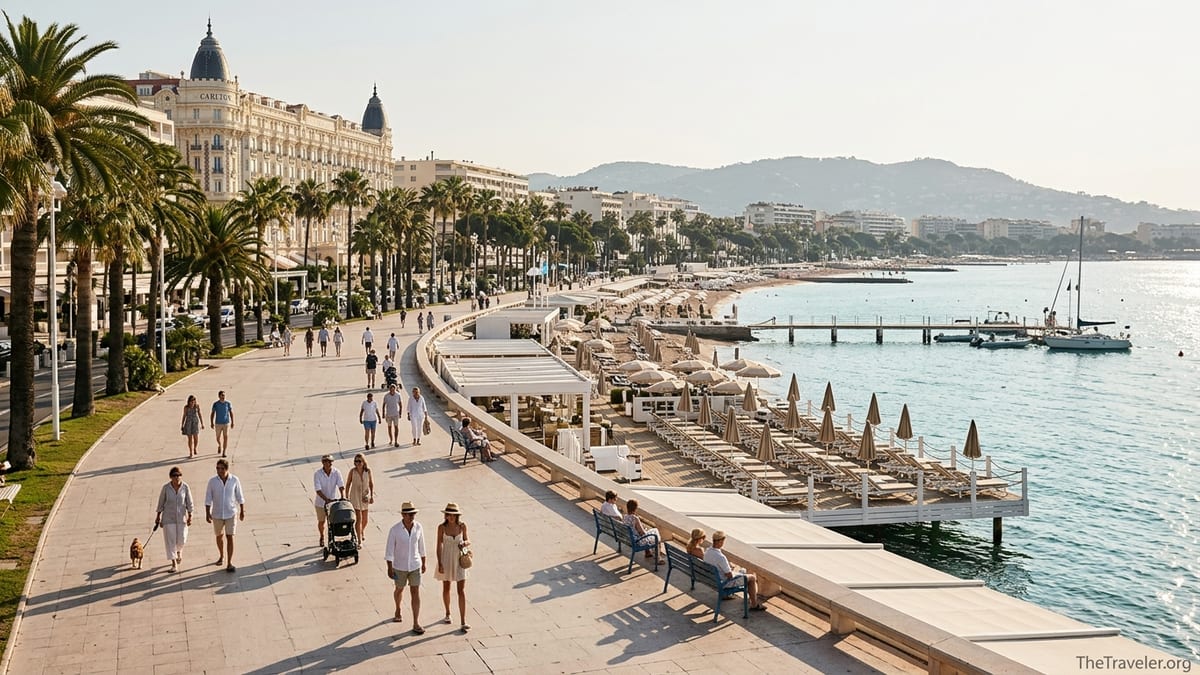
A Riviera Stage Set Between Sea and Palms
La Croisette is only about two kilometers long, but it feels like an entire world compressed into a single waterfront curve. On one side runs a classic promenade lined with perfectly spaced palm trees, benches, and the occasional blue-and-white "Cannes" chair where locals linger with an espresso. On the other, the Bay of Cannes glows in shades of turquoise, with yachts moored just offshore and tenders buzzing back and forth like discreet shuttle buses. The mix of sea air, salt, and a faint trace of perfume from passing shoppers is the city’s unofficial signature scent.
Even if you arrive outside the famous Cannes Film Festival, La Croisette still feels like a stage permanently set for an opening night. The pavement is immaculate. Flowerbeds around the lampposts are carefully tended. Digital billboards advertise upcoming festivals and luxury brand events rather than basic tourist promotions. The overall impression is that everything here is turned a few notches higher than strictly necessary, and that is exactly what makes it feel glamorous.
At street level you notice small touches that reinforce the mood. Taxi drivers keep their cars polished to a mirror shine. Beach attendants straighten sun loungers at the private clubs as if they might be photographed at any moment. Even joggers threading between slow-moving strollers look as if they have dressed knowing La Croisette will be their runway for an hour.
Grand Hotels That Look Ready for Their Close-Up
A major part of the boulevard’s glamour comes from its hotel skyline. Walking east from the Palais des Festivals, the white Art Deco lines of Hôtel Barrière Le Majestic rise almost immediately, with its striped awnings and red accents just across from the red-carpet steps of the festival palace. Inside, room rates in peak summer season often start in the high hundreds of euros per night and climb steeply for sea-view suites, but from the sidewalk you simply see the comings and goings of guests who look like they might be film producers, fashion editors or both.
Continue along and the Regent Carlton Cannes dominates the next stretch of the boulevard, its grand Belle Époque façade freshly restored and glowing soft cream in the Mediterranean light. Two domed towers flank its wings, a landmark visible from almost anywhere in the bay. The hotel’s private beach club across the road is laid out with rows of plush loungers, a pier stretching directly into the water and a restaurant terrace where a simple salad niçoise can easily cost between 25 and 35 euros, before you even consider a glass of rosé.
Farther along, Hôtel Martinez appears with its distinctive white façade and blue signage, another grand palace of the Riviera. Known for its two Michelin-starred restaurant, Palme d’Or, the property feels more like a vertical resort than a city hotel, with terraces overlooking the bay and a broad stretch of associated beach. Room prices here in high season often rival those at the Carlton and Majestic, and while you may never set foot inside, simply watching the line of black cars pulling up and the doormen in crisp uniforms provides its own form of people-watching entertainment.
Between these flagship addresses are smaller luxury options such as Mondrian Cannes, occupying the site of the former Grand Hotel with its gardens reaching almost to the sand, and Croisette Beach Hotel by MGallery, just a short turn off the boulevard. They all share one thing in common: they face the sea, and from the promenade you sense that every balcony above you hides a story, a deal, or an escape that brought someone here specifically to be part of this scene.
Luxury Boutiques That Treat the Boulevard as a Catwalk
If the hotels provide the vertical drama, the ground-floor action belongs to the boutiques. Between Rue d’Antibes and the beachfront, the Croisette has become a compact showcase for some of the most recognizable names in fashion and jewelry. Window displays from houses such as Fendi, Lanvin, and the leading Swiss watch brands use Riviera colors and yacht-club imagery to present capsule collections that often arrive here for the summer before they appear in other cities.
In 2024, Fendi relocated its Cannes boutique to a larger space along the boulevard, reflecting how valuable this strip has become as a showcase. Other luxury houses experiment with seasonal pop-ups around festival time, installing ephemeral spaces where the floor might resemble a yacht deck and fitting rooms evoke cabin-style dressing spaces in pale wood and linen. Even if you have no intention of buying a four-figure handbag, the visual spectacle of these storefronts can make a simple stroll feel like walking backstage at a fashion show.
Prices inside many of these boutiques are predictably high, but browsing is free and surprisingly encouraged. Staff are used to festival delegates, yacht crews and day-trippers drifting through. Step into a jeweler to admire a window piece and you might be gently offered a flute of Champagne. At a luxury watch boutique, the salesperson may casually place a timepiece on your wrist that costs more than a small car, fully aware that you may never return but determined that your experience of Cannes includes this tiny brush with another world.
Beyond the global labels, smaller concept stores and Riviera-focused brands add variety. Some focus on high-end resort wear: striped linen shirts, wide-brimmed hats, silk kaftans in sea-glass hues. Others curate made-in-France accessories, from straw bags woven in Provence to fine sandals crafted in nearby workshops. The overall effect is that you can step off a flight in Nice wearing basic travel clothes, wander La Croisette, and emerge a few hours later looking as though you have always belonged on a yacht.
Beach Clubs Where Glamour Meets Bare Feet in the Sand
Perhaps the most distinctive feature of La Croisette is the string of private beach clubs that occupy much of its sandy shoreline. Each club is technically an extension of a hotel or an independent operator, but from the promenade they read as a continuous line of white decking, teak walkways, restaurant terraces and neatly aligned parasols. Names like Mademoiselle Gray, Annex Beach, La Môme Plage and Hyde Beach appear on entrance signs, each promising a slightly different interpretation of barefoot luxury.
At many clubs, a front desk greets you at street level and a host escorts you down wooden steps to your chosen spot. A pair of sun loungers with parasol on the front row nearest the sea can easily cost between 60 and 120 euros for the day in peak summer, often with towel service included but food and drink charged separately. Second and third rows are sometimes more affordable, and occasionally you will find a midweek lunchtime offer that includes a lounger and a set menu for a combined price. Booking ahead has become common practice in July and August, particularly at the most talked-about clubs and on weekends.
Food at these beachfront restaurants is part of the appeal. Menus lean toward Mediterranean favorites: grilled sea bass, whole roasted prawns, truffle-topped pizzas, colorful salads with burrata and heirloom tomatoes. A glass of Provence rosé might start around 10 to 15 euros, while a bottle suitable for sharing among friends can easily reach 60 euros or more. The music evolves through the day, from relaxed lounge tracks in the late morning to a more upbeat playlist in the afternoon, with some clubs hosting live DJs or summer-themed events once the sun begins to lower.
For those not staying at the associated hotel, these beach clubs offer a way to rent a slice of Cannes glamour for a day. Dress codes are relaxed but intentional: linen shorts instead of gym wear, espadrilles instead of flip-flops, a well-cut swimsuit paired with a loose shirt. At the same time, you can stroll a little farther along La Croisette and find public sections of sand where locals spread their towels for free. These beaches lack waiter service and designer sunbeds, but the water is the same Mediterranean blue, and watching the beach-club rituals unfold a few meters away adds an extra layer of theater.
Festival Energy That Never Fully Leaves
Cannes is known worldwide for its film festival each May, when red carpets, camera flashes and couture gowns dominate global entertainment news. Yet even outside that intense window, La Croisette carries a festival residue that keeps it feeling charged. The Palais des Festivals sits at one end of the boulevard, and its sweeping steps and handprint-filled pavement remind you that the city’s most iconic images were captured right here. At almost any time of year you might see workers setting up structures for another event, from advertising gatherings to music awards and television markets.
During festival season itself, the boulevard transforms dramatically. Barricades appear, security checkpoints tighten, and the promenade becomes a corridor of branded pavilions and sponsor lounges. You might sit at a café terrace paying around 6 to 8 euros for an espresso, but your view includes a director giving interviews or an actor sprinting in borrowed stilettos to make a screening on time. Screens are set up on the beach for open-air film projections, and hotel façades become temporary billboards for streaming platforms and major studios.
Even if your visit falls in late spring or autumn, when the crowds thin, you still feel the echo of that intensity. Many of the same cafés along La Croisette have framed black-and-white photographs of stars who once sat at their tables. Waiters will point out where particular premieres took place or share stories of how late the music played on festival closing nights. It all reinforces the idea that this is a working stage for global culture rather than a static tourist postcard.
The convention center also means that business travelers use La Croisette as their daily commute. During events like advertising and television markets, groups with lanyards and tote bags stride briskly along the promenade in the mornings before slowing their steps at sunset for a drink on a hotel terrace. This blending of leisure, work, and spectacle is a key ingredient in the boulevard’s glamorous atmosphere. Everyone here seems to be on their way to something important, or at least trying to look as if they are.
Everyday Glamour: Cafés, Sunsets and Small Details
Despite all the big names and big prices, a walk along La Croisette can still be enjoyable at very modest cost. Many visitors build their day around simple rituals: an early-morning stroll when joggers and dog walkers share the promenade, a mid-morning coffee at a terrace, a pause on a public bench to watch the water taxis shuttle guests to anchored yachts. Order a café crème at a brasserie tucked just behind the main boulevard and you may pay only 3 or 4 euros, far less than at a front-row hotel bar, with nearly the same view one street away.
As the sun begins to set, the entire boulevard changes tone. Hotel façades glow amber, and the sunglasses that were practical a few hours earlier become accessories as people dress for dinner. Local families push strollers along the promenade, while groups of friends gather around ice cream kiosks, a scoop of pistachio or lemon sorbet costing around 3 to 5 euros depending on how many flavors you choose. Street musicians occasionally set up near the gardens, saxophone notes drifting over the sound of waves and muffled conversation from the beach restaurants below.
It is often the smaller details that make La Croisette unforgettable. The faint imprint of a film poster removed from a hotel façade. A classic car idling outside the Carlton as its driver waits for a guest who is taking their time in the lobby. The polished brass plaques listing a hotel’s historic guests. Even the typography of the street signs, with "Boulevard de la Croisette" written in neat blue-on-white ceramic, contributes to the sense that this is not just a road but a curated experience.
For photographers, the curve of the promenade offers one of the Riviera’s most photogenic settings. Morning light comes from behind the grand hotels, flattering their façades, while late afternoon and golden hour illuminate the bay and the line of palms in soft, horizontal light. Stand near the end of the peninsula and you can frame the entire sweep of La Croisette against the Esterel hills, a composition that explains in a single glance why so many travelers choose this stretch of coastline when they imagine the French Riviera.
Planning Your Own Walk Along La Croisette
Experiencing the glamour of La Croisette does not require a luxury hotel booking. One practical way to approach the boulevard is to start near the old port and Palais des Festivals in the morning, when the light is gentle and the air still cool, then walk east toward the Carlton and Martinez as the day warms. The full length of the promenade is manageable in about 30 minutes at a steady pace, but allowing two to three hours lets you pause at cafés, browse boutiques and detour onto small piers or side streets.
Comfortable shoes are more important than glamorous ones, especially in summer when pavements radiate heat. Many visitors adopt a simple uniform: breathable fabrics, a hat, sunglasses and a small crossbody bag. If you plan to stop at a beach club, it is generally acceptable to arrive in smart resort wear and change down by your lounger. Towels are usually provided with your sunbed rental, but it is wise to confirm this when booking or on arrival to avoid surprises.
Budget-wise, you can treat La Croisette as a luxury splurge or a mostly free spectacle. A day of indulgence might involve renting front-row loungers at a well-known beach club, ordering a seafood platter and a bottle of rosé, then ending with cocktails at a palace hotel bar. That kind of day can easily run into several hundred euros for two people. Alternatively, you could limit your spending to a few coffees, a scoop of gelato and perhaps a drink at a mid-range bar on a side street, spending under fifty euros while still absorbing much of the same atmosphere.
Transport is straightforward. Many travelers stay in more affordable accommodation a few blocks inland or in neighboring towns such as Antibes or Nice, then take the train into Cannes for day trips. From the station it is a five to ten minute walk down to La Croisette. This approach lets you enjoy the boulevard’s glamour in concentrated doses, returning to quieter neighborhoods in the evening while keeping your travel budget in check.
The Takeaway
By the time you reach the far end of La Croisette and look back toward the Palais des Festivals, the experience of walking the boulevard usually feels larger than the distance you have actually covered. The combination of historic grand hotels, meticulously styled boutiques, high-energy beach clubs and ever-present hints of festival culture creates an atmosphere that is uniquely Cannes. Glamour here is not only about wealth; it is about the precision with which details are arranged and the way everyday routines play out against a backdrop designed for the camera.
For visitors, this means that even simple moments take on a cinematic quality. A morning coffee on a side-street terrace, an hour sitting on a public bench watching yachts shift in the bay, a sunset walk past the glowing façades of the Carlton and Martinez: all of these feel like scenes from a film in which you have unexpectedly been cast. Walk La Croisette with your eyes open to these small details, and you quickly understand why Cannes has become a shorthand for a particular kind of European glamour that the rest of the world still finds deeply compelling.
FAQ
Q1. When is the best time of year to walk along Boulevard de la Croisette?
The most pleasant months for a Croisette stroll are generally late April to early June and September to early October, when temperatures are warm but not extreme, the light is beautiful, and the promenade is busy without being overwhelmed by peak-summer crowds.
Q2. Do I have to stay in a luxury hotel to enjoy La Croisette?
No. Many visitors stay in more modest hotels or apartments a few streets back or in nearby towns, then walk or take the train into Cannes. You can fully enjoy the promenade, window-shopping and even some cafés with only occasional splurges.
Q3. Are the beaches along La Croisette all private?
No. A significant portion of the sand is occupied by private beach clubs linked to hotels or independent operators, but there are also public sections at intervals along the boulevard and toward its eastern end, where you can spread a towel free of charge.
Q4. How expensive are the beach clubs on La Croisette?
Prices vary by season and location, but in high summer a pair of loungers and an umbrella at a prominent club often costs from around 60 euros upwards for the day, with food and drinks charged separately. Booking in advance is recommended at popular venues.
Q5. Is La Croisette worth visiting outside the Cannes Film Festival?
Yes. While the festival adds extra spectacle, the boulevard’s glamour is constant thanks to its grand hotels, boutiques and beach clubs. Outside festival dates you gain easier access, less security, and generally more relaxed prices and availability.
Q6. What should I wear for a day on La Croisette?
Smart-casual resort wear is ideal: light fabrics, comfortable shoes, a hat and sunglasses. Beach clubs appreciate guests arriving in cover-ups or shirts over swimwear, and most restaurants along the promenade prefer that you avoid gym clothes or overly beachy outfits at dinner.
Q7. Can I take good photos along La Croisette without special access?
Absolutely. The public promenade offers excellent vantage points over the bay, the line of palm trees, and the façades of hotels such as the Carlton, Majestic and Martinez. Early morning and late afternoon provide the most flattering light.
Q8. How long does it take to walk the full length of La Croisette?
Walking at a steady pace, you can cover the main stretch in about 30 minutes one way. Allowing two to three hours gives you time to stop for coffee, browse a few boutiques and perhaps dip your feet in the sea.
Q9. Are there budget-friendly food options near La Croisette?
Yes. While waterfront hotel restaurants can be expensive, you will find bakeries, casual cafés and small brasseries just a block or two inland where pastries, sandwiches and coffees are priced more moderately, making it easier to balance the occasional treat with everyday meals.
Q10. Is La Croisette suitable for families with children?
Yes. The promenade is mostly flat and stroller-friendly, with benches, public beaches and playgrounds within walking distance. Families often enjoy evenings here, combining a simple picnic or ice cream with a relaxed walk and people-watching by the sea.