


More news on this day
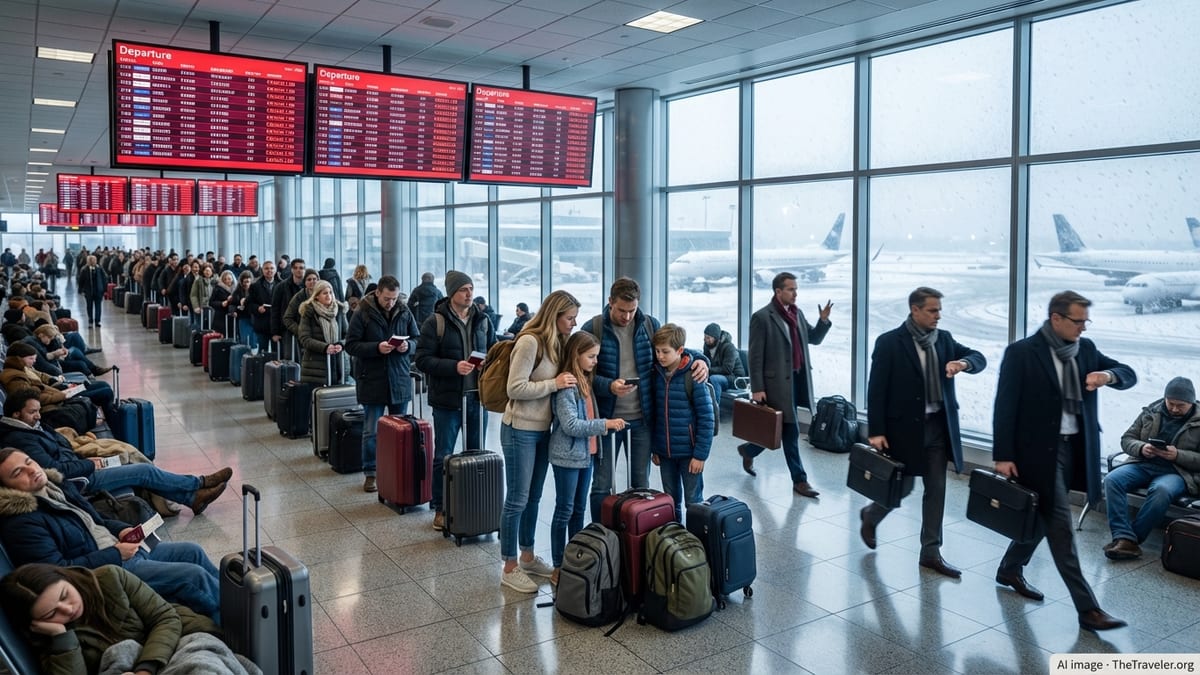
Travelers moving through Boston Logan International Airport are facing another difficult travel period as data from flight-tracking services show 182 delayed departures and arrivals and 9 cancellations across major carriers, affecting routes throughout the United States and to destinations in Spain, Italy and elsewhere in Europe.
Get the latest news straight to your inbox!
Broad Disruption Across Major U.S. Airlines
Publicly available flight-status boards for Boston Logan indicate that a wide cross-section of airlines is affected, including Republic Airways, JetBlue Airways, Delta Air Lines, United Airlines, Southwest Airlines and American Airlines, along with several regional and international partners. The disruptions span both departures and arrivals, creating a rolling impact on schedules as aircraft and crews fall out of position.
The 182 delayed flights represent a substantial share of the day’s operations at Boston Logan, where hundreds of daily movements connect New England with hubs across the United States and key international gateways. While most delays remain under two hours, scattered reports show some services held for significantly longer, particularly during peak afternoon and evening departure banks.
The nine cancellations, though modest relative to the overall schedule, compound the strain on passengers as rebooking options out of Boston narrow. Because many Boston routes are already operating near capacity during the summer travel period, some affected travelers are being shifted to next-day departures or routed through alternative hubs.
Historical performance data from aviation and transportation agencies show that carriers such as JetBlue, Southwest, American, Delta, United and regional operators like Republic typically maintain high completion factors, with cancellations generally concentrated during periods of weather or airspace constraints. Today’s pattern at Boston Logan fits this wider trend, with operational challenges clustering during busy seasonal travel windows.
Domestic Network Hit From Coast to Coast
Within the United States, the delays and cancellations at Boston Logan are reverberating across key domestic corridors. Flight-status information points to disruptions on heavily traveled routes to New York, Washington, Chicago and major Florida destinations, as well as long-haul domestic links to the West Coast, including San Francisco and Los Angeles.
Because Boston serves as an important focus city and crew base for several of the affected airlines, even moderate schedule disruptions can quickly ripple throughout their networks. When an early Boston departure is delayed or cancelled, the aircraft and crew assigned to subsequent flights often fail to reach their next origin on time, creating follow-on delays in other parts of the country.
This type of knock-on effect is particularly visible on narrow-body aircraft that operate multiple turns per day between Boston and other U.S. cities. A delay of even 60 to 90 minutes on an early rotation can accumulate as the day progresses, eventually translating into multi-hour disruptions for passengers booked on later departures from distant airports.
For travelers beginning or ending their trips at Boston Logan, the result is increased congestion at gates and customer service counters, longer waits for updated departure times, and higher competition for scarce open seats on alternative flights. Those connecting through Boston on same-day itineraries are especially vulnerable to missed connections when delay margins are tight.
Transatlantic Services To Spain, Italy And Beyond Affected
The disruption is not confined to domestic routes. Published schedules and live tracking show that some transatlantic services linking Boston with Spain, Italy and other European destinations are also affected, reflecting Boston Logan’s growing role as an international gateway.
Several U.S. carriers and their European partners operate nonstop flights from Boston to major hubs in Spain and Italy during the summer season, along with connections to secondary cities via European transfer points. When departure times slip in Boston, the impact often cascades into missed onward connections in Europe, forcing rebookings and overnight stays for some passengers.
According to published coverage from passenger-rights and air travel compensation services, even relatively small clusters of delays and cancellations at a large origin airport can have outsized consequences for long-haul operations, because aircraft cycles are longer and crew-duty limits more restrictive. Once a transatlantic rotation from Boston is significantly delayed, it can be difficult for airlines to recover the schedule within the same operating day.
Seasonal demand for Mediterranean destinations, including popular leisure cities in Spain and Italy, heightens the pressure on today’s schedule. With many flights departing close to full, re-accommodating passengers from even a single cancelled or severely delayed Boston departure onto other same-day services can prove challenging.
Weather, Airspace Constraints And Crew Positioning Challenges
While the specific causes for each delayed or cancelled flight at Boston Logan vary, publicly available data and past performance reports indicate that most large clusters of disruptions stem from a combination of weather, air traffic control initiatives and airline operational constraints, particularly crew and aircraft positioning.
Boston’s location on the Atlantic coast exposes the airport to rapidly changing weather patterns, including low clouds, strong winds and summer thunderstorms that can periodically reduce runway capacity. When arrival or departure rates are cut, even temporarily, queues build both in the air and on the ground, pushing subsequent flights behind schedule.
In addition, congestion in Northeast airspace frequently triggers flow-control measures that limit the number of aircraft allowed to depart for or arrive from certain regions at any given time. These restrictions, which can be felt from New England to major hubs in the mid-Atlantic and Midwest, tend to amplify delays at an already busy airport like Boston Logan.
Operational data released by transportation agencies also highlight the role of late-arriving aircraft and crew as a persistent contributor to delays. When an inbound flight to Boston operates behind schedule because of weather or airspace constraints elsewhere, the aircraft and crew may arrive too late to operate their next planned leg on time, creating a domino effect that transforms isolated issues into a broader disruption pattern similar to what is visible today.
What Travelers Through Boston Logan Can Expect
For passengers scheduled to fly into or out of Boston Logan while 182 delays and 9 cancellations are on the board, travel experts and consumer advocates generally recommend close monitoring of flight status and building extra time into connections. Airline mobile apps and airport displays typically reflect schedule changes as they occur, though updates can lag in fast-changing conditions.
Published guidance from aviation consumer-protection resources notes that, in many cases, travelers whose flights are significantly delayed or cancelled may be eligible for rebooking, refunds for unused segments, or meal and hotel vouchers, depending on the operating carrier, route and reason for disruption. Policies differ between domestic and international itineraries, so passengers flying to or from Spain, Italy and other European destinations should review both U.S. and foreign regulations that may apply.
Given Boston Logan’s role as a connecting point, some travelers may find that rerouting through alternative hubs such as New York, Washington, Chicago or Atlanta offers a faster path to their final destination when nonstops are heavily delayed. However, seat availability can tighten quickly on busy holiday and peak-summer dates, limiting options as the day progresses.
As airlines work to clear the backlog, operations at Boston Logan typically stabilize over a period of several hours, though residual delays can linger into the evening and, in some cases, affect the following morning’s departures. For now, the elevated delay and cancellation totals illustrate how quickly conditions at a major Northeast airport can shift, and how disruptions in Boston can ripple across the United States and into key European markets.