


More news on this day
Domestic air travel in India is set for a shake-up from June 1, as Air India and IndiGo move to cut hundreds of domestic flights over the next three months, citing surging jet fuel costs and softer post-summer demand.
Get the latest news straight to your inbox!
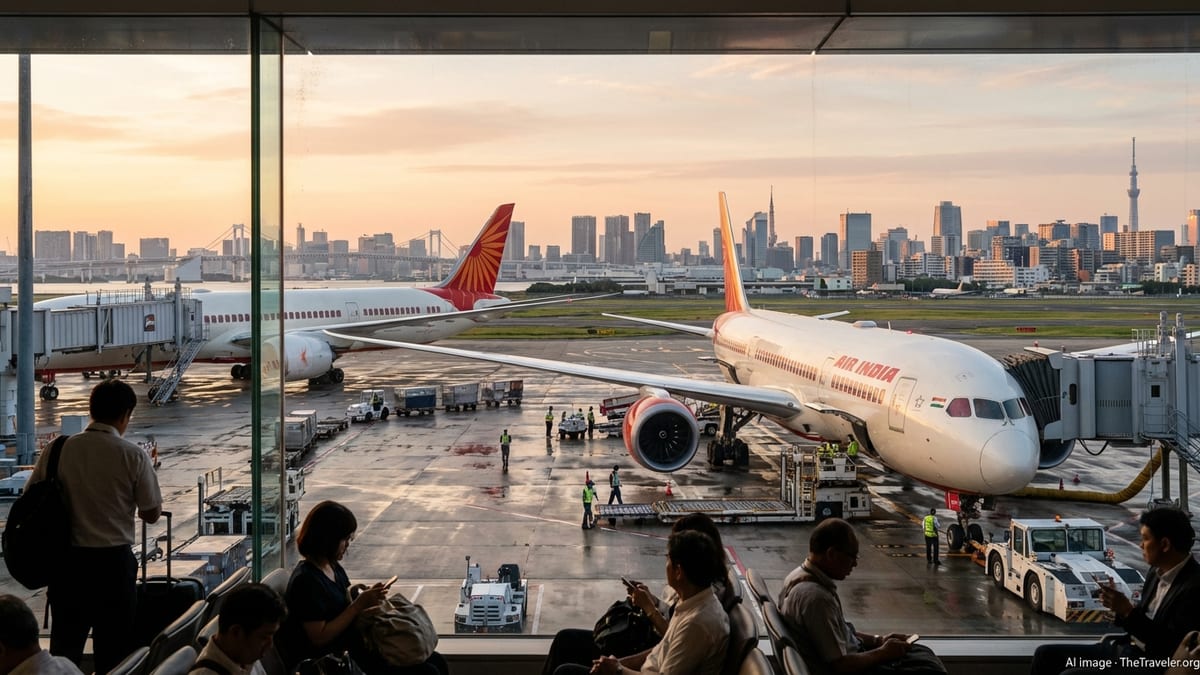
What is changing from June for Air India and IndiGo
Publicly available schedules and industry reports indicate that both Air India and IndiGo will reduce domestic capacity between June and August 2026. The changes begin on June 1 and are expected to run for roughly 90 days, covering the lean travel period that follows the school holiday rush.
Coverage in Indian business media suggests Air India is planning some of the deepest cuts among the major carriers, trimming a double-digit share of its domestic flights for June and July compared with the previous two months. Aviation analytics data cited in national newspapers points to a reduction of more than one quarter in Air India’s scheduled domestic services for the June to July window, compared with its earlier schedule.
IndiGo, India’s largest airline by market share and daily flights, is expected to implement a more modest but still significant pullback. Reports describe capacity reductions in the mid-single to low-double digit range on selected domestic routes, which still equates to a large number of individual flights when applied across its high-frequency network.
The adjustments follow a broader trend across Indian aviation. Recent analysis in business publications shows domestic flight schedules for June declining sector-wide, with several carriers cutting flights in response to higher operating costs, a weaker rupee and the impact of geopolitical tensions on fuel prices.
Why airlines are cutting domestic flights now
The dominant factor behind the June-to-August cuts is the cost of aviation turbine fuel, which has risen sharply since late 2025. Multiple financial and aviation outlets link the increase to disruptions in global oil markets connected to the conflict in West Asia, including the war involving Iran, which has pushed up jet fuel prices for Indian carriers.
Air India and IndiGo are also facing a typical seasonal dip in demand once the peak summer holiday period ends. Market commentary indicates that advance bookings for the core monsoon months are softer than in the same period last year, especially on secondary and smaller city routes, prompting airlines to reassess whether it is commercially viable to operate all previously scheduled frequencies.
Analysts quoted across the financial press note that carriers are balancing two priorities: keeping aircraft as full as possible to protect yields, and containing costs in an environment where both fuel and foreign-currency expenses are elevated. Rationalising domestic schedules for a defined period is being presented as part of that effort, alongside measures such as network reshaping and tighter capacity discipline.
The flight reductions also come after a turbulent spell for the sector, which has included a high-profile scheduling crisis at IndiGo in late 2025 and multiple rounds of international route rationalisation at Air India. Observers say this backdrop has made regulators and airlines more cautious about over-stretching operations during off-peak periods.
How many flights and which routes are affected
The precise number of cancelled or trimmed flights varies by carrier and week, and schedules are still being updated. Indicative data cited by Indian business newspapers suggests that Air India’s domestic schedule for June and July is down by more than 25 percent on a sequential basis. For IndiGo, estimates point to cuts of around 5 to 7 percent in domestic capacity during the initial phase, with the possibility of adjustments as demand patterns become clearer.
Early route-level notices indicate that the impact will be uneven. Heavily trafficked trunk routes such as Delhi–Mumbai and Bengaluru–Delhi are expected to retain frequent service, though with fewer daily options on some time bands. In contrast, smaller markets and some connecting services are seeing outright cancellations or longer gaps between flights, particularly during mid-day and late-evening windows.
At the airport level, passengers are already seeing advisories about specific flights. Notices from regional airports, such as Bhopal’s Raja Bhoj Airport, highlight temporary suspensions of select Air India and IndiGo services through June and July, with some cancellations extending to the end of July. Similar localised changes are likely at other tier-two and tier-three airports as airlines rebalance networks toward routes with stronger demand.
Because IndiGo operates nearly two thousand flights daily in India, even a relatively small percentage cut can translate into several dozen cancellations or downgraded frequencies each day. Travellers may therefore experience changes not only on clearly marginal routes but also on services that previously operated multiple times daily.
What travelers should do if they are booked from June
For both carriers, the main advice from travel industry reports is to treat June-to-August bookings as potentially subject to change and to monitor flight status closely in the weeks before departure. Air India and IndiGo typically notify customers of schedule changes via email or SMS based on the contact details provided at booking, but there can be delays between internal schedule decisions and passenger communication.
Air India’s published schedule-change policy indicates that when a domestic flight is cancelled or significantly retimed, affected passengers are generally entitled to options such as rebooking on an alternate Air India service, a change of date without penalty within a defined window, or a refund, depending on the fare rules. IndiGo’s standard conditions of carriage provide similar flexibility in the event of airline-initiated cancellations, including free changes to the next available flights on the same sector, subject to seat availability.
Travel intermediaries and online travel agencies are also expected to play a role, as many Indian passengers book through third parties. Industry guidance stresses that customers who purchased tickets through agents should coordinate directly with them for rebooking or refund processing, since airlines often route schedule-change handling via the original booking channel.
Passengers with time-sensitive travel, such as business trips or onward international connections, may want to build extra buffers into their plans. Travel planners suggest considering earlier departures, allowing longer layovers when connecting between domestic and international flights, and reviewing ticket conditions, especially for non-refundable or heavily restricted fares that may limit flexibility.
Impact on fares and the broader domestic market
Capacity reductions typically put upward pressure on fares, and early signs from fare-tracking services indicate that prices on some busy domestic routes have already edged higher for June and July travel dates. With fewer seats in the market and a significant share of capacity controlled by a small number of large airlines, discounts during the monsoon season may be less generous than in previous years.
Sector-wide data discussed in recent business coverage suggest that overall domestic flight schedules for June are set to fall by around mid-single digits compared with the previous month, with individual airlines showing larger or smaller declines. Some carriers outside the Air India and IndiGo groups are expected to trim flights as well, particularly those with weaker balance sheets or older, less fuel-efficient fleets.
Aviation analysts argue that the cuts could still support long-term stability if they help airlines preserve cash and avoid deeper disruptions later in the year. However, consumer groups are monitoring whether last-minute cancellations and schedule shifts repeat the kind of widespread disruption seen in past crises, where tens of thousands of passengers were left scrambling for alternatives at short notice.
For now, domestic travelers planning trips between June and August 2026 face a more constrained but still functional network. The practical takeaway is that careful planning, early booking, and close attention to schedule updates will be more important than usual during this period of reduced capacity.