


Westgate Myrtle Beach Oceanfront Resort pairs a prime boardwalk location with classic Grand Strand amenities, but like most large beach resorts, the final bill includes more than just the nightly room rate. Understanding the fees, deposits, and day‑to‑day extras before you arrive can make the difference between a smooth, on‑budget stay and some unwelcome surprises at checkout.
Get the latest updates straight to your inbox!
Resort Fees: What You Really Pay Per Night
Westgate Myrtle Beach Oceanfront Resort currently adds a nightly resort fee of about $19.99 plus tax per room, on top of the base rate. This fee is mandatory for most guests, whether you booked direct, through a travel site, or as part of a vacation package, and it is charged for every paid night of your stay. For a long weekend of three nights, that means roughly $60 in resort fees before tax. For a weeklong beach vacation, you are looking at about $140 in resort fees alone, so it is important to factor this into your total trip cost rather than just focusing on the advertised nightly rate.
The resort fee covers several core services that many travelers now consider standard. At Westgate Myrtle Beach, it typically includes Wi‑Fi access, use of the fitness center, local calls from your room, an in‑room safe, and small business-center style services such as boarding pass printing. While none of these line items feel dramatic on their own, they are bundled into the mandatory daily charge instead of appearing as separate optional add‑ons.
Keep in mind that taxes apply to the resort fee just as they do to your room rate. In South Carolina, when you add state sales tax and local occupancy and tourism taxes, the effective charge on that $19.99 nightly fee climbs further. As a practical budgeting example, if your room rate is $220 a night for four nights in July, you might pay something closer to $220 plus about $20 in resort fees per night, plus nearly 15 percent in combined taxes on the whole amount. That can push a “$220 nightly” stay to more like $280 per night once everything is tallied.
Timeshare owners staying on an ownership stay, and members of Westgate’s higher‑tier loyalty program, may sometimes have resort fees waived as part of specific benefits. However, renters and most regular hotel guests should plan as if the fee will apply. When in doubt, confirm the exact nightly resort fee and whether it is included or added on when you receive your written confirmation.
Parking Costs: How the New Garage Affects Your Wallet
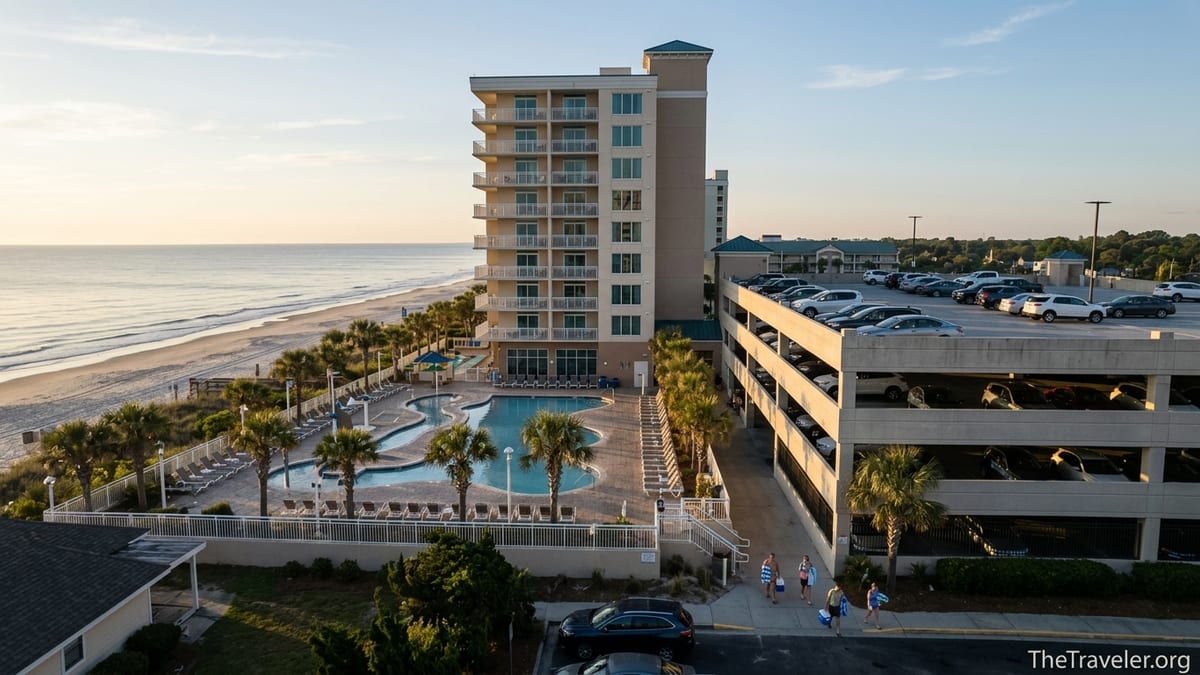
Parking is a major cost driver at many oceanfront Myrtle Beach hotels, where daily self‑parking charges between 10 and 25 dollars are increasingly common. Westgate Myrtle Beach Oceanfront Resort stands out for offering complimentary self‑parking for registered guests in its on‑site facilities, including a modern multi‑story garage built specifically to handle beach‑season demand. That means no daily parking line item should appear on your bill for standard self‑parking, which can easily save a family 70 to 150 dollars over a week compared to nearby properties that do charge.
This free parking is particularly valuable when you consider that the resort sits directly on South Ocean Boulevard, across from Family Kingdom Amusement Park and close to the boardwalk. In this part of Myrtle Beach, public parking lots and metered street spaces may charge hourly rates in busy months, and fees can accumulate quickly if you are moving your car in and out several times a day. Being able to pull into a dedicated guest garage without taking out your wallet each time removes both stress and cost.
There are a few practical caveats to keep in mind. During peak summer weekends or holiday periods, spaces in the main garage and surface lots can fill, and the most convenient spots close to the lobby may be taken by mid‑day. If you plan to arrive late on a Friday in July or during an event week, allow extra time to park and potentially walk a bit farther with your luggage. At present, there is no widely advertised valet parking program, so you should plan around self‑parking only and factor in the time to retrieve your vehicle before excursions, dinner reservations, or flights.
One more note for budgeting: parking is free for registered guests, but visiting friends and family who stop by to use the pool or meet you for dinner may have a harder time finding free parking during busy periods. They might need to use nearby city lots or metered street spaces, which could add a few extra dollars to that evening out.
Wi‑Fi, Breakfast, and Everyday Food Costs
Wi‑Fi is one of the few line items that often confuses travelers at beach resorts. At Westgate Myrtle Beach, standard Wi‑Fi access is included in the resort fee and described as complimentary in guest rooms and most common areas. That means you should not see a separate per‑device or per‑day Wi‑Fi charge on your folio for typical use. For a family traveling with multiple phones, tablets, and laptops, this bundled connectivity can represent a meaningful savings compared with hotels that still charge per device.
Where you are more likely to feel the cost is at breakfast and other meals. Breakfast is not automatically included in most room rates here. Instead, you can purchase breakfast from the on‑site restaurant or grab‑and‑go outlets, or you can eat off‑property. Guests frequently report that on‑site breakfast pricing feels similar to casual sit‑down spots elsewhere on the Grand Strand, so you might expect to spend somewhere in the range of 12 to 18 dollars per adult for a basic breakfast of eggs, toast, and coffee, with children’s plates somewhat less. For a family of four eating breakfast at the resort every morning, that might run 50 to 70 dollars a day before tax and tip.
There is also a pool bar and other on‑site food and beverage outlets offering burgers, salads, and drinks. While convenient, poolside pricing can easily reach 15 to 20 dollars per entree and double‑digit prices for cocktails. Ordering lunch and drinks for a family without paying attention can quietly add 80 to 100 dollars a day to your bill. To keep food costs predictable, many guests choose to stock their in‑room fridge with snacks and drinks from a nearby supermarket and limit on‑site purchases to a couple of strategically chosen meals and treats.
If you book a special package or promotion directly with Westgate, pay close attention to whether any meal vouchers or breakfast credits are included. Occasionally, certain offers for off‑season stays or timeshare preview packages will provide daily breakfast for two or a set dining credit per stay, which can offset a portion of your food spend. However, these inclusions are not standard across all rates, so treat them as a bonus rather than an expectation.
Pet Fees and Policies: What Dog Owners Should Expect
Westgate Myrtle Beach Oceanfront Resort is one of the relatively few oceanfront properties in Myrtle Beach that welcomes dogs in designated rooms, which is a big plus if you are traveling with a pet. That convenience comes with specific fees and rules. Guests can generally bring up to two dogs per room, subject to a combined weight limit and prior approval. In practice, policies often cap each dog around a mid‑size limit, so very large breeds may not be accepted; always confirm your dog’s eligibility before booking a non‑refundable rate.
The resort charges a one‑time, non‑refundable pet cleaning fee per stay, often quoted around 150 dollars per accommodation, plus applicable taxes. This is in line with what you see at many branded oceanfront properties that allow pets along the Grand Strand. Because this fee is per stay and not per night, a long weekend and a weeklong visit will cost the same from a pet‑fee standpoint, which makes longer trips comparatively better value for dog owners.
In addition to the standard pet cleaning fee, Westgate’s general pet terms mention an additional penalty of about 150 dollars plus tax if a dog is found in a room without being properly registered at check‑in. That means if you try to sneak in a pet to avoid the upfront fee and staff discovers the animal, you could end up paying both the regular fee and an unreported‑pet penalty. From a cost perspective, it is always cheaper and far less stressful to declare your dog when you make the reservation and again at check‑in.
There are also practical cost considerations beyond the official pet fee. Dogs are typically not allowed in pool areas, restaurants, or certain public indoor spaces, which can influence how you plan your day and whether you need to pay for doggy day care or a pet‑sitting service while you visit attractions that do not allow animals. If you are staying during peak summer, when sand is hot and daytime temperatures are high, you may also incur extra costs for cooling mats, booties, or additional grooming because of the salt and heat.
Security Deposits, Holds, and Payment Surprises
Like most full‑service resorts, Westgate Myrtle Beach places a security deposit or credit card hold at check‑in to cover incidentals and potential damages. Recent rate information suggests that guests who book promotional or loyalty offers are often asked for either a 200 dollar cash deposit or a smaller hold when using a credit or debit card, though exact amounts can vary by rate, season, and payment method. This hold is separate from your room and tax charges and is typically released at or shortly after checkout as long as there are no outstanding balances or room damages.
If you prefer to use a debit card or cash, be aware that the effective impact on your available funds can be more noticeable. A 200 dollar cash deposit plus the full stay’s room and tax, which might be prepaid or due at check‑in, can temporarily tie up a big chunk of your travel budget. For instance, on a four‑night stay with a total room and fee cost of around 1,100 dollars after tax, adding a 200 dollar incidental deposit means you need at least 1,300 dollars available at check‑in. With a credit card, you may not feel that immediately, but with a debit card or cash, that money is effectively out of circulation until your departure.
Westgate, like other resort operators, may also pre‑authorize your card for a bit more than the anticipated incidental spend to account for variables such as extra nights, room upgrades, or added charges. While most guests do not encounter issues, problems can arise if you arrive with a nearly maxed‑out card or a very low debit balance. To avoid declined transactions or the need to shuffle money between accounts at the front desk, check your card limits before you travel and consider traveling with a primary and a backup payment method.
Another potential cost surprise involves third‑party bookings. If you book through an online travel agency, the site may collect room charges upfront but not the resort fee or deposit. It is not uncommon for first‑time visitors to assume their stay is fully paid only to discover at check‑in that they still owe the nightly resort fee and must present a card for the incidental hold. To stay in control, read your confirmation carefully and look specifically for language about “additional mandatory charges payable at the property.”
Taxes, Seasonal Pricing, and Other Extra Costs
On the Grand Strand, the posted room rate is only part of what you ultimately pay. In addition to the resort fee, a mix of state sales tax, local accommodations tax, and tourism or hospitality taxes applies to your room rate and many resort‑related charges. While percentages vary slightly over time as local jurisdictions adjust their rules, the effective combined tax rate on hotel stays in Myrtle Beach is typically in the low‑ to mid‑teens. That means a 250 dollar nightly rate plus resort fee can carry 35 to 40 dollars in nightly taxes, significantly changing the final figure on your folio.
Seasonality has an equally large effect on overall cost. In the shoulder months of April or early May and again in September, you might find nightly rates at Westgate Myrtle Beach in a more moderate band compared with peak July weekends, when beachfront demand hits its high point. For example, a standard ocean‑view unit that might sell for under 200 dollars per night in late April can push well above 300 dollars in mid‑summer, even before taxes and fees. Multiply that difference over five or six nights and you are looking at several hundred dollars in seasonal premium.
There are also optional extras that can influence your total spend. Housekeeping services may follow limited‑service patterns for certain rate types, with daily cleaning or towel refresh sometimes coming at an extra cost for guests on extended‑stay or discount packages. On‑site laundry facilities, arcade games, and vending machines can also add up, especially with children who are excited by every activity and snack option. A handful of paid resort or local activities, such as beach chair and umbrella rentals arranged through third‑party vendors, are not covered by your room rate and can run 40 dollars or more per day for a pair of loungers and shade.
If you are driving, factor in tolls or parking at area attractions like Broadway at the Beach or certain city lots, even though parking at the resort itself is complimentary. If you are flying into Myrtle Beach International Airport and using ride‑share services, a typical one‑way trip to Westgate Myrtle Beach might fall in the 15 to 30 dollar range depending on time of day and demand. Round‑trip airport transfers for a family, plus a few rides around town, can easily match or exceed what you might have spent on a rental car and gas in the off‑season, so it is worth comparing options.
How to Keep Westgate Myrtle Beach Affordable
Despite the layers of fees and taxes, Westgate Myrtle Beach can still be an economical choice if you approach your booking strategically. The first and most effective tactic is flexibility on dates. Rates tend to dip on Sunday through Thursday nights and outside of peak school holiday windows. If you can shift a family trip from mid‑July to mid‑June or late August, you may find nightly rates drop enough that the resort fees and taxes feel less painful.
Second, pay attention to room type. Oceanfront units command a premium that can be 50 dollars or more per night compared with inland or partial‑view options. If you are planning to spend most of your time on the beach itself, you might decide that a lower‑floor, non‑oceanfront room at Westgate still gives you the same convenient access to the sand and pools at a noticeably lower total cost. On the other hand, if you plan to spend afternoons on the balcony, factoring the extra cost into your budget may be worth it.
Using the in‑room kitchenettes or full kitchens available in many of the villas is another powerful cost‑control tool. A grocery run early in your stay can reduce how often you eat at the restaurant or order poolside food. Preparing simple breakfasts in your room, packing beach snacks, and limiting sit‑down dinners to a few special nights can easily save a family several hundred dollars over the course of a week. Plenty of guests report that this is one of the biggest differences between a vacation that feels reasonably priced and one that spirals out of budget.
Finally, read every offer’s fine print. Some promotional packages include perks such as discounted rates in exchange for attending a timeshare presentation, resort credits, or loyalty points. While these can lower upfront costs, consider the value of your time and your tolerance for sales pitches. If you choose to accept a timeshare preview package, confirm in writing which fees are included, whether resort fees are waived, and what, if any, penalties apply if you skip the presentation.
The Takeaway
Staying at Westgate Myrtle Beach Oceanfront Resort means more than simply multiplying the nightly room rate by the number of nights, especially in 2026 when resort fees and travel costs across the Grand Strand continue to rise. Once you add the nightly resort fee, taxes, incidentals deposit, potential pet fees, and everyday spending on food and activities, the difference between the sticker price and the true cost of your vacation can be substantial.
At the same time, the resort’s complimentary self‑parking, inclusive Wi‑Fi, and family‑friendly amenities such as pools and water features help offset some of the charges you might face in other beachfront properties that add separate parking or internet fees. With careful date selection, thoughtful use of in‑room kitchens, and a clear understanding of how resort fees, deposits, and extras work, it is entirely possible to enjoy Westgate’s oceanfront location without blowing up your budget.
Before you lock in your stay, sketch out a realistic nightly total that includes resort fees and expected taxes, plus a daily allowance for meals and activities. Going in with eyes open will help ensure that the only surprises on your Myrtle Beach trip are the good kind, like discovering a new favorite seafood spot or catching an unexpected fireworks show over the Atlantic.
FAQ
Q1. Does Westgate Myrtle Beach charge a daily resort fee and what does it cover?
Yes. Westgate Myrtle Beach adds a nightly resort fee, around 19.99 dollars plus tax, which typically covers Wi‑Fi, fitness center access, local calls, an in‑room safe, and small services like boarding pass printing.
Q2. Is parking free at Westgate Myrtle Beach Oceanfront Resort?
For registered guests, self‑parking in the resort’s garage and surface lots is generally complimentary, and there is no separate daily parking charge added to your bill.
Q3. Is Wi‑Fi included in the room rate at Westgate Myrtle Beach?
Standard Wi‑Fi in guest rooms and most common areas is included as part of the resort fee, so you should not see a separate per‑day Wi‑Fi line item on your folio.
Q4. Is breakfast free at Westgate Myrtle Beach, or do I have to pay extra?
Breakfast is not automatically included with most room rates. You can buy breakfast at the on‑site restaurant or choose to eat at nearby cafes and diners off‑property.
Q5. How much are the pet fees if I bring my dog to Westgate Myrtle Beach?
Westgate typically charges a one‑time, non‑refundable pet cleaning fee of roughly 150 dollars per stay, plus tax, for approved dogs in designated pet‑friendly rooms.
Q6. Is there a security deposit or card hold at check‑in?
Yes. The resort usually places an incidental hold or requires a deposit at check‑in, often around 200 dollars, to cover potential damages and extra charges, which is released at or after checkout.
Q7. Are taxes already included in the nightly rate I see online?
Usually not. The rate you see online is typically before taxes and fees. Local and state taxes, plus the resort fee and any pet or incidental charges, are added to your final bill.
Q8. Do kids’ activities and the water features cost extra?
Access to the main pools and water features is usually included for registered guests, but extras like arcade games, rented beach chairs, and some organized activities may carry additional charges.
Q9. Can I avoid the resort fee if I do not use the amenities?
In most cases, no. The resort fee is mandatory for eligible reservations and applies whether or not you use the included amenities, so it should be treated as part of the nightly rate.
Q10. What is the best way to keep costs down during a stay at Westgate Myrtle Beach?
Booking off‑peak dates, choosing a less expensive room type, using in‑room kitchen facilities for some meals, and limiting on‑site food and impulse purchases are the most effective ways to control your total spend.