


Copenhagen is often mentioned in the same breath as its Nordic neighbors Stockholm, Oslo, Helsinki and Reykjavik. Yet when you start planning a trip, it quickly becomes clear that the Danish capital feels different. This is a city where you can swim in the downtown harbor, eat at some of the world’s most influential restaurants, bike almost everywhere in minutes and still find pockets of canal-side hygge that feel almost small-town. Understanding what truly sets Copenhagen apart helps you decide whether it deserves a dedicated trip rather than being just one stop on a broader Nordic circuit.
Get the latest updates straight to your inbox!
A Human-Scale Capital Where the Bike Is King
All Nordic capitals are relatively easy to navigate compared with megacities, but Copenhagen has pushed the “city for people” idea further than most. Visitors feel it as soon as they arrive in the center and realize that the roar of traffic is muted. Around half of all trips to work or study in Copenhagen are made by bicycle, and the city has invested heavily in separated bike lanes, bicycle “superhighways” leading into the suburbs and dedicated traffic lights that give cyclists a head start. For travelers, this means you can rent a bike near the City Hall Square and be in hip Nørrebro or waterside Christianshavn within 10 to 15 minutes without battling aggressive car traffic.
Compared with Stockholm or Oslo, where water and steep hills often make cycling more demanding, Copenhagen’s flat topography and dense network of lanes create an unusually relaxed riding experience. The city’s white “cycle snake” bridge curving over the harbor, and the broad lanes along streets like Nørrebrogade, turn everyday commuting into a kind of rolling sightseeing tour. Many visitors find they barely touch the metro after the first day because cycling is often quicker than public transport for cross-town trips.
This bike-first approach spills into other details that make the city feel welcoming at street level. Pavement cafés in Vesterbro and the Meatpacking District look out over bike lanes instead of multi-lane roads. Families transport children in roomy cargo bikes to school or to the urban beaches at Islands Brygge, underlining how normal and safe it is to move through the city without a car. The result is a capital that, despite growing visitor numbers, rarely feels overwhelming or hostile to pedestrians.
Clean, Swimmable Canals in the Heart of the City
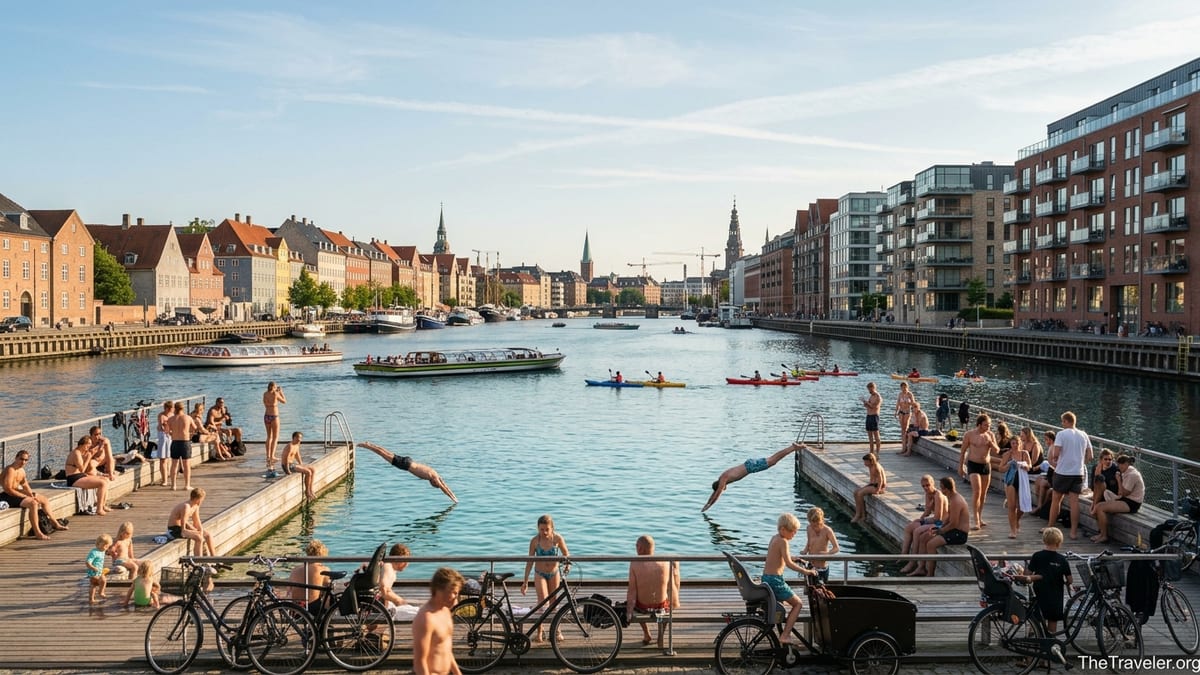
Several Nordic capitals sit by the water, but Copenhagen is one of the only major cities in Europe where locals regularly swim in the downtown harbor. After decades of investment in water treatment and environmental cleanup, the city opened its first official harbor bath at Islands Brygge in 2002, and today there are multiple designated bathing zones dotted along the waterfront. On a warm July afternoon, you can watch office workers in suits transform into swimmers on their lunch breaks, diving from wooden jetties with the skyline of Christianshavn and the spire of the Church of Our Saviour behind them.
For visitors this creates experiences that you simply do not get in most capitals. It is normal to pack a swimsuit in your day bag, rent a bike and end up at Islands Brygge Harbour Bath or the wooden decks at Nordhavn for an impromptu dip before dinner. Lifeguards patrol the main harbor baths in summer, and there are changing rooms, ladders and shallow pools for children. The fact that locals trust the water enough to bring toddlers there speaks volumes about how thoroughly the harbor has been cleaned.
Canal life shapes the rhythm of the city in other ways too. Classic open-top boat tours leave from Nyhavn and Gammel Strand, gliding under low stone bridges into Christianshavn’s leafy canals. Kayak rentals and small self-drive electric boats allow you to explore at your own pace, pulling up by the modern opera house or the converted warehouses of Refshaleøen for a coffee. While Stockholm’s archipelago and Oslo’s fjord cruises are spectacular on a grander, more natural scale, Copenhagen’s waterways feel intimately woven into daily urban life in a way that surprises many first-time visitors.
The Cradle of New Nordic Cuisine and Everyday Food Adventures
All Nordic capitals have raised their culinary profile in recent years, but Copenhagen has been at the center of a global food revolution. The New Nordic movement, first articulated in a 2004 manifesto led by chefs including René Redzepi, turned a spotlight on hyper-seasonal, locally sourced ingredients, foraging and techniques like fermentation. For two decades, the restaurant Noma, based in Copenhagen, defined this approach and was repeatedly named among the world’s best restaurants. Its closure as a full-time restaurant at the end of 2024 marked the end of an era, but the city’s dining ecosystem remains heavily influenced by its legacy.
Today, travelers can still sample cutting-edge cuisine at places like Geranium, a three-Michelin-starred restaurant perched inside the national football stadium that was crowned the world’s best restaurant in 2022, and Alchemist, an immersive two-star experience that blends elaborate tasting menus with art, light and theater. Reservations at these flagship spots can be difficult and expensive, with tasting menus typically running into several thousand Danish kroner per person, but they highlight just how far Copenhagen has pushed the boundaries of gastronomy compared with most cities of its size.
What really distinguishes Copenhagen for many visitors, though, is how the New Nordic philosophy trickles down into everyday eating. Former Noma staffers have opened more accessible wine bars and bistros across Nørrebro, Vesterbro and Refshaleøen. At casual spots you might pay a moderate price for sourdough bread topped with pickled vegetables and smoked fish, or tuck into seasonal vegetable dishes that would qualify as fine dining elsewhere. Food halls like Torvehallerne and Reffen combine Danish classics with global street food, so a traveler can move effortlessly from smørrebrød loaded with herring to Korean tacos or organic porridge topped with local berries without leaving the same complex.
Compared with Helsinki or Reykjavik, where high prices and smaller populations can limit diversity, Copenhagen offers a density of interesting places at many price points. It is entirely possible to build an itinerary that includes a blowout tasting menu one night and budget-friendly burgers or falafel the next, all while sampling the same local ingredients and producers that star on the city’s most famous menus.
Design, Hygge and Everyday Aesthetics
Copenhagen’s design sensibility is one of its most immediately noticeable traits and an important point of difference from other Nordic capitals. Danish modern furniture, with its clean lines and warm woods, is not just something you see in museums; it is what you sit on in many hotel lobbies, cafés and even casual restaurants. Iconic pieces by designers such as Arne Jacobsen and Hans Wegner appear in everyday settings, from the Egg chairs in upscale hotel bars to simple wooden stools in neighborhood coffee shops.
Visitors often describe the city as “quietly beautiful” rather than dramatic. The color-washed facades of townhouses lining streets like Nyhavn and the lakes are punctuated by modest church spires, copper roofs and leafy squares. Inside, the Danish concept of hygge plays out in candlelit windowsills, wool throws draped over café chairs and low, warm lighting that makes even a gray winter afternoon feel inviting. Compared with Stockholm’s grand boulevards or Oslo’s showcase waterfront, Copenhagen’s beauty is more intimate, focused on how spaces feel to inhabit rather than how they look in a postcard.
This attention to atmosphere carries into the city’s many small boutiques and design stores. In the compact Latin Quarter, visitors can browse ceramics studios, minimalist clothing brands and homeware shops that champion local makers. Even budget-conscious travelers feel the influence in the thoughtful interiors of mid-range hotels and hostels, where muted colors, natural materials and shared social spaces create a consistent sense of place. The cumulative effect is that you rarely feel like you are in a generic European capital; the details are distinctly and recognizably Danish.
From Historic Tivoli to Experimental Urban Districts
Copenhagen manages to balance deep history with ongoing urban experimentation in a way that gives visitors a broad spectrum of experiences in a compact area. At one end of the timeline sits Tivoli Gardens, the 19th-century amusement park opposite the central station that still charms with its twinkling lights, old wooden roller coaster and live performances. Locals visit as often as tourists, particularly in summer and during seasonal Halloween and Christmas openings, which helps the park avoid feeling like a historic relic. Standing under Tivoli’s lanterns in the evening, with the city’s modern towers visible in the background, you can feel how tradition and contemporary life are layered together.
At the other end are new or redeveloped neighborhoods such as Nordhavn and Refshaleøen. Nordhavn, a former industrial port area, is being transformed into a dense, mixed-use district connected by new metro lines and lined with modern residential buildings that incorporate swimming zones, promenades and ground-floor cafés. Refshaleøen, once home to one of the world’s largest shipyards, now hosts creative offices, climbing walls, the Reffen street food market and some of the city’s more adventurous dining rooms. Visitors can arrive by harbor bus or bike across the bridge from Christianshavn and spend a day exploring galleries and food stalls with views back toward the historic center.
Compared with Reykjavik or Helsinki, where urban development feels more spread out, Copenhagen’s compact geography makes it easy to combine these contrasts in a single day. You might start with coffee in the cobbled streets around Christiansborg Palace, spend midday wandering the independent shops of Jægersborggade in Nørrebro, and end up watching the sunset from a pier in Nordhavn as swimmers take a last dip. The city’s scale invites this kind of spontaneity, something that many visitors find refreshing.
Sustainability and Liveability You Can Actually Feel
Many cities talk about sustainability, but Copenhagen has embedded it into the core of its urban planning while still feeling fun to visit. The city has been widely recognized in liveability rankings for its combination of safety, healthcare, culture and environmental standards, and its goal of becoming carbon-neutral has influenced decisions as varied as energy production, waste management and building design. For travelers, this shows up less in slogans and more in small, practical details that add up.
The harbor’s clean water, extensive cycling infrastructure and network of green spaces mean that even a short stay often feels healthy and low-stress. It is common to see residents sunbathing on the grassy banks by the lakes, practicing yoga on quaysides or jogging along waterfront routes free of heavy traffic. Many hotels advertise low-waste breakfast buffets, refillable toiletry stations and partnerships with local bakeries rather than importing goods from far away. Café menus highlight organic produce and natural wines without fanfare; it is simply how the city prefers to eat and drink.
Compared with some larger European capitals where sustainability can feel like an add-on, Copenhagen’s approach is tightly integrated into daily life. The metro runs driverless trains at frequent intervals, making it easy to reach neighborhoods like Ørestad and the airport with minimal fuss. Waste-sorting bins are standard in most apartments and public spaces. Even major attractions follow this logic: the modern waste-to-energy plant known for its ski slope on the roof combines infrastructure with recreation, giving visitors a literal view of how the city manages its garbage while enjoying sweeping views of the skyline.
Distinct Neighborhood Personalities in a Compact City
One of Copenhagen’s strengths as a capital is how different its neighborhoods feel despite the city’s modest size. For many travelers, this makes the visit feel richer, as moving from one area to another is as simple as a 10-minute bike ride or a few metro stops. The historic core around Strøget and the royal palaces offers cobbled streets, high-street shopping and major museums, while Christianshavn’s canals and colorful houses lend the area a slightly Amsterdam-like atmosphere with a distinctly Danish twist.
Further out, Vesterbro, once a rough working-class district near the train tracks, has reinvented itself as a fashionable area filled with natural wine bars, third-wave coffee shops and the repurposed Meatpacking District, where old industrial buildings now house restaurants and nightlife. Nørrebro retains a more multicultural, youthful energy, with kebab shops, vintage stores and independent design boutiques lining streets alongside small parks and playgrounds. The lakes act as a natural divider between these neighborhoods and the old center, and are a popular promenade at almost any time of day.
Compared with Stockholm, where islands create stronger physical separation, or Oslo, whose neighborhoods stretch along the fjord and into hills, Copenhagen’s districts sit tightly packed, overlapping at their edges. This makes it easy to follow your curiosity: a visitor might set off in search of a recommended bakery in Østerbro and end up exploring nearby Fælledparken or stumbling onto a local flea market. The sense of discovery is amplified by how many interesting places are tucked into side streets rather than concentrated in a single tourist quarter.
The Takeaway
What makes Copenhagen stand out among Nordic capitals is not one single attraction but a constellation of qualities that reinforce one another. The city’s commitment to bikes and pedestrians creates a human-scale environment where it feels natural to explore slowly. Clean, swimmable canals turn the harbor into a giant blue public square rather than a no-go industrial zone. A world-leading food scene, born from the New Nordic movement, filters down into everything from elite tasting menus to simple café lunches. Design and hygge shape interiors and streetscapes alike, while historic sights like Tivoli coexist with experimental new districts in the former docklands.
Travelers considering how to divide time between Nordic capitals should see Copenhagen as more than just a gateway. It is a place where you can experience many of the region’s strengths in a concentrated, accessible package: progressive urban planning, ambitious cuisine, thoughtful design and a close relationship with the water. Whether you come for a long weekend focused on food and culture or use it as a base for a longer Danish itinerary, Copenhagen offers a distinctive flavor of the Nordic experience that is hard to replicate elsewhere.
FAQ
Q1. How many days do I need to experience what makes Copenhagen special?
Most travelers find that three full days provide enough time to explore the historic center, enjoy at least one major museum, visit Tivoli Gardens or an urban beach and sample both high-end and casual dining. If you want to add day trips along the coast or dive deeper into specific neighborhoods, four to five days allows a more relaxed pace.
Q2. Is Copenhagen much more expensive than other Nordic capitals?
Copenhagen is not cheap, but prices are broadly comparable to Oslo and slightly lower than Reykjavik for many everyday expenses. A simple café lunch might cost roughly the same as in Stockholm, while high-end tasting menus are similarly priced to other world-class restaurants in major cities. Using bikes and picnics, and choosing neighborhood bistros over luxury dining every night, helps keep costs under control.
Q3. Can I visit Copenhagen without riding a bike?
Yes. The city’s metro and bus network cover most areas visitors are likely to stay in or explore, and the compact center is very walkable. However, renting a bike for at least half a day gives a better sense of how locals move and opens up access to districts like Nørrebro, Vesterbro and Nordhavn in a way that feels natural and efficient.
Q4. Is it really safe to swim in Copenhagen’s harbor?
Swimming is allowed only in designated harbor baths and marked bathing zones where water quality and boat traffic are monitored. In summer these zones are busy with locals of all ages, which is a strong indicator that the water is considered safe. As in any city, it is wise to follow posted guidance, pay attention to lifeguards and avoid swimming outside the official areas.
Q5. Do I need reservations far in advance for top restaurants?
For the most sought-after places, especially Michelin-starred restaurants like Geranium or Alchemist, reservations often open months ahead and sell out quickly. However, Copenhagen’s food scene is deep, and many excellent bistros, wine bars and neighborhood restaurants accept bookings a few weeks in advance or keep some walk-in space. If fine dining is a priority, plan those meals early and leave flexibility elsewhere in your itinerary.
Q6. What time of year best showcases Copenhagen’s character?
Summer highlights canal life, outdoor swimming and long evenings on waterfront terraces, but also brings the most visitors. Spring and early autumn combine milder weather with fewer crowds and are ideal for cycling and café-hopping. Winter offers the most pronounced hygge atmosphere, with candlelit interiors, Christmas markets and the chance to see how Danes make short, dark days feel cozy.
Q7. How does Copenhagen compare culturally with other Nordic capitals?
While all Nordic capitals have strong cultural offerings, Copenhagen stands out for its combination of historic institutions and a lively, informal everyday culture. Classic attractions like the national museums and royal palaces sit alongside a dense network of contemporary galleries, design spaces and performance venues. The city feels particularly rich in smaller, experimental theaters, music clubs and design shops that are easy to explore on foot or by bike.
Q8. Is Copenhagen a good base for exploring the rest of Denmark?
Yes. From the central station you can reach coastal towns like Helsingør, university cities like Roskilde and beach areas on Zealand in under an hour by train. Longer journeys connect to Aarhus and Odense. Many visitors use Copenhagen as a hub, spending a few nights in the capital before adding one or two regional destinations that offer castles, dunes or smaller harbor towns.
Q9. Are English speakers comfortable getting around?
Most residents speak very good English, and service staff in hotels, restaurants, shops and public transport are accustomed to helping international visitors. Signs in the metro and at major attractions usually include English, and buying tickets from machines or apps is straightforward. Learning a few basic Danish phrases is appreciated but not necessary for everyday interactions.
Q10. Is Copenhagen suitable for families with children?
Copenhagen is particularly family-friendly. Wide sidewalks, extensive bike lanes, numerous playgrounds and attractions like Tivoli Gardens and the zoo make it easy to keep children entertained. Harbor baths and city beaches provide safe swimming areas in summer, while many cafés and museums include kid-focused spaces or activities. The overall safety, clean environment and relaxed pace appeal to parents as much as to children.