


Park Güell is one of Barcelona’s most photographed places, but not every traveler walks away equally satisfied. With 18 euro tickets, timed entry, hilltop climbs and crowds at peak times, it now demands more commitment than a casual park stroll. Depending on your interests, mobility and time in the city, you may be better off devoting those euros and hours to other Gaudí landmarks such as the Sagrada Família, Casa Batlló or La Pedrera. This guide breaks down who is likely to love Park Güell, who tends to leave underwhelmed, and which Gaudí attraction might suit different types of visitors better.
Get the latest updates straight to your inbox!
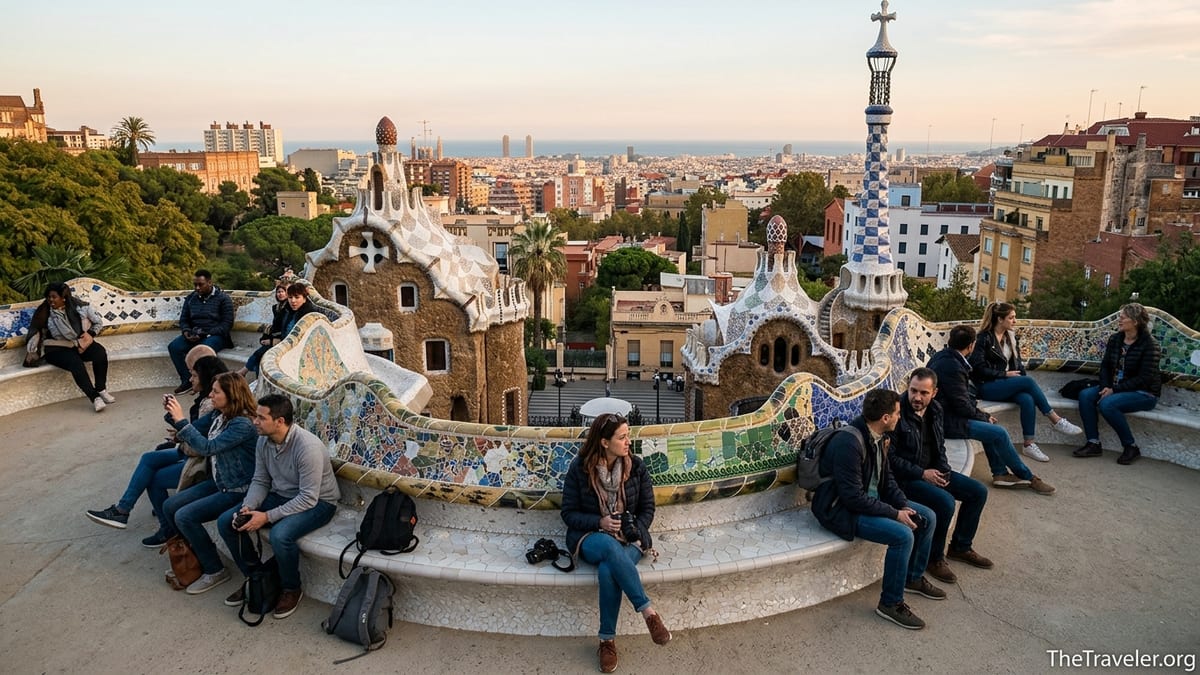
What Park Güell Really Offers Today
To decide if Park Güell is right for you, it helps to understand what a visit actually looks like in 2026. The famous mosaic dragon, the serpentine bench overlooking the city, the Hypostyle Room and monumental staircase now sit inside a regulated Monumental Zone, with adult tickets around 18 euros and timed entry slots. You have a 30 minute window to enter, then can stay as long as you like, but spontaneous walk-ups are no longer realistic because tickets are sold in advance online and peak dates often sell out.
The Monumental Zone occupies only part of the hill. Much of the surrounding woodland remains free, but the iconic Gaudí structures that people know from postcards are inside the paid area. From July 2024, tickets moved to online-only sales, so you will typically buy using the official Park Güell website or a reputable reseller before you ever see the park gates. This change, combined with the 2026 price rise, has shifted Park Güell from a casual neighborhood park experience into a high-demand monumental site on par with other major attractions.
Physically, Park Güell is a hillside park with stairs, sloping paths and uneven stone surfaces. To reach the main terrace from the bus stop or taxi drop-off, most routes involve moderate uphill walking. There are some escalators on nearby streets and a shuttle bus from certain metro stations offered in some ticket types, but anyone with knee problems, pushing a stroller or traveling with elderly relatives will feel the incline. On a hot July afternoon, the walk can feel much longer than it looks on the map.
Atmospherically, Park Güell is not the quiet, semi-abandoned garden that some guidebooks still describe. At popular sunrise and sunset slots on a spring weekend, you will likely share the mosaic terrace with group tours, tripods, and influencers positioning for the classic shot with the tiled bench and Sagrada Família in the distance. It is still beautiful and unique, but the vibe is busy, touristic and at times chaotic, especially if you arrive between late morning and mid-afternoon in high season.
Travelers Who Will Love Park Güell
Park Güell shines for visitors who enjoy being outdoors and do not mind a bit of walking for the view. If you picture yourself lingering on a tiled bench with a coffee from a takeaway cafe in nearby Gràcia, watching the city and the Mediterranean in the distance, this park delivers. Photographers who like colorful, organic forms and sweeping panoramas often rate it as their favorite Gaudí site because no interior visit can match the combination of skyline and playful mosaics you get from Plaça de la Natura.
Families with energetic kids often find Park Güell to be a good value, even at 18 euros for adults, because children can run up stone paths, weave between columns and pose with the mosaic lizard without the constant “inside voice” reminders needed at a basilica or a formal museum. For example, a family of four with two children aged 9 and 12 might spend around 63 euros for Monumental Zone tickets, then enjoy two to three hours exploring, taking photos, and letting the kids climb within clearly signed limits. Compared with multiple separate tickets for different houses, this can feel like a fuller afternoon.
Budget-conscious travelers still find Park Güell appealing when they pair a Monumental Zone visit with time in the free forested section. Someone staying in a mid-range hotel near Passeig de Gràcia might book an 8:30 a.m. entry, enjoy the mosaics before the biggest crowds, then hike the free paths above the Monumental Zone and continue on foot down to the Gràcia neighborhood for a 12 euro menú del día lunch at a local bar. In that scenario, Park Güell becomes the centerpiece of a half-day of low-cost exploring rather than a quick, expensive photo stop.
Finally, Park Güell is ideal for travelers who care about Gaudí’s urban planning ideas and early experiments more than about refined interiors. The park was originally intended as a garden city project, and you can sense those ambitions in the layout, viaducts and integration with the hillside. Architecture students, urbanists and Gaudí fans who have already seen his houses often appreciate Park Güell as a way to understand how he thought about landscape and public space, even if the project was never fully realized.
Who Might Be Disappointed by Park Güell
Certain travelers come away from Park Güell wondering what the fuss was about. The most common disappointment comes from visitors expecting a lush botanical garden or a park-like retreat similar to London’s Hyde Park or Paris’s Luxembourg Gardens. Park Güell does have trees, shaded paths and views, but it is also structured, regulated and crowded in its central area. If your priority is to sit on the grass and read under a tree for hours, you may prefer Parc de la Ciutadella or Montjuïc’s gardens, which are free and less controlled.
Mobility-challenged visitors often find Park Güell more tiring than expected. Someone with limited mobility who has managed the flat floors of the Sagrada Família basilica may struggle more here, where reaching viewpoints can involve stairs, sloped paths and occasional jostling. There are accessible routes and official recommendations, but the terrain is inherently hilly. In practical terms, if you already know that a 20 minute uphill walk on cobblestones would ruin your day, Park Güell is unlikely to be your best Gaudí investment.
Travelers chasing an in-depth understanding of Gaudí’s craft inside lived-in spaces might also feel underwhelmed. While there is a small museum and excellent viewpoints, Park Güell does not immerse you in complete interiors the way Casa Batlló’s 10D Experience or La Pedrera’s reconstructed apartment does. If you only have one Gaudí ticket in your budget and you are especially interested in how people actually lived in his buildings, Park Güell is probably not the top choice.
Finally, visitors who are especially sensitive to crowds or rigid logistics may find the timed-entry system stressful. A couple who enjoys wandering cities without plans might resent needing to be at a hilltop gate at 10:30 sharp, especially if they are staying in Barceloneta or Poblenou and relying on metro and bus connections. In that case, a more central Gaudí house on Passeig de Gràcia, where you can walk from your hotel and find ticketed entry windows throughout the day, may feel more convenient and less disruptive to the rest of your plans.
When Sagrada Família Is a Better First Gaudí Experience
For many travelers, if you must pick just one Gaudí site, the Sagrada Família is the best all-round choice. The basilica is a global icon on its way to completion, and its interior overwhelms even visitors who usually dislike churches. Colored light pours through the stained glass windows at different angles during the day, and the forest-like columns create a sense of height and space that is difficult to capture in photos. Even people who are indifferent to architecture often describe stepping inside as one of their most powerful travel memories.
Practically speaking, the Sagrada Família is flatter and more accessible than Park Güell. Most of the visit happens on level floors, with elevators for tower access where available. Tickets are still timed and must be purchased online, but the basilica is central, connected by two metro lines and multiple buses, and surrounded by cafes and services. A traveler staying in Eixample can be at the basilica in ten minutes by metro, enjoy a 9 a.m. entry before the lines, and be sitting with a coffee across the street by late morning without having climbed a hillside.
The Sagrada Família also suits visitors seeking context. The audio guide and guided tours explain Gaudí’s symbolism, religious ideas and engineering solutions in a depth you do not get from casual park signage. For example, an architecture enthusiast might choose a 90 minute guided visit with tower access for around 35 to 40 euros, learning about the Nativity and Passion facades, cranes and ongoing work. That investment often feels more worthwhile than multiple smaller tickets, especially for a short trip.
If your time is extremely limited, the Sagrada Família is generally the better choice than Park Güell. A cruise passenger with only a few hours in Barcelona can book a timed entry, take a taxi directly to the basilica, and reliably complete their visit in 90 minutes. Accessing and exploring Park Güell would require more travel time, hill walking and contingency planning. In other words, if you only have one Gaudí highlight, choose the basilica first and treat Park Güell as an “extra” once you have seen the inside of this landmark.
Casa Batlló vs Park Güell: Immersion vs Landscape
Casa Batlló, on Passeig de Gràcia, offers a very different type of Gaudí experience from Park Güell. The house has invested heavily in immersive technology, including an augmented reality audio guide, the Gaudí Dome and the Gaudí Cube, a six-sided LED space that surrounds visitors with images inspired by Gaudí’s imagination. The result is less about fresh air and vistas and more about stepping into a curated narrative of the architect’s world, complete with sound design and projections.
This makes Casa Batlló ideal for travelers who love immersive museums and design details. Someone who enjoys the teamLab exhibitions or contemporary art installations will likely appreciate the way Casa Batlló has been reinterpreted with digital tools. You move through restored rooms, staircase halls and the rooftop, but the focus is on atmosphere, storytelling and multisensory effects. A design student or creative professional might happily spend 90 minutes lingering over tile patterns, door handles and attic structures, then browsing the upscale boutiques nearby.
Compared with Park Güell’s 18 euro Monumental Zone ticket, Casa Batlló tickets are usually higher, often in the 30 to 40 euro range for the main immersive visit, depending on season and options. For some visitors, that premium makes sense: the site is central, accessible by foot from many Eixample hotels, and does not involve hill climbs. A visitor with limited mobility who struggles at Park Güell might find Casa Batlló far easier to manage, with elevators and carefully controlled visitor flow.
On the other hand, Casa Batlló may feel too curated for travelers who prefer organic landscapes and unscripted moments. If your favorite part of a trip is sitting under a tree listening to city noise in the distance, you will likely resonate more with Park Güell’s terraces and paths than with LED projections in a darkened room. In such cases, the ideal plan for Gaudí fans with two days in Barcelona is often one immersive interior like Casa Batlló and one open-air space like Park Güell, balancing cost by skipping smaller, less distinctive sites.
La Pedrera (Casa Milà): The Better Choice for Night and Rooftops
La Pedrera, also known as Casa Milà, offers another compelling alternative, especially for evening visits. Its Night Experience combines a guided tour through selected spaces with a rooftop light show, often priced around the high 30 euro range for adults. Visitors are led through courtyards, interior rooms and finally onto the rooftop, where projections, music and the sculptural chimneys create a theatrical but still architectural experience. A glass of cava at the end turns the visit into a full night out.
This format particularly suits couples and small groups of adults who want a cultural activity that feels special but not overly formal. A pair on a city break might book the Night Experience for one evening instead of sitting through a long dinner, enjoying the cool air and nighttime views of Barcelona from the rooftop. Because the building is on Passeig de Gràcia, they can walk there from many central hotels, stopping for tapas on nearby Carrer d’Enric Granados afterward. Compared with trekking up to Park Güell for sunset, La Pedrera at night offers similar rooftop drama with less logistical effort.
During the day, La Pedrera also provides more insight into daily life in a Gaudí building than Park Güell does. The recreated early 20th century apartment lets you see period furniture, kitchen equipment and layout, which brings Gaudí’s design principles into human scale. Families with older children who study history may find this more tangible than an open park. For example, a 15 year old who is lukewarm about scenery might still engage with how a bourgeois family lived, from the children’s room to the servant spaces.
If you already have tickets to Park Güell and are considering a second Gaudí experience, La Pedrera is a strong complement. The park shows Gaudí in nature, while La Pedrera shows him in urban form and rooftop sculpture. If you must choose between a late afternoon climb up to Park Güell and an evening La Pedrera visit on a humid August day, many visitors from recent years report that their lasting memories come from standing among the rooftop chimneys rather than from squeezing into a crowded mosaic terrace for sunset.
How to Decide: Real-World Trip Scenarios
Different traveler profiles will weigh Park Güell and alternative Gaudí sites differently. Consider a long weekend visitor staying near Plaça de Catalunya, in Barcelona for the first time. With only two full days, they might book the Sagrada Família one morning and Casa Batlló or La Pedrera that same afternoon or evening, leaving Park Güell for a future trip. The logic is simple: central sites minimize transit time, and interior visits are less weather-dependent if rain or heat strikes.
A family on a week-long summer holiday, staying in an apartment near Joanic metro, faces a different calculation. Because they are already closer to the hills and have flexible days, they might choose an early morning Park Güell visit, followed by an afternoon at the beach, and schedule the Sagrada Família on a separate day. For them, Park Güell’s open space is a way to let children burn energy while still seeing a world-famous monument, making the 18 euro adult ticket feel like part of a full-day family program rather than a standalone cost.
Solo travelers and backpackers on strict budgets often adopt a hybrid strategy. They might buy only one major Gaudí ticket, typically for the Sagrada Família or Park Güell, and then admire Casa Batlló and La Pedrera from the street. Strolling Passeig de Gràcia at dusk, they can still photograph the facades and soak up modernist architecture for free. In that scenario, Park Güell appeals if they enjoy hiking and viewpoints, while the basilica wins if they are more drawn to spiritual spaces and interior light.
Finally, repeat visitors to Barcelona or Gaudí enthusiasts can afford to be picky. Someone who has already seen the Sagrada Família interior twice might prioritize new experiences like Casa Batlló’s updated immersive rooms or the La Pedrera Night Experience, treating Park Güell mainly as a backdrop for relaxed walks in the free woodland section rather than as a must-do paid attraction. As ticket prices rise, these travelers tend to ask not just “Is it famous?” but “Does it match my specific interests and energy level on this trip?”
The Takeaway
Park Güell remains one of Barcelona’s signature sights, but its evolution into a tightly managed, 18 euro timed-entry monument means it is no longer a casual detour for everyone. Travelers who value outdoor space, city views, playful color and do not mind hills will still find it magical, especially with early or late time slots and realistic expectations about crowds. Families with active children and photography-minded visitors also tend to come away happy.
On the other hand, if you have limited mobility, a strong preference for quiet interiors, or only one Gaudí ticket in your budget, you will probably get more from the Sagrada Família, Casa Batlló or La Pedrera. Those sites are more central, more accessible and often more informative about how Gaudí thought, lived and built. There is no single “best” Gaudí attraction for every traveler. Instead, the smart move is to match each monument to your own energy, schedule and curiosity, so that your time with Gaudí in Barcelona feels less like a checklist and more like a set of experiences chosen just for you.
FAQ
Q1. Is Park Güell worth the 18 euro ticket if I am on a tight budget?
If you love viewpoints, outdoor spaces and photography, the Monumental Zone can still be worthwhile, especially if you combine it with time in the free woodland area and skip other paid Gaudí interiors. If you are more interested in detailed interiors or symbolism, you might get better value choosing a single ticket to the Sagrada Família or La Pedrera instead.
Q2. I have limited mobility. Should I prioritize Park Güell or another Gaudí site?
Park Güell involves hills, uneven paths and stairs, so it can be challenging for those with knee or balance issues. In most cases, a flatter site like the Sagrada Família, Casa Batlló or La Pedrera is a better first choice, as they offer elevators, smoother floors and more controlled routes.
Q3. If I only have time for one Gaudí attraction, should it be Park Güell or Sagrada Família?
For a first visit to Barcelona, most travelers will get more impact from the Sagrada Família, especially if you go inside. The basilica’s interior, light and scale are hard to match, and it provides more context about Gaudí than Park Güell alone.
Q4. Is Park Güell a good choice with young children?
Yes, for many families it works well. Children can move more freely outdoors than in a church or museum, and the mosaics, lizard fountain and columns are visually engaging. Just be prepared for hills, bring water and sun protection, and consider an early morning slot in summer.
Q5. How far in advance should I book Park Güell tickets?
In busy months such as April to October, it is sensible to book at least a few days ahead, and one to two weeks ahead for very popular dates like Easter or major holiday weekends. Last-minute slots sometimes appear, but relying on same-day availability can be risky.
Q6. Can I still see something of Park Güell without paying for the Monumental Zone?
Yes. The surrounding woodland and some viewpoints outside the Monumental Zone remain free. You will not access the famous mosaic terrace, dragon staircase or Hypostyle Room, but you can still enjoy walks, city views and a sense of the landscape.
Q7. Which Gaudí house is the best alternative if I skip Park Güell?
If you want immersion and storytelling, Casa Batlló is usually the top pick. If you prefer a mix of rooftop views, history and slightly quieter interiors, La Pedrera is an excellent alternative. Both are central on Passeig de Gràcia and easy to combine with other sightseeing.
Q8. Is Park Güell or La Pedrera better for sunset?
Park Güell offers broader natural views, but reaching it for sunset involves a hill climb and a timed ticket. La Pedrera’s Night Experience provides a planned evening with a rooftop show and city lights, often easier to fit around dinner plans and less dependent on hiking uphill in the heat.
Q9. Will I miss something essential about Gaudí if I skip Park Güell?
You will miss his major experiment with a garden city and some famous mosaics, but you can still gain a strong sense of his work through the Sagrada Família and one of the houses. Many short-stay visitors skip Park Güell and still leave feeling they have understood Gaudí’s vision.
Q10. Can I visit both Park Güell and another Gaudí site in the same day?
Yes, and many travelers do. A common plan is an early morning slot at Park Güell followed by a late afternoon Sagrada Família visit, or Park Güell in the morning and Casa Batlló or La Pedrera in the evening. Just account for transit time and the physical effort of hills when planning.