


New Jersey may look compact on the map, but travelers quickly discover it is really two very different experiences stitched together by the Turnpike. Locals talk about North Jersey and South Jersey almost as if they were separate states, each with its own food culture, accents, beaches, and ways to spend a weekend. If you are planning a trip and wondering which side of the Garden State fits your style better, it helps to understand what each region actually offers on the ground, from a Friday night out to a weeklong summer escape.
Get the latest updates straight to your inbox!
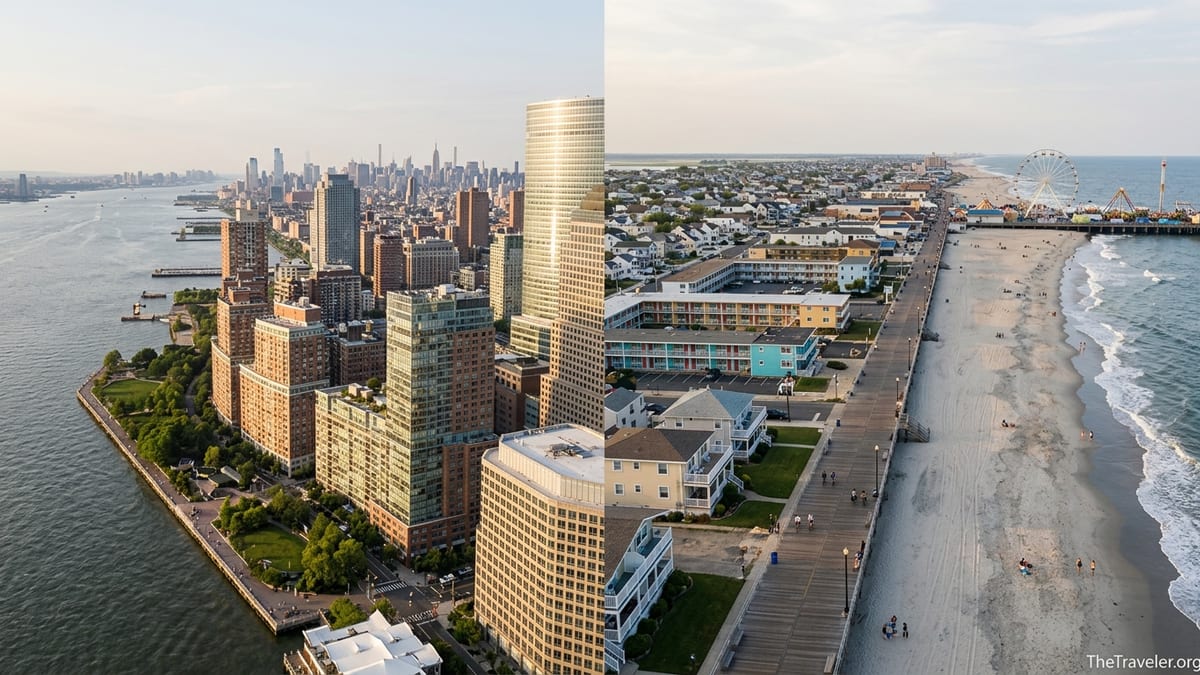
North Jersey vs South Jersey: What Do People Actually Mean?
Ask three New Jersey residents where North ends and South begins and you will probably get three different answers. In practice, most travelers think of North Jersey as the band of counties closest to New York City, including Hudson, Essex, Bergen, Passaic, and Union, with some people stretching it west into Morris and Sussex. South Jersey generally means everything below the line of Trenton and the I 195 corridor, including beach destinations like Atlantic City, Ocean City, Wildwood, and Cape May, along with the quieter pine forest interior.
This divide is not only geographic but cultural. In North Jersey, almost everything orients toward New York City. You see Manhattan’s skyline from places like Jersey City and Hoboken, and local trains, light rail, and ferries funnel commuters and visitors back and forth all day. In South Jersey, the gravitational pull is Philadelphia and the Delaware Bay, plus long Atlantic beaches that feel far removed from the New York metro rush.
Understanding this helps you match your expectations. If you imagine a city break with skyline bars, immigrant food enclaves, and fast transit, North Jersey is the natural base. If your vision is more boardwalk fries, classic motels, and unhurried days on the sand, South Jersey’s shore towns and small cities are more likely to feel like the New Jersey you had in mind.
Of course there is overlap. Both regions have beaches, historic neighborhoods, and nature reserves. The real question is where you want to spend most of your time, and how far you are willing to drive between experiences, because a traffic heavy trip from Hoboken to Cape May can easily take three hours or more in summer.
Beaches and Boardwalks: Shore Days North and South
If the Jersey Shore is the main reason you are visiting, you will find very different atmospheres depending on which side of the state you favor. In the northern half, popular options include Sandy Hook, the beaches of Long Branch and Asbury Park, and the more low key stretches in Ocean Grove, Bradley Beach, and Belmar. These are the beaches many New York metro residents use for day trips, so on a warm July Saturday you can expect crowds, lively bars close to the sand, and a fair number of commuters hopping off New Jersey Transit trains with beach chairs in hand.
Asbury Park in particular has become a destination in its own right, with a revitalized boardwalk lined with independent restaurants, a retro style arcade, and the historic Stone Pony music venue a few blocks inland. A couple could realistically take an early train from New York, spend the day on the sand, have oysters and cocktails at a boardwalk restaurant, and catch a late show, without ever needing a car.
Farther south, the beach experience changes noticeably. Ocean City markets itself as a family focused, alcohol free resort town, with a classic amusement filled boardwalk and lots of rental homes that book by the week in summer. Wildwood leans into a more exuberant, neon lit boardwalk feel, with multiple amusement piers and wide, deep beaches that can feel almost wild at the waterline. Cape May at the southern tip offers Victorian architecture, boutique hotels, and quieter, more romantic stretches of sand that attract couples as much as families.
Costs differ too. A day beach badge at a typical Ocean County or Monmouth County beach in 2026 often lands around the low teens per person, while some South Jersey towns structure more discounts for weekly or seasonal passes, which can make sense if you are staying for several days. Parking in North Jersey beach towns can run from metered street spaces at a few dollars per hour to private lots that charge flat daily rates, whereas many South Jersey beaches have a mix of free street parking further from the boardwalk and paid lots closer in. If you are planning a classic week at the shore, especially with kids and lots of gear, South Jersey’s more residential feel and larger range of rental houses can be a better fit than the more day trip oriented north.
Urban Energy vs Laid Back Towns: How You Like to Spend Evenings
One of the clearest differences between North and South Jersey is how your evenings will feel once you are off the beach or trails. In North Jersey’s Hudson and Essex counties, you are essentially in the orbit of New York City. Jersey City’s downtown and waterfront neighborhoods have high rise apartments, rooftop bars, and a dense grid of restaurants that cater to young professionals, with cuisines ranging from Filipino and Indian to upscale Italian and contemporary American. Hoboken, with its brownstone lined streets along the Hudson, hosts busy bars, waterfront parks with Manhattan views, and a compact main drag where you can wander between cocktail lounges, pizzerias, and bakeries late into the night.
Newark, often overlooked by visitors, has a performing arts center that hosts touring Broadway productions and major concerts, along with the Prudential Center arena for big name shows and sports. For a traveler, that means you can spend the morning exploring Liberty State Park, ride a ferry around the harbor, and still be at a headliner concert or a professional hockey game after dinner without leaving the county.
South Jersey evenings are usually quieter and often more seasonal. In the height of summer, Ocean City’s boardwalk hums with families on rental bikes, teenagers lining up for water rides, and grandparents waiting at soft serve windows. There are plenty of places to buy seafood platters, pizza slices, and fudge, but you will not find the same density of craft cocktail bars or late night clubs you see around Hoboken or Jersey City. Wildwood’s nightlife is more energetic, with dance bars, casinos just up the coast in Atlantic City, and live music in beach bars, but most venues still skew casual, with flip flops, T shirts, and outdoor decks.
If you are the kind of traveler who likes to combine a beach day with a late dinner in a serious restaurant and a nightcap with a skyline view, North Jersey makes that easy. If, instead, you picture evenings walking a boardwalk with a cone in hand, kids begging for one more ride ticket, and a quieter house or motel by 11, the feel of South Jersey’s resort towns usually wins out.
Outdoors and Nature: From Highlands Trails to Pine Barrens
New Jersey has more varied landscapes than its Turnpike image suggests, and where you base yourself determines what you will see most easily. In North Jersey, the terrain rises into the Kittatinny Mountains and Highlands region, with places like High Point State Park and Worthington State Forest giving you rocky ridges, hardwood forests, and sections of the Appalachian Trail. Within the Delaware Water Gap National Recreation Area along the northwest border, hikers tackle summits such as Mount Tammany on the New Jersey side, where a few miles of steep red blazed trail reward you with sweeping views over the Delaware River and Pennsylvania hills.
This part of North Jersey appeals to travelers who enjoy strenuous day hikes, waterfall walks, and activities like rafting, kayaking, or tubing on the Delaware River. Outfitters along the river provide gear and shuttles, so a group can book a half day canoe trip, float through forested banks, and still make it back to a campground or motel by dinner. In cooler months, you also find solid fall foliage displays on these northern ridges, which pair well with drives through small towns in Sussex and Warren counties.
South Jersey’s natural identity is more about flat pine forest, wetlands, and coastal estuaries than mountains. The Pine Barrens cover a huge swath of the southern interior, with sandy roads, tea colored streams, and canoe routes that can feel surprisingly remote considering you are not far from major highways. Wharton State Forest, for instance, offers long, quiet stretches of cedar lined rivers where paddlers might see herons, turtles, and the occasional deer along the banks.
On the coast, wildlife refuges and protected areas near places like Cape May and Atlantic County harbor migratory birds, making South Jersey a favored destination for birdwatchers during spring and fall. If your idea of the outdoors is less about steep climbs and more about paddling, birding, and easy walking on flat trails or boardwalks through marshes, South Jersey fits that style well. Travelers who prioritize big summit views and rock scrambles are more likely to favor the north.
Food, Culture, and Everyday Local Flavor
For many visitors, food is the best lens for understanding the split between North and South Jersey. In the north, proximity to New York and a long history of immigration from Italy, Portugal, Latin America, and Asia translates into dense, varied restaurant scenes. In Jersey City alone, you can spend a weekend eating Venezuelan arepas at a counter spot for lunch, trying hand pulled noodles in a small Chinese restaurant for dinner, and finishing the night with gelato from an Italian style cafe. Newark’s Ironbound neighborhood is known for Portuguese and Brazilian barbecue, where groups share platters of grilled meats and pitchers of sangria at bustling dining rooms that stay busy late.
South Jersey’s food culture leans into both Philadelphia style and shore traditions. You will find hoagies, cheesesteaks, and soft pretzels that reflect the influence of Philly just across the Delaware River, along with diners and pizzerias that anchor small towns. Along the coast, summer stands sell boardwalk staples like funnel cakes, sausage and pepper sandwiches, and buckets of fries strong on vinegar and salt. In Cape May and neighboring towns, there is a growing scene of chef driven seafood restaurants that emphasize seasonal local catches, though menus remain generally more relaxed than the polished dining rooms of North Jersey’s top urban spots.
Everyday rituals also look a little different. North Jersey commuters often grab their coffee at busy corner delis before heading to trains or buses into Manhattan, and many bars there show New York sports on television. South Jersey locals debate cheesesteak spots and watch Philadelphia teams, and family gatherings might revolve around backyard barbecues after a Saturday at the beach.
Neither culture is inherently better for a visitor, but they feel distinct. If trying multiple international cuisines and exploring dense, walkable neighborhoods is a priority for your trip, North Jersey is the more natural base. If your idea of travel taste is more about finding the perfect boardwalk slice, a crab cake sandwich eaten on a picnic bench, or a diner breakfast before a long day in the sun, South Jersey will likely feel more satisfying.
Logistics, Transportation, and Trip Planning Realities
When you are deciding between North and South Jersey, some of the most important differences are practical. North Jersey benefits from extensive rail and bus links tied into the New York region. From New York Penn Station, trains run to Newark, Jersey City via nearby transfer points, Hoboken, and major hubs like Secaucus Junction. Light rail service extends through parts of Hudson and Essex counties, making it possible to explore several waterfront towns and urban neighborhoods without ever renting a car.
For a traveler staying in Jersey City or Hoboken, that means you can land at Newark Liberty International Airport, take a short train ride or rideshare to your hotel, and then spend several days using public transit to reach parks, museums, and even some beaches. Day trips to Manhattan are simple, and you can reverse things by using North Jersey as a more affordable lodging base while spending much of your time across the river.
South Jersey is more car dependent. There are trains that reach Atlantic City from Philadelphia and limited rail lines into Camden County suburbs, but the classic trip to Ocean City, Wildwood, or Cape May usually involves a drive down the Garden State Parkway. During peak summer weekends, heavy traffic is common, and travelers often plan around it by leaving very early in the morning or late in the evening. Once you are in a shore town, however, many daily needs are walkable or bikeable, particularly in compact places like Ocean City or Cape May where you can walk from rental homes to the beach, grocery stores, and boardwalk without using your car.
From a budget perspective, hotel rates in North Jersey’s urban core can be relatively high year round due to business travel and spillover from New York, but you sometimes find better winter and shoulder season deals. Along the South Jersey shore, nightly prices rise sharply between late June and Labor Day, with many properties requiring minimum stays. Travelers with flexibility sometimes aim for early June or September weeks when the water is warming or still pleasant, many services remain open, and accommodation costs are lower than high season.
Which Side Fits Different Types of Travelers?
Thinking in terms of travel personalities can make the North versus South choice clearer. City oriented travelers who like museums, nightlife, diverse restaurants, and the option of hopping into New York for a day will feel at home in North Jersey. A long weekend based in a Jersey City hotel, for instance, can combine afternoons at Liberty State Park, evenings in Manhattan theaters, and a day trip to a nearby beach like Asbury Park, all stitched together with trains and short rideshares.
Families with younger kids who dream of a simple beach routine often gravitate to South Jersey’s classic shore towns. Booking a rental in Ocean City or Wildwood Crest for a week turns travel into a comfortable pattern of mornings on the sand, afternoon naps back at the house, early dinners on or near the boardwalk, and low pressure entertainment that rarely runs late into the night. Grandparents can walk the boardwalk at their own pace, teenagers can roam between arcades and rides, and parents gain a measure of independence knowing everything is within a few blocks.
Outdoors focused travelers might split the difference. If you like mountain style hiking, rock scrambling, and cooler summer temperatures, basing in North Jersey near the Delaware Water Gap or the Skylands region puts you close to trailheads, campgrounds, and river outfitters. If you prefer paddling through flat pine forests, fishing in quiet backwaters, or birding along coastal marshes, South Jersey’s Pine Barrens and wetlands are a better canvas for your trip.
Finally, travelers who love nostalgia and Americana tend to find South Jersey’s Victorian porches, Doo Wop era motels in Wildwood, and hand painted boardwalk signs deeply appealing. Those who are more interested in contemporary skylines, chic cafes, and a denser urban aesthetic usually feel more drawn to North Jersey. Deciding which of those images feels more like “vacation” to you is often the easiest way to pick a side.
The Takeaway
North Jersey and South Jersey are less like two halves of the same travel destination and more like cousins with very different personalities who happen to share state lines. The north deals in urban energy, transit connected convenience, and access to some of the Northeast’s biggest cultural and commercial centers. The south trades in long beaches, boardwalk evenings, and flat, quiet wilderness that can feel surprisingly far from city life.
Choosing which side fits your travel style comes down to a few simple questions. Do you want your evenings framed by skyline lights or Ferris wheels over the ocean. Would you rather spend your days on mountain ridges and in immigrant food districts, or padding along wide, soft beaches before a boardwalk stroll. There is no wrong answer, only a better match for how you like to move through a place.
Many travelers eventually discover that New Jersey is best experienced in slices. A future trip might put you in a Hoboken hotel with easy train access to Manhattan and Newark. Another year, you could rent a small house in Cape May or Ocean City, stock the fridge, park the car, and forget about schedules other than sunrise and high tide. Start with the side that feels most like you now, and leave room to be surprised by the other later on.
FAQ
Q1. Is North Jersey or South Jersey better for a first time visitor to the state. For a first visit, North Jersey works well if you want to include New York City and urban neighborhoods, while South Jersey is better if a classic beach vacation is your top priority.
Q2. Where should I stay if I want beaches but also easy access to New York City. Consider basing in a North Jersey coastal town like Long Branch or Asbury Park, where you can reach the beach and still use New Jersey Transit trains to get into Manhattan for a day or evening.
Q3. Which side of New Jersey is more budget friendly for families. Both regions can be expensive in peak summer, but South Jersey shore towns with weekly rentals often become more economical when costs are shared across a family, while North Jersey may offer better off season hotel deals for shorter stays.
Q4. Do I need a car to enjoy either North or South Jersey. In North Jersey’s urban areas, it is possible to rely on trains, light rail, and rideshares, especially around Jersey City, Hoboken, and Newark. In South Jersey, having a car makes reaching most shore towns and exploring the Pine Barrens or smaller communities much easier.
Q5. Which area is better for hiking and more rugged outdoor adventures. North Jersey, particularly the Skylands region and areas near the Delaware Water Gap, offers steeper hikes, rock scrambles, and ridge line views, making it a stronger choice for travelers seeking more demanding trails.
Q6. Where should food focused travelers go in New Jersey. Food travelers often gravitate to North Jersey for the sheer variety of international cuisines in cities like Jersey City and Newark, while South Jersey shines for boardwalk classics, shore seafood, and Philadelphia influenced comfort foods.
Q7. Is South Jersey only worth visiting in summer. Summer is the busiest beach season, but South Jersey also has appealing shoulder seasons, particularly in late spring and early fall, when crowds thin, prices often drop, and coastal towns like Cape May host festivals and birdwatching events.
Q8. Which side is better for a quick weekend trip from New York City. North Jersey is usually more practical for a short weekend from New York City because you can reach key destinations by train in under an hour, while many South Jersey shore towns require longer drives and benefit from a multi day stay.
Q9. Are there casinos in both North and South Jersey. Casino gaming is concentrated in Atlantic City in South Jersey, so travelers looking for a beach plus casino environment generally head south rather than basing in the northern part of the state.
Q10. Can I realistically experience both North and South Jersey in one trip. Yes, but it works best on a longer itinerary of a week or more, allowing time to spend several days in an urban North Jersey base and then drive to a South Jersey shore town for a few nights, rather than trying to commute back and forth in a single short stay.