


Specialist adventure travel insurance like Snowcard can look reassuring on paper: big medical limits, bold promises of helicopter rescue, and lists of sports from off piste skiing to high-altitude trekking. But what is Snowcard travel insurance really like once you strip the brochure language away and break down how the cover works in real life? This guide unpacks Snowcard’s strengths and weaknesses, using concrete examples from skiing, climbing, cycling and trekking trips so you can decide whether its policies match the way you actually travel.
Get the latest updates straight to your inbox!
Who Snowcard Is Really For
Snowcard is a UK-based specialist in activity and adventure travel insurance. Its core audience is not the casual beach traveler but people planning trips built around sport: ski touring in the Alps, climbing in the Dolomites, bikepacking across Europe, or trekking to Everest Base Camp. The company has been around since the early 1990s and positions itself as one of the few insurers that genuinely embraces higher-risk activities rather than burying them in exclusions.
Unlike many bank-packaged or credit card policies that quietly exclude anything more serious than gentle resort skiing, Snowcard openly advertises cover for winter sports, mountaineering, technical climbing, white-water kayaking and a wide array of cycling disciplines. Its own material emphasizes that standard travel insurance will “almost certainly” not cover your mountain bike or higher-risk bike sports, while its cycling products specifically call out events like triathlons, endurance rides and road racing as insurable activities when correctly selected on the policy.
In practice, Snowcard tends to appeal to three types of traveler. First are UK skiers and snowboarders who regularly head to France, Austria or Italy and know that helicopter evacuation alone can cost several thousand pounds. Second are climbers and trekkers heading for places like the Alps, the Atlas Mountains or Nepal, where simple slips can quickly turn into rope rescues or helicopter evacuations. Third are keen cyclists who take their own bikes abroad and need both medical cover for road or trail crashes and protection for expensive equipment.
If your trip is essentially a city break with a bit of sightseeing, there is little reason to pay for Snowcard. But if a typical holiday means you are clipping into skis, racking up quickdraws, or packing a carbon road bike into a hard case, Snowcard sits in a very different category from the generic policies bundled with your bank account or premium credit card.
How the Cover Really Works: Levels, Limits and Excess
Snowcard markets itself as unusually flexible in how you build a policy. Instead of being forced into fixed cancellation or baggage limits, you choose your own sums insured within defined bands. You start by selecting a trip type, then an activity “cover level” that corresponds to the riskiness of the sports you will do, and finally you add or remove options such as baggage, sports equipment, gadgets and cancellation. This means a ski tourer with £4,000 of gear can buy much higher equipment cover than a city cyclist content with airline liability.
Across these tailored options, some core features are fairly consistent. Snowcard highlights up to around £10 million of emergency medical expenses on many activity products, including ambulance and airlift costs, and around £2 million of personal liability cover as standard. Those numbers put it in the same league as other better-quality UK travel insurers, but the key difference is that Snowcard is comfortable paying out for rescues that arise directly from skiing, climbing or cycling incidents, as long as the activity is within the category you selected when you bought the policy.
One point that often surprises people is the excess structure. The company’s policy wording stresses that the policy excess is applied per person, per section, for each claim. That means a family of four making both a medical claim and an equipment claim after a ski accident could see multiple excesses deducted. Snowcard does offer an option to pay an additional premium to remove the excess entirely, which can be attractive for high-value kit or for families who would otherwise see several hundred pounds shaved off a claim before any reimbursement.
Snowcard also insists that you insure the full duration of your trip with them if you want their cover to be valid. Cyclists who hope to “top up” a bank policy just for the days they are racing in an event are specifically told this is not permitted. If you hold a lower-level annual Snowcard policy, you can buy short single-trip medical-only upgrades at a higher activity level, but topping up an external policy for just a few days of riskier activity is not allowed. That catches some travelers by surprise, particularly those used to mixing and matching free credit card cover with slim standalone adventure add-ons.
Real-World Example: A Serious Skiing Accident
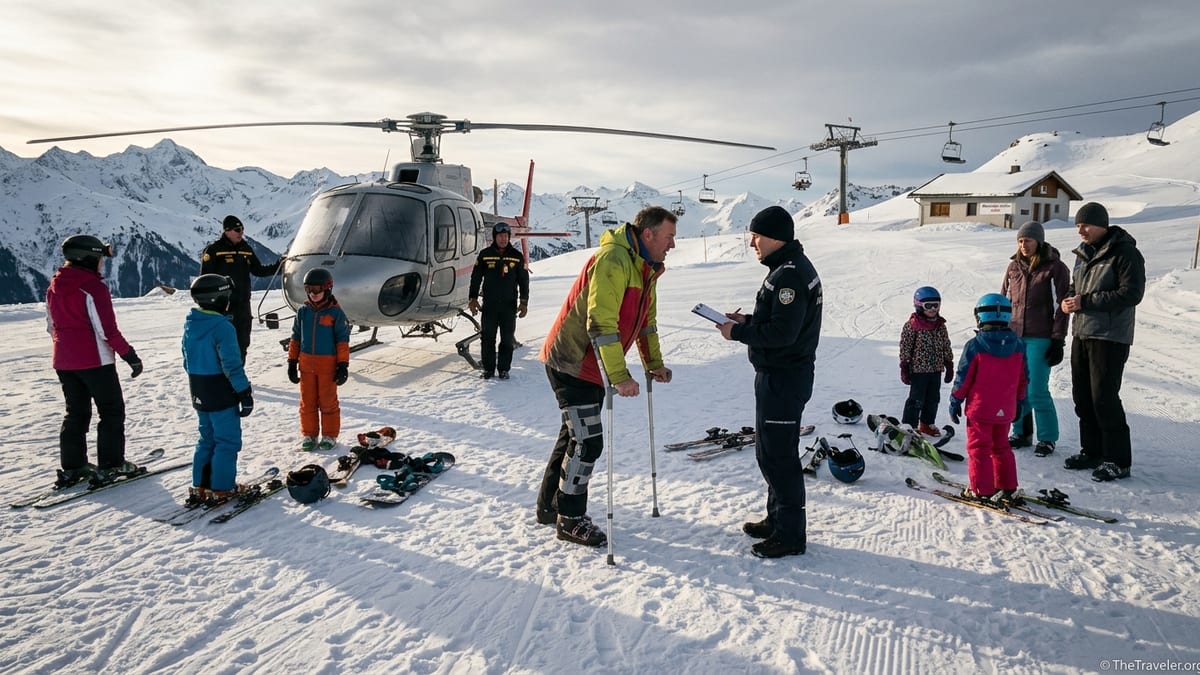
To see how Snowcard plays out beyond the marketing, consider a hypothetical but realistic scenario based on typical cases skiers discuss in online forums. A UK skier in their 40s heads to Les Arcs for a week, insured with a Snowcard annual multi-trip policy at an appropriate winter sports level. On day three, they catch an edge on an icy red run, collide with another skier, and suffer a complex leg fracture that requires helicopter evacuation to a hospital in Bourg-Saint-Maurice.
In the French Alps, rescue and initial medical costs can escalate quickly. The helicopter evacuation alone may cost in the region of several thousand euros, and emergency treatment plus a short hospital stay can easily push the total bill into the tens of thousands. Under Snowcard’s advertised emergency medical limit, these costs would normally sit comfortably below the policy ceiling. Because winter sports, including on and off piste skiing when conditions of cover are met, are part of Snowcard’s core offer, the activity is not treated as an excluded risk as it might be under many basic bank policies.
Where the skier really benefits is in the coordinated rescue and repatriation. Snowcard partners with specialist assistance providers who arrange guarantees of payment to hospitals, negotiate suitable timing and method of return to the UK, and handle the logistics of getting the injured traveler home, which might involve a stretcher flight or a business-class seat block with leg elevation. For the traveler, this can be the difference between facing a series of terrifying bills and phone calls, and simply signing consent forms while the insurer deals with French emergency services in the background.
However, the fine print still matters. If the injured skier had decided to ski off piste against local avalanche advice, or had been drinking heavily, the claim could be challenged. Similarly, the liability section would be crucial if the other skier involved in the collision alleged negligence and sued for damages. Snowcard’s personal liability cover is a significant safety net in such scenarios, but it does not extend to deliberate acts, competitive racing outside the policy terms, or situations where the insured’s behavior clearly falls outside reasonable conduct.
Real-World Example: High-Altitude Trekking and Helicopter Rescue
Snowcard has become particularly well known in communities planning serious treks in Nepal and other high-altitude regions. Trekkers swapping research on insurance options for routes like Everest Base Camp often highlight that many mainstream policies either impose strict altitude limits, such as 3,000 or 4,000 metres, or exclude helicopter evacuation unless it is organized through particular channels. Snowcard, by contrast, is often recommended for having generous altitude allowances on the right activity level, and for explicitly including search and rescue and helicopter evacuation as core benefits.
Imagine a British traveler booking a 16-day Everest Base Camp trek with a reputable UK-guided operator. They choose a Snowcard policy that covers trekking to the maximum altitude of the route, including Kala Patthar. On day eight, at around 4,500 metres, they develop symptoms of acute mountain sickness that do not resolve with rest and descent to a nearby lower village. The guide calls the insurer’s emergency assistance number, and a helicopter is arranged to evacuate the trekker to a hospital in Kathmandu for assessment and oxygen therapy.
In such a case, the helicopter flight alone can cost several thousand US dollars, and hospital observation and diagnostics add significantly to the bill. Snowcard’s medical and rescue cover is designed for exactly this situation: the assistance provider issues a guarantee of payment, the chopper is dispatched, and the traveler is not asked to put the charge on a personal credit card. That is a major practical difference compared with some cheaper policies that expect you to pay upfront and claim later, or that only reimburse partial costs after long disputes about whether the evacuation was medically necessary.
There are, however, pitfalls. In recent years, local authorities in Nepal have clamped down on a pattern of fraudulent helicopter evacuations where unscrupulous trekking operators encouraged unnecessary flights to generate kickbacks from insurers. Any insurer operating in that space, including Snowcard, may scrutinize helicopter claims carefully. Travelers need to follow policy procedures, use reputable guides, and be prepared to provide medical notes and itinerary details. Failure to do so could delay or complicate claims, even when the medical need was genuine.
Real-World Example: Cycling, Bike Cover and Trip Interruption
Snowcard’s cycling-focused products demonstrate both the strengths and some of the complexities of its build-your-own-cover model. Take a rider from Manchester heading to the Pyrenees for a week-long cycling camp, bringing a carbon road bike worth around £4,000. They buy a Snowcard policy tailored to cycling, selecting appropriate cover for amateur endurance and sportive events, emergency medical expenses, cancellation, baggage, and specific equipment cover for the bike.
On day two, a car pulls out unexpectedly on a mountain road, and the rider crashes, suffering broken collarbone and extensive damage to the frame and wheels. The local hospital treats the fracture and recommends that the rider cut the trip short. Under Snowcard’s policy, emergency medical treatment is covered up to the standard limit, and the cancellation or curtailment section can reimburse unused pre-paid accommodation and event fees, subject to documentation and excess. Because the bike was specifically insured as sports equipment, Snowcard can contribute toward repair or replacement up to the chosen sum insured, again minus any excess.
Contrast this with relying solely on a free credit card policy. Many would cover basic medical expenses but exclude any kind of competitive cycling or organized sportive, and would not insure the bike at all beyond token baggage limits. Snowcard’s approach is clearly more appropriate for riders who see their equipment as a major asset and are comfortable paying higher premiums to protect it. But travelers do need to read the small print about how bikes must be packed, where they can be stored overnight, and what counts as acceptable security. Claims for theft from an unlocked car or from a street where the bike was not properly secured are likely to be rejected.
Another nuance is how Snowcard handles partial trips. If the injured cyclist decides to stay in Spain and simply cannot ride but is otherwise mobile, the insurer will look to the specific wording of the curtailment and trip-interruption sections. Being unable to participate in sport alone is not always sufficient to claim for the whole value of a holiday, especially if accommodation and flights are still usable. The traveler must show that it is medically necessary to end or significantly change the trip, not simply that they are disappointed they can no longer ride.
What Snowcard Tends Not to Cover
Snowcard is generous in the range of sports it will entertain, but it is still a travel insurance policy with real-world exclusions. Pre-existing medical conditions are a major one. If your health history does not meet Snowcard’s standard acceptance criteria, the company openly directs you toward specialist medical insurers and notes that it will not usually cover conditions it has excluded. That can be a surprise for older travelers who assume that paying more for a specialist adventure policy will automatically sweep in all their medical history; in reality, you may need a separate provider focused on chronic conditions.
There are also clear limitations on what counts as acceptable risk-taking. Snowcard’s policy information stresses that you must not endanger your own life or others by attempting activities beyond your skill level, especially without a qualified guide or instructor. Activities like climbing on the outside of buildings, jumping from balconies, or other forms of reckless behavior are explicitly excluded. Alcohol and drugs can also compromise cover if they contribute to an accident. Many of these exclusions are standard across the industry, but they are particularly important in environments like ski resorts and party towns where boundaries can blur.
Another area that sometimes causes friction is the interaction between Snowcard and other overlapping policies. For example, a traveler may hold an annual worldwide policy through a bank, a dedicated Snowcard policy for a specific trip, and separate gadget insurance at home. When something goes wrong, insurers can argue about who is primary. Snowcard’s documentation is clear that if the loss is more appropriately covered elsewhere, its contribution may be limited. Travelers who expect Snowcard to act as an all-purpose, no-questions-asked backstop for every conceivable issue may therefore be disappointed when directed first to airline compensation rules, card chargeback rights, or home insurance for certain types of property loss.
Finally, Snowcard does not promise to cover every imaginable activity just because it is outdoorsy. Unusual or very high-risk pursuits, large expeditions, or unguided objectives in remote regions often require case-by-case assessment, and Snowcard specifically asks customers to email itineraries, experience details and emergency plans for review. Where the underwriters feel the risk is beyond their appetite, they may decline cover entirely. That can feel frustrating if you are planning a once-in-a-lifetime expedition, but it is better to get a clear no in advance than to discover at claim time that a bold assumption about cover does not align with what the underwriters intended.
How Snowcard Compares in the Real Market
For UK-based adventure travelers, Snowcard usually sits in the same conversation as organizations like the British Mountaineering Council’s insurance products, True Traveller, and a handful of specialist ski insurers. Independent comparisons commonly show Snowcard premiums for serious mountaineering or worldwide trekking sitting higher than basic backpacker policies but competitive with other technical-sport insurers. For example, some recent third-party write-ups suggest rough annual prices from around the mid double digits for UK-only cover, rising into the low hundreds of pounds for worldwide, higher-risk itineraries, with exact figures varying by age, destination and sport intensity.
The real distinction is not price alone but the combination of activity breadth and the ability to tune sums insured. A mountaineer who routinely travels to the Alps and occasionally goes to the Greater Ranges might value the fact that Snowcard understands high-altitude technical terrain, has search and rescue baked into the policy, and offers claims handlers used to reading expedition reports. Cyclists may appreciate that e-bikes are treated in a similar way to non-powered bikes provided they meet manufacturer specifications, addressing a gap in many mainstream travel products.
On the flip side, there is no shortage of anecdotal reports from travelers who find Snowcard’s online quote process more involved than average and its documentation dense. Some forum users praise efficient claim handling for ski injuries or broken limbs abroad, while others mention lengthy back-and-forth over documentation and interpretation of clauses, which is not unique to Snowcard but reflects the wider realities of modern travel insurance. Anyone expecting a frictionless, instant payout experience, regardless of circumstances, is likely to be disappointed no matter which insurer they choose.
When compared with “free” travel cover on premium cards, Snowcard usually wins on clarity of activity cover and appropriate medical and rescue response in adventure settings, but loses on simplicity and perceived value for low-risk trips. For a long weekend in Barcelona, a bundled bank policy might suffice; for a month of ski touring, hut-to-hut in Austria, Snowcard or a similar specialist is often the more rational choice.
The Takeaway
Breaking down Snowcard’s cover reveals a company that largely delivers what it promises to a specific audience: people whose travels revolve around skiing, climbing, trekking and cycling, rather than shopping and sun loungers. Its strengths lie in high medical and rescue limits, an unusually broad acceptance of higher-risk activities, and the ability to tailor sums insured for cancellation, equipment and electronics to match the value of the trip you are actually taking.
At the same time, Snowcard is not a magical shield that overrides the logic of insurance. Travelers still need to match the activity level to what they are actually doing, declare any relevant medical conditions honestly, and understand that exclusions remain in place for reckless behavior, undeclared pre-existing issues and activities outside the scope of the chosen cover level. Excesses are meaningful, overlapping policies can create complexity, and claims involving helicopters, high altitude or expensive bikes will always attract closer scrutiny.
If you are considering Snowcard, the practical way to assess it is to take a real upcoming trip and walk through the details. What altitude will you reach? Will you be skiing on or off piste, guided or unguided? How much is your bike or climbing rack worth? How much would it really cost to cancel everything at short notice? Then see whether a Snowcard quote, structured realistically around those answers, offers a level of protection that feels proportionate to the real risks you are taking. For many adventure travelers, the answer will be yes. For others, especially on low-risk city or beach holidays, a simpler and cheaper policy may remain the better fit.
FAQ
Q1. Is Snowcard travel insurance worth it if I only ski once a year?
It can be, if that single ski trip involves higher-risk elements like off piste skiing, touring or expensive equipment that basic bank or credit card policies either exclude or barely cover. If you plan a straightforward week on groomed pistes with modest kit, a good mainstream winter sports policy may offer similar protection at a lower price.
Q2. Does Snowcard cover helicopter rescue for trekking in Nepal?
On appropriate activity levels, Snowcard typically includes search, rescue and helicopter evacuation within its emergency medical cover, which is why it is often recommended for routes like Everest Base Camp. You must still follow the insurer’s procedures, use reputable guides and ensure that the evacuation is medically justified according to the policy terms.
Q3. Can I use Snowcard just to top up the adventure part of my free bank travel insurance?
Generally no. Snowcard expects you to insure the full trip duration with them for the policy to be valid and specifically warns that it will not act as a day-by-day top-up to another insurer’s policy. You may be able to buy higher-level single-trip medical cover on top of a lower-level Snowcard annual policy, but not on top of an external product.
Q4. Will Snowcard insure my e-bike on an overseas cycling holiday?
In many cases yes, provided the e-bike is used within the manufacturer’s specifications and has not been modified to exceed intended power or speed limits. You need to select the correct cycling activity level and add equipment cover up to the replacement value of the bike, and you must comply with security requirements for storage and transit.
Q5. How does Snowcard handle pre-existing medical conditions?
Snowcard has clear eligibility criteria for medical history and will not automatically accept all pre-existing conditions. Some conditions may be excluded from cover, and the company may direct you toward specialist medical insurers instead. It is essential to answer medical questions honestly at the quote stage and to obtain written confirmation about what is and is not covered.
Q6. Are off piste skiing and ski touring covered as standard?
Off piste skiing and ski touring can be covered on many Snowcard policies, but they must be within the scope of the activity level you have selected and subject to local safety guidance. Certain high-risk variations or itineraries may require higher-level cover or specific approval, so the details of your planned routes and guiding arrangements matter.
Q7. Does Snowcard cover my climbing gear if it is stolen from a hire car?
Only in some circumstances. You need to have purchased equipment cover, and then comply with policy conditions around unattended vehicles, locked compartments and proof of forcible entry. Theft from an unlocked vehicle, or from a place where reasonable security precautions were not taken, is likely to be excluded.
Q8. How quickly does Snowcard pay out on claims?
Payout speed varies by case. Straightforward claims with clear documentation can be processed relatively quickly, while complex cases involving helicopter evacuations, disputed medical necessity or overlapping cover from other insurers can take longer. Providing detailed paperwork and responding promptly to queries tends to make the process smoother.
Q9. Is Snowcard a good option for family adventure holidays?
It can be, especially for families where multiple members ski, cycle or trek on the same trip. High medical limits, activity-friendly cover and the option to remove excesses can offer real peace of mind. However, the per-person, per-section excess structure and the need to buy cover for the full trip duration mean you should run careful sums on the total cost versus the likely risks.
Q10. What is the biggest mistake people make when buying Snowcard?
The most common mistake is underestimating the activity level or misdescribing the trip, for example choosing a lower-risk skiing category when planning off piste or ski touring, or not declaring relevant medical history. That can result in claims being reduced or declined. Being conservative and transparent when you describe your plans is usually the safest strategy.