


Philadelphia rewards travelers who look past the Liberty Bell, Independence Hall and the Rocky steps. In this city of rowhouse blocks, corner bars and pocket parks, some of the most memorable experiences happen far from the standard sightseeing script. If you want your time here to feel more like a week as a local than a day on a bus tour, focus on neighborhoods, small businesses and the city’s thriving creative scene.
Get the latest updates straight to your inbox!
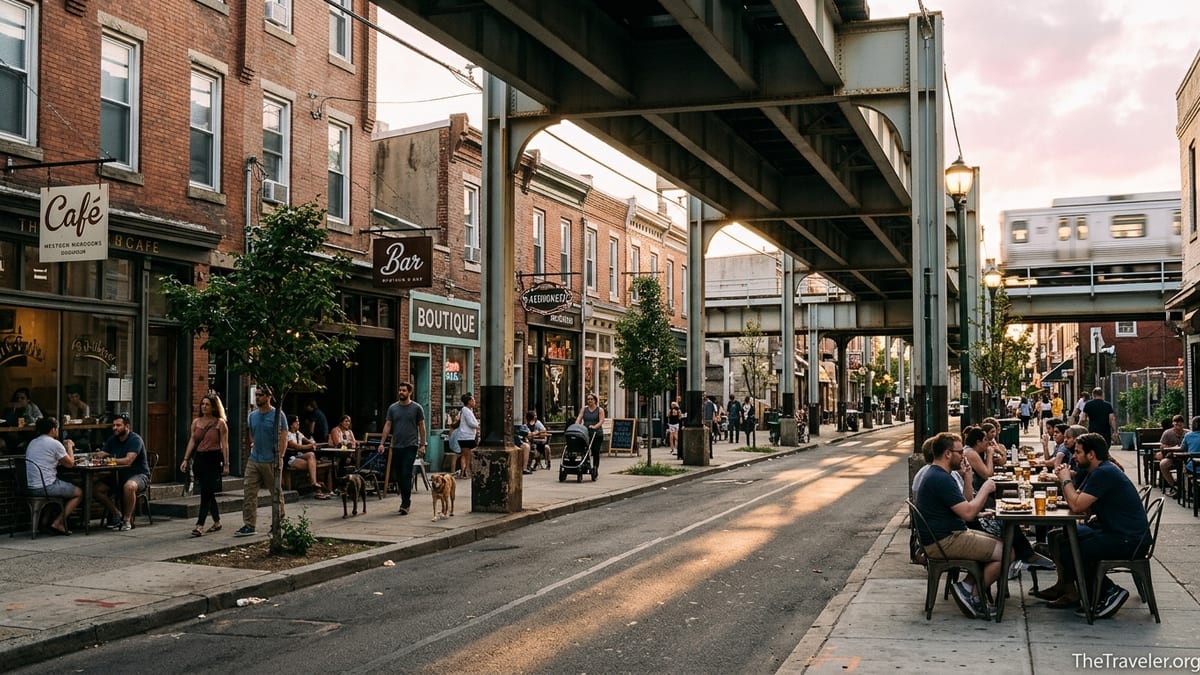
Trade the Historic Core for Neighborhood Wandering
If your image of Philadelphia is only cobblestones and founders in wigs, you miss most of what residents love about the city. Start by building at least one full day around neighborhood wandering instead of museum-hopping. Fishtown, a former working waterfront district along the Delaware River, has become a creative hub with rowhouse streets, mural-splashed warehouses and some of the city’s highest concentrations of restaurants and bars. You can step off the Market–Frankford Line at Girard Station and be surrounded by coffee shops and music venues within a few blocks.
South of Center City, East Passyunk feels like a narrow slice of old-world main street dropped into a South Philadelphia grid. The diagonal avenue is lined with family-run bakeries, small boutiques and destination dining rooms tucked between corner bars. On warm evenings, residents sit on stoops while diners fill sidewalk tables, and it is easy to forget that you are only a 20-minute subway ride from Independence Hall.
For a different mood again, head west across the Schuylkill River to Cedar Park and Garden Court in West Philadelphia. Here, leafy streets of early 20th century houses and porch-front twins give way to community gardens, small African and Caribbean groceries, and long-standing jazz bars. A late afternoon walk down Baltimore Avenue might include stopping for Ethiopian coffee, browsing a feminist or Black-owned bookstore and catching a neighborhood drum circle in a park, all without encountering a tour group.
These areas are not stage sets built for visitors. They are evolving places where Philadelphians actually live, and that is the point. Give yourself space in the schedule to sit in a park like Penn Treaty in Fishtown or Columbus Square near Passyunk, people-watch with a takeout sandwich and notice the rhythms of everyday life. Those unstructured hours can leave a stronger impression than another plaque about the 1700s.
Eat Like a Local, Not a Food Channel Crew
Philadelphia’s food reputation is still dominated by cheesesteaks and roast pork, and the lines outside the most famous spots in South Philly make clear that many visitors never move beyond that script. If you are willing to skip the longest queues, you can tap into a much more interesting food landscape that locals know well. On East Passyunk Avenue, for example, you might start a casual crawl with hand-pulled mozzarella or wood-fired pizza at a neighborhood trattoria, then wander up the block for modern Mexican plates, and finish with a scoop from a small-batch ice cream shop. None of it will be on a standard tour, yet you will likely wait less and eat better than at the most hyped counters.
Breakfast is a good time to see another side of the city’s food culture. In Fishtown and neighboring Kensington, cafes inside former factories pour single-origin coffee and serve breakfast sandwiches on crusty local rolls. It is common to find bagels made on-site, vegetarian scrambles built around regional produce and vegan baked goods sharing the case with classic butter-heavy pastries. Grabbing a seat by the window or at a communal table and listening to the morning rush around you can be as revealing as any guided walk.
Philadelphia also has a quieter but rich tradition of immigrant-owned eateries that rarely appear in top ten lists but form a backbone of everyday dining. Along stretches of South 9th Street near the Italian Market, you can find Mexican taquerias selling tacos on freshly pressed tortillas next to Southeast Asian groceries with steam tables of curries and noodles. In West Philadelphia, casual West African restaurants serve jollof rice and grilled fish to local families, students and adventurous diners who have learned where to go. Prices are often lower than in the city’s trendiest dining rooms, and meals feel very much anchored in the communities that surround them.
To connect food with place, consider timing your visit around one of the seasonal neighborhood events that turn entire corridors into open-air tasting rooms. In summer, East Passyunk’s evening promenades close parts of the avenue to cars so that restaurants can spill into the street, while pop-up beer gardens and food trucks fill in the gaps. You will encounter more Philadelphians out with their kids and dogs than organized tour groups, which is exactly the atmosphere you are seeking.
Skip Big Box Shopping for Indie Bookstores and Record Shops
If you like to understand a city through its printed words and playlists, Philadelphia’s independent bookstores and record shops offer a rewarding alternative to chain stores in Center City. In Fishtown, a small shop that blends new and used titles with author events and writing workshops has become a community living room. Shelves lean into contemporary fiction, poetry, small-press zines and books by local writers, and staff picks often highlight voices from Philadelphia’s own neighborhoods. It is the sort of place where you might walk in for a map and walk out with a short story collection set two blocks away.
Farther south, East Passyunk hosts an intimate bookstore focused on socially engaged literature, children’s books and works by underrepresented authors. Weeknight readings turn the narrow space into a standing-room-only salon, drawing a mix of neighbors, teachers and visitors who happen to wander in after dinner. You can easily pair an hour of browsing with a coffee from a nearby cafe and then carry your new book to a park bench around the corner.
Secondhand treasure hunters should make time for the used shops scattered around Old City and beyond. One well-known book dealer near the historic district occupies multiple floors of a narrow building, with floor-to-ceiling shelves and a separate room dedicated to vinyl records. The experience of climbing creaking stairs, weaving through stacks and discovering an out-of-print Philadelphia history title or a jazz record by a local legend is as much a part of the visit as whatever you buy.
Speaking of vinyl, the city’s record shops form their own informal trail. In Kensington and South Philly, stores housed in former garages or corner storefronts specialize in everything from classic soul and jazz to underground punk and electronic music. Staff are usually happy to point you toward local bands playing that night or small venues worth checking out, effectively doubling as informal cultural concierges. Even if you travel light and cannot haul many records home, an hour flipping through bins will give you a feel for what makes the city’s creative scenes tick.
Experience Philly After Dark Beyond the Big Venues
Many visitors only encounter Philadelphia’s nightlife in the form of arena concerts or games at the sports complex, but the city’s smaller-scale after-dark culture is where its personality truly shines. In Fishtown, a handful of historic bars now function as both neighborhood hangouts and respected music venues. You might start the evening with a burger and local beer at the downstairs bar, then climb a narrow staircase to a dimly lit room where an indie band, jazz trio or DJ collective plays to a few hundred people. Tickets are often modestly priced, and it is not unusual to share the bar rail with working musicians finishing their own shifts.
Elsewhere in the neighborhood, repurposed factories house clubs and performance spaces where you will find everything from experimental electronic nights to salsa lessons. The setting tends to be industrial but welcoming: exposed brick walls, string lights, folding chairs and a makeshift bar serving regional craft beers or simple cocktails. There is little separation between performers and audience, which makes it easy to strike up conversations between sets.
If you prefer your evenings to move at a slower pace, Philadelphia’s cocktail and distillery scene provides options that are more about conversation than crowds. In South Philadelphia, for instance, a small-batch rum distillery operates out of a no-frills space on a quiet street, offering tours and tastings where you can learn how they transform molasses into spirits. Farther afield in the region, a craft distillery located inside a restored 19th century firehouse opens its still room for guided walks and flights of gin, vodka and experimental liqueurs, with tasting fees that are typically comparable to a single cocktail at a downtown hotel bar.
Jazz lovers can spend a full evening in West Philadelphia, where intimate clubs host local players several nights a week. These spaces are more living room than concert hall, with mismatched chairs, modest cover charges at the door and bartenders who probably know half the crowd by name. Ordering a simple drink, settling in under low lights and listening to a quartet stretch out over a standard can feel like time travel in the best possible way.
Get Outside in Parks and Along the Water
Few standard itineraries give you much time outdoors beyond a quick photo at the Rocky steps, yet Philadelphia is rich in green space. One of the easiest ways to see a less touristed side of the city is to spend time in its neighborhood parks and along its rivers. Fishtown’s Penn Treaty Park, for example, sits on a calm curve of the Delaware with wide views of the Benjamin Franklin Bridge and often surprisingly few visitors. Locals come here to jog, walk their dogs, fly kites and grill on weekends, and on a nice day you can spread a blanket, unpack a hoagie from a nearby deli and watch container ships slide past.
To the west, the Schuylkill River Trail runs for miles along the water, linking Center City with more residential pockets. Rent a bike or simply walk the paved path that threads under bridges and past community boathouses. Early mornings bring runners and commuters on bicycles, while late afternoons see families pushing strollers and groups of students sprawled on the grass with textbooks. With only a modest detour, you can connect the trail to the University City side of the river, where landscaped quads and modern science buildings provide a completely different visual from the colonial core.
Another favorite escape is Fairmount Park, one of the country’s largest urban park systems, which spreads along both sides of the Schuylkill. Beyond the familiar art museum area, wooded paths lead to historic mansions, small creeks and hillside views of the skyline. You can join a guided hike organized by local parks groups, or simply pick a loop that starts near a transit stop and see where it leads. Because the park’s acreage is so vast, it is easy to find quiet corners even on weekends.
If you have access to a car or do not mind a regional rail ride, you can push the idea of outdoor exploration even farther. Trails and waterfront stretches outside the city limits are popular with Philadelphians looking for half-day escapes, and some park systems connect directly with historic mill towns and canal paths. Spending a few hours walking under trees before returning to the rowhouse blocks offers a refreshing contrast to back-to-back indoor attractions.
Connect With Community Events and Creative Scenes
One of the simplest ways to avoid a tourist-only experience in Philadelphia is to build your days around the same events that residents plan their weeks around. In warmer months, nearly every neighborhood organizes street festivals, outdoor markets or live performances. In South Philly, weekly evening promenades along East Passyunk Avenue bring out families, couples and groups of friends for al fresco dining, local vendor stalls and impromptu performances. Many of these gatherings are free to attend, with costs limited to whatever you choose to eat or buy.
On the city’s western edge, Clark Park in West Philadelphia functions almost like a community town square. Saturday farmers markets fill the lawn with regional produce, baked goods and small-batch prepared foods, and it is common to see live music or kids’ activities layered on top. In summer, Shakespeare productions on the park’s sloping field draw blankets and lawn chairs as the sun sets behind the trees. You can easily combine a visit here with coffee at a nearby cafe and time at a neighborhood bookstore, creating a day that feels embedded in daily life rather than separated from it.
Art walks and open studio nights offer another point of entry into local culture. On designated evenings, galleries and creative spaces in neighborhoods like Old City and Fishtown open their doors late, pour small cups of wine or cider and invite visitors to wander between exhibits. You might stumble into a printmaking workshop, a ceramics studio holding a firing demonstration or a photography collective presenting a series on changing city neighborhoods. Conversations with artists often drift into recommendations for where to eat or hear music afterward, turning one outing into several.
Even if your visit does not coincide with a major festival, smaller recurring events can provide the same window into community life. Look for bar trivia nights, neighborhood history walks led by local nonprofits, volunteer days at community gardens or seasonal pop-up markets held in re-purposed school buildings and historic churches. Participating in even one of these activities can shift your role from observer to temporary neighbor.
The Takeaway
The most rewarding way to experience Philadelphia is not by racing through a checklist of monuments but by treating the city as a patchwork of lived-in neighborhoods. Spend your days following your curiosity down residential streets, through independent bookstores and into corner bars that double as music venues. Let small details guide you: the smell of bread from a South Philly bakery, the sound of a jazz saxophone drifting from a West Philadelphia basement club, the sight of kids playing basketball under a bridge along the river.
By prioritizing local businesses, community events and outdoor spaces, you will come away with a sense of how Philadelphians actually use their city. You will still see the skyline, the bridges and the historic facades, but they will serve as a backdrop rather than the entire story. In a place as layered as Philadelphia, that deeper context turns a short visit into something that lingers long after you board the train or plane home.
FAQ
Q1. How many days should I spend in Philadelphia if I am skipping the usual tourist circuit? Aim for at least three full days so you can dedicate one day each to neighborhood wandering, cultural experiences like bookstores and music, and outdoor time along the rivers or in Fairmount Park.
Q2. Which neighborhood is the best base if I want a more local feel? Fishtown, East Passyunk and parts of West Philadelphia such as Cedar Park are good options, offering walkable streets, independent businesses and straightforward transit links to the rest of the city.
Q3. Is it easy to explore these neighborhoods without a car? Yes. The Market–Frankford Line, Broad Street Line, trolleys and buses cover most areas mentioned, and many neighborhoods are compact enough to explore on foot once you arrive.
Q4. Are these less touristy areas safe to visit at night? Conditions vary by block, as in any large city. In general, busy corridors in Fishtown, East Passyunk and parts of West Philadelphia see plenty of local foot traffic, but you should stay aware of your surroundings, stick to well-lit streets and follow current local guidance.
Q5. Do I need to book restaurant reservations in advance in these neighborhoods? For popular spots in Fishtown and East Passyunk, reservations for prime weekend times are helpful, while casual cafes, bakeries and many immigrant-owned eateries operate on a walk-in basis.
Q6. What is a realistic budget for eating like a local in Philadelphia? Expect casual meals in neighborhood spots to run from the low teens to around twenty dollars per person before tax and tip, with higher prices in trendier dining rooms and lower costs at takeout counters and markets.
Q7. Can I still visit one or two classic sights without feeling like I am on a tourist track? Yes. Many visitors pair a brief stop at Independence Hall or the Art Museum with afternoons and evenings in less touristed neighborhoods, using the landmarks as a starting point rather than the whole plan.
Q8. How should I dress for exploring parks and outdoor spaces in the city? Comfortable walking shoes are essential. In summer, bring light layers, sunscreen and water; in cooler months, pack a windproof jacket since riverfront areas can feel breezier than inland streets.
Q9. Are there guided tours that focus on neighborhoods instead of major monuments? A growing number of small operators and community organizations offer walking tours focused on street art, food, social history and specific neighborhoods; check current listings close to your travel dates.
Q10. What is the best way to support local communities while I am in town? Choose independent accommodations where possible, eat at locally owned restaurants, shop at neighborhood bookstores and markets, attend community events and be respectful of residential streets by keeping noise low and following local etiquette.