


Marriott Vacation Club Desert Springs Villas sits in a sweet spot of the Coachella Valley: close enough to Greater Palm Springs staples to reach them in minutes, yet tucked into a quieter corner of Palm Desert. If you are staying at the Villas and wondering what to do beyond the pools and golf courses, you are perfectly placed for desert trails, wildlife encounters, shopping streets, arts venues and easy day trips. This guide focuses on realistic, close-at-hand experiences you can actually fit between lazy hours by the pool, with specific examples and local details to help you plan.
Get the latest updates straight to your inbox!
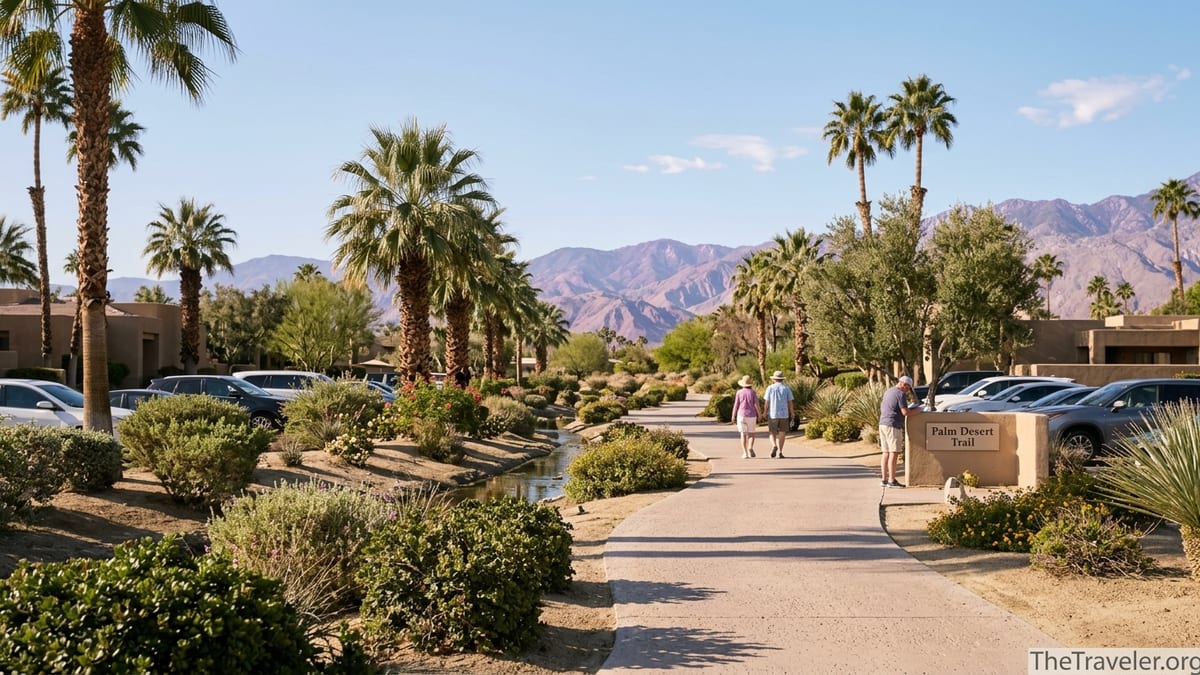
Getting Oriented: Where You Are in Palm Desert
Marriott’s Desert Springs Villas, often referred to simply as Desert Springs Villas I and II, sit off Country Club Drive in Palm Desert, a few minutes north of Highway 111. In practical terms, that puts you about a 10-minute drive from El Paseo’s main shopping corridor, roughly 15 minutes from The Living Desert Zoo & Gardens, and 25 to 30 minutes from downtown Palm Springs, depending on traffic. Rideshare services like Uber and Lyft operate widely across the valley, but most visitors still find a rental car or personal vehicle the most convenient way to explore.
The Villas sit next to the larger JW Marriott Desert Springs Resort & Spa, which many guests use as a reference point when navigating. While the resort itself offers extensive amenities, from two Ted Robinson–designed golf courses to a large spa, this article focuses on experiences off property. Think of the Villas as your home base in the middle of a ring of distinct areas: the mountain foothills to the south, suburban shopping and dining corridors to the east and west, and classic mid-century Palm Springs to the northwest.
Because the Coachella Valley runs generally east–west, distances can be deceptive on a map. The Empire Polo Club grounds in Indio, where the Coachella and Stagecoach festivals are held each April, are roughly 25 to 30 minutes from the Villas in normal traffic, but on festival weekends that same drive can stretch well over an hour. Likewise, summer heat significantly changes what is comfortable to do outside. In July and August, plan your hikes and outdoor activities for early morning or late evening and keep indoor options in mind for midday.
For budgeting, expect typical resort-area pricing. A casual brunch on El Paseo will often land around 18 to 25 dollars per person before tax and tip, while a mid-range dinner entrée in central Palm Desert or downtown Palm Springs frequently sits in the 24 to 35 dollar range. Attractions like The Living Desert or the Palm Springs Aerial Tramway are usually in the 25 to 40 dollar per adult bracket, with discounts for children and seniors.
Desert Trails and Mountain Views Minutes from the Villas
One of the biggest advantages of staying at Desert Springs Villas is how quickly you can be on a trail. The Santa Rosa and San Jacinto Mountains frame Palm Desert, and several popular hikes begin within a 15- to 25-minute drive. The Bump and Grind trail, just above Highway 111 near Painter’s Path, is a local favorite for sunrise and sunset. The main loop is around 4 miles with a moderate climb of roughly 1,000 feet, enough to get your heart rate up without requiring technical skills. Park in the gravel lot near the trailhead and start early to avoid heat; most visitors carry at least a liter of water per person even in cooler months.
If you prefer shorter or gentler walks, the Santa Rosa & San Jacinto Mountains National Monument Visitor Center in south Palm Desert is an excellent first stop. It is typically about a 20-minute drive from the Villas, depending on traffic along Monterey or Portola. The center offers short, relatively flat nature trails with interpretive signs about desert plants and wildlife, along with helpful rangers who can explain current trail conditions, closures and seasonal blooms. Families with younger children often find this a good way to experience desert terrain without committing to a longer hike.
For a more dramatic mountain experience, the Palm Springs Aerial Tramway is roughly half an hour from the resort. From the tram base, a rotating cable car climbs almost 6,000 feet to the top station on the edge of Mount San Jacinto State Park. Even in early spring, temperatures at the top are usually 20 to 30 degrees cooler than in the valley below, and it is not unusual to find snow underfoot while Palm Desert bakes in the mid-80s Fahrenheit. At the top you can take short paved walks to viewpoints, or branch out onto signed forest trails ranging from easy strolls to full-day hikes.
Those visiting in March often time their trips around the Coachella Valley Wildflower Festival, which for 2026 is scheduled for March 7. Held in nearby Palm Desert, the festival focuses on local flora, desert conservation and family-friendly outdoor activities. Even if you miss the event itself, late winter and early spring are prime times for wildflower spotting on lower-elevation trails, especially after winters with decent rainfall.
Wildlife and Gardens: The Living Desert and Beyond
Just south of El Paseo, The Living Desert Zoo & Gardens is one of the area’s signature attractions and an easy half-day trip from Marriott’s Desert Springs Villas. The drive takes roughly 15 minutes in light traffic. Unlike a traditional zoo, The Living Desert focuses on arid environments around the world, pairing animal exhibits with extensive botanical gardens. Experiences such as giraffe feedings are especially popular with families; for a modest upcharge, guests can hand a branch of browse to a towering giraffe and watch its long, blue tongue curl around the leaves.
Plan to walk a lot here. The grounds are spread out, with wide paths and shade structures but relatively little dense tree cover. In cooler months, it is comfortable to explore in the late morning through afternoon. From May through September, many visitors aim to arrive close to opening time to catch the animals during their most active period before midday heat. A simple lunch for a family of four at one of the onsite cafes typically runs in the 50 to 70 dollar range, depending on beverages and add-ons.
A few minutes north of the zoo, Palm Desert’s Civic Center Park offers a different sort of outdoor experience. This large municipal park features walking loops, sports courts, playgrounds and a small lake. Many locals use it for morning jogs and dog-walking, and visitors staying at Desert Springs Villas sometimes come here for a picnic or to let kids burn off energy in a non-resort setting. Seasonal events, such as fall or spring concert series, occasionally use the park’s amphitheater, and schedules are usually published through the City of Palm Desert’s event channels.
Art-minded travelers can combine these outings with a stop at the Palm Springs Art Museum in Palm Desert. This satellite location, near Highway 111, focuses heavily on sculpture and features a notable outdoor garden area. It is a compact, manageable stop that pairs well with an afternoon on El Paseo or a morning at Civic Center Park, offering a quiet, air-conditioned break with a focus on regional and contemporary art.
Shopping, Dining and Culture on El Paseo and Around Town
For many guests at Desert Springs Villas, El Paseo is the primary off-resort destination. Often described as the Coachella Valley’s answer to Rodeo Drive, this mile-long stretch in central Palm Desert concentrates over 300 shops, galleries and restaurants along a landscaped avenue. From the Villas, it is typically a 10-minute drive via Country Club Drive and Monterey Avenue. Parking is a mix of street spaces, small surface lots and a few structured garages; midweek mornings usually offer the easiest parking, while Friday and Saturday evenings can be busy in peak season.
El Paseo’s dining scene spans quick coffee stops to white-tablecloth restaurants. Breakfast or brunch at a mid-range café on or just off El Paseo might cost around 18 dollars for a dish such as avocado toast or eggs Benedict, with coffee adding another 4 to 6 dollars. Dinner menus in bistros and steakhouses along the strip often feature entrées in the mid-20s to mid-30s, with higher prices for premium cuts of steak or seafood. Advance reservations are strongly recommended during winter high season, March food and wine events and April festival weekends, when many restaurants book out well in advance.
Cultural events surface throughout the year. March typically brings Palm Desert Food & Wine, a multi-day festival that has featured cooking demonstrations with celebrity chefs, grand tastings and paired dinners in and around El Paseo. Fashion Week El Paseo, billed as one of the larger fashion events on the West Coast, showcases runway shows and designer appearances. Even if you do not attend ticketed events, you will feel the buzz on the street: pop-up installations, busier patios and later evening crowds than usual.
For more everyday needs, The Shops at Palm Desert, a traditional enclosed mall on Highway 111, sits about 10 minutes from the Villas by car. Here you will find national retailers, chain restaurants, a movie theater and indoor, air-conditioned space that can be welcome on very hot days. Many guests use this mall for practical errands, such as picking up forgotten clothing items, snacks, basic gear for hiking or an extra swimsuit for the kids.
Festivals, Sports and Day Trips Across the Coachella Valley
Beyond immediate Palm Desert, a ring of communities from Palm Springs to Indio offers large-scale events and easy day trips. Festival season, especially in April, dramatically changes the feel of the valley. During the Coachella Valley Music and Arts Festival and the Stagecoach country music festival at the Empire Polo Club in Indio, room rates climb across the region and driving times increase, particularly in the evenings. If you are not attending the festivals, it is still possible to enjoy your stay at Desert Springs Villas, but you will want to plan driving routes carefully and build in extra time.
Sports fans will find the Indian Wells Tennis Garden, home of a major professional tennis tournament each March, about a 15- to 20-minute drive from the Villas. Even outside tournament weeks, the complex sometimes offers public play or hosts smaller events, so it is worth checking schedules if you enjoy racket sports. Golfers, meanwhile, are spoiled for choice. In addition to the courses directly adjoining the JW Marriott, nearby options include Desert Willow Golf Resort, Palm Desert’s municipal facility with two well-regarded championship layouts, Mountain View and Firecliff. Tee times there are dynamic-priced based on season and time of day, but paying around 120 to 200 dollars for a prime winter morning round is common, with lower rates in the shoulder seasons and in afternoon time slots.
If you have a full day to spare and want a break from the desert floor, consider a drive up to Idyllwild, a pine-forested mountain town usually about an hour to an hour and fifteen minutes from Palm Desert. Temperatures there often run 20 to 30 degrees cooler than in the Coachella Valley, making it an appealing escape during hot months. Visitors commonly spend a few hours browsing small galleries and cafes, then hike short trails in the surrounding national forest before driving back down to the Villas in the evening.
Another popular day trip direction is northeast toward Joshua Tree National Park. From Desert Springs Villas, most guests drive north through Palm Desert and Palm Springs, then cut across to one of the park entrances near Joshua Tree or Twentynine Palms, a journey of around 60 to 90 minutes each way depending on route and traffic. This is a full day out, not a quick side trip, and you should bring plenty of water, sun protection and layered clothing. Many visitors pair a few hours of hiking or sightseeing in the park with a late lunch or early dinner in the town of Joshua Tree or nearby Yucca Valley before heading back.
Art, Nightlife and Architecture in Nearby Palm Springs
Downtown Palm Springs lies roughly 25 to 30 minutes from Marriott’s Desert Springs Villas in typical traffic. This area, centered around Palm Canyon Drive and Indian Canyon Drive, offers a denser, more walkable environment than Palm Desert, with mid-century modern architecture, boutique hotels, cocktail bars and galleries. Many visitors staying in Palm Desert plan at least one dedicated evening in Palm Springs to experience its atmosphere, then return to the quieter setting of the Villas to sleep.
On Thursday nights for much of the year, Palm Springs VillageFest turns several blocks of Palm Canyon Drive into a pedestrian street fair. Dozens of vendors set up stalls selling everything from local art and jewelry to grilled corn, tamales and date shakes. Parking fills early on these evenings, and from Desert Springs Villas you should plan at least 40 minutes door to door to allow for traffic and finding a spot. It is a lively but generally family-friendly scene, with street musicians and a mix of visitors and locals strolling until around 10 p.m.
Architecture buffs will recognize Palm Springs as one of the centers of mid-century modern residential design in the United States. Tours during events like Modernism Week in February can sell out weeks or months in advance, featuring access to private homes, lectures and bus tours of notable buildings. Even outside festival periods, you can take self-guided drives through neighborhoods like Vista Las Palmas or Twin Palms to appreciate low-slung, glass-heavy homes framed by the San Jacinto Mountains. Be respectful of residents: these are lived-in neighborhoods, so avoid blocking driveways and keep noise and photography discreet.
Nightlife in Palm Springs runs broader and later than in Palm Desert. LGBTQ+ venues, craft cocktail bars, piano lounges and casual patios all sit within a few walkable blocks downtown. A typical craft cocktail might cost 16 to 20 dollars, while many bars also offer happy-hour deals earlier in the evening. If you prefer not to drive back to the Villas late at night, consider using a rideshare service for the return trip; costs vary with demand, but many guests budget 30 to 45 dollars each way for peak weekend evenings between Palm Springs and the Marriott Desert Springs area.
Practical Tips: Getting Around and Handling the Desert Climate
Transportation logistics can make or break your time off property. While the Coachella Valley does have a regional bus system, most routes are not optimized for visitors staying at resorts, and service can be infrequent outside major corridors. A rental car remains the most flexible option, especially if you want to hike in Indian Canyons, visit Joshua Tree or hop between Palm Desert, Palm Springs and La Quinta. That said, for evenings focused on dining and drinks in a single area, rideshare services are widely used and allow you to avoid parking hassles.
Parking is generally straightforward at most daytime attractions. The Living Desert has its own surface lots included with admission. The Palm Springs Aerial Tramway uses a tiered parking system where you may be directed to lower lots and then take a shuttle to the valley station; arrive early on weekends to avoid long waits, particularly during holiday periods or peak wildflower seasons. In downtown Palm Springs, a mix of street parking, paid lots and a few city garages serve visitors; signage is usually clear, but time limits vary and are strictly enforced in busy areas.
Weather is the other major practical factor. From roughly late May through September, daytime highs in Palm Desert routinely exceed 100 degrees Fahrenheit, and triple-digit temperatures can stretch late into the evening. In those months, schedule outdoor activities like the Bump and Grind trail, the Indian Canyons hikes or golf tee times for as early in the morning as possible. Always bring more water than you think you will need, wear sun-protective clothing and a hat, and avoid setting out on unshaded trails in the middle of the day.
Winter and shoulder seasons, from November through April, are far more forgiving and are when many seasonal residents and visitors return. However, evenings can still be cool, especially if you ride the Aerial Tramway or visit higher-elevation areas. Pack layers that allow you to go from a sunny 75-degree afternoon at the Villas pool to a breezy 50-degree evening in downtown Palm Springs or a 40-degree walk at the top of the tram. Sandals and light resort wear are fine for most casual dining, but some of the more formal restaurants on El Paseo or in Palm Springs appreciate collared shirts and closed-toe shoes for evening service.
The Takeaway
Staying at Marriott Vacation Club Desert Springs Villas gives you built-in pools, golf and resort comforts, but its real strength lies in how easily you can reach the wider Coachella Valley. Within 15 minutes you can be feeding giraffes at The Living Desert, browsing high-end boutiques on El Paseo, or setting off on a desert trail with panoramic views of the Santa Rosa and San Jacinto ranges. A bit farther afield, day trips to Palm Springs, Indian Wells, Joshua Tree or Idyllwild open up architecture, nightlife, festivals and cooler mountain air.
By thinking in terms of half-day or daylong excursions, you can balance the relaxation of your villa stay with substantive experiences that feel uniquely tied to this part of Southern California. Use early mornings for hikes and golf, reserve midday for shopping, art or spa visits, and save evenings for dinner patios and strolls through Palm Desert or Palm Springs. With realistic drive times, climate-aware planning and a sense of how the valley’s different towns fit together, you will find that there is far more to do beyond the resort than you can likely fit into one trip.
FAQ
Q1. How far is Marriott Vacation Club Desert Springs Villas from downtown Palm Springs?
In normal traffic it usually takes about 25 to 30 minutes by car to drive from the Villas in Palm Desert to the heart of downtown Palm Springs around Palm Canyon Drive.
Q2. Do I need a rental car to explore areas beyond the resort?
A rental car is highly recommended, especially if you plan to visit hiking areas, Joshua Tree National Park or multiple towns in the valley. Rideshares work well for evenings in one area, but they are less practical for full days of sightseeing.
Q3. What are the closest major attractions to the Villas?
The closest major attractions include The Living Desert Zoo & Gardens and the El Paseo shopping district, each about a 10- to 15-minute drive away, along with nearby Civic Center Park and the Santa Rosa & San Jacinto Mountains National Monument Visitor Center.
Q4. When is the best time of year to hike near Palm Desert?
November through April generally offers the most comfortable hiking conditions, with cooler daytime highs. Early mornings are best even in winter, and in summer you should avoid midday hiking due to extreme heat.
Q5. How long should I plan for a visit to The Living Desert Zoo & Gardens?
Most visitors spend between three and five hours at The Living Desert, enough time to see the main animal exhibits, explore some of the gardens and participate in experiences like giraffe feedings.
Q6. Is it realistic to visit Joshua Tree National Park as a day trip from the resort?
Yes, but you should plan a full day. Driving to a main park entrance typically takes 60 to 90 minutes each way, and you will want several hours inside the park plus breaks for meals and rest.
Q7. What should I budget for dining off property?
For casual meals, expect around 18 to 25 dollars per person for breakfast or lunch and 24 to 35 dollars for typical dinner entrées, before tax and tip. Upscale venues and steak-focused restaurants can cost more.
Q8. Are there family-friendly activities off the resort besides the zoo?
Yes. Civic Center Park’s playgrounds and open spaces, short nature trails near the National Monument visitor center, the Palm Springs Aerial Tramway, and the Thursday night VillageFest street fair all appeal to families.
Q9. How does festival season affect a stay at Desert Springs Villas?
During major events like Coachella and Stagecoach, room rates across the valley rise and driving times, especially toward Indio, increase. If you are attending the festivals, the resort makes a comfortable base; if you are not, you will simply need to allow more time for traffic.
Q10. What should I pack for a visit that includes both resort time and offsite exploring?
Pack light, breathable clothing for hot days, a hat and strong sun protection, sturdy walking or hiking shoes, and at least one warmer layer for cooler evenings or higher-elevation outings like the Palm Springs Aerial Tramway.