


Tokyo Haneda Airport is now the preferred gateway for most travelers heading into the Japanese capital, prized for its proximity to central Tokyo and its efficient, well organized layout. With multiple terminals, several competing train lines, and a growing list of services and lounges, it can still feel confusing on a first visit. This guide walks you through how Haneda works in 2026, how to get into the city with minimal stress, and how to make smart use of the airport’s facilities before or after your flight.
Get the latest updates straight to your inbox!
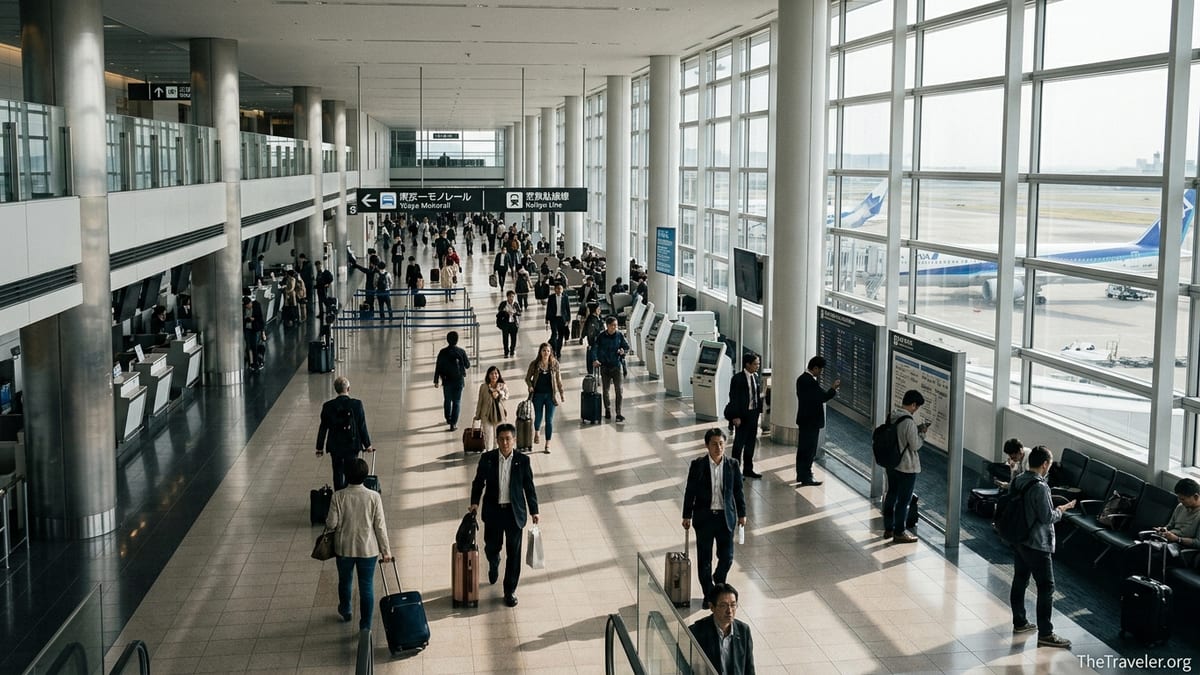
Understanding Haneda’s Terminals and Layout
Haneda Airport, officially Tokyo International Airport, has three main passenger terminals. Terminal 1 and Terminal 2 handle the bulk of domestic flights, while Terminal 3 is the primary international terminal. Japan Airlines typically uses Terminal 1 for domestic services, while All Nippon Airways focuses on Terminal 2, with many international flights arriving and departing from Terminal 3. Budget and regional carriers may shift as schedules change, so always double check your e-ticket to confirm your terminal before you travel.
All three terminals are linked airside and landside by free shuttle buses and the airport’s rail links. A typical example: if you land in Terminal 3 on an overnight flight from Los Angeles and are connecting to a domestic flight to Fukuoka in Terminal 1, you can follow the clear “Domestic Transfer” signs after immigration, ride the shuttle bus, and be at the domestic check in area in roughly 15 to 20 minutes, assuming normal queues. The terminals are compact compared with many global hubs, which helps keep transfer times manageable.
Passenger facilities are spread across several floors in each terminal. In Terminal 3, for instance, arrivals from international flights typically come out on the second floor, where you will find customs, baggage claim, currency exchange, SIM card counters, and public transport desks. Departures are one level up, with check in counters, security, and immigration, then duty free shops, lounges, and restaurants beyond. Clear bilingual signage in Japanese and English, along with pictograms, makes navigation straightforward even if you have just shaken off a long haul flight.
The airport continues to evolve, with new shops and services opening regularly. Local tourism boards, such as the Tokyo metropolitan government, keep updated floor maps and terminal information that show where new facilities are located, from kids’ play areas to business lounges. Travelers who have not been back since before the pandemic usually remark on how much more international Terminal 3 feels, with wider walkways, more varied restaurants, and additional airline lounges.
Transport from Haneda into Tokyo
One of Haneda’s biggest advantages over Narita is its quick access to central Tokyo. Two rail options compete for most travelers: the Tokyo Monorail and the Keikyu Airport Line. As of 2026, the Tokyo Monorail runs from Haneda to Hamamatsucho Station in about 18 minutes, with a typical adult IC card fare a little over 500 yen. From Hamamatsucho, you can transfer to the JR Yamanote Line for major hubs such as Shibuya, Shinjuku, and Tokyo Station. This route is especially convenient for travelers staying around Shinbashi, Shiodome, or the Tokyo Tower area.
The Keikyu Airport Line connects Haneda to Shinagawa in as little as around 14 minutes, often at a slightly lower base fare than the monorail. From Shinagawa, you can transfer to JR lines including the Yamanote Line and the Tokaido Shinkansen for cities such as Kyoto, Osaka, and Nagoya. For example, a traveler heading to Kyoto might ride Keikyu from Terminal 3 to Shinagawa, transfer directly to the Shinkansen platforms, and be on a bullet train less than an hour after landing, if immigration and baggage are smooth.
Limousine buses remain an important option, especially if you are carrying heavy luggage or traveling with children. These buses run directly from Haneda to major hotel districts such as Shinjuku, Shibuya, Tokyo Station area, and to hubs like Tokyo City Air Terminal. In practice, a couple with two large suitcases staying near Shinjuku Station may prefer the bus, which drops them near their hotel without transfers, even if the journey takes 40 to 60 minutes depending on traffic. Taxis and app based ride services are widely available outside each terminal, but the cost into central Tokyo can easily exceed the equivalent of 7,000 to 10,000 yen or more, so they tend to make sense mainly for groups sharing the fare or arriving late at night when trains are no longer running.
Before choosing your route, consider both your final destination and your luggage. A solo traveler with a small backpack heading to a business hotel near Tokyo Station might choose the monorail plus JR for speed and cost efficiency. A family of four with jet lag and strollers, staying at a large full service hotel in Shibuya, may find the direct limousine bus worth the additional expense to avoid crowded commuter trains and multiple transfers.
Arriving at Haneda: Immigration, Customs, and First Steps
On arrival in Terminal 3, international passengers are funneled through immigration, baggage claim, and customs before reaching the public arrivals hall. Processing times vary depending on time of day and season. In quieter periods, travelers report clearing immigration and customs in as little as 20 to 30 minutes. During busy holiday weeks or when several wide body flights land at once, queues can easily stretch to an hour or more. Automated gates for eligible passport holders and digital kiosks help speed things up, but planning a generous buffer before any onward domestic flight or train connection remains wise.
Once you exit customs, you step into a bright arrivals area lined with currency exchange counters, ATMs, and telecom kiosks. Although exchange rates at airports are often not the most competitive, many travelers choose to convert a small amount of cash here, for example 10,000 to 20,000 yen, for immediate expenses such as train tickets and snacks. ATMs that accept international cards from major networks are common, though some machines may charge modest withdrawal fees. It is a good idea to withdraw enough to cover your first couple of days, especially if you are continuing on to rural areas that may still rely heavily on cash.
Connectivity is easy to arrange on arrival. Major Japanese telecom providers operate counters selling physical SIM cards and eSIM activation for tourists, often packaged with data allowances and optional voice minutes. A typical plan in 2026 might offer several gigabytes of high speed data usable over a two week period, priced competitively with other Asian hubs. Staff generally speak English and can help you set up your phone on the spot. If you prefer to rely on public Wi Fi, Haneda provides free Wi Fi throughout the terminals, though a dedicated SIM or pocket Wi Fi device remains more reliable for navigation in the city.
Just beyond the telecom counters you will find information desks and transport service counters for the Tokyo Monorail, Keikyu, and limousine bus companies. These are particularly helpful if you are unfamiliar with the rail network or if you are buying special combo tickets that cover airport transfer plus unlimited rides in the city. Staff can point you to the correct platform, print out simple route maps, and in many cases communicate smoothly in English, Mandarin, or Korean.
Getting Around Inside the Airport
Moving between terminals at Haneda is relatively straightforward thanks to a combination of rails and free shuttles. The Tokyo Monorail and Keikyu Airport Line both serve multiple stations at the airport area, allowing you to ride between, say, Terminal 3 and Terminal 1 in just a few minutes for a modest fare. For passengers already checked in or transferring on through tickets, the free shuttle buses that loop between terminals provide another option, usually running every few minutes during the day. Signs clearly indicate which shuttles are for domestic only and which serve the international terminal.
Inside each terminal, moving walkways, clear floor markings, and large information boards help you orient yourself quickly. In Terminal 1 and 2, domestic gates stretch along long piers, so it can easily be a 10 minute walk from security to a far end gate. Allow time for this, particularly when traveling with children or older family members. Elevators and escalators are plentiful, making it relatively easy to move between the train platforms on the basement level, the check in floors, and the restaurants and observation decks on the higher floors.
Travelers with mobility needs will find Haneda comparatively well equipped. Wheelchair assistance can be requested in advance via your airline and picked up at the arrivals gate. Accessible toilets, tactile paving, and elevators with audio announcements are standard. If you are traveling with bulky items such as skis or oversized musical instruments, airline counters and oversize baggage belts are clearly marked, and airport staff are accustomed to handling such luggage for both domestic and international flights.
If you have a long connection, consider using the observation decks located on upper floors of each terminal. These open air terraces overlook the runways, with views toward Tokyo Bay on clear days. In practice, they provide a welcome change of scene during a multi hour wait, especially for families with children who need a break from sitting in the gate areas. Vending machines and small cafes near the decks offer coffee, soft drinks, and light snacks while you watch aircraft take off and land.
Services, Showers, and Relaxation
Haneda’s service offering has expanded in recent years, and you can now treat the airport as more than simply a transit point. One of the most appreciated facilities by long haul travelers is the set of public shower rooms in Terminal 3, located in the arrivals area. These are typically open 24 hours a day and do not require reservations. For a fixed fee, you receive a private shower booth for a limited time, with towel and basic toiletries included. Many passengers arriving on 12 or 13 hour flights from Europe or North America use these showers to freshen up before heading into the city or continuing on to domestic flights.
Luggage storage is another valuable service. Staffed baggage counters allow you to leave suitcases or backpacks for a few hours or several days for a per item fee that scales with size and duration. This is especially useful if you are staying at a Tokyo hotel that cannot yet accept your bags, or if you are taking a short side trip to another region and prefer to travel with only a small carry on. Self service coin lockers are also scattered throughout the terminals, though they can fill up during peak travel seasons and may not accommodate oversized luggage.
For deeper rest, Haneda offers a mix of airport hotels and paid lounges. Several hotels are directly attached or within a short walk, allowing late arriving passengers to check in and sleep within 15 to 20 minutes of clearing customs. Inside the security area, pay in lounges accept walk in guests regardless of airline or class of service, subject to capacity. Walk up prices tend to fall in a range below what many travelers would consider expensive by international standards, especially given the inclusion of drinks, snacks, and quieter seating. Some travelers choose these lounges specifically to work remotely for a few hours using stable Wi Fi before heading into the city for meetings.
One of the more unusual facilities is the hot spring style public bath that has operated as part of the airport complex. This kind of onsen inspired space allows ticketed guests to soak in indoor or semi outdoor pools, often with views over the airport. While operating details and branding can change, the concept illustrates how Japanese airports increasingly position themselves as places for relaxation and wellness as much as transit. Checking current opening hours and any age or tattoo policies on the day of travel is recommended, as these can change with renovations or management updates.
Dining, Shopping, and Last Minute Essentials
Food options at Haneda cover everything from quick convenience store meals to sit down restaurants showcasing regional Japanese cuisine. In Terminal 3, you might grab a simple bowl of ramen before a late night departure, pick up bento boxes for a Shinkansen ride from Shinagawa, or sit down for sushi at a mid range restaurant overlooking the departure lounge. Major chains such as Japanese style curry houses, family restaurants, and coffee shops operate alongside independent eateries, making it easy to find something familiar or try a new dish.
For travelers in a hurry, multiple convenience stores inside each terminal stock onigiri rice balls, sandwiches, salads, drinks, and travel sized toiletries. A practical example: a traveler landing at 10 pm, who wants to keep costs low, might stop at a convenience store in the arrivals hall to buy a simple dinner and breakfast items before taking the monorail to a budget hotel near Hamamatsucho. This approach can save both money and time compared with hunting for restaurants late at night in an unfamiliar neighborhood.
Shopping spans from everyday necessities to premium souvenirs. Duty free outlets in Terminal 3 carry cosmetics, electronics, alcohol, and confectionery from Japanese and international brands. Smaller boutiques sell traditional crafts such as tenugui hand towels, chopsticks, and ceramics, which make compact souvenirs. Travelers often use longer layovers to pick up gifts like regional snacks packaged in beautifully designed boxes, which are popular in Japanese gift giving culture. Many items are priced similarly to city stores, though duty free savings can be meaningful on higher value cosmetics and liquor.
Last minute travel needs are also well catered for. Pharmacies and drugstores sell over the counter medication, masks, and personal care products, while travel shops stock plug adapters, power banks, neck pillows, and other gear that might have been forgotten at home. If you realize just before boarding that you need a simple item like a universal adapter or a new charging cable, there is usually a store within a short walk of most gates where you can pick one up quickly.
Money, Tickets, and Smart Planning Tips
Planning ahead for payments and tickets can make your time at Haneda and in Tokyo much smoother. Prepaid IC cards such as Suica and PASMO (or their digital equivalents on smartphones) remain the most convenient way to ride trains, subways, and buses. You can purchase or top up these cards at machines and counters in the airport train stations. As of 2026, many visitors also rely on contactless credit cards for retail purchases, but having an IC card still speed ups gate entry on public transport and is widely useful for vending machines and small shops.
If you are using a nationwide rail pass for long distance travel, it is often efficient to activate it at the airport. This might mean visiting a dedicated rail service center near the monorail or Keikyu station after you land. A traveler planning to travel from Haneda to Tokyo, then onward to Nagano and Kanazawa over a week, can have their pass start on the day of arrival or the following day, depending on when longer distance travel begins. Staff can also help you reserve Shinkansen seats that align with realistic connection times from your flight.
Time management remains one of the most practical planning tools. For international departures from Terminal 3, airlines and airport authorities generally recommend arriving at least two to three hours before scheduled takeoff. At busy times, such as around major Japanese holidays or summer weekends, adding extra buffer is sensible. Security and immigration have become more efficient with automated systems, but queues can still build unexpectedly. On the arrivals side, when planning a same day onward Shinkansen connection at Tokyo Station or Shinagawa, many experienced travelers assume they will clear formalities and reach the train platforms approximately 90 minutes after landing, then book train tickets accordingly rather than pushing for tight 45 minute connections.
Finally, it helps to know that Japanese transport systems are highly punctual and often crowded during commuting hours. If you are landing early on a weekday and plan to ride the monorail or Keikyu into the city between 7 am and 9 am, expect standing room and packed cars. Families arriving at such times sometimes choose to linger at the airport for breakfast, use showers, and enter the city after peak hours. In contrast, mid morning and mid afternoon trains tend to be less busy, making them more comfortable if you are carrying large suitcases or traveling with elderly relatives.
The Takeaway
Haneda Airport’s combination of proximity to central Tokyo, modern facilities, and a wide range of services has earned it frequent accolades as one of the world’s most traveler friendly hubs. Yet for first time visitors, the mix of terminals, transport choices, and new amenities can still seem daunting. Understanding the basic terminal layout, how the Tokyo Monorail and Keikyu lines differ, and what services you can realistically use during your time at the airport removes much of the uncertainty.
With a bit of advance planning, you can turn a simple arrival or departure into a smooth, even enjoyable, experience. Arrive with a sense of which rail line or bus best fits your hotel location, build in reasonable time buffers for immigration and transfers, and make strategic use of showers, luggage storage, and lounges. Whether you are transiting for a few hours or starting a multi week journey across Japan, Haneda works best when you treat it not just as an endpoint, but as a well thought out first step into Tokyo and beyond.
FAQ
Q1. How long does it take to get from Haneda Airport to central Tokyo?
In typical conditions, the Tokyo Monorail reaches Hamamatsucho in around 18 minutes and the Keikyu Line reaches Shinagawa in roughly 14 minutes. Allow additional time for transfers and walking within stations.
Q2. Which terminal at Haneda handles international flights?
Most international flights use Terminal 3, while Terminals 1 and 2 focus on domestic routes. Some airlines may operate both domestic and international services from different terminals, so always check your booking.
Q3. Is Haneda or Narita better for visiting Tokyo?
For most visitors, Haneda is more convenient because it is much closer to central Tokyo and offers faster, often cheaper, transfers. Narita can still be useful if flight times or fares are significantly better, but Haneda generally wins on location.
Q4. Are there showers at Haneda Airport?
Yes, Terminal 3 has paid shower rooms in the arrivals area that are typically open 24 hours. They include towels and basic toiletries and are popular with long haul travelers.
Q5. Can I sleep at Haneda Airport during an overnight layover?
Sleeping in public seating areas is possible, but for better rest you can book an on site or nearby airport hotel, or use certain paid lounges that offer reclining chairs and quieter spaces during their operating hours.
Q6. What is the easiest way to reach Shinjuku from Haneda?
A common route is the Tokyo Monorail to Hamamatsucho, then the JR Yamanote Line to Shinjuku. Many travelers with heavy luggage prefer a limousine bus that runs directly to major Shinjuku hotels and bus terminals.
Q7. Do I need cash at Haneda, or will credit cards be enough?
Most shops, restaurants, and transport services at Haneda accept major credit cards and IC cards, but having some yen in cash is practical for small purchases, vending machines, and situations where cards are temporarily unavailable.
Q8. How early should I arrive at Haneda for an international flight?
Arriving two to three hours before departure is generally recommended, and more during peak travel seasons or if you need to check baggage, claim tax refunds, or shop and dine before your flight.
Q9. Is there luggage storage at Haneda Airport?
Yes, staffed baggage storage counters and coin lockers are available in the terminals. You can leave bags for a few hours or several days for a fee that depends on size and duration.
Q10. Are there SIM cards or eSIMs for tourists at Haneda?
Telecom counters in the arrivals area sell tourist focused SIM cards and eSIM plans that include data and sometimes voice minutes. Staff can usually help you set up your phone immediately after landing.