


Los Angeles International Airport is one of the busiest hubs in the United States, but security at LAX is often less chaotic than travelers fear. The key is understanding how TSA works here in 2026, what has changed with ID and screening rules, and how the airport’s spread-out terminals affect your experience. With realistic preparation, most travelers can clear security in 10 to 30 minutes and start their trip without unnecessary stress.
Get the latest updates straight to your inbox!
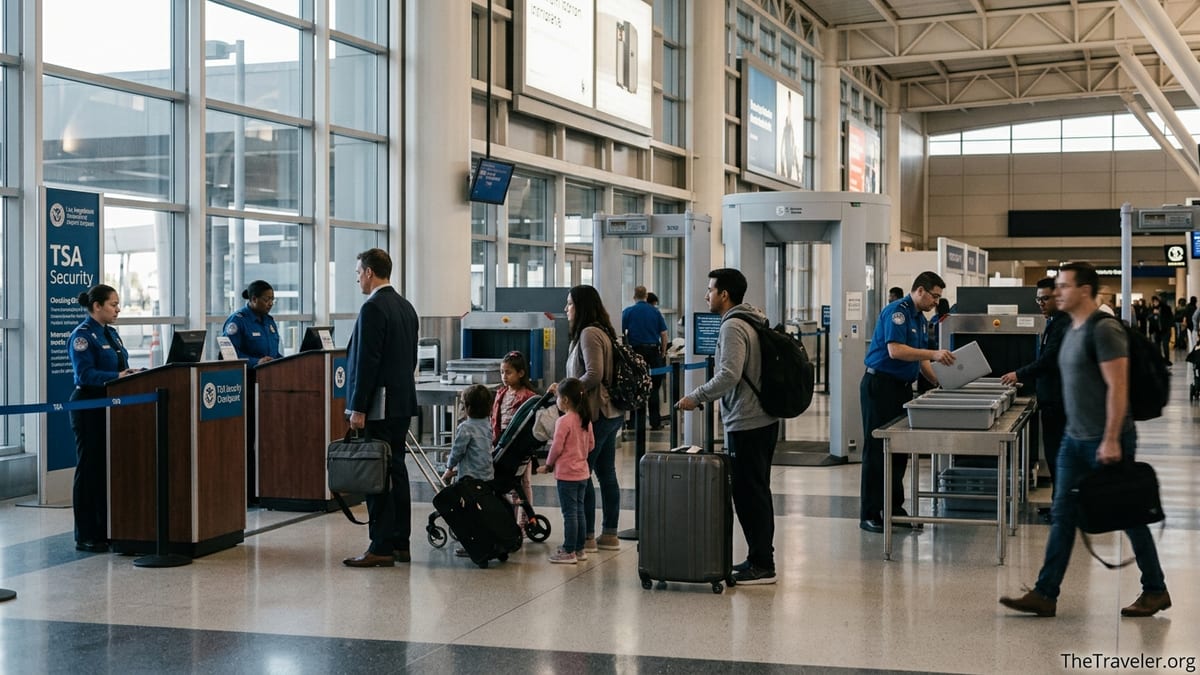
How LAX Security Is Set Up Across the Terminals
LAX is not a single big hall with one central checkpoint. Instead, it has nine passenger terminals, numbered 1 through 8 plus the Tom Bradley International Terminal, often called Terminal B. Each of these has its own TSA checkpoint, except for Terminal 8, which shares security with Terminal 7. That means your security experience will depend a lot on which airline you fly and which terminal you use, because lines are separate.
For example, Southwest passengers use Terminal 1, Delta mainly uses Terminals 2 and 3, American Airlines spreads across Terminals 4, 5 and parts of 6, and many international carriers use Terminal B. A Monday morning in Terminal 1 can feel completely different from a quiet mid-afternoon in Terminal 7. Travelers who show up expecting airport-wide wait times like you might see at some European hubs are often surprised to find that LAX feels more manageable precisely because security is broken up terminal by terminal.
Inside security, several terminals are connected by airside walkways and tunnels. In practice, that means you might clear security in one terminal and walk to another if they are linked airside. For example, Terminals 4 through 8 and Terminal B are connected behind security in a series of walkways and corridors. A traveler on American with a long line at Terminal 4 might sometimes clear at Terminal 5 or 6 instead, then walk back to their gate. This kind of strategy only works once you are familiar with the layout and comfortable walking 10 to 20 minutes with your bags.
Because terminals operate somewhat independently, wait times can swing sharply even within an hour. At 6:00 a.m., Terminal 1 may have a general screening line wrapped around the corner, while Terminal 7’s line is moving quickly. Later that morning, the pattern can reverse. Checking live wait time boards for LAX before you leave for the airport can help you adjust your arrival time or even decide whether to try a nearby terminal’s security if your airline and boarding pass allow it.
Current ID Rules, REAL ID, and TSA ConfirmID Fees
As of May 7, 2025, TSA fully enforces REAL ID requirements for domestic flights. In practical terms, that means every traveler 18 or older flying within the United States from LAX now needs either a REAL ID compliant driver’s license or another acceptable ID, such as a U.S. passport, passport card or DHS trusted traveler card, to pass through security. Traditional state licenses that are not REAL ID compliant are no longer enough on their own to board a domestic flight.
In 2026, travelers who show up at LAX security without a REAL ID or other acceptable ID are not automatically turned away, but they face a new process called TSA ConfirmID. Under this system, agents use other documents and biographical checks to verify your identity, and there is a fee of about 45 dollars for the extra work. The fee and the process can easily add 20 to 30 minutes or more to your time at the checkpoint, which means a late arrival combined with no valid ID can quickly turn into a missed flight.
A real-world example: a Los Angeles resident flying from LAX to Denver with only a standard California driver’s license that is not marked for REAL ID would be routed to TSA ConfirmID at security. After being informed of the fee and time impact, they might need to show a credit card, insurance card and answer personal questions to verify their identity. During peak hours, this can create a small queue of travelers in the same situation, all paying the fee and being processed one by one, while those with passports or REAL ID cards move normally through the standard screening line.
To avoid both the fee and the delay, most frequent travelers through LAX now carry a passport or REAL ID license by default, even for short hops to San Francisco or Las Vegas. Occasional travelers planning a big vacation through LAX in 2026 should check their driver’s license for the REAL ID star or equivalent marking well before their trip and, if there is any doubt, plan to bring a passport instead.
What Security Screening Looks Like at LAX in 2026
The basic rules at LAX match TSA standards across the country, but how they play out at a busy hub is worth understanding. For carry on bags, the familiar 3-1-1 liquids rule remains in effect: liquids, gels, aerosols, creams and pastes must be in containers of 3.4 ounces or less, and those containers must fit in a single clear quart size bag. At LAX checkpoints, TSA agents still regularly ask passengers to remove that bag and place it in a bin, and large bottles of sunscreen or full size shampoo routinely get pulled from carry ons and thrown away.
Electronics screening has also become a point of confusion. At most general screening lanes at LAX, travelers are still expected to remove laptops and larger electronics from their bags and place them in separate bins. With newer computed tomography scanners being slowly introduced, some checkpoints allow laptops to remain in bags, but this varies by lane and terminal. A traveler departing from Terminal 3 may see one lane where laptops can stay put and another where agents are calling out reminders to take them out. The safest approach is to listen carefully to the instructions at your specific lane and be ready to remove laptops and tablets if asked.
Footwear and outerwear rules are another area where expectations differ. In standard lanes, you should still plan to remove shoes, belts with large metal buckles, heavy jackets and items like watches or chunky jewelry that could set off the metal detector. At LAX, this is especially important during busy waves of departures when any extra time spent stepping in and out of bins slows the entire line. Many experienced travelers flying from LAX in the early morning choose slip on sneakers or sandals and avoid layered jewelry to move through the process more quickly.
Random additional screening is part of the LAX experience as well. Travelers may be directed to stand aside for a pat down, a swab of their hands or bags, or a secondary bag search. It might be triggered by an item inside a carry on, such as a camera tripod, or simply by a random selection system. On a typical afternoon in Terminal B, it is common to see one passenger out of a small group pulled aside so a TSA officer can run a trace detection swab across the handles of their suitcase or open a bag to examine a dense object seen on the X ray.
Timing Your Arrival and Understanding Real Wait Times
Official guidance for LAX still suggests arriving at least two hours before a domestic flight and three hours before an international flight. In reality, many recent travelers report shorter waits at security, especially when they are not traveling at peak times, but those anecdotes can be misleading if you accidentally hit a rush. A common pattern at LAX is a very light crowd just after 9:00 p.m. followed by a surge of late night international departures at Terminal B, or a lull at 10:00 a.m. followed by midday departures that suddenly fill the lines at Terminal 1.
Recent reports and unofficial trackers suggest that typical wait times for standard TSA lines at LAX often fall in the 10 to 25 minute range at many terminals, with peak periods that can reach 30 minutes or a bit longer at busier checkpoints. For example, a family flying out of Terminal 1 for a mid morning Southwest flight might see a 20 minute line that snakes close to the terminal entrance, while a solo traveler heading out of Terminal 7 at the same time breezes through general screening in under 15 minutes. TSA PreCheck and CLEAR members often report waits closer to 5 to 10 minutes at many terminals outside the heaviest early morning bank of departures.
Planning around these patterns makes a big difference. A traveler with a 7:00 a.m. domestic departure from Terminal 1 who arrives curbside at 5:00 a.m. may encounter a full queuing area and take nearly 30 minutes to reach the X ray belt, leaving less time for a quick breakfast near the gate. The same flight on a Tuesday might have lighter lines, but counting on that is risky. By contrast, a 2:00 p.m. domestic departure from Terminal 7 could see the traveler check in, pass through security in 10 or 15 minutes and still have time to walk to another terminal airside for a specific coffee shop or lounge.
Real time wait time boards and apps are increasingly useful at LAX. The airport publishes live estimates broken down by terminal, and independent tools aggregate traveler reports. While the numbers are only estimates and can change quickly, checking these around the time you order your rideshare can help you decide whether to push for a slightly earlier pickup or feel comfortable arriving closer to the recommended cutoff. In 2026, many LAX regulars will glance at live wait estimates as routinely as they check traffic on the freeway before heading to the airport.
TSA PreCheck, CLEAR, and Other Expedited Options at LAX
LAX is a strong airport for travelers who invest in expedited screening programs. TSA PreCheck is available in every main terminal, and CLEAR operates in several of the busiest ones, including those used by major domestic carriers. Together, these programs can dramatically reduce your time in line and simplify the screening process, particularly if you are a frequent flyer or often catch early morning departures.
With TSA PreCheck at LAX, you can usually keep your shoes and light jackets on and leave laptops and approved liquids inside your carry on, unless an officer gives you different instructions for a specific lane. In practice, that means a frequent business traveler flying American out of Terminal 4 at 6:30 a.m. might walk from the curb through the PreCheck line and be through security in under 10 minutes, even while the general line stretches toward the ticket counters. Several recent traveler accounts describe PreCheck lines at Terminals 7 and B that are nearly empty during certain midday windows, turning security into a quick formality.
CLEAR, which uses biometric identity verification, operates alongside TSA at LAX and is most helpful at terminals where the general ID check queue is long. A CLEAR member flying Delta from Terminal 3 might see a 20 minute general line but be escorted to the front of the physical screening area after a quick scan at a CLEAR kiosk. However, at times when TSA PreCheck lines are already short, CLEAR’s advantage shrinks, and members sometimes report that it offers little time savings compared with simply walking into the PreCheck lane.
Trusted traveler programs that include TSA PreCheck, such as Global Entry, can be especially valuable for international travelers connecting through LAX. A passenger arriving from Tokyo into Terminal B, clearing immigration and customs, and then rechecking a bag for a domestic connection to Phoenix can benefit from faster admission into the United States as well as shorter security lines for the onward flight. At a sprawling airport like LAX, shaving 10 or 15 minutes off both immigration and security can be the difference between a comfortable connection and a sprint between terminals.
For families, it is worth noting that children 17 and under traveling with a parent or guardian who has TSA PreCheck are often allowed to use the PreCheck lane with them, but this can vary with airline and TSA policies. A family of four flying from LAX to Orlando during a school holiday might save significant time and reduce stress by having at least one adult enrolled in PreCheck, especially during the crowded early morning hours when family groups with strollers and car seats often fill the general lines.
Terminal Specific Quirks and Real World Scenarios
Each LAX terminal has its own personality and quirks when it comes to security. Terminal 1, dominated by Southwest, is known for heavy peaks around early morning and late afternoon banked departures. Travelers flying out on a Friday evening often face a busy ticketing hall and lines that can approach 30 minutes in standard TSA lanes, while those catching a mid afternoon flight on a weekday may find the process much quicker.
Terminals 2 and 3, which serve Delta and several partner airlines, have benefited from major modernization in recent years. Security areas feel more open than older parts of the airport, and the flow from check in to screening is generally straightforward. However, because many popular domestic and transcontinental routes depart from these terminals, the early morning hours can still be crowded. A traveler heading to New York on a 7:30 a.m. flight from Terminal 3 might encounter a sharp spike in both general and PreCheck lines between 5:30 and 6:30 a.m.
Terminal B, the Tom Bradley International Terminal, is where many long haul overseas flights originate. Security there tends to ebb and flow with banked departure times, especially in the late afternoon and late evening. For example, clusters of flights to Europe and Asia departing between 8:00 p.m. and midnight can create heavy waves at security, with lines that appear short but move slowly due to the number of passengers carrying large amounts of cabin baggage. In contrast, a mid morning departure to Mexico or Canada may offer a comparatively quiet checkpoint experience.
On the other side of the airport, Terminals 4 through 7 are linked airside, which introduces some flexibility. An American Airlines passenger who finds Terminal 4’s security wrapped far back into the ticketing lobby at 6:00 a.m. might walk to Terminal 5, where the line is shorter, clear security there, and then follow the airside signs and corridors back to their gate in Terminal 4. This strategy is common among LAX regulars, though it requires extra walking time and the willingness to explore the airport’s interior walkways.
Handling Bags, Special Items, and Common LAX Mistakes
One of the most common reasons travelers are delayed at LAX security is not the length of the line but issues discovered at the X ray machine. Oversized liquids, forgotten items in pockets, and dense electronics packed on top of each other in a carry on often trigger bag pulls and secondary inspections. At a busy checkpoint, every extra minute spent repacking or watching an officer unwrap a tower of chargers and cables from your bag can feel twice as long.
Travelers through LAX frequently encounter specific problem items. Large bottles of sunscreen and hair products are common for visitors heading to beach destinations like Hawaii or Mexico and are often taken out and discarded if they exceed 3.4 ounces and are not in checked luggage. Souvenir bottles of wine or spirits bought in Los Angeles and placed in a carry on are also flagged and must be surrendered if the traveler is passing through a standard checkpoint instead of arriving from a duty free purchase at another airport.
Sports equipment is another frequent issue in Southern California. Items like baseball bats, skateboards, surfboard fins, and hiking poles all receive extra scrutiny. Some of these must go into checked baggage rather than carry on. A traveler trying to take a hiking pole in a carry on through Terminal 6, for instance, is likely to have it removed and checked or surrendered, causing a delay and possible extra charges at the airline counter.
Medications, baby formula, and breast milk are allowed in larger quantities than the standard liquids limit, but they must be separated and declared at the checkpoint. At LAX, officers are used to screening these items and often perform quick additional checks. A parent traveling with an infant out of Terminal 5, carrying multiple bottles and an insulated cooler pack, should be ready to remove these from the bag and explain them to an officer. Keeping them in a separate pouch or clear bag can make the process smoother and shorten any extra time spent at the X ray belt.
The Takeaway
Security at Los Angeles International Airport in 2026 is busy but predictable for travelers who understand how the terminals and TSA rules fit together. The airport’s multiple checkpoints spread crowds out, while programs such as TSA PreCheck and CLEAR help many passengers move through quickly. At the same time, stricter REAL ID enforcement and the new ConfirmID process mean that arriving without proper identification can be both costly and time consuming.
Most travelers who arrive at LAX two to three hours before departure, have valid ID ready, follow the 3-1-1 liquids rule, and pack electronics and special items thoughtfully find that security is just one step in the journey rather than a major obstacle. By combining realistic expectations about wait times with practical habits such as wearing easy to remove shoes, checking the latest TSA guidance, and using live wait time tools, you can turn LAX security from a source of anxiety into a manageable part of your travel day.
FAQ
Q1. How early should I arrive at LAX for TSA security?
For most travelers, two hours before a domestic flight and three hours before an international flight is still a safe rule. During heavy travel periods, such as holiday weekends or early morning Monday business departures, adding an extra 30 minutes can provide a buffer for traffic, check in, and any unexpected delays at security.
Q2. What ID do I need to fly from LAX in 2026?
Travelers 18 and older need a REAL ID compliant driver’s license or another acceptable ID such as a passport, passport card, or DHS trusted traveler card. Standard driver’s licenses that are not REAL ID compliant are no longer enough on their own for domestic flights, and arriving without acceptable ID can trigger the TSA ConfirmID process, a fee, and extra time at the checkpoint.
Q3. Can I still fly from LAX without a REAL ID?
Yes, but you must bring another acceptable form of ID like a valid passport, or you will be routed to TSA ConfirmID. That process involves additional identity checks, a fee of around 45 dollars, and can add 20 to 30 minutes or more to your time in security, especially during busy hours.
Q4. What are typical TSA wait times at LAX?
Wait times vary by terminal and time of day, but many travelers experience 10 to 25 minutes in standard lines and often under 10 minutes in TSA PreCheck lanes. Peak periods, such as early morning in Terminals 1, 2, and 3, or late evening at Terminal B, can push waits toward 30 minutes or a bit more if multiple large flights depart close together.
Q5. Does TSA PreCheck make a big difference at LAX?
In most cases, yes. PreCheck members at LAX usually enjoy shorter lines, keep their shoes and light jackets on, and can often leave laptops and small liquids in their bags. On many recent flights, especially from Terminals 4, 7, and B, travelers report clearing security in under 10 minutes with PreCheck, even while general lines are significantly longer.
Q6. Is CLEAR worth it at LAX?
CLEAR can be valuable at terminals where the ID check queues are long, such as during morning and evening peaks at Terminals 2, 3, and B. It allows you to verify your identity via biometrics and then jump ahead to the physical screening area. However, when lines are already short, especially in TSA PreCheck lanes, CLEAR may save little or no time, so its value depends on when and how often you fly.
Q7. Do I need to take out my laptop and liquids at LAX security?
In standard lanes, you should plan to remove laptops and the quart size 3-1-1 liquids bag from your carry on and place them in separate bins, unless an officer clearly says otherwise. Some lanes with newer scanners may allow electronics to remain in bags, but this is not guaranteed, so listening to instructions at your specific checkpoint is essential to avoid delays or extra bag checks.
Q8. Are the terminals connected after security at LAX?
Several terminals are connected airside, including Terminals 4 through 8 and Terminal B, which allows you to walk between them after clearing security without exiting and re screening. This can help if you want to use a particular lounge or restaurant in another terminal. However, the walks can be long, and not every terminal is linked, so you should allow extra time if you plan to use these connections.
Q9. What should I do if I am traveling with medications or baby items?
Medications, baby formula, and breast milk are allowed in larger quantities than the standard 3.4 ounce liquid limit, but you must separate and declare them at the checkpoint. At LAX, it helps to pack these items in a dedicated pouch or clear bag so you can easily remove them, explain what they are to the TSA officer, and complete any additional screening quickly without holding up the line.
Q10. What are the most common mistakes travelers make at LAX security?
Frequent mistakes include arriving with a non compliant ID, packing full size liquids in carry on bags, wearing complicated footwear or jewelry that slows down screening, and underestimating how far it can be from the curb to the checkpoint in large terminals. By checking your ID ahead of time, following the 3-1-1 rule, choosing simple travel clothing, and allowing enough time to walk and queue, you can avoid most common security hassles at LAX.