


MakeMyTrip is one of the most recognizable online travel agencies in India, used by millions to book flights, hotels, holidays, trains and buses. For many travelers, it is the default tab they open when planning a trip from Delhi to Goa, a family holiday to Dubai, or a last-minute ticket home. Yet convenience and brand recognition can hide important details about pricing, fees, refunds, and customer support that only become visible when something goes wrong. Before you click “Pay now,” it is worth understanding how MakeMyTrip actually works and what that means for your money and your plans.
Get the latest updates straight to your inbox!
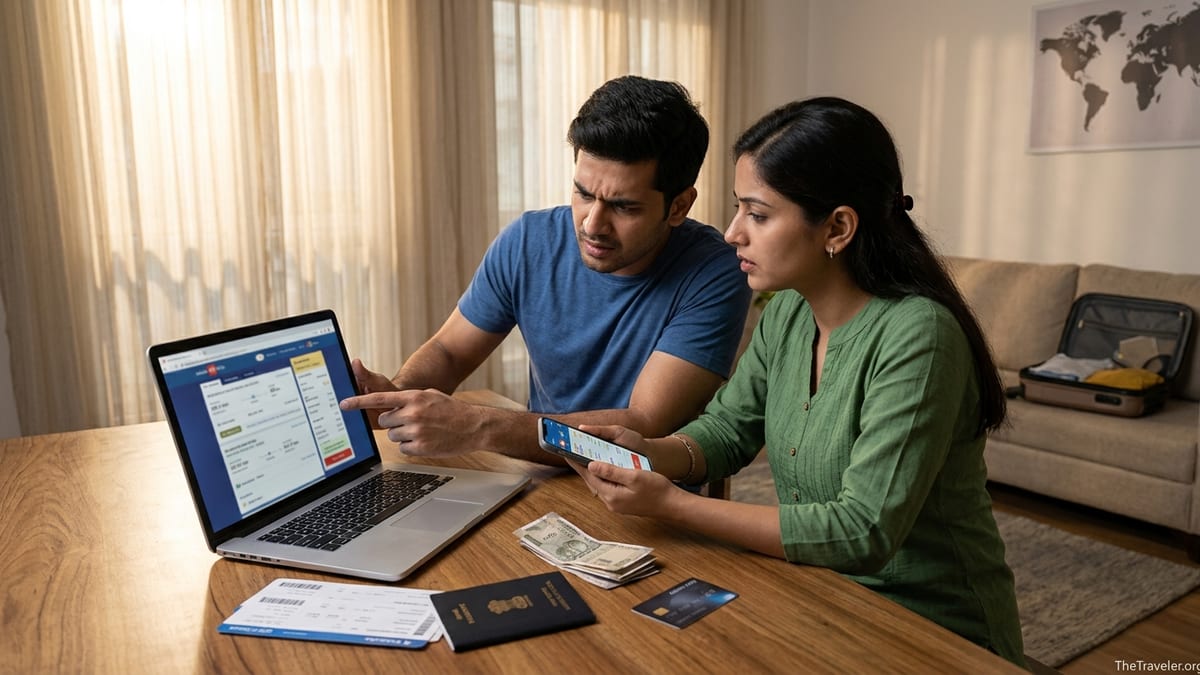
How MakeMyTrip Fits Into the Travel Booking Landscape
MakeMyTrip is an intermediary, not the airline or hotel itself. Legally and operationally, it sits between you and the underlying service provider: IndiGo, Air India, Vistara, Emirates, Marriott, a boutique homestay in Manali, or a budget hotel in Jaipur. It aggregates inventory, shows you comparative prices, and processes payment, then passes your booking and money to the airline or hotel according to commercial agreements you do not see. This setup explains both the convenience of a single platform and many of the frustrations travelers report when plans change or refunds are due.
For a Delhi to Mumbai flight, for example, the base fare and official airline fees are the same whether you book on the airline website or through MakeMyTrip. What changes is how the final price is presented, what additional fees the intermediary adds, and who you must deal with when you need to cancel, change dates, or chase a refund. Many travelers only discover the practical implications of that “in-between” role when an airline cancels a flight or a hotel denies a refund that MakeMyTrip initially seemed to promise.
MakeMyTrip’s scale also shapes your experience. The platform handles a very large volume of bookings across flights, hotels, and packages. On the positive side, that can translate into negotiated fares on certain routes, app-only coupon codes, and bundled discounts such as flight + hotel deals for destinations like Bangkok or Bali. On the negative side, it means customer support systems are highly automated, with standardized responses and escalation paths that can feel slow or unhelpful if your case does not fit neatly into predefined categories.
Understanding MakeMyTrip as a broker rather than a direct provider is the starting point to interpreting its prices, cancellation rules, vouchers, and the way responsibility is shared whenever something does not go to plan.
Prices, Convenience Fees and “Hidden” Costs
One of the biggest surprises for new users is that the fare you see on the first search screen is often not the amount you pay at checkout. Like most large online travel agencies in India, MakeMyTrip typically adds a separate convenience fee near the final payment step. Recent industry comparisons of Indian flight booking sites in 2026 show that these fees on MakeMyTrip frequently fall in the range of roughly ₹249 to ₹499 per passenger on domestic flights, and can be higher on certain international routes, especially when you add services such as travel protection or seat selection.
That difference becomes tangible on group trips. A family of four booking a Delhi to Kochi round-trip might see an enticing base fare of about ₹6,000 per person at the search stage, suggesting a total of around ₹24,000. By the time they reach payment, per-passenger convenience fees and optional add-ons can easily add ₹2,000 or more to the overall bill. In contrast, booking the same itinerary directly on an airline app might involve either a much smaller booking fee or none at all, depending on the carrier and ongoing promotions.
The same pattern appears on international itineraries. A traveler booking a Bengaluru to Tokyo round trip reported a MakeMyTrip checkout that included a near ₹900 convenience fee on top of a fare around ₹39,000, pushing the final total above ₹40,000. Competing platforms, or certain membership-based travel clubs, sometimes presented slightly lower all-in prices for the same flights by charging smaller or no convenience fees. The headline difference might look minor on one ticket, but across two or three passengers it can mean several thousand rupees more.
Another subtle source of extra cost is defaulted add-ons. On some bookings, users find options like travel insurance, ancillary services, or special protections pre-selected. For example, a traveler booking a long-haul ticket noted receiving an unsolicited message later stating that travel insurance was “mandatory” under a supposed regulation and was being strongly urged to add it after paying almost 900 US dollars for the ticket itself. While insurance can be valuable, the way it is presented can make it hard to distinguish optional protection from legally required charges. Taking a few extra minutes to manually review each charge line before paying is essential.
Refunds, Cancellations and the Fine Print
Refunds and cancellations are where the gap between marketing promises and real-world outcomes is most sharply felt. On the booking page, MakeMyTrip often highlights messages such as “Free cancellation,” “100 percent refund on cancellation,” or “Refundable up to a certain date.” However, the underlying rules can depend on a complex combination of airline or hotel policies, MakeMyTrip’s own service terms, and any special promotional conditions.
Consider a real example from 2025 where a traveler booked a hotel through MakeMyTrip that was advertised with a 100 percent refund on cancellation. When the guest later canceled within the permitted window, the platform treated the promised refund as cashback credited in a specific way rather than a full cash return to the original payment method. The customer reported being told by support that “cashback refund is out of policy,” despite the initial headline language strongly suggesting a straightforward refund. The outcome was not that no money came back, but that the form and timing of that return were very different from what the guest expected.
Flight cancellations show similar patterns. In multiple real cases shared publicly in 2024 and 2026, travelers whose flights were canceled by airlines such as Go First or due to geopolitical disruptions said the carrier had already processed a refund to MakeMyTrip, but the amount was slow to appear in the traveler’s account or arrived only partially. One passenger flying from Frankfurt to Delhi with a Middle East connection described weeks of waiting for an international refund that the airline reported as processed, while MakeMyTrip’s system continued to show the request as pending. Others have reported receiving a fraction of what had been indicated at booking after canceling within the stated window, once airline cancellation fees, service charges, and various deductions were applied.
The core issue is that your contract is split. The airline or hotel sets baseline rules: for instance, a partially refundable economy ticket might allow cancellation for a fee of ₹3,000 per passenger before departure. MakeMyTrip then layers its own service logic on top of that, including any additional handling charges or interpretations of “non-refundable” or “flexible.” When you cancel through the platform, your refund path is routed through MakeMyTrip, not directly from the airline or hotel in many cases. If either side delays or disputes a component, the traveler ends up in the middle, trying to decode who actually holds the money at that moment.
Customer Support, Disputes and Real-World Experiences
Customer reviews of MakeMyTrip form a mixed picture. Many travelers successfully complete trips with no issues and never need to interact with support beyond automation. However, those who do need help often describe long resolution times, inconsistent information, or frustration when dealing with complex problems such as partial refunds or itinerary changes triggered by airlines.
Public complaint boards and review sites in 2024, 2025, and 2026 contain a recurring theme: travelers alleging that MakeMyTrip takes weeks or months to pass on refunds after airline cancellations, or that only partial sums arrive without clear breakdowns. One customer, for instance, had a round-trip itinerary from Delhi to Boston rescheduled by the airline and ultimately canceled. They reported receiving only the return-leg refund at first, with the fare for the original outbound segment still stuck despite repeated reassurances from support that it would be processed.
Other travelers who booked flight plus hotel packages have described confusion over how responsibilities are split when one component fails. In one widely discussed case, an airline canceled a flight that was part of a combined package. The traveler believed that this should trigger a full refund or at least a comprehensive rebooking since the hotel stay had become impractical. Instead, MakeMyTrip treated the flight and hotel as if they had been booked separately, referred back to a non-refundable hotel policy, and offered only a partial refund, heavily leaning on gift-card style credits rather than returning the original payment.
To be fair, MakeMyTrip publicly emphasizes its investment in customer service systems and publishes corporate sustainability reports highlighting complaint handling frameworks and internal metrics. Yet the gap between those documents and the lived experience of many individual users is notable. For travelers, the practical lesson is simple: if you anticipate that your plans might change, or if you are booking an expensive international itinerary where a refund dispute would be financially painful, you should scrutinize both the airline or hotel cancellation rules and MakeMyTrip’s own terms before committing.
Special Products: Price Lock, Protection Plans and Vouchers
Alongside standard bookings, MakeMyTrip offers several “value-add” products intended to give travelers more flexibility or peace of mind. One prominent example is its Price Lock feature on selected flights. For a fee that can start as low as about ₹99 on some domestic routes, you can lock in a fare for a fixed period, often from one to seven days and sometimes longer on promotions. If fares climb during that window, you can still book at the locked price, with MakeMyTrip absorbing the difference up to a published cap. If fares drop, you typically pay the lower amount; the lock protects you against increases rather than locking you into a higher fare.
Price Lock can be particularly useful on routes where fares are volatile. Imagine spotting a Mumbai to Leh flight in peak Ladakh season priced at ₹5,000 one way. You want to confirm leave from work before committing. Locking the fare for a small fee might save you thousands if the price jumps to ₹8,000 in the next few days. However, that fee is usually non-refundable if you never complete the booking. Travelers who treat price-lock fees as part of their overall budgeting generally find them helpful, but only if they read the conditions around lock duration, eligible flights, and maximum price-difference coverage.
MakeMyTrip also sells a range of protection products: trip cancellation covers, visa guarantee packages on certain international routes, and various “assured refund” or “zero cancellation” style offers. In theory, these can soften the blow if visas are denied, plans change for medical reasons, or you need to cancel close to departure. In practice, customers have reported that claiming these benefits can be more complex than the initial marketing suggests. For example, travelers who purchased visa guarantee protection for flights to destinations such as Georgia have later complained publicly that they struggled to get reimbursements even when visas were refused, despite having documentation they believed met the stated criteria.
Voucher-based refunds add another layer of complexity. Some MakeMyTrip campaigns and customer service resolutions provide compensation in the form of platform credits or gift cards rather than direct cash refunds. For a frequent traveler regularly booking domestic hops between Bengaluru and Hyderabad, that might be perfectly acceptable. For a family that saves for a single international trip every few years, finding that a large portion of an expected cash refund has been converted into time-limited vouchers can be deeply frustrating. Before accepting any such offer, it is wise to ask for the exact validity, blackout dates, and usage conditions in writing.
When It Makes Sense to Book Through MakeMyTrip
Despite the concerns, there are clear scenarios where MakeMyTrip can be useful and even advantageous. One is comparison shopping for complex itineraries. If you are considering multiple airlines and times for a Bangalore to London trip with one stop, MakeMyTrip’s grid view, filters, and sorting tools can quickly surface options you might miss by manually checking each airline. You can then decide whether to book through MakeMyTrip or take the same flight details and book directly with the carrier.
Another potential advantage is bundled deals. In popular leisure destinations like Dubai, Bali, Phuket, or Mauritius, MakeMyTrip sometimes negotiates flight plus hotel plus transfer packages that are competitively priced compared with assembling each part yourself, particularly during off-peak seasons. For a first-time traveler who wants a pre-arranged itinerary, airport pick-up, and a named contact, such packages can be comfortable. The trade-off is reduced flexibility and more layers of terms and conditions, especially if you need to cut the trip short or change dates.
Loyalty and co-branded card offers can also tilt the balance. Some banks periodically run promotions tied to MakeMyTrip, such as limited-time discounts on domestic flights or cashbacks on international holiday bookings when you pay with a particular credit card. For example, an offer might give ₹1,500 off a Delhi to Kochi return if you use a specific bank’s card on selected dates. If you are already an informed traveler who understands the refund rules and is comfortable with the platform, stacking such discounts with a reliable itinerary can deliver good value.
Finally, for bus and train bookings within India, MakeMyTrip can centralize multiple operators and classes in one place, simplifying what can otherwise be a fragmented search process. As with flights and hotels, the key is to read operator-specific policies on rescheduling and refunds, especially on popular routes like Bangalore to Chennai by overnight bus or Delhi to Agra by train, where last-minute changes are common.
How to Protect Yourself Before You Click “Pay”
There are several practical steps you can take to reduce risk when booking through MakeMyTrip. First, always compare the final payable amount on MakeMyTrip with the final amount on at least one other channel, such as the airline’s own app or another major online travel site. Do this at the last stage of checkout on each platform, where all fees and add-ons are visible. On a typical Delhi to Goa domestic ticket, you might discover that MakeMyTrip’s convenience fee adds ₹300 per passenger while the airline site charges only a small processing fee, or none at all, for the same flight.
Second, click into the fare rules and cancellation policy details on the MakeMyTrip booking screen. Do not rely on a single green label saying “Refundable” or “Free cancellation.” Look for specific statements such as “Airline cancellation fee,” “MakeMyTrip service fee,” “Refund method,” and any mention of cashback, wallet credits, or vouchers. If the policy states that refunds may be issued as credits or promotional balances, ask yourself whether you are comfortable with that outcome, especially for larger bookings above, say, ₹50,000.
Third, document important representations at the time of booking. This can be as simple as taking screenshots on your phone showing the cancellation promise, refund estimates, and any special protections you are buying, along with the date and time. In some recent disputes escalated to consumer forums in India, travelers have relied on such screenshots to challenge outcomes where the actual refund was far lower than the booking screen implied, once airline and intermediary fees were applied.
Finally, build in a margin of safety for time and cost. If you are booking for urgent travel, consider whether you can afford a delay of a few weeks if a refund goes into dispute. If the answer is no, you might prefer booking directly with an airline or a hotel chain known for faster direct refunds, even if the upfront price is marginally higher. Similarly, if an add-on such as “zero cancellation” cover or visa protection feels critical to you, experiment by checking how similar protections are handled by competing platforms or through standalone travel insurance policies, rather than assuming MakeMyTrip’s version will be the easiest to claim.
The Takeaway
MakeMyTrip remains a powerful tool for planning and booking travel, especially in and around India. Its broad inventory, user-friendly app, and regular promotions have made it the default choice for everything from student trips to Goa to multi-country family holidays. However, convenience comes with trade-offs that every traveler should understand in advance. Pricing is not only about the base fare displayed on the first screen, but also about per-passenger convenience fees, pre-selected add-ons, and the way refunds are structured.
The most serious issues tend to arise when trips do not go as planned: airline cancellations, visa refusals, personal emergencies, or hotel disputes. In those moments, MakeMyTrip’s role as an intermediary can blur lines of responsibility and extend timelines for getting your money back. Real-world cases from the last few years underline the importance of reading the fine print, confirming whether refunds are cash or credits, and documenting promises made on booking screens.
If you go into the process with clear eyes, compare final prices with alternative channels, and understand exactly what protections you are buying, MakeMyTrip can be one useful option among several, rather than the only tab you trust. The essential move is to treat every attractive label, from “100 percent refund” to “zero cancellation,” as an invitation to read the underlying rules and decide whether those terms genuinely fit your risk tolerance and travel style.
FAQ
Q1. Is it cheaper to book flights on MakeMyTrip or directly with the airline?
In many cases the base fare is similar, but MakeMyTrip often adds a separate convenience fee per passenger at checkout. Airlines sometimes charge lower or no booking fees on their own apps, so it is common to find that the all-in price is slightly cheaper direct, especially on simple one-way or return itineraries.
Q2. How reliable are MakeMyTrip’s “100 percent refund” or “free cancellation” claims?
These labels can be accurate but are usually subject to conditions. The refund may come as cashback or platform credit, not always as a full cash return to your card. Always open the detailed policy to see whether the refund is to your original payment method, a wallet, or a time-limited voucher.
Q3. What happens if my airline cancels a flight booked through MakeMyTrip?
Typically the airline processes a refund or offers a free date change to MakeMyTrip, which then has to pass that option to you. Some travelers report smooth handling, while others describe long waits or partial refunds. It is important to track communication from both the airline and MakeMyTrip and to keep copies of any emails confirming that a refund has been issued.
Q4. Are MakeMyTrip’s protection plans and visa guarantees worth buying?
They can be useful in specific situations, but the conditions can be strict. Read the eligibility rules and claim requirements carefully and compare them with standalone travel insurance or other platforms’ protections. If a denied visa or last-minute cancellation would seriously damage your finances, consider diversifying protection rather than relying solely on one platform’s add-on.
Q5. How long do refunds from MakeMyTrip usually take?
For straightforward cancellations on fully refundable tickets, refunds can appear within a few days to a couple of weeks. When cancellations involve airline disruptions, complex packages, or special promotions, some customers report waiting significantly longer. If a promised refund has not arrived within the stated timeframe, escalate through written support and, if necessary, relevant consumer channels.
Q6. Can I avoid paying MakeMyTrip’s convenience fee?
The convenience fee is typically mandatory on MakeMyTrip itself, though its exact amount can vary by route, promotion and payment method. The most practical way to avoid or reduce it is to compare with airline-direct bookings or with other travel sites that charge lower or zero convenience fees on certain routes.
Q7. Is it safe to store my card details and documents on MakeMyTrip?
MakeMyTrip states that it follows industry-standard security practices and regularly highlights data protection measures in corporate reports. However, as with any online service, you should use strong, unique passwords, enable two-factor authentication where available, and store only the minimum necessary information to complete bookings.
Q8. What should I do if MakeMyTrip gives me a voucher instead of a cash refund?
First, check whether the voucher option is mandatory under the booking terms or if you can insist on a refund to the original payment method. Review the voucher’s validity, restrictions and blackout dates. If you believe a cash refund was clearly promised at booking, raise a formal complaint with MakeMyTrip and consider documenting the case with screenshots and written correspondence.
Q9. Are MakeMyTrip’s package holidays better value than booking separately?
Sometimes. In destinations like Dubai or Bali, bundled flight and hotel packages can be competitively priced, especially during sales. However, you sacrifice some flexibility and may face more complex refund rules if part of the trip changes. It often makes sense to price out the same flights and hotels separately before deciding.
Q10. How can I minimize problems when booking through MakeMyTrip?
Compare final prices with at least one alternative channel, read all fare rules and refund conditions, avoid unwanted add-ons, and keep screenshots of key promises. For high-value or time-sensitive trips, consider whether booking directly with airlines or major hotel chains better matches your risk tolerance, even if the initial price looks slightly higher.