


More news on this day
A cascading equipment failure at a key Federal Aviation Administration facility near Philadelphia on Monday, September 21, led to widespread ground stops and delays across the Northeast, disrupting thousands of flights and stranding travelers at some of the country’s busiest airports.
Get the latest news straight to your inbox!
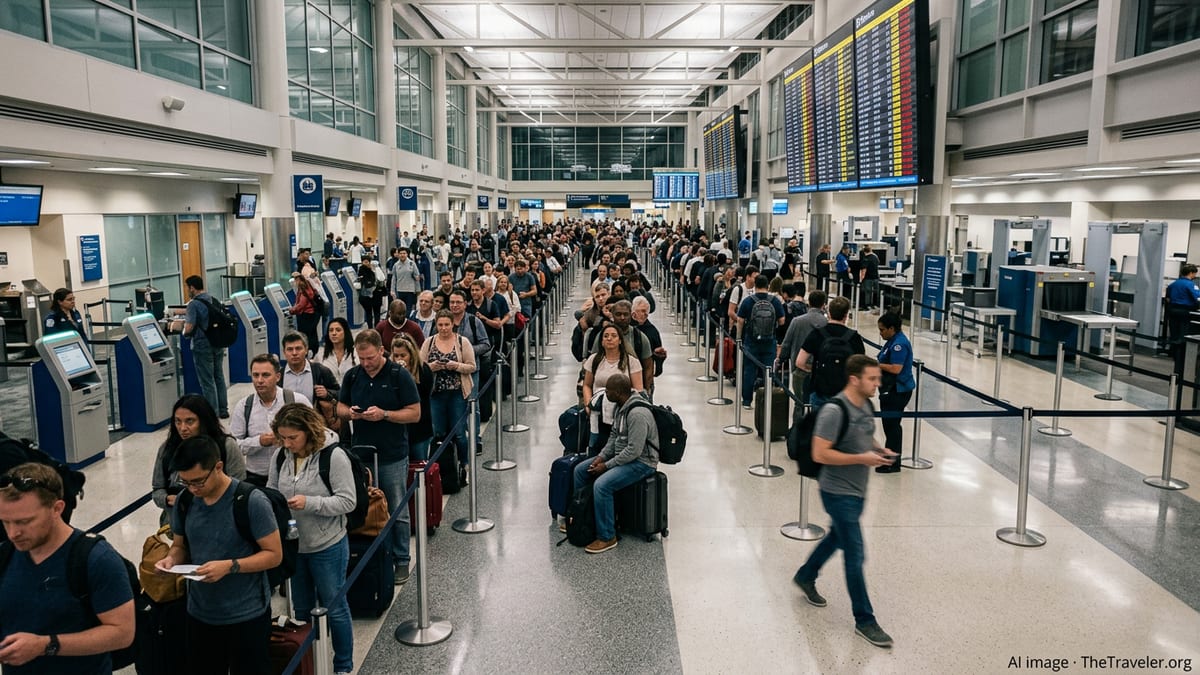
How the outage began and where it hit hardest
Publicly available information indicates that the disruption began late Monday morning, when a regional air traffic communications facility serving the Northeast corridor experienced a sudden equipment failure. The incident affected radio and data links used to manage flights into and out of Philadelphia International Airport, Newark Liberty International Airport, New York’s John F. Kennedy and LaGuardia airports, and several smaller fields including Teterboro in New Jersey.
According to published coverage, the Federal Aviation Administration responded by ordering ground stops at Newark, Philadelphia and Teterboro, meaning departures were temporarily halted while technicians worked to restore communications. Arrivals were also sharply curtailed, with flight tracking data showing that no commercial flights landed at Newark Liberty for several hours in the middle of the day.
As the outage rippled outward, New York’s major airports reported holds and delays on both arrivals and departures. By late afternoon, traffic along the Northeast corridor was heavily backlogged, with average delays at some airports exceeding 90 minutes and growing. The disruption coincided with the afternoon peak at major hubs and with heavy traffic into New York for the United Nations General Assembly, magnifying the impact on travelers.
Flight tracking services cited in news reports show that by Monday evening the outage had caused hundreds of cancellations and diversions nationwide, with Newark recording more cancellations than any other airport in the world that day. Disruptions spread well beyond the Northeast as airlines repositioned aircraft and crews and delayed departures from other regions that were scheduled to fly into the affected airspace.
What investigators say triggered the failure
Early accounts from transportation officials and agency statements point to a problem with the communications infrastructure that links the Philadelphia regional approach control facility to the broader national air traffic system. Reports indicate that a fiber optic telecom line was severed at or near a construction site in New Jersey, cutting a critical circuit that handles air traffic communications for the region.
Coverage from multiple outlets describes a second layer to the failure. A backup circuit that was supposed to provide redundancy did not function as intended, leaving controllers with limited or no access to some radar and radio systems. This combination of an aging primary circuit and a compromised backup produced the cascading outage that forced the FAA to halt flights rather than risk operating with degraded situational awareness.
The affected facility, often referred to as the Philadelphia TRACON, manages approach and departure traffic for a large portion of the mid-Atlantic and Northeast, including busy routes into New York and New Jersey. Congressional testimony and earlier reports have already highlighted strain on this facility after certain responsibilities for Newark-area airspace were shifted there in recent years, with experts warning about the potential consequences of data and communications failures.
As of Tuesday, September 22, transportation officials have indicated that the severed telecom lines were repaired and that the system was operating again, but detailed technical findings about why the backup paths did not prevent such a widespread shutdown have not yet been made public. Formal investigations into the construction mishap and the resilience of the communications architecture are expected to continue in the coming days and weeks.
The scale of the disruption for travelers and airlines
By Monday night, flight status boards at major Northeast airports told the story of the outage’s reach. At Boston Logan International Airport, which lies just outside the core of the affected airspace but relies on the same corridor, local coverage reported nearly 500 delayed flights and more than 70 cancellations by the end of the day. Some aircraft originally bound for New York area airports were diverted to Boston, adding pressure to gate and ramp operations there.
In Philadelphia, airport data referenced in regional reporting showed average delays of around two hours for arrivals and departures on Monday evening, even after the formal ground stop had been lifted. Travelers described multi-hour waits on the tarmac and in terminals as airlines struggled to re-sequence departures once the system came back online.
The disruption at Newark Liberty reverberated particularly widely because the airport serves as a major hub for a large U.S. carrier and a key transatlantic gateway. Airline statements cited in national coverage noted that the technology outage affected “all airlines in the Northeast,” with flights bound for Newark held at their origin airports or diverted en route. As aircraft and crews fell out of position, the impact spilled into Tuesday’s schedules, leading carriers to offer travel waivers and advising passengers to monitor their bookings closely.
The outage also affected airports farther afield. Some West Coast hubs reported elevated delay levels as flights destined for the Northeast were held or rerouted, compounding existing weather-related programs. Travelers flying through connecting hubs found that even flights not passing directly over the Philadelphia-controlled airspace were delayed as airlines absorbed the systemwide shock.
What this reveals about aging air traffic infrastructure
The outage has renewed scrutiny of the resilience of the national airspace system and of the aging technology that underpins critical air traffic functions. In recent years, lawmakers and aviation groups have warned that key facilities, including the regional control centers that manage complex terminal airspace, are reliant on legacy circuits and hardware that can be vulnerable to single points of failure.
Congress approved roughly 12.5 billion dollars last year for upgrades to air traffic control systems, including communications, navigation and surveillance infrastructure, according to federal budget documents. However, recent hearings have underscored that modernizing facilities such as the Philadelphia TRACON and the New York area approach control centers is a multi-year undertaking that must proceed while those same facilities continue handling heavy daily traffic.
Published analyses of Monday’s outage note that this is not the first significant technology-related disruption to strike the region. Earlier episodes involving radar and communications glitches at facilities serving Newark and Philadelphia prompted internal reviews and calls for additional investment. The latest failure, linked to a cut fiber line and a nonperforming backup path, is feeding a broader debate over how much redundancy is sufficient in the busiest air corridors.
Aviation industry groups argue that, although large-scale outages are relatively rare compared with the total volume of flights handled each year, the consequences for passengers and airlines when they do occur are severe. The latest incident is likely to feature prominently in ongoing discussions in Washington over long-term funding for the Airport and Airway Trust Fund and for targeted projects to harden critical communications nodes against both physical damage and software faults.
What travelers should know in the aftermath
For travelers with upcoming trips through the Northeast, publicly available guidance from airlines and airport operators emphasizes the importance of monitoring flight status closely in the days following the outage. Even after ground stops are lifted, it can take multiple operational cycles for aircraft and crews to return to their normal positions, leading to rolling delays or isolated cancellations on subsequent days.
Several major airlines serving Newark, Philadelphia, New York and Boston have issued temporary travel waivers, allowing customers booked on certain dates and routes to change flights without additional fees. Details vary by carrier and fare type, but travelers are being encouraged in airline statements to rebook early if they have flexibility, especially for nonessential journeys.
Airport information channels indicate that security checkpoints, rental car centers and public transportation links remain open and functioning normally. However, passengers connecting at large hubs may encounter longer lines at customer service desks and rebooking counters as airlines work through the backlog of disrupted itineraries.
More broadly, the episode serves as a reminder that even in the absence of severe weather, travelers in tightly scheduled corridors like the Northeast can be affected by infrastructure failures many states away. In the short term, the most actionable step for passengers is to build extra time into itineraries that touch congested hubs, ensure that airline apps and contact details are up to date, and remain prepared for schedule changes as the system fully recovers from one of the most significant technology-related interruptions of the year.