


More news on this day
Travelers passing through Norfolk International Airport are encountering more frequent waits at the gate and around the baggage carousel, as a wave of construction projects and steadily rising passenger numbers combine to strain the airport’s aging infrastructure in the short term.
Get the latest news straight to your inbox!
Record Passenger Growth Meets an Aging Terminal
Publicly available data shows that Norfolk International Airport set a new annual passenger record in 2024, handling more than 4.8 million travelers, a nearly 7 percent increase over the previous year. That marked the third straight year of record traffic and pushed the mid-sized airport closer to pre-pandemic forecasts that anticipated long-term growth in the coastal Virginia region.
Those numbers are arriving in a terminal complex whose core departures building dates back to the mid-1970s. While the airport has undergone multiple rounds of improvements over the decades, the historic layout still influences how passengers move between check-in, security, gates and baggage claim. As volumes climb, any disruption, from late aircraft to weather or crew scheduling, can cascade more quickly into delays at gates and slow baggage delivery.
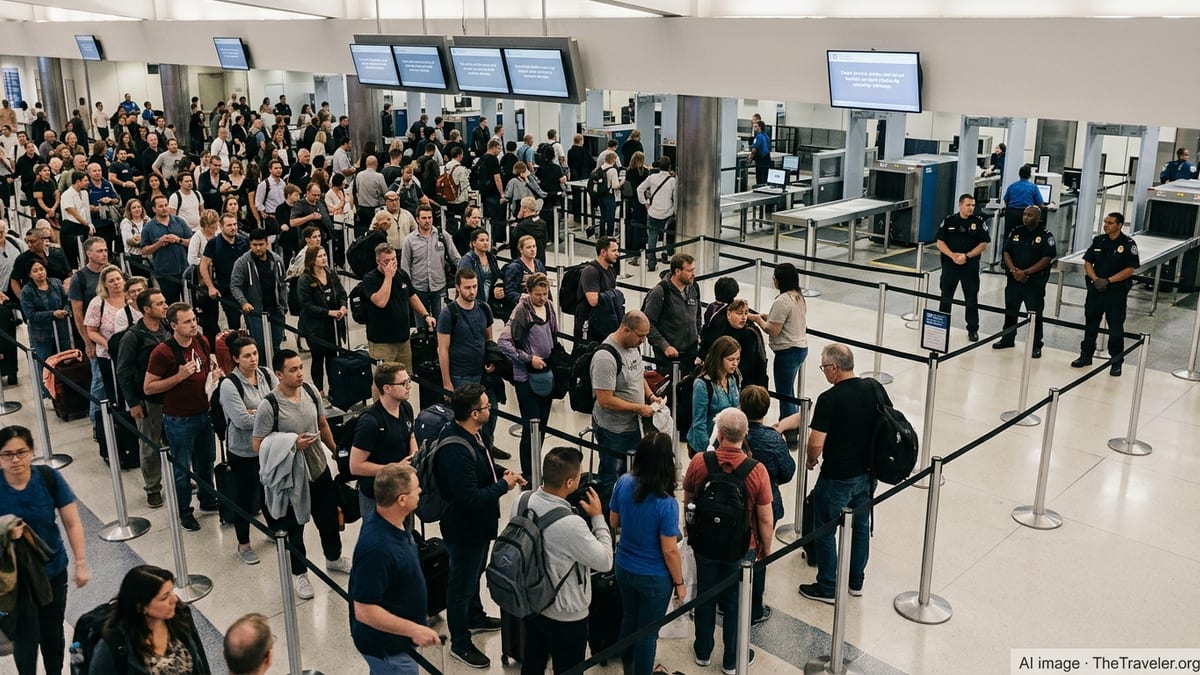
Reports from regular travelers suggest that security and check-in at Norfolk often remain comparatively smooth, but the pinch points are increasingly appearing at the gate and on the arrivals level. With more flights operating near capacity, it takes longer to turn aircraft, reposition ground equipment and move bags through systems that were not designed for today’s sustained traffic peaks.
TransformORF: Construction in a Live Terminal
Norfolk International is in the middle of what airport materials describe as the largest modernization effort since the current departures terminal opened. The long-range capital program, branded TransformORF in industry coverage, is touching almost every part of the terminal complex, including departures, concourses, baggage systems and international arrivals.
Construction of an expanded Concourse A, along with a new Federal Inspection Services facility for international arrivals, is underway with work progressing in phases. Project information from contractors indicates that these upgrades include new baggage handling equipment and reconfigured tug routes on the airfield to support international bag flows. While designed to improve efficiency over the long term, phased construction in and around active gates can temporarily constrain available parking positions and ground-access routes.
Additional projects, including a departures terminal expansion and modernization with a reworked central security checkpoint and outbound baggage make-up area, are proceeding through design and procurement. Requests for proposals and construction manager contracts describe a complex sequence of renovations, adaptive reuse of existing spaces, and new site work intended to keep the airport functioning throughout construction. That sequencing often means working around temporary walls, closed corridors and relocated equipment, all of which can slow both passengers and luggage.
Baggage Systems Under Strain and in Transition
Recent planning documents and bid notices highlight a particular focus on baggage handling and information systems. The departures terminal expansion includes upgraded baggage handling systems and supporting infrastructure, while concourse and international facility work calls for new conveyors and sorting equipment. At the same time, the Norfolk Airport Authority is moving to replace its integrated passenger processing and display systems, including baggage information displays.
A current solicitation seeks a fully integrated, cloud-based system that would tie together check-in, gate management, flight displays and baggage information screens throughout the terminal. Until that new system is implemented, the airport is relying on legacy equipment and software that must be kept operational while contractors prepare the transition. Industry experience at other airports suggests that this kind of overlap period can contribute to irregular baggage delivery times when components are taken out of service for upgrades or when workarounds are required.
Norfolk’s modernization plans also involve repurposing some interior space. A recent city land-use report notes a project converting part of the baggage claim area into administrative offices. While relatively modest in scale, such changes can temporarily reduce the footprint available for baggage operations or require belts and carousels to be reconfigured, increasing the potential for congestion when several full flights arrive close together.
More Flights, Tighter Schedules at the Gate
Beyond the baggage room, the airport’s gate area is also feeling the effects of growth and construction. With passenger counts rising and airlines increasing capacity on key routes, gate usage has become more tightly scheduled. Occasional ground delay programs affecting the region, shared in public flight-tracking notices, describe short but recurring gate holds, especially when inbound aircraft arrive late or when weather disrupts traffic flows along the East Coast.
The expansion of Concourse A and eventual addition of new or reconfigured gates is intended to provide more breathing room. However, during the build-out phase, some ramp and boarding-bridge areas are periodically restricted. Construction updates from contractors describe phased installation of new boarding bridges and apron improvements, work that must be coordinated around active airline operations. When certain stands are temporarily unavailable, arriving aircraft may have fewer options, increasing the likelihood of waiting on the tarmac for a gate to open.
On the passenger side, even small changes can add minutes to the process of deplaning and reaching baggage claim. Detours around construction zones, temporary boarding corridors and adjusted exit routes to the arrivals level all lengthen walking times and concentrate crowds at certain chokepoints. Combined with busy peak periods in the early morning and late afternoon, these factors contribute to the perception of more frequent and longer delays between touchdown and baggage pickup.
Short-Term Frustrations, Long-Term Payoff
Norfolk International’s current challenges at the gate and baggage claim fit a broader pattern seen at mid-sized U.S. airports undertaking major upgrades while continuing to operate at near-record volumes. Industry coverage points to similar experiences elsewhere as terminals modernize security checkpoints, expand concourses and overhaul baggage systems under tight construction windows.
Airport planning documents and state aviation summaries indicate that Norfolk is securing federal and state funding to support its capital program, including work on passenger facilities and international processing. The goal is to align the airport’s infrastructure with current standards for security, accessibility and international traffic, and to give airlines room to grow service to and from Hampton Roads in the coming decade.
For now, the trade-off is most visible at the places travelers feel it most directly: waiting at the gate for a delayed arrival or watching the carousel at baggage claim. As new concourse space, upgraded systems and redesigned flows come online over the next several years, the airport’s modernization push is expected to ease today’s bottlenecks, even as passenger counts continue to rise.