


Wheels Up has evolved from a niche King Air operator into a major private aviation brand with a tightly focused core fleet and a deep network of partner aircraft. For travelers, that means you can now choose from a small number of standardized in-house types, plus a broad selection of third-party jets when your trip demands something larger or more specialized. This guide walks through every main aircraft category you can access through Wheels Up today, how they differ in the real world, and what that means for your next business run to Chicago or a family escape to the Caribbean.
Get the latest updates straight to your inbox!
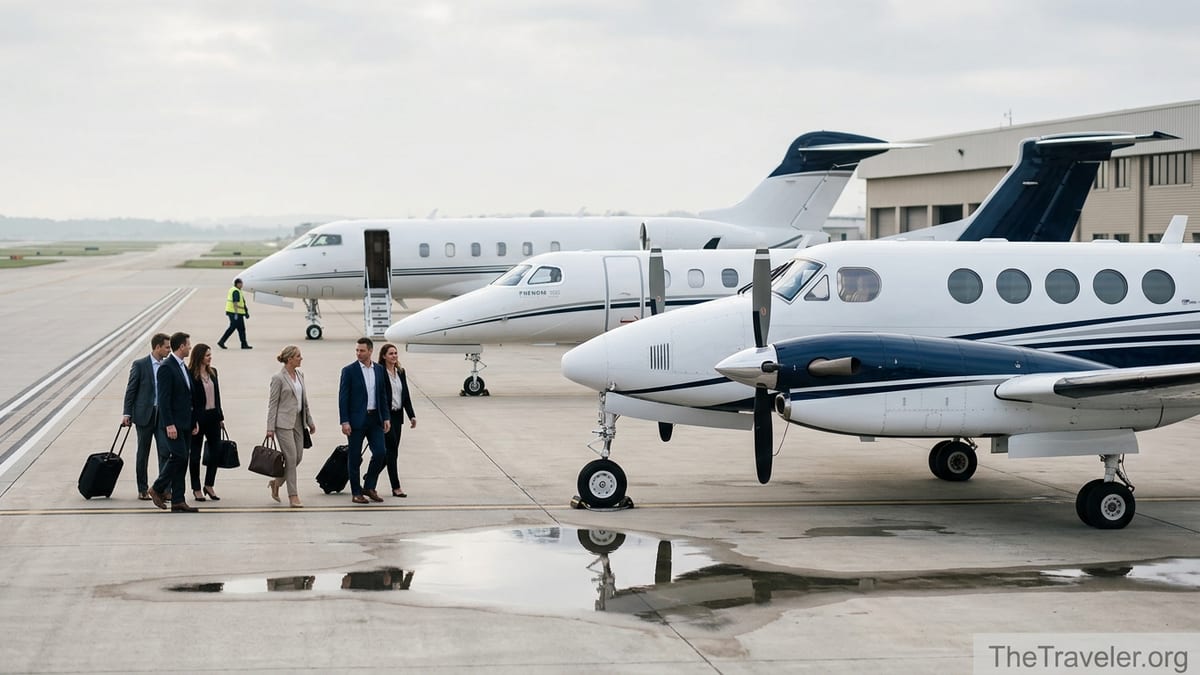
How the Wheels Up Fleet Is Structured Today
To understand which aircraft you can actually book with Wheels Up, it helps to separate two pieces. First is the company’s own “core” fleet, aircraft that Wheels Up operates and brands directly. Second is a much larger pool of partner aircraft that Wheels Up can source on demand from vetted operators. Together, they give you access to everything from a turboprop hop between Boston and Nantucket to a super midsize jet for a nonstop New York to Aspen run.
In recent years, Wheels Up has pursued a significant fleet modernization strategy, consolidating around three workhorse types in its core operation: the Beechcraft King Air 350i turboprop, the Embraer Phenom 300 light jet, and the Bombardier Challenger 300 series in the super midsize category. Older light and midsize jets such as the Hawker 400XP, Cessna Citation CJ3, Citation Excel/XLS, and Citation X have largely been phased out of the owned and managed fleet in favor of these newer, more standardized models. At the same time, Wheels Up continues to offer access to a broad mix of light, midsize, super midsize, and large-cabin jets through its partner network.
In practice, that means a traveler flying from Atlanta to Miami might be quoted a Wheels Up operated Phenom 300 if they have a membership tier that includes access to the premium fleet, while a one-off charter from Los Angeles to London would likely be arranged on a partner-operated large-cabin jet such as a Gulfstream or Global. The company’s close partnership with Delta Air Lines also means some higher-tier Wheels Up members can connect their private flights with commercial Delta services, for example flying a Challenger 300 from Westchester County to Salt Lake City and then connecting onto a Delta widebody for an onward route to Europe.
Because availability and fleet size shift over time, Wheels Up now emphasizes categories rather than long lists of specific models in its marketing. Still, if you look at investor filings and industry coverage, three names keep appearing as the backbone of the modern fleet: King Air 350i, Phenom 300, and Challenger 300 series. Around them sits a flexible ring of partner aircraft that can include everything from smaller very light jets on short hops to long-range global cabin aircraft on transoceanic trips.
King Air 350i: The Turboprop Workhorse
The Beechcraft King Air 350i is the aircraft that put Wheels Up on the map and it remains central to the offering for short to medium-haul flights. Typically configured for eight passengers, the 350i is a twin turboprop known for strong short-field performance and the ability to use smaller airfields that many jets cannot. For a traveler, that may translate into flying directly into a closer regional airport and saving 45 minutes of drive time on each end of the trip.
On a practical level, the King Air 350i is well suited to flights of roughly up to 2 to 3 hours. Common use cases include New York to Nantucket, Boston to Toronto, Dallas to Santa Fe, or San Francisco to Sun Valley. Many leisure travelers choose it for weekend ski trips because it can operate into airports like Truckee or Jackson Hole when runway length or field elevation would make some light jets less optimal. Inside, the 350i cabin is not tall enough to stand fully upright for most passengers, but it offers club seating, work tables, and generous baggage space for skis, golf clubs, or baby gear.
From a cost perspective, the King Air 350i typically prices below comparable jets on a per-hour basis, making it attractive for cost-conscious travelers who do not need jet speeds. As a rough example, a midweek business roundtrip from New York to Washington on a King Air might be quoted tens of percent lower than on a Phenom 300, depending on membership and demand. For flights under about 500 nautical miles, the actual time difference between a turboprop and a light jet can be modest, sometimes 15 to 30 minutes, so many members choose the King Air for value. The trade-off is that on longer legs such as Chicago to Miami, the slower cruise speed becomes more noticeable and a jet is usually preferred.
Phenom 300: The Premium Light Jet
The Embraer Phenom 300 has become the core light jet in the Wheels Up premium fleet, particularly for members with Signature-style memberships that emphasize guaranteed availability on these aircraft. The Phenom 300 typically seats six to seven passengers in a comfortable cabin with a flat floor feel, large windows, and a lavatory at the rear. It is one of the most popular light jets in the world for charter and fractional programs because of its balance of speed, range, and operating economics.
In real-world use, a Phenom 300 is ideal for flights up to about 3 to 3.5 hours. Think Dallas to Aspen, Chicago to Palm Beach, or New York to Nassau. On these routes, it can often fly nonstop with a full passenger load and bags, and it will cruise significantly faster than a turboprop. For a business traveler doing a same-day roundtrip from Atlanta to Chicago with four colleagues, a Phenom 300 offers a good blend of time savings and cost efficiency compared to stepping up to a midsize or super midsize jet.
Cabin comfort is one of the big reasons many frequent flyers prefer the Phenom 300. The interior typically features facing club seats that can recline and swivel, fold-out tables for laptops or documents, and in many aircraft Wi-Fi connectivity. Luggage capacity compares favorably with other light jets, which matters if you are bringing multiple hard suitcases and golf bags. For example, a family of five flying from Miami to Turks and Caicos with two large checked-style suitcases, a stroller, and dive gear will often find a Phenom 300 more than adequate for both space and range.
For cost planning, a Phenom 300 will usually carry a higher hourly rate than a King Air but still under typical midsize jet pricing. Wheels Up may offer dynamic pricing to charter customers, so the actual number moves with demand, but as a general guide many travelers consider the Phenom 300 the sweet spot for trips in the 700 to 1,200 mile range when they want a true jet experience without stepping up to super midsize costs.
Challenger 300 Series: Super Midsize Reach and Comfort
The Bombardier Challenger 300 and its derivative Challenger 350 series anchor the super midsize segment in the Wheels Up modernized fleet. These aircraft are designed for longer legs, higher passenger counts, and a distinctly more spacious cabin. Typical seating runs eight to nine passengers, often in a mix of club seats and a divan, with a full enclosed lavatory and far more room to move around than in a light jet.
From a mission standpoint, the Challenger 300 family is well suited to flights in the 4 to 5 hour range, such as New York to Los Angeles, Dallas to Vancouver, or Miami to Denver, often nonstop with a meaningful baggage load. Many corporate travelers choose this category when they need to take six to eight executives on a cross-country meeting or when they want to minimize fuel stops on longer itineraries. For instance, a tech team traveling from San Jose to Austin for a product launch might book a Challenger 300 to ensure nonstop capability plus enough cabin space for laptops, sample hardware, and presentation equipment.
On leisure routes, the Challenger 300 category shines on trips like Chicago to Cabo San Lucas or New York to Jackson Hole, where range, performance at higher elevation airports, and baggage capacity all matter. A ski group bringing multiple sets of skis, snowboards, and checked-sized luggage will find the additional baggage volume and weight allowance a tangible advantage over light jets. Cabin noise levels and ride quality also tend to feel more “airliner-like,” which can be appreciated by travelers used to business class on large airlines.
The cost step up from a light jet to a Challenger 300 is noticeable, yet for larger groups the per-seat economics can still make sense. If eight people are splitting the bill on a cross-country flight, the incremental total cost of a super midsize jet spread across that many passengers may compare favorably to buying last-minute lie-flat business class fares on a commercial carrier, especially when you factor in time saved and the ability to use smaller airports closer to your final destination.
Partner Light and Midsize Jets: Flexibility Beyond the Core Fleet
Even as Wheels Up standardizes around its own King Air, Phenom 300, and Challenger 300 aircraft, it continues to source a wide range of other light and midsize jets from partner operators. Historically, the company’s “Program Fleet” has included models such as the Cessna Citation CJ3, Citation Encore, Citation Excel and XLS, Citation X, Hawker 400XP, Hawker 800XP, Learjet 60, and comparable aircraft from other manufacturers, all vetted under Wheels Up’s safety and service standards.
For travelers, this partner network matters because it expands availability and routing choices. If the owned fleet is heavily booked over a major holiday period, Wheels Up can still offer an option by sourcing a similar aircraft from a partner operator. For example, if you request a Saturday morning flight from Teterboro to Key West on Presidents Day weekend, your quote might come back on a partner-operated Citation XLS instead of a Wheels Up Phenom 300, with comparable seating and range but perhaps slightly different cabin styling.
Partner aircraft also help when a very specific mission profile is required. A traveler who insists on a particular midsize jet they know well, or who needs an aircraft with an unusually large baggage hold relative to its size, can often be accommodated via the broader partner pool. This is particularly relevant on busy routes like Los Angeles to Las Vegas or Houston to New Orleans, where the choice of operator may matter less than departure time, cabin layout, or whether the aircraft has in-flight connectivity.
Pricing on partner aircraft is generally quoted dynamically and may differ from core-fleet pricing tiers, especially for on-demand clients without long-term memberships. You may see small variations in hourly rate between superficially similar aircraft depending on age, configuration, and operator. However, many travelers find that being flexible about exact model, for instance accepting a Hawker 800XP instead of a Citation XLS, can open up better time slots or enable last-minute bookings when the Wheels Up branded fleet is constrained.
Large-Cabin and Global Jets: Access for Long-Haul and Special Missions
While Wheels Up does not focus its own branded fleet on long-range wide-cabin jets, it does give clients access to these aircraft through its charter and partner network. These are the aircraft you consider when your trip involves an ocean crossing, an overnight sector where lie-flat comfort matters, or a group larger than eight passengers. In this space you will encounter types such as the Gulfstream IV and V families, Gulfstream 450 and 550, Bombardier Challenger 604 and 605, Bombardier Global series, and Dassault Falcon 2000 among others, depending on what partner aircraft are available at the time of booking.
For example, a corporate group needing to travel from New York to London with 10 executives might request a large-cabin jet with a conference-style seating area and lie-flat berths for an overnight flight. Wheels Up could respond with an option on a partner-operated Gulfstream 550 configured for 14 passengers, with a full galley and a flight attendant on board, even though that model is not part of the in-house premium fleet. Similarly, a family planning a multi-stop summer holiday from Los Angeles to Honolulu, onward to Maui, and then back to the mainland might be quoted an ultra-long-range aircraft like a Global Express if their priority is nonstops and ample baggage space for surfboards and luggage.
These large-cabin aircraft are typically the most expensive options in the Wheels Up universe on a per-hour basis, but they also deliver the greatest comfort, range, and flexibility for complex itineraries. On a practical level, you might only consider them when flying five hours or more, when carrying more than eight passengers, or when you want a cabin experience that approximates or exceeds international first class on a commercial airline. Many high-net-worth leisure travelers use this category for annual trips to Europe or the Maldives, while corporate clients charter them for investor roadshows or board meetings spanning multiple countries in a single week.
Because these aircraft are sourced from external operators, availability and exact types can vary more widely than in the standardized core fleet. Travelers booking far in advance for a specific date, such as a major sporting event or global conference, are more likely to secure their preferred aircraft type and interior configuration, while last-minute bookings may require greater flexibility on both model and departure time.
Matching Aircraft Types to Real-World Trips
Once you understand the main Wheels Up aircraft families, the next step is choosing the right type for a specific itinerary. Distance, number of passengers, baggage needs, and budget all play into the decision. For instance, if you are organizing a long weekend from New York to Charleston for four people with light luggage, a King Air 350i can be a smart, cost-effective solution. The flight time might be around two hours versus somewhat less on a jet, but the savings in hourly rate and the ability to use a convenient regional airport can make it attractive.
By contrast, if your group of six is planning a nonstop ski trip from Miami to Aspen in January, you may lean toward a Phenom 300 or a super midsize jet depending on availability and weather. A Phenom 300 can often handle that route, but in heavier winter conditions and with full luggage and ski gear, a Challenger 300 may provide greater comfort and performance at higher elevation fields. That can mean a more reliable arrival window during snow season, which matters if you have connecting ground transfers or dinner reservations locked in.
On transcontinental business routes, such as San Francisco to New York, a Challenger 300 series aircraft is usually the most practical choice within the Wheels Up ecosystem. With six to eight passengers and an expectation of inflight work, the additional cabin width, quieter interior, and more generous galley and lavatory arrangements all add up. If budget is a concern, some groups will instead choose to route via a stop using a light jet, but most corporate users find the time premium of a nonstop super midsize leg worth the cost.
For ultra-long-range or highly specialized missions, such as a film crew moving from Los Angeles to Reykjavik with bulky equipment, the conversation quickly shifts to large-cabin partner jets. Here, the key is to communicate priorities clearly at the quote stage: number of passengers, weight and volume of equipment, whether you need onboard power for sensitive gear, and if overnight rest is a priority. Wheels Up can then match those needs to a partner operator whose aircraft and crew are set up for that type of mission, even if the model is not one commonly seen in the branded fleet.
The Takeaway
Wheels Up today is built around a streamlined trio of core aircraft types plus a broad halo of partner jets that extend its reach into every major private aviation category. The King Air 350i remains the backbone for short regional hops where runway access, cargo flexibility, and cost efficiency matter more than speed. The Phenom 300 anchors the premium light jet offering, delivering a true jet experience on trips up to a few hours with excellent comfort and baggage capacity. For longer legs and larger groups, the Challenger 300 series steps in with super midsize range and a cabin that feels much closer to airline business class.
Beyond those core types, Wheels Up’s network of partner aircraft gives travelers access to a wide spectrum of light, midsize, super midsize, and large-cabin jets, including long-range Gulfstreams and Globals for transoceanic flights or complex multi-city itineraries. That flexibility allows you to tailor each trip to its specific requirements, from a two-passenger day trip between Chicago and Detroit to a 12-person executive roadshow through Europe and the Middle East.
The practical takeaway for travelers is that you do not need to memorize every aircraft model in the Wheels Up universe. Instead, think in terms of mission profiles. Short regional hop with four people and sports gear. Three-hour family flight to the Caribbean with kids and strollers. Cross-country board meeting with eight executives and laptops. Ultra-long-range holiday to Europe with a larger group. Once you frame the trip this way, your Wheels Up representative or charter specialist can match you to the most appropriate aircraft type from the King Air, Phenom, Challenger, or partner fleets, and walk you through how each option will impact cost, comfort, and travel time.
FAQ
Q1. What are the main aircraft types in the current Wheels Up fleet? The modern Wheels Up core fleet centers on the Beechcraft King Air 350i turboprop, the Embraer Phenom 300 light jet, and the Bombardier Challenger 300 series super midsize jets, with additional aircraft sourced from a vetted network of partner operators.
Q2. Can I still fly on older models like the Hawker 400XP or Citation Excel with Wheels Up? While these models have largely been phased out of the owned and managed fleet, similar light and midsize jets, including Hawker and Citation types, may still be available through Wheels Up’s partner aircraft network on an as-available basis.
Q3. When is the King Air 350i the best choice for my trip? The King Air 350i is typically best for regional flights of up to 2 to 3 hours, especially when you want to access smaller airports, carry bulky luggage like golf bags or skis, or manage costs compared to a jet.
Q4. What kind of trips fit the Phenom 300 light jet? The Phenom 300 is ideal for flights in the 700 to 1,200 mile range with four to seven passengers, such as New York to Nassau or Dallas to Aspen, when you want jet speed, a comfortable cabin, and good baggage capacity without stepping up to super midsize pricing.
Q5. Why would I choose a Challenger 300 series jet over a light jet? You would normally choose a Challenger 300 or similar super midsize aircraft for longer legs of about 4 to 5 hours, larger groups of six to nine passengers, or when you value a wider, quieter cabin with more room to work, rest, and store baggage.
Q6. Does Wheels Up offer large-cabin or global jets for long-haul flights? Yes, Wheels Up can arrange large-cabin and ultra-long-range jets, such as Gulfstream, Global, or Falcon models, through its partner network for missions like New York to London, Los Angeles to Honolulu, or multi-stop international itineraries.
Q7. How do I decide which aircraft type is most cost-effective? The most cost-effective choice depends on distance, passenger count, and baggage. For short hops with smaller groups, a King Air 350i is often most economical, while for longer routes with more passengers, stepping up to a Phenom 300 or Challenger 300 can make sense on a per-seat basis despite the higher hourly rate.
Q8. Are all Wheels Up aircraft equipped with Wi-Fi? Many core fleet aircraft, especially Phenom 300 and Challenger 300 series jets, are equipped with Wi-Fi, but equipment can vary by specific tail number, particularly on partner aircraft, so you should confirm connectivity requirements when requesting a quote.
Q9. Can Wheels Up accommodate special luggage like skis, golf clubs, or film equipment? Yes, most core aircraft have generous baggage capacity, especially the King Air 350i and Challenger 300. For very bulky or heavy items, Wheels Up can recommend specific aircraft types or partner jets tailored to your equipment needs.
Q10. How far in advance should I book to get my preferred aircraft? For peak travel periods or specific aircraft requests, booking several weeks to a few months in advance improves your chances of securing your preferred type, while last-minute trips can usually be accommodated if you are flexible about exact models and departure times.