

On most blue‑sky mornings in Great Smoky Mountains National Park, the parking lot at Alum Cave Trail overflows with hikers bound for Mount Le Conte. Rainbow Falls and Boulevard Trail see their share of traffic too. Yet only a fraction of those visitors drive a little farther, lace up their boots, and start climbing through old‑growth forest toward Grotto Falls and the high ridges above on Trillium Gap Trail. For hikers willing to trade a shorter, showier ascent for a slower, quieter journey, Trillium Gap may be the most rewarding and most overlooked way to reach one of the Smokies’ signature summits.
Get the latest updates straight to your inbox!
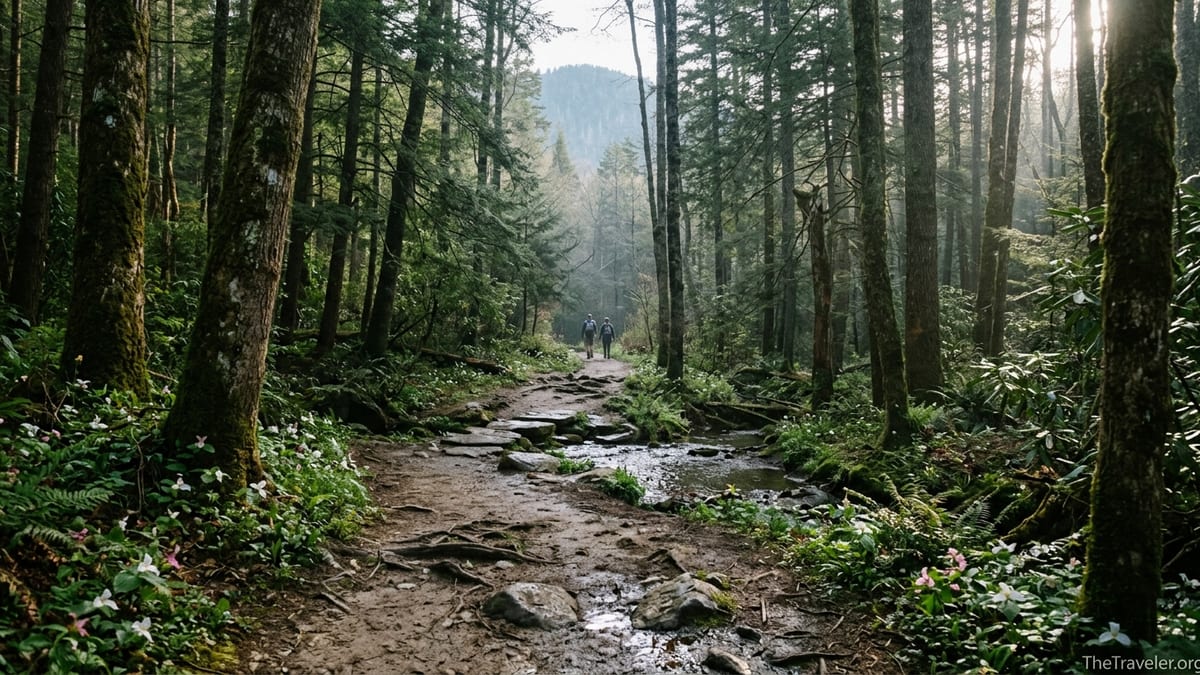
Meet Trillium Gap: The Long, Quiet Way Up Le Conte
Trillium Gap is one of five main routes to Mount Le Conte, rising from near Gatlinburg on the mountain’s north side to the rustic cabins of LeConte Lodge. The full route from the Trillium Gap trailhead to the lodge is roughly 6.5 to 8.9 miles one way depending on where you start, with a cumulative elevation gain of around 3,200 to more than 4,000 feet. In practical terms, it is a full‑day outing for most hikers rather than a quick up‑and‑back climb.
Compared with the popular Alum Cave Trail, which is about 5.5 miles one way and is often billed as Le Conte’s most scenic path, Trillium Gap feels like the slower, more contemplative sibling. It begins on the Roaring Fork Motor Nature Trail above Gatlinburg and immediately enters a cool, mossy hemlock forest, crossing a series of small streams that rarely appear on postcards but set the tone for the hike: intimate, shaded, and surprisingly wild given the proximity to one of the busiest gateway towns in the national park system.
Despite its beauty, Trillium Gap remains off the radar for many visitors planning a first Le Conte trip. Ask at outfitters in Gatlinburg or Pigeon Forge and you will often hear people debating between Alum Cave and Rainbow Falls. Trillium Gap enters the conversation far less often, largely because it is longer, has fewer dramatic cliff‑edge viewpoints on the ascent, and requires a bit more logistical planning just to reach the trailhead and secure a parking space.
For hikers who love the idea of sharing the Smokies with more trees than people, though, those very drawbacks are what make Trillium Gap so appealing. It offers a rare combination in this park: a marquee destination, a well‑maintained trail, and long stretches of relative solitude, especially beyond the crowds at Grotto Falls.
Why So Many Hikers Overlook This Route
The first reason Trillium Gap gets overlooked is simple psychology. Trail descriptions and park brochures have long highlighted Alum Cave’s bluffs and narrow ledges as the classic Le Conte experience. That reputation feeds on itself; when visitors ask rangers and lodge staff what to choose for a first summit attempt, Alum Cave is often the default suggestion. Rainbow Falls gets attention for its namesake waterfall and slightly more moderate grade compared with Alum, leaving Trillium Gap as something of an “insider” recommendation.
The second factor is distance. When travelers are squeezing a Le Conte climb into a long weekend out of Atlanta, Nashville, or Charlotte, they often gravitate toward the shorter routes on the trail map. From the classic Trillium Gap trailhead along Roaring Fork, you are committing to a day that can easily stretch to 9 to 12 hours round trip once you factor in breaks, side trips to Cliff Tops or Myrtle Point, and time at the lodge. For many vacationers with kids or less‑experienced hikers in the group, that sounds ambitious compared with a 5.5‑mile climb that still reaches the same lodge and views.
Access also plays a role. The main Trillium Gap parking area sits on the one‑way Roaring Fork Motor Nature Trail, which is closed to vehicles in winter and can have partial closures or reduced access in shoulder seasons or after storms. When the upper road or Grotto Falls lot is closed or full, hikers may need to park lower on Cherokee Orchard Road and add extra road walking to reach the trailhead. On busy summer days, visitors arriving after 8:30 or 9 a.m. often discover that the small lot serving Grotto Falls and Trillium Gap has already filled, which pushes spontaneous hikers toward larger, more obvious trailheads like Alum Cave along Newfound Gap Road.
Finally, the character of the hike itself does not always sell in a quick social media post. Trillium Gap’s highlights are cumulative: the rhythm of creek crossings, the gradual transition from cove hardwoods to spruce‑fir forest, the carpet of spring beauties and trillium flowers in April and May. These do not show up as one “must‑see” moment in an Instagram reel, which makes the route less buzzy despite its deep rewards.
What Makes Trillium Gap Special on the Ground
From the very first steps, Trillium Gap distinguishes itself through its atmosphere. The lower section of the trail meanders through old‑growth hemlock and mixed hardwood forest, shaded and cool even on humid July afternoons. The grade is relatively gentle as you approach Grotto Falls, climbing only about 500 feet over the first mile and a half. Small footbridges and rock hops carry you across clear streams, and in early summer the understory explodes with rhododendron and ferns.
Grotto Falls itself is a unique Smokies landmark and a major reason this trail sees any traffic at all. About 1.3 miles from the trailhead, Roaring Fork Creek plunges roughly 25 to 30 feet into a rocky alcove, and the trail actually passes behind the waterfall. On hot days you can expect families and casual walkers to be clustered here, waiting their turn for the classic “behind the falls” photo. It is a good place to top off water bottles, apply another layer of sunscreen, and prepare for the more sustained climb ahead.
Beyond Grotto Falls, the crowds thin dramatically. The path narrows and steepens as it works toward Trillium Gap proper, where a side trail leads less than half a mile to Brushy Mountain and surprisingly wide views over Pigeon Forge and Sevierville on clear days. Spring hikers often find this section carpeted in wildflowers, including various trillium species that give the gap and trail their name. The canopy shifts to American beech and then to heath balds, where low shrubs like mountain laurel and blueberry dominate the ridgeline.
As you gain elevation, the forest changes once more into a high‑country spruce‑fir ecosystem that feels more like New England than Tennessee. On cool mornings in September or October, mist often clings to the branches, giving the final miles to LeConte Lodge a distinctly alpine flavor. Glimpses of the valleys open through the trees, and in good visibility you may see as far as the outskirts of Knoxville. By the time you reach the lodge clearing, you have walked through several distinct ecological zones, a slow unfolding of the Smokies that few day hikers experience in such detail.
The Only Llama Route and a Living Piece of Le Conte Culture
One of Trillium Gap’s quirkiest and most charming distinctions is that it is the only route used by pack animals to supply LeConte Lodge. Several times a week in the main operating season, a team of llamas climbs the trail with loads of food, linens, and propane for the cabins, then descends with garbage and dirty laundry. The llamas replaced horses years ago because they are gentler on the trail surface and better suited to the narrow, rocky sections near the top.
For hikers, meeting the llama train is often a trip highlight. On scheduled service days, typically in the middle of the week, you may encounter them at a rest break in a clearing or patiently stepping across one of the many stream crossings. Parents hiking with older children often plan their ascent specifically to coincide with a llama day; kids who might otherwise grumble about the next two miles will happily march on if there is a chance of seeing long‑eyelashed pack animals around the next bend.
This working‑trail aspect also changes how Trillium Gap is maintained and experienced. Because it must safely accommodate animals carrying bulky panniers, the corridor tends to be a bit wider and better cleared of blowdowns than some of the rougher Smokies routes. Water bars and side drains are carefully maintained to control erosion under the llama hooves. Yet for all that human and animal traffic, the upper sections of the trail still feel surprisingly quiet compared with the chatter and constant footsteps you hear on Alum Cave.
The llama connection reinforces the traditional, almost old‑world character of LeConte Lodge itself. Reaching a cluster of rough‑hewn, electricity‑free cabins after watching pack animals labor up the mountain feels very different from driving to a front‑country campground. For hikers who enjoy the romance of mountain hospitality without road access, Trillium Gap offers the most thematically consistent approach.
Solitude, Safety, and Scenery: How Trillium Gap Compares
Every route to Mount Le Conte has its personality. Alum Cave is steep, dramatic, and efficient, with airy ledges and narrow staircases carved into the cliffside. Rainbow Falls offers a powerful waterfall early in the hike but can feel relentlessly steep and rocky near the top. Boulevard Trail is long and rolling, connecting from the Appalachian Trail at Newfound Gap, and often attracts more experienced backpackers linking multiple days. Against that backdrop, Trillium Gap quietly occupies a sweet spot between difficulty, scenic interest, and relative solitude.
In terms of physical challenge, Trillium Gap is often described as “moderately strenuous” rather than punishing. The overall elevation gain is comparable to Alum Cave, but spread over more miles. That means fewer extended sections where you feel like you are climbing a staircase without end. For hikers with solid fitness but limited experience on steep, exposed terrain, the more gradual grade and forested setting can make the day feel more achievable, especially on the descent when knees and ankles start to protest.
Safety is another area where Trillium Gap offers advantages, particularly in shoulder seasons. While ice can form on rocks and stream crossings in winter and early spring, the trail does not feature the same extended narrow ledges and chain‑assisted sections that characterize part of Alum Cave. Hikers who are uncomfortable with heights or who anticipate encountering patches of lingering ice sometimes opt for Trillium Gap specifically for this reason. In photos and trip reports, you will often see people describe it as the “safer” or “less exposed” way up, though any route on Le Conte demands respect for weather, footing, and changing conditions.
Scenically, Trillium Gap trades big overlooks on the ascent for an almost continuous sense of immersion in the forest. You get your grand panoramas at the top, either at Cliff Tops at sunset or Myrtle Point at sunrise, just like hikers who came up other trails. But on the way there, your camera roll is more likely to feature waterfalls, moss‑draped logs, and close‑up shots of wildflowers than sweeping valley vistas. For some travelers, that is the whole point: a walk that emphasizes the micro rather than the macro, the textures and sounds of the Smokies instead of the postcard view at every turn.
Planning a Trillium Gap Day: Logistics, Seasons, and Real‑World Details
For most visitors staying in Gatlinburg, Pigeon Forge, or Sevierville, a Trillium Gap ascent begins with a pre‑dawn alarm. Reaching the trailhead via Cherokee Orchard Road and the Roaring Fork Motor Nature Trail typically takes 20 to 40 minutes from in‑town lodging depending on traffic. Because parking is tight and the lot doubles as the starting point for the popular short hike to Grotto Falls, arriving by 7:30 or 8 a.m. during peak summer and fall foliage seasons dramatically increases your odds of finding a legitimate parking spot rather than circling or retreating to another trail.
If sections of Roaring Fork are closed, you may need to park at a lower pull‑off and add additional walking on the road to connect with the trailhead. This can tack on another mile or more round trip, which matters if you are already close to your comfortable daily mileage. During winter, when the motor trail is closed to vehicles, some strong hikers still access Trillium Gap on foot, but that turns the outing into a longer, more serious undertaking best left to those with experience in cold‑weather mountain travel.
Seasonally, late spring through mid‑fall is the sweet spot for most people. April and May bring dense carpets of wildflowers and relatively cool temperatures. Summer can be humid, but the shaded nature of the trail and frequent water access make it more forgiving than exposed routes. Autumn, typically from late September into early November, layers on brilliant foliage at the lower and middle elevations before the high‑country spruces dust themselves with rime ice at season’s end. Winter ascents appeal to a smaller set of experienced hikers who come prepared for ice on rocks, freezing stream crossings, and the closure of LeConte Lodge itself.
In terms of gear, Trillium Gap rewards careful but not overly technical preparation. Sturdy hiking boots or trail shoes with good wet‑rock traction are essential due to the numerous creek crossings and often‑damp sections of trail. Trekking poles can significantly reduce strain on knees during the long descent and help with balance on slick stones. Many hikers carry at least 2 to 3 liters of water per person, especially in warm months, and supplement with a filter or purification tablets to refill from flowing streams above Grotto Falls if needed. Afternoon thunderstorms are common in the Smokies, so lightweight rain shells and dry bags or liners for electronics and extra layers are wise additions even when the day starts blue and cloudless.
Who Trillium Gap Is Best For (And Who Might Prefer Another Trail)
Because it balances moderate grades with substantial distance, Trillium Gap is ideally suited for hikers who have some experience with day hikes of 10 to 14 miles and are comfortable spending an entire day on their feet. It attracts fit couples on weekend getaways, friend groups who want a shared challenge, and families with teenagers who are excited about wildlife, waterfalls, and a rustic lodge at the top. Those who love natural history, botany, or photography often appreciate the variety of ecosystems and subjects the trail provides.
Travelers who are nervous about exposure or heights, or who dislike the idea of narrow ledges with steep drop‑offs, often find Trillium Gap more psychologically comfortable than Alum Cave. Its forested corridor and lack of dramatic cliffside sections make it feel calmer, even when your heart is pounding from the climb. Similarly, solo hikers who value stretches of quiet may prefer this route to the almost constant chatter on the park’s more famous trails, especially outside of peak holiday weekends.
On the other hand, first‑time Smokies visitors with limited time, young children, or relatively low fitness may be better off savoring Grotto Falls as a standalone outing rather than pushing all the way to Le Conte via Trillium Gap. The first 1.3 miles to the waterfall provide a wonderful taste of the trail’s character without committing to a potentially exhausting 14‑ to 18‑mile day. Likewise, hikers chasing maximum summit views for the least effort may opt for Alum Cave or a combination of shorter view‑rich trails instead.
If you have already climbed Le Conte once via Alum Cave or Rainbow Falls and are wondering whether a repeat trip is worthwhile, Trillium Gap is one of the best arguments for going back. Many experienced Smokies hikers speak of “collecting” all the Le Conte routes over the years. When they do, Trillium Gap often ends up near the top of their personal rankings, not for the single best viewpoint, but for the overall quality and variety of the journey.
The Takeaway
Trillium Gap Trail may never become the headline act in Great Smoky Mountains National Park, and that is precisely why it matters. In a landscape where some overlooks feel as busy as city parks on sunny weekends, this longer, quieter path up Mount Le Conte preserves an older vision of mountain hiking: long hours in the trees, a steady accumulation of elevation, and the gentle surprise of arriving at a mountaintop community accessible only by foot.
For travelers willing to trade a bit of convenience for a lot of character, Trillium Gap offers almost everything that makes the Smokies special in one day: a walk behind a waterfall, carpets of spring wildflowers, the soft footfalls of llamas heading toward a ridge‑top lodge, and finally the sweep of the valleys from Cliff Tops or Myrtle Point as the light fades. It is the route many people overlook when they first scan the map, but for those who choose it, Trillium Gap often becomes the way they remember Mount Le Conte forever.
FAQ
Q1. How long is Trillium Gap Trail to Mount Le Conte, and how difficult is it?
The full hike from the Trillium Gap trailhead near Roaring Fork to LeConte Lodge is roughly 6.5 to 8.9 miles one way depending on your exact starting point and any side trips. Most hikers consider it moderately strenuous because of the length and total elevation gain of around 3,000 to 4,000 feet, rather than any technical scrambling.
Q2. Why would I choose Trillium Gap over the more popular Alum Cave Trail?
Trillium Gap offers a quieter, less exposed ascent with more time in deep forest, the chance to walk behind Grotto Falls, and opportunities to see the llama pack train. It is an excellent choice if you prefer fewer crowds and are comfortable with a longer day on gentler grades instead of steep, cliff‑edge sections.
Q3. When is the best time of year to hike Trillium Gap Trail?
Late spring through mid‑fall is ideal for most hikers. April and May bring extensive wildflowers, summer offers cool shade and flowing water, and autumn features colorful foliage and crisp air. Winter ascents are possible for experienced hikers but involve ice, colder temperatures, and seasonal road closures.
Q4. How early should I arrive to find parking at the Trillium Gap trailhead?
Because the trailhead also serves the popular short hike to Grotto Falls and sits on a narrow mountain road, spaces are limited. In busy summer and fall periods, arriving by 7:30 or 8 a.m. significantly improves your chances of finding a legal spot and avoiding a longer walk from a lower pull‑off.
Q5. Can I just hike to Grotto Falls without going all the way to Le Conte?
Yes. Many visitors hike only the 1.3 miles from the trailhead to Grotto Falls and back for a 2.6‑mile round‑trip outing. This shorter hike still gives you stream crossings, old‑growth forest, and the unique experience of walking behind a waterfall without committing to the full mountain ascent.
Q6. On what days can I see the llamas on Trillium Gap Trail?
LeConte Lodge typically schedules llama supply trips several mornings a week during its operating season, often on fixed days such as Monday, Wednesday, and Friday, although exact schedules can change. If seeing the llamas is a priority, check current information from the lodge or park before your visit and plan to start early so you are on the trail during their ascent.
Q7. Is Trillium Gap Trail suitable for children or less experienced hikers?
The lower section to Grotto Falls is popular with families and newer hikers because of its moderate grade and relatively short distance. Continuing to Mount Le Conte requires more stamina and preparation and is best for older children, teenagers, and adults who are already comfortable with longer day hikes of 10 miles or more.
Q8. What gear should I bring specifically for Trillium Gap?
Sturdy hiking footwear with good traction, trekking poles, and 2 to 3 liters of water per person are highly recommended. Because the trail includes many wet, rocky sections and frequent summer storms, pack a lightweight rain jacket, extra layers, and a small first‑aid kit. A water filter or purification method is useful if you plan to refill from streams higher on the trail.
Q9. Are there bathrooms or facilities along Trillium Gap Trail?
There are no flush toilets on the trail itself. Basic facilities may be available near the trailhead, and simple restrooms are located at LeConte Lodge for overnight guests and sometimes for day hikers. Plan to follow Leave No Trace principles and be self‑sufficient for most of the day.
Q10. Do I need a reservation at LeConte Lodge to enjoy the views from the top?
No reservation is required to day hike Trillium Gap and visit viewpoints such as Cliff Tops or Myrtle Point near the summit. Overnight stays at LeConte Lodge do require advance reservations, often made many months ahead, but day hikers are welcome to rest in designated common areas around the lodge before beginning their descent.