


Choosing where to stay in the Cyclades really means making two linked decisions. First you pick the island or islands that match your style and budget. Then you choose a specific area on each island, whether that is a main town, a beach resort, or a quieter inland village. The right combination can mean walking to dinner, easy buses and relaxed evenings; the wrong one can leave you relying on taxis, climbing endless steps or battling the meltemi wind. This guide focuses on the most visited Cycladic islands with distinct bases and helps you match them to how you like to travel.
Get the latest updates straight to your inbox!
How Base Choice Shapes a Cyclades Trip
In the Cyclades, distances look small on the map, but transport and terrain make your base choice important. Ports are often on one side of an island while famous beaches or hill towns are on another, and bus networks typically radiate out from a single hub rather than forming a grid. On Santorini, almost all public bus routes are structured around the central station in Fira, with services fanning out to Oia, Kamari, Perissa, Akrotiri, the airport and the ferry port, rather than linking the outer villages directly. This means where you sleep will often dictate whether you change buses in town or simply stroll down to the sand.
Most larger islands combine a port town that doubles as a transport hub, one or more developed beach areas and a handful of quieter inland or coastal villages. Port towns usually offer the best bus connections, a wide choice of places to eat and drink and easier arrival and departure days. Beach areas are better if you want to walk straight to the sea each morning and are happy to rely on a few regular routes back to town. Inland villages and small coves give a stronger local feel and more calm but usually require a rental car or scooter, and parking rules are increasingly enforced in small centers during high season.
Because ferry and flight schedules change by season and year, you should check current timetables before committing to non refundable stays, especially if you plan early morning or late night connections. Local bus timetables also vary between winter and the busy summer period, and even within summer there can be different schedules for June, July to August and early autumn. For example, the public buses on Santorini operate more frequently in peak months and still route almost all journeys through Fira; comparable seasonal patterns exist on Paros, Naxos and Mykonos, where extra departures are commonly added between port towns and popular beaches. Always verify the exact times for your travel dates shortly before you go.
Finally, consider how much you want to move around. Some islands lend themselves to staying in one place and day tripping by bus or rental car. Others work better if you split your stay between, say, a lively town and a quieter beach. With inter island ferries, remember that even short hops can be delayed by wind, so avoid scheduling tight same day connections between check out, ferries and flights.
Santorini: Caldera Villages or Beach Resorts
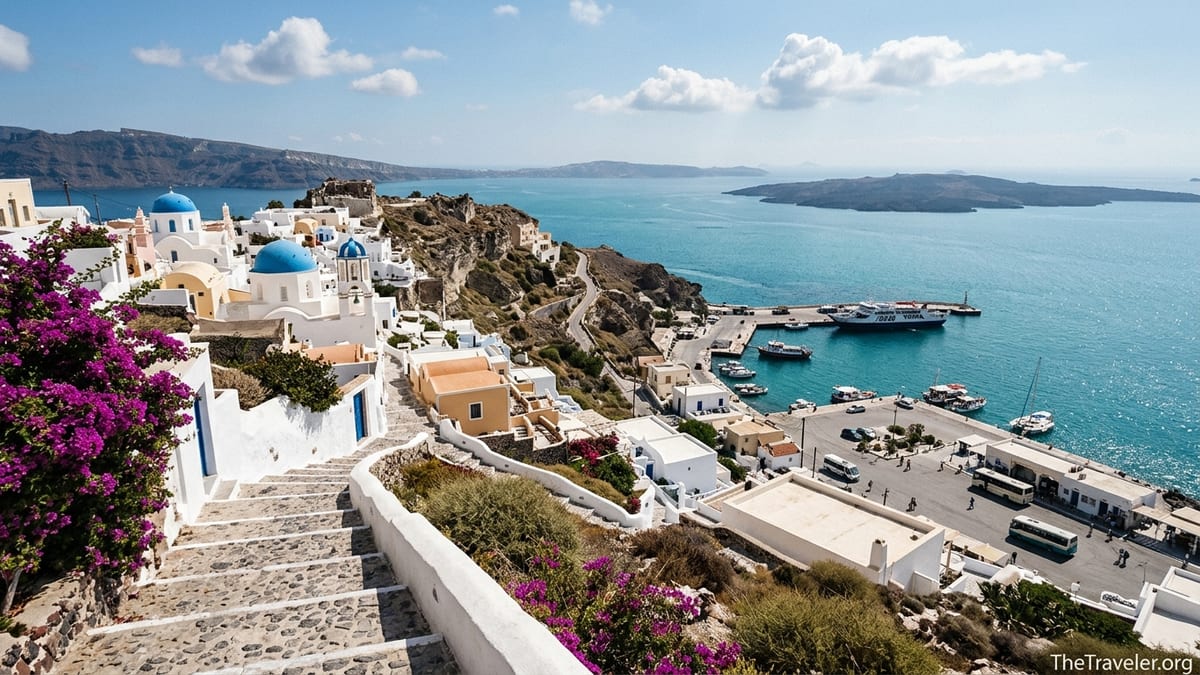
Santorini is where the two level choice of island and area is most obvious. If you want the classic caldera view of cliffs and sunsets over the volcano, your main bases are Fira, Firostefani, Imerovigli and Oia strung along the rim. Fira is the liveliest and serves as the bus hub, with services radiating to Oia, Kamari, Perissa, Akrotiri, the airport and the Athinios ferry port. Buses run more frequently in summer, and recent timetables show daytime services between Fira and the beach towns roughly every one to one and a half hours in the current winter season, with more departures in high season. This makes Fira a practical base if you intend to rely on buses, but it can be noisy late into the night and involves steep alleys and steps.
Firostefani and Imerovigli sit north of Fira along the caldera path. They still offer caldera views but are quieter in the evenings, with a handful of tavernas and small markets within walking distance rather than a full nightlife strip. You can walk to Fira in roughly 10 to 25 minutes depending on where you stay and your pace, but you should expect some steep sections and steps. The trade off is calmer nights and fewer cruise day trippers right outside your door. Parking is limited in the lanes, so travelers with cars should be prepared to leave vehicles on the edge of the settlements and walk in with luggage.
Oia at the northern tip is the most photographed and tends to have the highest prices and most upscale accommodation. It suits those who want boutique hotels and sunset viewpoints within a short stroll, but the lanes can be extremely crowded at sunset in peak months. The main late night focus is dining and bars rather than large clubs, and the village quiets noticeably away from the caldera promenade. Buses link Oia to Fira, and for anywhere beyond you normally change in Fira, which adds time to excursions to beaches or the ferry port. Parking is constrained, with regulated lots on the edge of the village; arriving without a car or planning to leave it outside the busiest zone can reduce stress.
If you care more about being on the sand than on the caldera edge, Kamari and Perissa or Perivolos on the east and southeast coasts are the main beach bases. They offer long black sand beaches, a relaxed holiday atmosphere and broad seaside promenades lined with tavernas and bars. You can walk to multiple places to eat and drink, rent sunbeds, and join water sports without needing a vehicle each day. Public buses run between these resorts and Fira, with typical single fares of a few euros, and there are also buses linking Fira to the airport and port. There is no direct public bus between Kamari and Perissa since they are divided by Mesa Vouno mountain, although there is a marked hiking path via Ancient Thera. In these resorts, nightlife is casual and beach focused rather than club heavy, and prices for accommodation are often somewhat lower than on the caldera.
Mykonos: Town Energy vs Beach Life
Mykonos is compact but busy, so where you stay has a big impact on how often you get stuck in traffic or search for parking. Mykonos Town, also called Chora, spreads around the old port and the famous windmills. It suits travelers who want to walk to restaurants, bars and shopping lanes and who appreciate being near boat excursions and late running nightlife. The streets are narrow and mostly pedestrian, and car access is restricted in the core so many visitors leave vehicles in peripheral lots. Public buses use two main terminals in town, commonly called Fabrika and the Old Port, which connect out to beaches such as Platis Gialos, Paradise and others according to the current schedule. In high season, evening and night services are usually increased on the busiest beach routes, but this still requires you to be comfortable with crowds and late night noise.
Platis Gialos is a popular beach base a short drive south of town. It offers a broad sandy bay and a string of accommodations and tavernas along the waterfront, and in summer small water taxis shuttle from here to other south coast beaches like Paraga, Paradise, Super Paradise and Elia according to their own operating schedules. A road bus usually connects Platis Gialos with Mykonos Town during the day and evening, making it a good compromise for those who want easy swimming and some nightlife access without sleeping directly in the club zones. Nights are social and lively but tend to focus on seafront bars rather than huge dance venues.
Paradise and the surrounding party beaches are best for travelers who explicitly seek beach club energy and loud music well into the night. Here, massive clubs and bars overlook the shore, and summer events can run until early morning. Accommodation near the beach is more limited and often priced for party demand, and noise levels are high. Bus services to these beaches operate from Mykonos Town in season and often extend into the night, but schedules reduce outside the busy months, so late May or late September visitors should confirm last bus times. Renting a car here makes less sense if you plan to drink, and relying on taxis can be expensive and subject to waits.
For a calmer experience, look to Ornos or Agios Ioannis. Ornos has a sheltered bay, family friendly atmosphere and a good selection of tavernas and small hotels within a compact footprint. Buses link it to Mykonos Town, and in season water taxis may call here on their beach circuits. Agios Ioannis is quieter again and better for sunset views than for nightlife. In both, you can often walk everywhere locally and avoid driving, but you will still need buses or a car for exploring the rest of the island.
Paros: Balancing Port Towns, Naoussa and Beaches
Paros has become one of the most popular all round bases in the Cyclades because it combines an active port town, charming harbor village and attractive beaches with reasonably good bus connections. Parikia, the main port, is the administrative and transport hub. It suits travelers who want straightforward arrivals and departures, the widest range of services and frequent buses. The central bus station in Parikia dispatches routes around the island, including to Naoussa, the east coast beaches and smaller villages according to seasonal timetables. Within town, you can walk from most accommodations to the seafront, historic churches and a good choice of tavernas and low key bars, and the atmosphere remains more balanced than hyper party oriented.
Naoussa on the north coast offers a more polished harbor scene and has become the chic focal point of Paros. Its compact old harbor, waterfront restaurants and late opening bars appeal to couples and groups looking for stylish evenings without the intensity of Mykonos. In high season, Naoussa’s lanes can be crowded at night and some venues keep music going late, so light sleepers might prefer locations just outside the core. Buses link Naoussa to Parikia and to some nearby beaches, and recent schedules show multiple daily services in summer on these routes; however, frequency falls in the shoulders of the season. Taxis are limited in number island wide, so for late night returns you might either stay in Naoussa itself or rent a car.
If your priority is waking directly on a beach, look at the east and southeast coasts around Golden Beach, Drios and Logaras or Piso Livadi. These areas have sandy shores, water sports operators in season and a modest but growing selection of tavernas and cafes. Public buses link them back to Parikia and Naoussa with more departures in summer, and some schedules specifically serve Golden Beach and Drios. These zones suit families and relaxed travelers who are happy with a smaller choice of evening venues in exchange for easy swims and a calmer environment. Outside of July and August some beach businesses reduce hours or close, so check what will be open for shoulder season stays.
Inland villages such as Lefkes give a different feel entirely, with cooler evening air, stone alleys and views across the island. Staying here suits visitors who value quiet, local bakeries and a small cluster of tavernas over nightlife or direct beach access. Public buses do serve Lefkes from Parikia and Naoussa based on published routes, but services are less frequent than along the main coastal corridor. A rental car simplifies day trips from these hill villages, and parking is typically on the edge of the old centers followed by short walks through pedestrian lanes.
Naxos: Chora, Beach Strip and Villages
Naxos is the largest island in this group and works particularly well as a single base for a week or more. Naxos Town, often called Chora, combines the main port, a long town beach at Agios Georgios and an atmospheric old quarter climbing up to the castle. It is the natural choice for travelers without a car, given that the main bus station is beside the port and dispatches routes to the southwest beaches and to inland villages. From most accommodations in town you can walk to the seafront promenade, cafes and a range of shops, and you can reach the sandy shallows of Agios Georgios on foot too, which makes it popular with families.
Southwest of town, the beaches of Agios Prokopios, Agia Anna and Plaka form a near continuous strip of sand. They are linked to Naxos Town by regular buses in season, and published timetables for recent years show multiple departures throughout the day on these routes during early May to autumn. Each of these beaches has tavernas and accommodations directly behind the sand, so you can spend whole days without using a vehicle. Agios Prokopios and Agia Anna are more developed and busy, while Plaka remains somewhat quieter and more spread out, matching well with couples and travelers seeking a slower rhythm.
If you are drawn to traditional villages and hiking, bases in the interior such as Halki or Filoti are worth considering. They sit amid terraced hills and orchards, with stone built centers, small squares and a few tavernas and cafes. Public buses from Naxos Town serve these villages, but generally with fewer departures than the beach routes. Staying inland usually means you will rent a car or at least accept bus schedules that favor daytime trips over late evening returns. In exchange you get cool breezes, village life and good access to trails, with beaches reachable as half day or full day excursions.
Because Naxos is large enough that some sights and beaches are scattered, a mixed strategy can also work: a few nights in Chora for port convenience and exploration, followed by time on the southwest beach strip or in a village. However, many visitors are satisfied with one base in Chora or Agios Prokopios and day trips by bus or rental car, which keeps packing and check in logistics simple.
Milos, Sifnos and Syros: Smaller Islands with Distinct Centers
Milos draws visitors for its striking coastline and boat accessible coves. Most travelers choose between staying near the main port, Adamas, or in hilltop or seaside villages like Plaka or Pollonia. Adamas is practical, especially if you arrive late or depart early by ferry, and it concentrates many rental agencies, cafes and the island’s main bus departures. Buses in season typically run from Adamas to Pollonia, Plaka, popular beaches and the airport, although frequencies are limited compared with busier islands. With a base here you can walk the harborfront and join boat trips without needing to drive each day.
Plaka, the old capital above Adamas, offers sunset views and whitewashed lanes. It is best for those who enjoy evening strolls and relaxed dining in traditional tavernas. Reaching beaches from Plaka usually requires a car or relying on the bus route via Adamas, which adds time. Parking near the core of the village is limited and parts of the center are car free, so you may need to park at the edge and walk in. Pollonia on the northeast coast gives a quieter waterfront village feel, with a small sandy beach, a handful of tavernas and boat connections toward nearby islands in season. It is a good choice for families and couples wanting calm rather than nightlife, but you should expect to use a car or follow limited bus timetables for wider exploration.
Sifnos is known for its hiking paths and balanced atmosphere. Kamares, the port, has a crescent beach and a compact selection of accommodations and tavernas. It suits travelers who appreciate easy ferry days and being able to walk between their room, the beach and restaurants. Buses typically connect Kamares with the hill village of Apollonia and onward to other settlements and beaches in season. Apollonia, roughly in the island’s center, has more dining options and a pleasant evening buzz, but no beach of its own. From there you can connect by bus to beach villages like Platis Gialos or Vathi, though frequencies vary, especially outside July and August, so a rental car remains helpful for flexibility.
Syros, with the elegant capital of Ermoupoli, offers a different, more year round Greek island experience. Ermoupoli is both port and administrative center of the Cyclades region, with neoclassical architecture, markets, and a grid of streets that stay active beyond the tourist season. It suits travelers who like a local feel, cultural venues and urban comforts more than beach resorts. Public buses link Ermoupoli with nearby beaches such as Galissas and Kini, where small clusters of accommodations sit directly on or near the sand. These beach settlements are quieter, with a few tavernas and a family oriented pace, and work well if you prefer dipping into Ermoupoli for day trips instead of staying in town.
Smaller Options: Tinos, Amorgos and Koufonisia
Tinos has gained attention for its blend of religious pilgrimage, traditional villages and under the radar beaches. Tinos Town, also called Chora, spreads uphill from the port and the famous church of Panagia Evangelistria. It is the most convenient base for travelers who want to rely on buses and taxis, as most services start here, including routes to beaches and villages that operate more frequently in peak months. Within town you can walk to the seafront, shops and a range of places to eat. For quieter stays, some travelers base themselves in beach areas like Agios Ioannis Porto or in scenic villages such as Pyrgos, but in these cases a rental car or careful reading of the limited bus schedule becomes important.
Amorgos is long and narrow, with two main ports at Katapola and Aegiali. Katapola, near the island’s center, is the more sheltered harbor and has a scattering of accommodations and tavernas around the bay, making it an easy base for arrivals. Aegiali at the northern end combines a beach and small village atmosphere and appeals to hikers and those seeking a slightly more relaxed feel. Buses in season run between the ports, the hilltop capital of Chora and the Monastery of Hozoviotissa, but services are modest compared with larger islands, so many visitors rent cars or scooters to manage the distances and mountain roads.
Koufonisia, usually meaning Ano Koufonisi in travel planning, is very small and largely walkable. Accommodation clusters around the main village near the port, from where you can walk to multiple beaches along dirt paths or join small boats that shuttle further along the coast in summer. This is the classic choice if you want a car free base and are content with a handful of tavernas and bars. There is no need for internal buses, but wind and sun exposure can be strong on footpaths, and the meltemi can roughen seas for small boat services on certain days, so some flexibility is sensible.
All three of these islands are best for travelers who prioritize landscape, walking and a slower rhythm over nightlife or extensive shopping. They pair well as a second, quieter base after time on a busier island such as Mykonos or Santorini, provided you allow extra margin in your schedule for ferries, which are more limited and more affected by weather on these routes.
Budgets, Booking and Single vs Multi Base Stays
Across the Cyclades, prices vary significantly by island, area and season, and change year to year. As a broad pattern, Santorini and Mykonos caldera side villages, Mykonos Town and Naoussa on Paros command some of the highest accommodation rates, especially in July and August and around Greek holidays. In these places, true budget options are scarce in peak season and sell out early. More moderately priced rooms and apartments tend to cluster in beach areas like Kamari and Perissa on Santorini, Agios Prokopios and Agia Anna on Naxos, the east coast of Paros, and port towns such as Adamas on Milos or Kamares on Sifnos. Even there, expect higher prices at the height of summer and more negotiable rates in shoulder months.
Because specific nightly rates depend on your dates, room type and how early you book, use current booking engines and direct contact with properties to understand realistic budgets for the month and year you plan to travel. As a guideline, for stays in late July or early August, it is prudent to secure sought after areas like Oia, Imerovigli, Mykonos Town or Naoussa several months in advance, particularly for small hotels or family rooms. In quieter islands or less in demand areas, such as inland villages or second line properties away from the water, availability may remain later, but you still benefit from booking ahead for weekends and holiday periods.
Deciding between a single base and splitting your stay on the same island depends on your priorities and length of visit. On a compact island like Santorini, it can make sense to begin with a couple of nights in a caldera view village to enjoy the cliffside atmosphere, then move to a beach base such as Kamari or Perissa for a more relaxed and better value stay. On Naxos or Paros, combining a few nights in the main town with time on a quieter beach can give variety without adding a new ferry leg. For shorter trips of three to four nights, however, the check in and packing time of changing bases may outweigh the benefits, and a single well chosen area with day trips can be more efficient.
Whichever pattern you choose, always check ferry and flight times for the exact dates of your trip before locking in non refundable bookings, and leave reasonable buffers between check out and departures in case of delays or last minute schedule shifts. Local bus timetables, which you can find from official KTEL operators on each island, should be rechecked close to your travel date, as routes and last departure times can change between early and late season. Build your plans around what you value most, whether that is walking access to the beach, late night dining, village quiet or easy transport, and then match islands and specific areas that align with those priorities.
From Preferences to Concrete Cyclades Itineraries
To turn all these options into decisions, start with your overall style. If you want one affordable island base with access to varied beaches and villages, Naxos Town or the southwest Naxos beach strip, Parikia on Paros or Kamares on Sifnos all work well. You can arrive by ferry, check into one place and use buses or a rental car to explore. These bases give a mix of local life, dining options and day trips without the extreme prices of the most famous hotspots. For many first time visitors, spending a full week in one of these towns offers a satisfying balance of rest and exploration.
If your dream includes an iconic caldera view, consider combining a short stay of two or three nights in Fira, Imerovigli or Oia on Santorini with a second, calmer island. After enjoying the cliffside sunsets, move on by ferry to Paros, Naxos, Milos or Tinos for wider beaches and a more laid back rhythm. Make sure to check ferry connections for your exact dates and choose combinations with at least one direct sailing to simplify travel days. When your itinerary involves smaller islands like Amorgos or Koufonisia, add extra buffer days and avoid planning tight onward connections immediately after those legs.
Travelers focused on nightlife might base themselves in Mykonos Town or near the major south coast party beaches, or choose Naoussa on Paros for a more compact but still lively evening scene. Here, staying within walking distance of the main bar areas allows you to avoid late night drives and taxi queues. Families and those craving a softer atmosphere often gravitate to Kamari or Perissa on Santorini, Agios Prokopios or Plaka on Naxos, Ornos on Mykonos, or beach villages on Syros and Tinos, where shallow waters and a smaller scale keep things manageable with children.
Finally, if you care more about local character, hiking and quiet evenings, prioritize inland and hilltop villages or smaller islands. Bases like Lefkes on Paros, Apollonia on Sifnos, Tinos Town plus its mountain villages, or Katapola and Aegiali on Amorgos can anchor itineraries built around trails and tavern life rather than beach clubs. In these cases a rental car or careful study of the limited bus timetables becomes part of the trip, and you should be comfortable with walking and occasional steps or hills. With clear preferences and up to date checks on ferries, buses and local rules, you can match Cycladic islands and neighborhoods to your own pace and return home with memories shaped by the base that suited you best.