


More news on this day
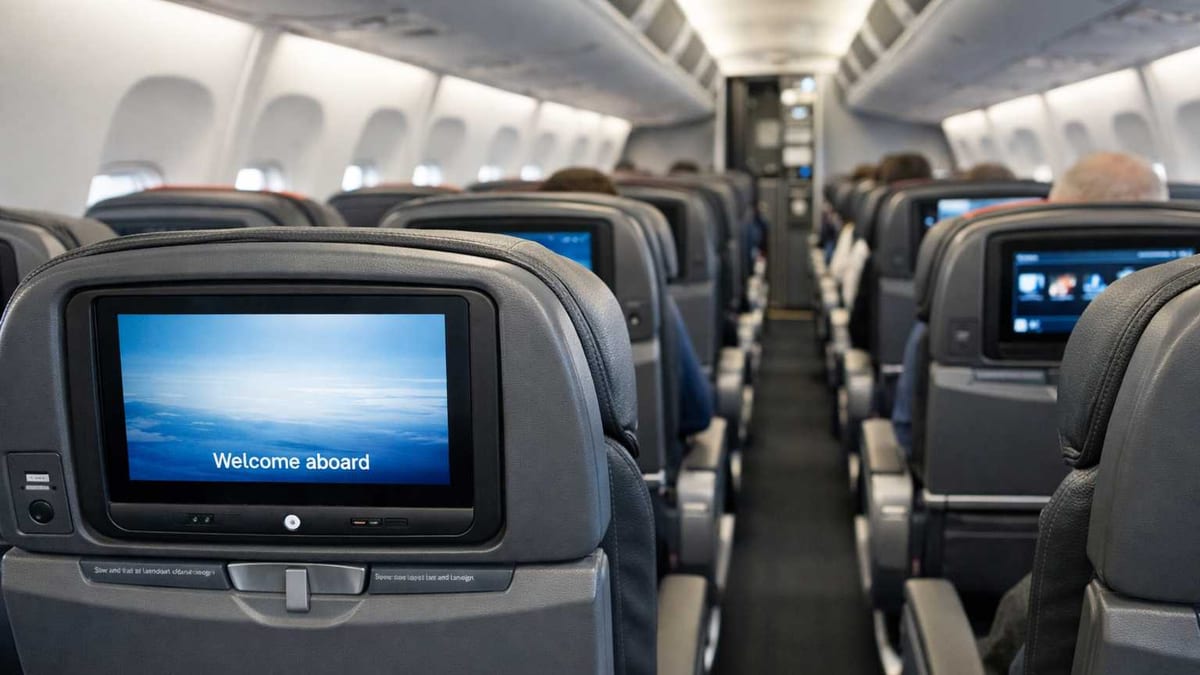
Once seen as a relic in the age of smartphones and tablets, the seatback screen is enjoying a renewed moment at 30,000 feet, as major U.S. carriers including Delta Air Lines and United Airlines pour billions into new and retrofitted cabins that once again put a personal display at nearly every seat.
Get the latest news straight to your inbox!
From 1988 Innovation to Mid-2010s Retreat
The modern seatback entertainment screen traces its roots to 1988, when an early system from Airvision brought personal video displays to a Boeing 747 and introduced passengers to the idea of individualized in-flight viewing. Industry coverage from that period notes that airlines quickly tested whether travelers preferred these new personal screens to bulkhead monitors, with surveys indicating strong demand and a willingness to favor airlines that offered them.
Through the 1990s and 2000s, embedded screens spread rapidly across long-haul fleets, becoming a hallmark of premium international travel. For many travelers, a screen in the seatback became synonymous with a modern aircraft, even as content libraries remained relatively limited by today’s streaming standards.
By the early to mid-2010s, however, some U.S. airlines began to question the economics of hardware-heavy systems. The rise of smartphones and tablets, plus improving onboard Wi-Fi, encouraged a shift toward “bring your own device” strategies. Several carriers publicly emphasized wireless streaming to personal devices, and select fleets were delivered without seatback monitors in order to save weight, lower maintenance costs and free up capital.
The recent pivot back to screens reflects how that experiment has played out in practice. While personal devices remain central, airlines are finding that customers still value a dedicated, easy-to-use screen that works from gate to gate without battery worries or connectivity hurdles.
Delta Bets Big on an Integrated Screen and Wi-Fi Experience
Delta has emerged as one of the most visible proponents of keeping and upgrading seatback systems. The airline highlights that it has more than 165,000 screens across its global fleet and promotes having the most seatback-equipped aircraft among domestic competitors. Recent fleet announcements show that new Airbus A350-1000 jets and refreshed A330-200/300 aircraft will feature Delta’s largest-ever screens at every seat, paired with Bluetooth audio, USB-C power and universal outlets, effectively turning the seatback into a smart TV-style hub.
At the same time, the carrier is building a digital layer on top of that hardware. The Delta Sync platform, which combines free high-speed Wi-Fi with personalized seatback interfaces, is now active on hundreds of aircraft, with the company describing it as a cloud-based system designed to deliver more content and real-time travel tools directly to the screen. Partnerships with content providers such as YouTube add ad-free access for SkyMiles members, reflecting a push to make the seatback feel like a familiar streaming environment.
Delta has also outlined technology agreements intended to future-proof this approach. A recent deal involving Amazon’s low-Earth-orbit connectivity project is framed as a way to deliver faster, more reliable onboard internet, which in turn supports more data-rich features in Delta Sync seatback. Published materials from the airline describe this as part of a multi-year effort to tie entertainment, connectivity and customer communications together through the screen rather than treating in-flight entertainment as a standalone amenity.
Retrofits are continuing alongside new deliveries. For example, selected Boeing 737-800 aircraft are being updated with larger Panasonic seatback displays in Delta Comfort Plus and Main Cabin, paired with a refreshed cabin interior and access to the full Delta Studio catalog. The result is that even on shorter domestic routes, passengers increasingly encounter a modern screen in front of them rather than relying solely on their own devices.
United’s ‘Signature Interior’ Targets Screens at Every Seat
United Airlines is following a similar trajectory with its United Next and “Signature Interior” programs. Investor and fleet presentations describe a plan to have more than 300,000 seatback screens across the airline’s fleet as it takes delivery of hundreds of new narrowbody and widebody aircraft. These signature cabins pair individual displays with larger overhead bins, power at every seat and ambient lighting, positioning the hardware as part of a broader upgrade in cabin experience.
On its latest aircraft types, United is emphasizing higher-resolution displays and new features. The carrier’s updated Boeing 787-9 Dreamliners, marketed as having an “elevated interior,” tout larger 4K seatback screens with Bluetooth connectivity in every cabin, bringing headphone pairing and higher-fidelity viewing that aligns more closely with at-home expectations. Similar hardware is rolling out on 737 MAX and Airbus A321neo jets, where United promotes personal screens as a core part of its competitive offering on domestic routes.
United is also integrating connectivity directly with those monitors. More than half of its regional fleet now uses SpaceX’s Starlink service, and a mainline rollout is under way. Company statements link the Starlink program to expanded capabilities on inflight entertainment screens, allowing passengers to stream content, access updated moving maps and interact with a richer interface without depending exclusively on their own devices.
Progress is still uneven, particularly on older widebodies and certain narrowbody subfleets that are awaiting retrofit, but the overall direction is clear in the airline’s public targets. Where a decade ago United leaned more heavily on streaming to personal devices, its near-term plans call for nearly all mainline passengers to have a dedicated screen in front of them once current retrofit and delivery cycles are complete.
Why Airlines Are Reversing Course on Seatback Screens
The renewed enthusiasm for embedded screens reflects several converging trends. Passenger-experience surveys consistently show that travelers perceive a seatback monitor as a sign of a modern, full-service carrier, particularly on longer flights. Even when customers carry multiple personal devices, many still prefer a built-in screen for movies and TV, reserving phones and tablets for messaging or work. Airlines have publicly cited that preference in marketing materials that contrast their offerings with low-cost rivals that provide no hardware at all.
Operationally, today’s systems differ from early-generation seatback setups. Airlines and suppliers now rely heavily on wireless distribution, lighter components and more centralized content management, which can reduce some of the historical penalties in weight and maintenance. Delta, for example, has highlighted a proprietary wireless in-flight entertainment platform designed to simplify updates and cut down on cabling, while manufacturers such as Panasonic Avionics describe a progression from grainy bulkhead displays to high-definition, interactive seatback experiences.
Connectivity improvements are another factor. As carriers invest in faster satellite links and larger onboard bandwidth, the seatback becomes more than just a video player. It can host interactive maps, destination guides, loyalty-program tools and even real-time notifications about connections or baggage. That broader functionality helps justify the capital expense, especially when airlines seek to differentiate their product in crowded domestic and transatlantic markets.
There is also a strategic dimension. Full-service airlines increasingly use cabin features like seatback screens, power and generous overhead bins to distance themselves from ultra-low-cost competitors. By positioning in-flight entertainment as part of a premium, “no compromises” experience, carriers aim to support higher average fares and stronger loyalty, even on routes where customers have cheaper alternatives.
What Travelers Can Expect on Future Cabins
For passengers, the most visible change in the next few years will be consistency. On many U.S. airlines today, travelers still encounter a mix of cabins, with some aircraft offering full-featured displays and others relying entirely on personal devices. As retrofit programs mature and more new-generation aircraft arrive, the likelihood of finding a screen at every seat on major carriers such as Delta and United is set to increase sharply, particularly on mainline routes.
The experience on those screens is also evolving. Beyond larger, sharper displays, airlines are rolling out Bluetooth audio pairing so passengers can use their own wireless headphones, as well as more responsive, app-like interfaces that can recommend content or surface flight information in real time. Some cabins are experimenting with new map views, more robust kids’ sections and wellness or productivity content that aligns with broader lifestyle trends.
At the same time, the rise of free high-speed Wi-Fi on fleets like Delta’s means that passengers will not need to choose between screen and device. The emerging model is a hybrid one: use the seatback for entertainment and travel tools, while using personal devices for messaging, work and multi-tasking across services. For airlines, that balance supports a more resilient customer experience, less vulnerable to dead batteries or spotty device streaming.
While low-cost carriers are likely to continue favoring device-based solutions, the direction of travel among large global network airlines is clear. Nearly four decades after the first seatback screens appeared in 1988, the industry is pivoting back to the idea that a dedicated display remains central to how many passengers want to fly, even in a world where almost everyone boards with a screen of their own.
https://www.panasonic.aero/blog/blog-post/the-history-of-moving-maps
https://news.delta.com/delta-sync-seatback-rolls-out-more-planes-bbc-news-joins-live-tv-lineup