


More news on this day
More than 600 flights across the United States were delayed and at least 53 were canceled as a fresh wave of operational strains, summer storms and already tight schedules combined to disrupt air travel for thousands of passengers.
Get the latest news straight to your inbox!
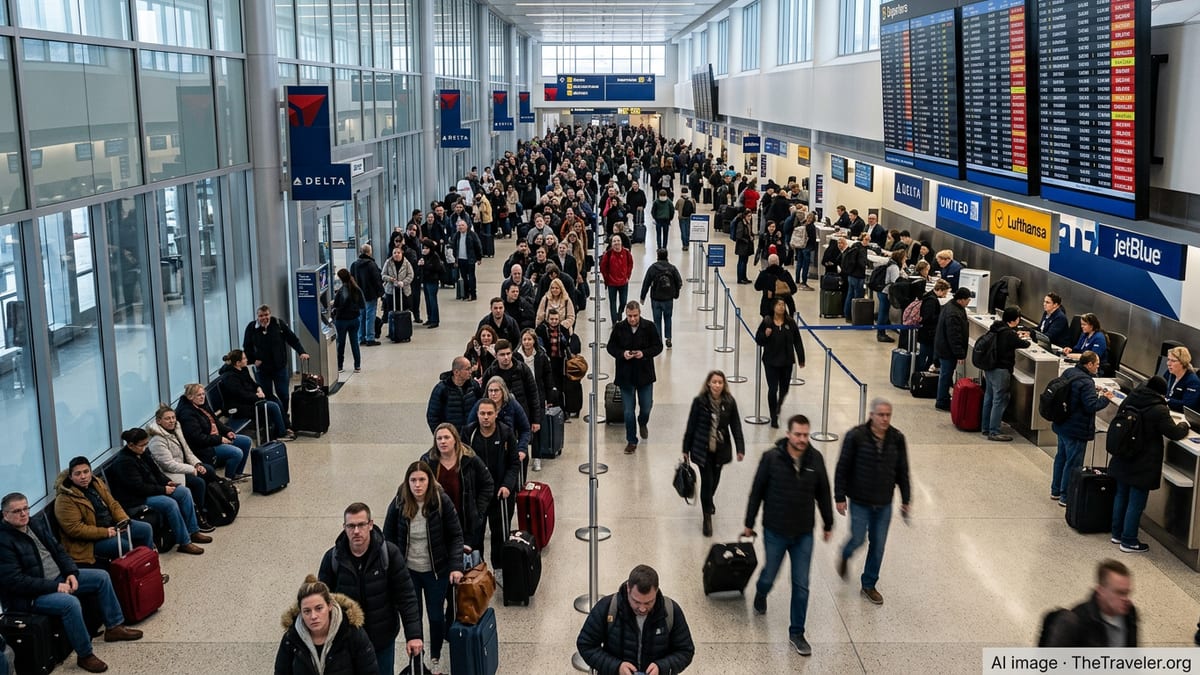
Nationwide delays accumulate as summer skies grow congested
Publicly available tracking data on August 25 showed hundreds of delays and dozens of cancellations across major U.S. hubs, reflecting a pattern of rolling disruptions that has marked much of this summer’s peak travel season. While the latest tally of more than 600 delayed flights and 53 cancellations falls short of the most severe recent meltdowns, it underscores how even moderate weather or staffing issues can quickly ripple through an already stretched system.
Coverage of recent disruption days indicates that storms and low clouds at congested airports such as New York, Chicago and Denver routinely trigger ground stops and schedule reductions, which then lead to knock-on delays nationwide as aircraft and crews fall out of position. One recent analysis described more than 1,600 delays and over 150 cancellations on a single August day when thunderstorms hit multiple hubs at once, leaving airlines with limited flexibility to recover their schedules quickly.
These latest disruptions also arrive on the heels of a broader spike in August flight problems. Published reporting citing FlightAware data noted that between August 9 and August 14, more than 40,000 flights within, into or out of the United States were delayed and over 3,500 were canceled, illustrating how frequently the system has been operating at or beyond its limits during peak summer travel.
Regulatory and industry analyses compiled over the past two years show that delay rates remain elevated compared with the late 2010s, even as overall flight volumes have returned to or surpassed pre‑pandemic levels. That backdrop helps explain why a disruption affecting a few hundred flights on any given day now has a greater chance of stranding travelers overnight or forcing multi‑day rebookings.
Weather, staffing and infrastructure constraints converge
Reports from recent episodes indicate that severe weather remains the most visible trigger of mass disruptions, but underlying infrastructure and staffing constraints often determine how quickly operations can recover. Thunderstorms in key corridors, low visibility and lightning risks around ramp areas continue to generate cascading disruptions during the busiest hours of the day, particularly when they affect multiple hubs at once.
At the same time, several recent cases highlight how even non‑weather issues can lead to hundreds or thousands of delayed flights. In late July, an information‑technology outage at a major U.S. carrier prompted a brief nationwide departure halt that delayed more than a thousand flights and forced over 200 cancellations for that airline alone before operations resumed. Publicly available federal summaries of major events over the past two years also point to recurring technology failures and air traffic control bottlenecks as key contributors during large disruption days.
Staffing remains another pressure point. Coverage of recent summers has documented chronic shortages and scheduling strains among air traffic controllers, ground handlers and airline crews, which can magnify the impact of any weather or technical setback. When storms force lengthy ground delays, pilots and flight attendants can quickly “time out” under duty‑time rules, leaving airlines with aircraft but no legal crew to operate them, a dynamic that has surfaced repeatedly in passenger accounts and industry briefings this season.
Longer‑term data compiled by the U.S. Department of Transportation’s Air Travel Consumer Reports shows that, in busy months, more than one in five flights can arrive at least 15 minutes late. Recent reports indicate that summer periods regularly record some of the highest delay and cancellation rates of the year, reinforcing concerns that today’s infrastructure and staffing levels are struggling to keep pace with demand.
Travelers report multi‑day detours and missed vacations
For passengers, the statistics translate into very personal disruptions. Recent user accounts on travel forums describe families facing multiple cancellations in a row from Washington, D.C., Boston and other East Coast airports, with replacement flights sometimes pushed several days out during peak periods. Some travelers reported abandoning trips entirely after repeated rebookings fell through, while others described sleeping on airport floors when hotel vouchers or rebooked seats were unavailable.
Other passengers have documented being stranded after late‑night cancellations tied to air traffic control constraints or weather around major hubs, then offered rebookings as much as two or three days later. These anecdotes mirror the broader pattern identified in news coverage: when a hub’s operations are sharply reduced, regional flights and short‑haul routes are often the first to be cut, leaving limited alternatives for travelers who need to reach smaller cities.
Airline‑specific experiences also vary. During July’s technology outage at one large carrier, tracking data showed delay rates for that airline far above the national average, while other airlines continued operating relatively normally. Earlier episodes this year tied to severe winter weather and to Canadian labor actions produced similar carrier‑specific spikes in cancellations, even as rival airlines were affected to a lesser degree.
Industry analyses and consumer advocacy reports note that disruption impacts can hit certain groups especially hard, including travelers with disabilities, those connecting from small communities with limited service, and passengers who cannot easily absorb last‑minute hotel and meal costs. Recent congressional and regulatory hearings have highlighted repeated accounts of damaged mobility devices, inaccessible rebooking channels and inconsistent customer‑service responses during major disruption events.
What the latest wave reveals about a fragile system
Although more than 600 delays and 53 cancellations represent a relatively contained disruption by the standards of recent years, the episode illustrates how narrow the margin for error has become in U.S. air travel. When aircraft utilization is high and schedules are dense, even a modest slowdown at one or two hubs can quickly exhaust the slack needed to absorb irregular operations.
Recent government briefings and independent studies of disruption events since 2022 point to a combination of structural and cyclical pressures: aging technology systems, constrained airspace, staffing gaps and rising demand that is highly concentrated around peak holiday and summer travel windows. In that environment, each thunderstorm line, ground stop or IT fault increases the risk that passengers will experience missed connections, lost vacation days and unplanned overnight stays.
Analysts who have examined multi‑year datasets describe a pattern in which recovery from each major event becomes more complex. Once aircraft and crews are out of position, it can take several days for networks to return to normal, especially when there are few spare planes and limited empty seats. This dynamic helps explain why travelers can still encounter delays and cancellations long after the original storm or outage has passed.
Recent policy discussions in Washington and among industry stakeholders have focused on potential responses, including modernizing air traffic control technology, bolstering staffing, and tightening or clarifying passenger‑rights and refund rules when flights are significantly delayed or canceled. While those debates continue, the latest day of more than 600 delayed flights and 53 cancellations serves as another reminder that for many travelers, even routine summer travel now carries a heightened risk of disruption.
How passengers can navigate ongoing disruptions
Travel experts and consumer advocates who track air travel performance point to several practical steps that can reduce, though not eliminate, the risk of being caught in widespread delays. Booking early‑morning departures, for example, can lower exposure to knock‑on delays from earlier disruptions, since first‑wave flights are less likely to depart late due to late‑arriving aircraft.
Publicly available guidance from federal agencies emphasizes the importance of understanding refund and rebooking rules before travel. If a carrier cancels or significantly changes a flight and a traveler chooses not to take the rebooked option, passengers on U.S. carriers are generally entitled to a refund rather than a voucher. Consumer‑protection resources also encourage documenting disruption details, including reasons given for delays or cancellations, to support any later claims with airlines or credit‑card travel insurance.
Given recurring strains on hub airports, some analysts suggest that passengers who have flexibility consider longer connection times, especially when flying through weather‑prone regions during summer or winter. Others recommend monitoring flight status closely in the 24 hours before departure and signing up for airline and airport alerts so that options can be pursued quickly if delays or cancellations begin to mount.
As this latest wave of more than 600 delays and 53 cancellations shows, even relatively moderate disruption days can upend travel plans for many people. With demand likely to remain strong through the end of the summer season, travelers may need to approach itineraries with greater contingency planning than in years when the system had more built‑in buffers.
Washington Post: Summer 2026 U.S. flight delays and cancellations
U.S. DOT Air Travel Consumer Reports