


Across the high desert canyons of Colorado, Utah, New Mexico and Arizona, stone villages cling to cliffs and hide in alcoves, preserving the stories of the Ancestral Pueblo people. Visiting these places is one of the most powerful experiences a traveler can have in the American Southwest, but it also carries a responsibility to move thoughtfully through living cultural landscapes. This guide walks you through how to plan a trip to major cliff dwellings and lesser-known ruins, what to expect on the ground, and how to explore in ways that honor both the past and the present-day descendant communities.
Get the latest updates straight to your inbox!
Understanding Ancestral Puebloan Sites Before You Go
The term “Ancestral Puebloan” refers to the Indigenous peoples who built stone villages, great houses and cliff dwellings across the Four Corners region from roughly 600 to the late 1200s. Their communities stretched from Chaco Canyon in present-day New Mexico to Mesa Verde in Colorado, Bandelier in New Mexico, Hovenweep on the Colorado–Utah border and hundreds of smaller sites scattered across the Colorado Plateau. Many modern Pueblo nations, including Hopi and the pueblos along the Rio Grande, trace cultural connections to these places.
To prepare for a visit, spend some time with introductory materials from the National Park Service and tribal cultural centers. Exhibits at the Mesa Verde Visitor and Research Center in Colorado, for example, explain how people first farmed on mesa tops and later built more than 600 known cliff dwellings in sheltered alcoves, with over 5,000 archaeological sites documented in the park. Museum displays at Bandelier National Monument in New Mexico walk you through daily life in the Frijoles Canyon village, from grinding corn to firing pottery.
Understanding the broad timeline also shapes how you see the ruins. At Step House in Mesa Verde, you can walk through pithouse remains from the 600s and a later masonry pueblo from the 1200s in a single alcove, seeing how architecture evolved from semi-subterranean dwellings to multi-room stone villages. In Hovenweep, you step into the 1200s, when people built tower-like structures on canyon rims and at canyon heads as part of dense village clusters.
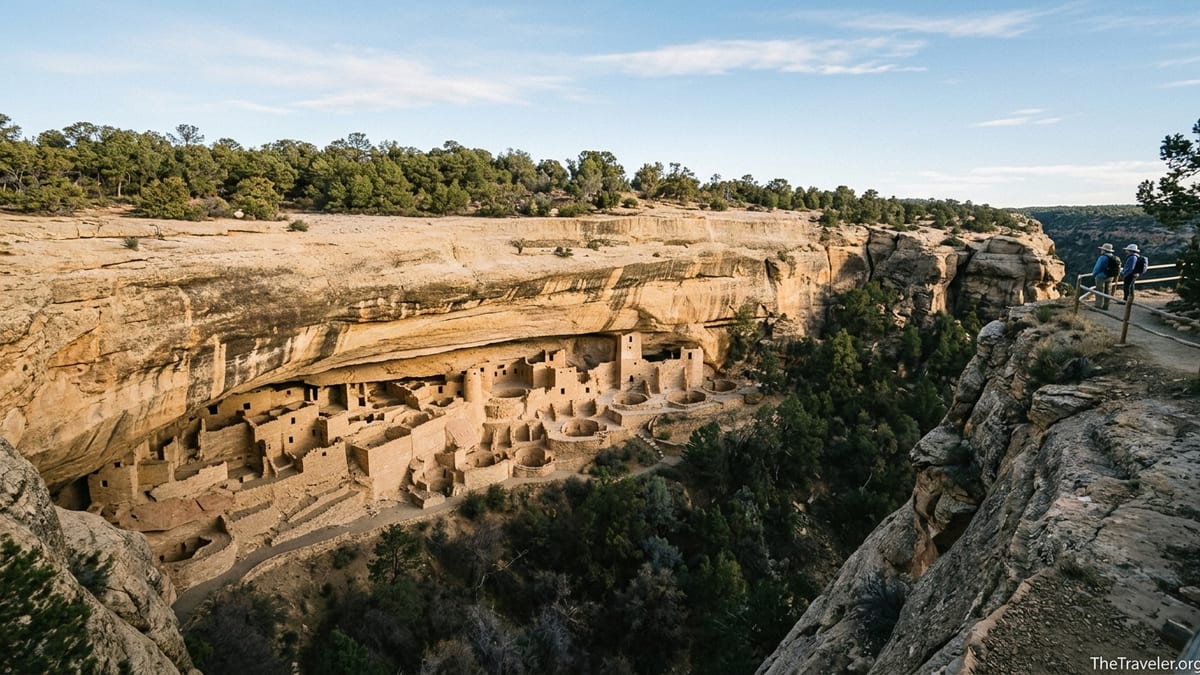
Equally important is to recognize that these are not abandoned or forgotten places. Many Pueblo and other Indigenous communities consider them part of ongoing cultural and spiritual landscapes. When you visit Cliff Palace in Mesa Verde or climb the ladders into Alcove House at Bandelier, you are entering spaces that remain meaningful to living people today.
Planning Your Trip: Seasons, Tickets and Logistics
Most major Ancestral Puebloan sites in the United States are in high desert environments with hot summers, cold winters and occasionally unpredictable storms. In practical terms, that means spring and fall are often the most comfortable times to visit. At Mesa Verde, for instance, cliff dwelling tours typically operate from around May through October, with shoulder seasons offering cooler temperatures and smaller crowds. Bandelier’s main Frijoles Canyon area is open year-round, but summer afternoons can be very hot and afternoon thunderstorms can roll through.
Advance planning is critical at heavily visited parks. Mesa Verde requires ranger-guided tour tickets for its most famous cliff dwellings such as Cliff Palace, Balcony House and Long House. As of mid-2026, tickets are generally sold online or at the Mesa Verde Visitor and Research Center for a modest per-person fee, and tours can sell out during peak weeks. At Bandelier, the popular Pueblo Loop Trail is usually open to walk independently, but access to Alcove House, which involves climbing long wooden ladders up a cliff, may close during winter or hazardous weather.
Remoter ancestral villages require different logistics. Reaching Hovenweep National Monument, straddling the Utah–Colorado border, means driving several miles of paved and graded dirt roads from junctions near Blanding, Utah or Cortez, Colorado. The main Square Tower Group has a small campground, visitor center and loop trail, but some outlying units such as Holly or Cutthroat Castle lie far down rough roads where high-clearance vehicles are recommended. On Cedar Mesa and in parts of Bears Ears National Monument in Utah, visiting cliff dwellings like House on Fire or Mule Canyon ruins may require permits that are limited to protect fragile canyons.
When budgeting time, remember that driving distances across the Four Corners can be deceptive. It can take 45 minutes to an hour simply to drive from the entrance of Mesa Verde up the winding road to the main archaeological loops, and unpaved approaches to canyon sites in Bears Ears may be slow going. Build in generous time for driving, orientation stops at visitor centers, and unexpected weather delays so you are never rushed around sites.
Signature Cliff Dwellings You Should Not Miss
If you are planning a first-time trip focused on cliff dwellings, three destinations anchor most itineraries: Mesa Verde National Park, Bandelier National Monument and Hovenweep National Monument, with optional side trips to Cedar Mesa and Bears Ears. Each offers a different way of experiencing Ancestral Puebloan architecture and landscape.
Mesa Verde, in southwestern Colorado, protects one of the densest concentrations of cliff dwellings in North America, including some of the largest and best-preserved complexes. At Cliff Palace, a ranger-guided tour leads you down stone stairways and along ledges into a multistory village of kivas, towers and masonry rooms tucked deep in a sandstone alcove. Balcony House offers a more adventurous experience, with visitors climbing long ladders and squeezing through a narrow passage to stand on a ledge lined with small rooms overlooking a deep canyon.
Bandelier, near Los Alamos, New Mexico, offers a more intimate on-foot exploration. The Pueblo Loop Trail leads you past the foundations of a large village on the canyon floor and then up to cavates, or carved rooms in the tuff cliffs, accessed by short wooden ladders. A branch trail continues to Alcove House, where a series of tall ladders climbs 140 feet to a cliff dwelling and reconstructed kiva in a sheltered niche. The combination of village plaza, cliff-side rooms and creek-side cottonwoods gives a vivid sense of daily life in a canyon community.
At Hovenweep, on the Utah–Colorado line, stone towers perched on canyon rims and boulders offer a dramatic twist on the cliff-dwelling experience. The Square Tower Group loop is an easy to moderate hike that circles a shallow canyon where 13th-century villages once clustered around a spring. You can look across at perfectly stacked masonry towers, some balanced on boulders at the edge of the canyon, others tucked below the rim. With fewer visitors than larger parks, Hovenweep often feels quiet and contemplative, especially at sunrise or late afternoon.
Exploring Beyond the Icons: Quieter Ruins and Backcountry Sites
While the marquee cliff dwellings draw understandable attention, some of the most rewarding experiences happen at smaller, less developed sites. Canyons of the Ancients National Monument in Colorado, for example, contains thousands of archaeological sites scattered across sagebrush mesas and shallow canyons. Low-profile room blocks, kivas and towers dot the landscape, and you may find yourself alone on a trail overlooking 800-year-old masonry.
In Utah, Cedar Mesa and surrounding parts of Bears Ears National Monument host densely layered cultural landscapes. Hikes in canyons like Mule, Butler or Road Canyon bring you to alcoves sheltering small cliff dwellings, granaries and rock art panels. House on Fire, a photogenic small ruin in Mule Canyon, sits in a shallow alcove where patterned sandstone above the masonry can glow like flames at certain times of day. Access rules in this region are evolving, with permit systems in place or under discussion to limit daily visitors in specific canyons, so always check the latest agency guidance before you go.
New Mexico also offers lesser-known cliff and mesa-top sites. Gila Cliff Dwellings National Monument, reached by a winding mountain road north of Silver City, preserves a small but dramatic set of caves with masonry rooms you can explore on a short loop trail. Aztec Ruins National Monument near Farmington houses a reconstructed great kiva and multi-story great house architecture linked culturally to both Mesa Verde and Chaco Canyon.
Backcountry exploration demands more preparation and restraint than visits to major parks. Trails may be informal or faint, signage minimal, and cellular coverage unreliable. Travelers often carry detailed topographic maps or offline navigation apps, plus plenty of water, sun protection and basic first-aid supplies. Just as important, you need a clear understanding of site etiquette: where to walk, what not to touch and how to recognize and avoid fragile archaeological features hidden in brush or on ledges.
How to Visit Respectfully and Responsibly
From the moment you approach a ruin, your choices shape its future. Archaeological sites in the Southwest are vulnerable to erosion, looting and simple wear from countless footsteps. A single person sitting on a 700-year-old wall or touching painted plaster can accelerate damage that cannot be undone. Responsible visitation is less about rigid rules and more about adopting a mindset of moving as if you were a guest in someone else’s home.
On the ground, that means staying on established trails and bare rock surfaces, even if an unmarked shortcut looks tempting. In cliff alcoves and villages, avoid stepping on walls, midden mounds or low mounds of soil that may conceal buried features. Never enter structures that are posted as closed or roped off, and do not attempt to climb up to ruins that lack signed, developed access, even if social media photos suggest others have done it.
Leave everything exactly as you find it. Pottery sherds, stone tools, corn cobs and other artifacts are crucial pieces of an archaeological record and sometimes hold ongoing cultural meaning. It may be acceptable in some developed sites to gently look at a sherd where it lies, but moving or pocketing anything is both ethically wrong and often illegal. The same goes for carving, scratching initials or stacking rocks near ruins, which can confuse future research and disrupt the visual landscape.
Sound and behavior matter too. Remember that many modern Pueblo people see these locations as ancestral homes and sacred spaces. Speak quietly in alcoves and kivas, avoid playing music, and keep group sizes small inside confined spaces where voices echo. Refrain from drone use where it is prohibited, which includes most national parks and many monuments, both to protect wildlife and to preserve the sense of place for other visitors.
Working With Rangers, Guides and Tribal Voices
One of the best ways to deepen your experience is to learn from the people who know these sites best. National Park Service rangers, tribal guides and local cultural interpreters can connect architecture and artifacts to stories about migration, ceremony and resilience that you might otherwise miss. Their presence also helps ensure visitor safety in challenging terrain.
At Mesa Verde, ranger-led tours into Cliff Palace or Balcony House blend logistical guidance with interpretation. A ranger may point out how T-shaped doorways, carefully shaped sandstone blocks and plastered walls hint at both practicality and cosmology. They will also talk openly about the fact that Ancestral Pueblo people lived in cliff dwellings for less than a century before leaving the mesa tops and canyons, likely in response to a mix of environmental stress, social factors and cultural decisions.
In places like Bears Ears and Cedar Mesa, increasingly you may find tribally affiliated guides or Indigenous-owned outfitting companies offering hikes that focus on both natural and cultural history. Joining a small guided group can help you visit sensitive canyons without inadvertently damaging sites, while also supporting communities whose ancestors built the dwellings you are visiting. In some pueblos along the Rio Grande, seasonal tours or cultural centers present contemporary perspectives that help frame how ancestral and modern communities are connected.
When you attend programs or tours, ask questions respectfully and be prepared to listen more than you speak. Not all stories or knowledge are meant for public sharing, and guides may decline to answer certain questions about ceremonies or sacred meanings. Taking notes in a small notebook instead of constantly filming can help you stay present while still remembering what you learned.
Safety, Terrain and Practical Trail Advice
Cliff dwellings and canyon villages were built for people who moved confidently on steep slopes and narrow ledges, and visiting them today often involves exposure, ladders and uneven footing. Before you sign up for a Balcony House tour at Mesa Verde or commit to climbing to Alcove House at Bandelier, read the official descriptions carefully. These routes typically involve multiple 30-foot ladders, tight tunnels or steep stone stairways that may not be suitable for visitors with significant fear of heights, mobility challenges or very young children.
Footwear and hydration are simple but critical details. Closed-toe hiking shoes with good traction are strongly recommended, even on short loop trails, because sandstone steps and dust-covered rock can be slick. Daytime temperatures in summer can climb well above 80 or 90 degrees Fahrenheit on exposed mesas, so carrying at least a liter of water per person for short walks, and more for longer backcountry hikes, is wise. Hat, sunscreen and light long sleeves help mitigate high-altitude sun.
Weather can change quickly. In the monsoon season, typically mid to late summer, thunderstorms can roll across the Colorado Plateau with lightning and sudden downpours. Rangers may temporarily close ladder routes or steep trails during storms, and slot-like canyons can become hazardous in flash floods. In winter, snow and ice can make steps dangerous; some parks scale back cliff dwelling tours or limit access to overlooks rather than interior routes.
Finally, plan around limited services. In Hovenweep, there is a small campground but no fuel or major grocery store on-site, so visitors typically stock up in towns like Blanding, Bluff or Cortez before driving out. On Cedar Mesa, there are few facilities beyond trailhead parking areas and simple restrooms. Even in larger parks, food concessions and lodges may operate seasonally. Checking operating hours, road conditions and tour availability on official channels before you drive out can save you from long, disappointing detours.
The Takeaway
To walk among Ancestral Puebloan cliff dwellings is to step into a layered conversation between stone, sky and community. Whether you are looking across the alcove at Cliff Palace in Mesa Verde, climbing a ladder to a cavate in Bandelier, or standing alone at sunset among the towers of Hovenweep, these places ask for attention rather than spectacle. They challenge visitors to see the Southwest not as empty desert but as a homeland shaped by centuries of ingenuity, farming, trade and migration.
Thoughtful planning and humble behavior are the price of entry to that conversation. Choosing cooler seasons, securing necessary tour tickets and permits, bringing appropriate gear and learning basic site etiquette all make your trip smoother. Just as importantly, seeking out ranger talks, guided hikes and tribal perspectives turns a series of scenic stops into a deeper understanding of how past and present intertwine across mesas and canyons.
If you treat each ruin as a home rather than a backdrop, you will come away with more than photographs. You will gain a feel for how people once organized their villages around scarce water, cultivated fields on sloping mesa tops and stacked sandstone into enduring forms. And you will leave these fragile places a little better protected for the families, researchers and future travelers who will stand where you stood, looking out across the same stone and sky.
FAQ
Q1: Do I need guided tours to see Ancestral Puebloan cliff dwellings?
In some parks, yes. At Mesa Verde, you must join a ranger-guided tour to enter major cliff dwellings like Cliff Palace, Balcony House and Long House, while other sites can be viewed from overlooks or self-guided trails. Parks such as Bandelier allow self-guided visits on main trails, though some areas may have seasonal or safety-related restrictions.
Q2: When is the best time of year to visit cliff dwellings in the Southwest?
Generally, spring and fall offer the most comfortable combination of temperatures, daylight and access. Summers can be very hot, especially on exposed mesas, and afternoon thunderstorms are more common. Winter brings fewer crowds and a stark beauty but may limit access to ladders, backcountry roads or ranger-led tours.
Q3: Are these sites suitable for young children or visitors with limited mobility?
Many viewpoints and some ruins are accessible via short, relatively level paths, and visitor centers often have exhibits everyone can enjoy. However, ladders, steep stone steps and uneven trails are common at cliff dwellings. Families and visitors with mobility concerns should carefully read site descriptions, choose easier trails and consult rangers about current conditions and accessibility options.
Q4: How can I visit Bears Ears, Cedar Mesa or other backcountry ruins responsibly?
Start by checking current regulations from land managers, since permit systems and access rules can change. Travel with detailed maps, carry plenty of water and stay on durable surfaces. Never climb to or enter ruins that lack official access trails, and avoid posting precise locations of fragile backcountry sites on social media to reduce crowding and damage.
Q5: Is it legal to pick up or move pottery sherds and artifacts if I put them back?
No. On federal and most state lands, disturbing or removing artifacts is prohibited by law, and even casual handling can damage them or disrupt their scientific context. The best practice is to look with your eyes, leave everything exactly where you find it and report any signs of looting or vandalism to land managers.
Q6: What should I pack for a day of exploring ancestral ruins?
Plan for strong sun, dry air and uneven terrain. Closed-toe hiking shoes, at least a liter or two of water per person, sun hat, sunscreen, light layers and a small first-aid kit are practical basics. In more remote areas, add extra water, snacks, a paper map or offline navigation, and a headlamp in case hikes take longer than expected.
Q7: Can I photograph cliff dwellings and rock art?
In most public sites, personal photography is allowed from trails and designated areas, but flash photography inside kivas or museums may be restricted. Never touch rock art or add new marks, and avoid climbing or leaning on walls to get a better angle. When photographing, be mindful of other visitors and of cultural sensitivities around sacred places and ceremonies.
Q8: How do I learn more about the descendant communities connected to these places?
Visitor centers, park bookstores and tribal cultural centers often sell books and recordings produced by Pueblo authors and historians. Many pueblos in New Mexico and Arizona welcome visitors at specific times of year under clearly posted guidelines. Seeking out tribally affiliated guides and educational programs is another way to hear directly from people whose cultural ties to these landscapes continue today.
Q9: Are there entrance fees for Ancestral Puebloan sites?
Most national parks and monuments that protect ancestral sites charge entrance fees, which may be covered by federal passes. Some areas on tribal or mixed-ownership lands use separate fee or permit systems. Because fee structures and pass options change periodically, it is wise to confirm current costs and accepted passes with official sources before your trip.
Q10: How much time should I plan for a visit to Mesa Verde or a similar park?
For Mesa Verde, many travelers find that one full day allows for a cliff dwelling tour, several overlooks and a couple of short hikes, while two days provide a more relaxed pace and time for museum exhibits. Smaller sites like Bandelier or Hovenweep can fit into a long half-day or full day, though adding extra time lets you explore trails in cooler morning and evening light and avoids rushing between stops.