


Perched at the very tip of Oslo’s Tjuvholmen peninsula, the Astrup Fearnley Museum of Modern Art combines bold contemporary art, striking Renzo Piano architecture, and fjord views that could fill an afternoon on their own. With so much packed into the museum and its waterfront surroundings, a bit of planning is the difference between a rushed walk-through and a genuinely memorable visit. This guide shows you how to get there, what to expect inside, and how to make the most of the museum’s beach, sculpture park, and lively neighborhood in a single, well-planned outing.
Get the latest updates straight to your inbox!
Understanding the Astrup Fearnley Museum Experience
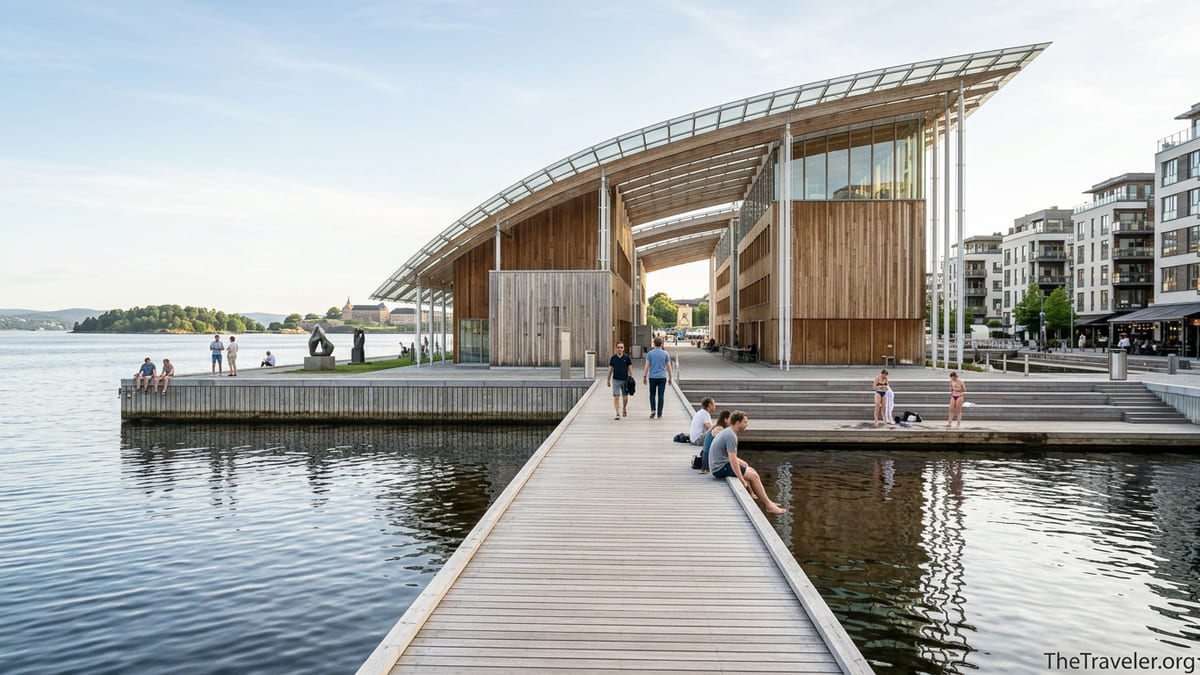
The Astrup Fearnley Museum is a privately funded contemporary art museum that moved to its current Tjuvholmen location in 2012. The building, designed by Renzo Piano, is split into two curved glass-and-wood structures covered by a dramatic sail-like roof. Inside, you will usually find one wing devoted to works from the Astrup Fearnley Foundation’s collection and the other to changing temporary exhibitions, so the experience can be quite different from one season to the next.
The permanent collection is known for major international names such as Jeff Koons, Cindy Sherman, and Damien Hirst, alongside important Nordic artists. Depending on the current hang, you might move from Koons’s glossy sculptures in one room to photography by Sherman or large-scale installations by younger Norwegian artists in the next. Expect bold, sometimes provocative works rather than a chronological history lesson in modern art.
The museum is fairly compact compared with giants like the National Museum or MUNCH, and many visitors find that 60 to 90 minutes is enough time for a satisfying visit inside. That makes it ideal to combine with a relaxed stroll around Tjuvholmen, a swim at the museum beach in summer, or an early dinner by the water. With careful timing, you can see the exhibitions without feeling museum fatigue and still have energy left for the rest of the day.
Because Astrup Fearnley is focused on contemporary work, it pairs especially well with other institutions in Oslo. For instance, you might spend your morning at the National Museum’s classic Norwegian paintings and design, then head to Tjuvholmen after lunch to see how artists are working today. Travelers often report that this creates a satisfying arc from Norway’s artistic past to its present within a single day.
Practical Essentials: Tickets, Opening Hours and Budgeting
The museum’s latest visitor information confirms that it typically opens six days a week, with a closed day early in the week and extended hours into the evening one day. Because these details can shift with seasons and special events, it is wise to confirm opening hours just before you go and avoid assuming that a Monday or Tuesday visit will always be possible. If you land in Oslo in the morning and hope to visit the museum that afternoon, checking the current schedule can save you a wasted walk.
Admission prices are in line with other major Oslo museums. As of mid-2026, you can expect a standard adult ticket to cost in the low to mid-hundreds of Norwegian kroner, with reduced rates for students and young people, and free or discounted entry for children. If you are traveling with a family of four, it is realistic to budget the equivalent of a casual sit-down lunch in Oslo for museum entry. The cost is similar to what you might pay for a main course and soft drink at a mid-range bistro in Aker Brygge nearby.
The museum participates in the Oslo Pass, the city’s tourist card that offers free entry to many attractions and unlimited public transport. If you plan to visit several museums in a single day – for example the National Museum, the Fram Museum on Bygdøy, and Astrup Fearnley – a 24-hour Oslo Pass often pays for itself. For a weekend trip where you will be constantly on the move, a 48- or 72-hour pass can take the stress out of calculating individual tickets and compare favorably with buying separate entries, especially if you also use the ferries and trams.
Inside the museum you will find a shop and a café. Prices here reflect the waterfront location and Norway’s generally high cost of living, but there are ways to keep expenses under control. Many visitors choose to buy a coffee or small pastry rather than a full meal, then have a proper lunch or dinner at one of the numerous restaurants along the Tjuvholmen and Aker Brygge boardwalks. For travelers on tighter budgets, it is completely acceptable to bring a simple sandwich from a supermarket such as REMA 1000 or Coop and eat it on a bench in the nearby sculpture park, provided you tidy up after yourself.
Getting There: Navigation Tips from Central Oslo
The Astrup Fearnley Museum sits at Strandpromenaden 2, right at the end of the Tjuvholmen peninsula. From Oslo Central Station, the most pleasant way to arrive is often on foot: it is roughly a 20 to 25-minute walk if you follow the waterfront past the City Hall and Aker Brygge. Many first-time visitors describe this as one of the highlights of their day, as you pass harbor ferries, outdoor cafés, and a series of modern buildings that chart Oslo’s transformation from industrial port to waterfront promenade.
If you prefer public transport, the city’s unified Ruter system makes it straightforward. From central stops like Jernbanetorget or Nationaltheatret, several tram and bus lines run towards Aker Brygge and the western parts of the city. It is common to ride to a stop near Aker Brygge and then walk the final 10 minutes along the boardwalk to Tjuvholmen. A single-zone ticket, valid on trams, buses, and metro, costs roughly the price of a small coffee in a Norwegian café and can also be used to connect onward by ferry later in the day.
During the summer cruise season, hop-on hop-off sightseeing buses often include a stop signposted for Aker Brygge and the Astrup Fearnley Museum. These buses are considerably more expensive than regular public transport, but can make sense if you are trying to see multiple scattered attractions in one short day. For example, a visitor arriving on a cruise ship with only eight hours ashore might use the hop-on hop-off route to visit the Viking Ship Museum area on Bygdøy, then hop off again at Aker Brygge for Astrup Fearnley before returning to the ship.
Arriving by taxi or rideshare is simple but rarely necessary unless you are traveling with mobility issues or heavy luggage. Journey time from most central hotels is short, but Oslo’s fares mean that even a 10-minute ride can cost as much as a museum ticket. For many travelers, the walk from the City Hall or Nationaltheatret area does double duty as a scenic introduction to the harbor and is more rewarding than sitting in a car.
Planning Your Time Inside the Museum
Because the museum is compact, how you structure your visit matters more than sheer stamina. A smart approach is to start with the current temporary exhibition, then end in the collection galleries. Temporary shows are what you will never see again in the same form, while the collection rotates but tends to retain some core works. For example, if the museum is hosting a large-scale solo exhibition of a contemporary artist, beginning there ensures you have the time and attention it deserves before you tire.
Many visitors find that a loop through each exhibition level, with brief pauses, is comfortable. The museum’s architecture creates views through glass walls and across atriums, so you will naturally encounter spots where you can sit for a moment, look out at the fjord, and reset your attention. Families often use these areas to regroup; a parent might look at a nearby sculpture while a teenager scrolls through photos for five minutes before continuing.
If you are not deeply familiar with contemporary art, it can be useful to pick up any printed exhibition leaflets available at the entrance. These typically highlight a few key artworks and themes in clear, accessible language. Instead of trying to read every label, you can focus on a handful of works mentioned in the leaflet and allow yourself simply to respond to the rest. Travelers who do this often report that the visit feels less like studying and more like walking through an interesting conversation.
Photography is generally allowed in many parts of the museum, but rules can vary by exhibition and individual artwork, especially when loans from other institutions are involved. As a rule of thumb, if you do not see a no-photography symbol on a label or at the gallery entrance, discreet photo-taking without flash is usually acceptable. If in doubt, ask a guard. Respectful behavior keeps the experience pleasant for everyone and protects delicate works from light damage.
Beyond the Galleries: Sculpture Park, City Beach and Neighborhood Walks
One of the best reasons to visit the Astrup Fearnley Museum is what begins when you step back outside. Directly behind the building lies the Tjuvholmen Sculpture Park, a compact waterfront park dotted with contemporary artworks. Here, sculptures frame views of the Oslofjord, and paths wind between lawns, benches, and small jetties. In good weather you might see office workers eating lunch on the grass, children playing near the water, and visitors taking photos of sculptures against the backdrop of Akershus Fortress across the bay.
On the seaward side of the museum you will find Tjuvholmen Sjøbad, a small city beach and designated swimming area. In summer, locals come here to sunbathe on the wooden decks and swim in the fjord during their lunch break. The area includes steps and ladders into the water and is free to use, though you will want to bring your own towel and swimsuit. If you are visiting in July and the weather is clear, it is entirely realistic to spend an hour in the museum, then immediately change into swimwear and join locals for a quick dip.
The Tjuvholmen and Aker Brygge neighborhood is also known for its restaurants and bars. Along the boardwalk you can choose between Italian pizzerias, seafood-focused brasseries, burger joints, and high-end dining rooms with multi-course tasting menus. Prices are higher than in many other parts of Oslo, but the setting is hard to beat. A common strategy for budget-conscious travelers is to have a coffee or glass of wine at a waterfront terrace during late afternoon, taking in the atmosphere and views, then head a few blocks inland for a more affordable dinner.
If you continue walking east along the Harbor Promenade from Tjuvholmen, you can link the museum with other major cultural sites such as the City Hall, the Oslo Opera House, and MUNCH. Visitors who enjoy long urban walks sometimes start at Astrup Fearnley in the late morning, then follow the waterfront all the way to the opera in the afternoon, stopping to look at public art and modern architecture along the way. This is an efficient way to experience how Oslo has reshaped its entire inner harbor around culture and recreation.
When to Visit and How to Avoid Crowds
Attendance at the Astrup Fearnley Museum is strongly shaped by Oslo’s seasons and cruise schedule. In high summer, particularly June through August, late mornings and early afternoons can be busy with international visitors and organized groups. If you would like more space and quiet, consider arriving shortly after opening time or in the late afternoon, especially on the day of the week when the museum stays open into the evening. In the shoulder seasons of May and September, the museum often feels pleasantly active without being crowded.
Winter brings its own charm. Oslo’s short days and low light mean that the museum’s warm interior and large glass walls, glowing against a backdrop of dusk, can feel especially inviting. The Tjuvholmen boardwalk is quieter, and the sculpture park takes on a different mood with snow or bare trees. You will not be swimming off the museum pier in January, but you might move directly from the galleries to a cozy café for hot chocolate while watching the fjord from indoors.
Weather should play a role in how you plan your day. On bright, clear days it is worth allowing extra time after your museum visit to enjoy the outdoor spaces. Travelers often report that some of their favorite memories involved simply sitting on the steps near the water at Tjuvholmen with an ice cream from a nearby kiosk. On rainy or windy days, you might instead move more quickly between the museum, the café, and indoor attractions in Aker Brygge or the city center.
Special events and exhibition openings can also affect crowd levels. When a major new show launches, Oslo’s art community tends to converge on the museum in the first week. If you value a calmer experience and have flexibility, try visiting a couple of weeks after a big opening. Conversely, if you enjoy an energetic buzz and public talks, watching the museum’s event calendar ahead of your trip can help you align your visit with an artist conversation, guided tour, or family workshop.
Combining Astrup Fearnley with Other Oslo Highlights
Because the museum visit itself rarely takes more than a couple of hours, it fits easily into broader Oslo itineraries. A classic “art by the fjord” day might start at MUNCH by the Opera House to see Edvard Munch’s paintings and contemporary exhibitions, followed by a ferry or tram ride to the National Museum near the City Hall, and then a walk along the harbor to Astrup Fearnley in the late afternoon. This triangle connects three very different institutions and gives a rounded picture of Norwegian and international art in a single day.
For families or travelers who want to mix art with outdoor time, pairing Astrup Fearnley with a trip to the Bygdøy peninsula works well in summer. You could start the morning at the Fram Museum or the Norwegian Museum of Cultural History, take a short bus or ferry back towards the city, and then spend the late afternoon exploring Tjuvholmen’s sculpture park and beach. Kids who have reached their limit with museum interiors can often be persuaded to keep going if they know there is a chance to paddle or play by the water afterwards.
If your time in Oslo is very short, such as a single overnight stop on a longer Scandinavian journey, you can still include Astrup Fearnley without overloading your schedule. One realistic pattern is to arrive in the afternoon, check into a central hotel, and walk down to Aker Brygge and Tjuvholmen for a sunset visit to the museum and dinner. The next morning can be devoted to a different area, such as Vigeland Sculpture Park or the historic Akershus Fortress, before you catch your onward train or flight.
Travelers who enjoy exploring neighborhoods rather than ticking off sights can treat the museum as a focal point for an entire day in Oslo’s west-central waterfront. Start with brunch in a café around Solli plass or Frogner, then stroll down to Aker Brygge for a harbor walk, visit the museum, swim or relax in the sculpture park, and finish the evening with a sauna session at one of the floating saunas near the City Hall. This approach lets you experience both the city’s everyday life and its contemporary cultural institutions at a comfortable pace.
The Takeaway
Visiting the Astrup Fearnley Museum of Modern Art is less about checking a single attraction off your list and more about immersing yourself in a corner of Oslo where contemporary art, striking architecture, and everyday fjord life intersect. With a bit of advance planning around opening hours, tickets, and transport, you can comfortably see the museum’s exhibitions in 60 to 90 minutes and still have time to enjoy Tjuvholmen’s sculpture park, city beach, and waterfront cafés.
Whether you are an art enthusiast eager to trace global contemporary trends, a casual visitor drawn by the building and the views, or a family looking for a museum that won’t exhaust younger travelers, Astrup Fearnley can fit naturally into your plans. By combining the visit with a walk along the Harbor Promenade or other nearby museums, you will come away with a deeper sense of how Oslo has transformed its relationship with the sea and made culture a visible part of its urban landscape.
If you remember just a few things, let them be these: check the latest opening hours before you go, allow time to explore outside as well as inside, and use the museum as an anchor for discovering the surrounding waterfront. Do that, and your visit to Astrup Fearnley will likely stand out as one of the most vivid moments of your stay in the Norwegian capital.
FAQ
Q1. How long should I plan for a visit to the Astrup Fearnley Museum?
Most visitors find that 60 to 90 minutes is enough to see the exhibitions at a comfortable pace, not counting extra time in the sculpture park or at the beach.
Q2. Is the Astrup Fearnley Museum included in the Oslo Pass?
The museum has been part of the Oslo Pass network, and pass holders typically receive free entry, but you should always verify current benefits before purchasing.
Q3. What is the easiest way to get to the museum from Oslo Central Station?
A scenic 20 to 25-minute walk along the harbor via the City Hall and Aker Brygge suits many travelers, while others prefer a short tram or bus ride followed by a 10-minute walk.
Q4. Can I swim near the Astrup Fearnley Museum?
Yes. Tjuvholmen Sjøbad, a small city beach and swimming area right beside the museum, is popular in summer with locals and visitors on warm days.
Q5. Are there good food options near the museum?
The Tjuvholmen and Aker Brygge waterfront is lined with restaurants, cafés, and bars, ranging from casual burger places and pizzerias to high-end seafood and Nordic restaurants.
Q6. Is the museum suitable for children and teenagers?
Many families enjoy visiting because the museum is compact, and the nearby sculpture park and beach give younger visitors space to move around between gallery visits.
Q7. Do I need to book tickets in advance?
Advance booking is often not essential on regular weekdays, but during busy summer weekends, special exhibitions, or holidays, pre-purchasing tickets can reduce waiting time.
Q8. What is the best time of day to avoid crowds?
Arriving soon after opening or in the late afternoon, especially outside peak summer weekends, usually offers a calmer experience with more space in the galleries.
Q9. Is the Astrup Fearnley Museum accessible for visitors with limited mobility?
The museum building is modern, with elevators and step-free routes, and staff are generally helpful, but travelers with specific needs should confirm details before visiting.
Q10. Can I combine a visit to Astrup Fearnley with other major Oslo sights in one day?
Yes. Many visitors pair it with the National Museum, MUNCH, or the Bygdøy museums, using the Harbor Promenade and public transport to move efficiently between them.