


Cades Cove is an unlikely celebrity. On paper, it is just one valley tucked into the Tennessee side of Great Smoky Mountains National Park, an 11-mile, one-way loop hemmed in by forested ridges. In reality, it has become the park’s undisputed crowd magnet, drawing more visitors than any other single area in the Smokies. To understand why Cades Cove became the park’s most visited area is to understand the mix of scenery, wildlife, history, and accessibility that modern travelers crave, all concentrated in one remarkably photogenic bowl of land.
Get the latest updates straight to your inbox!
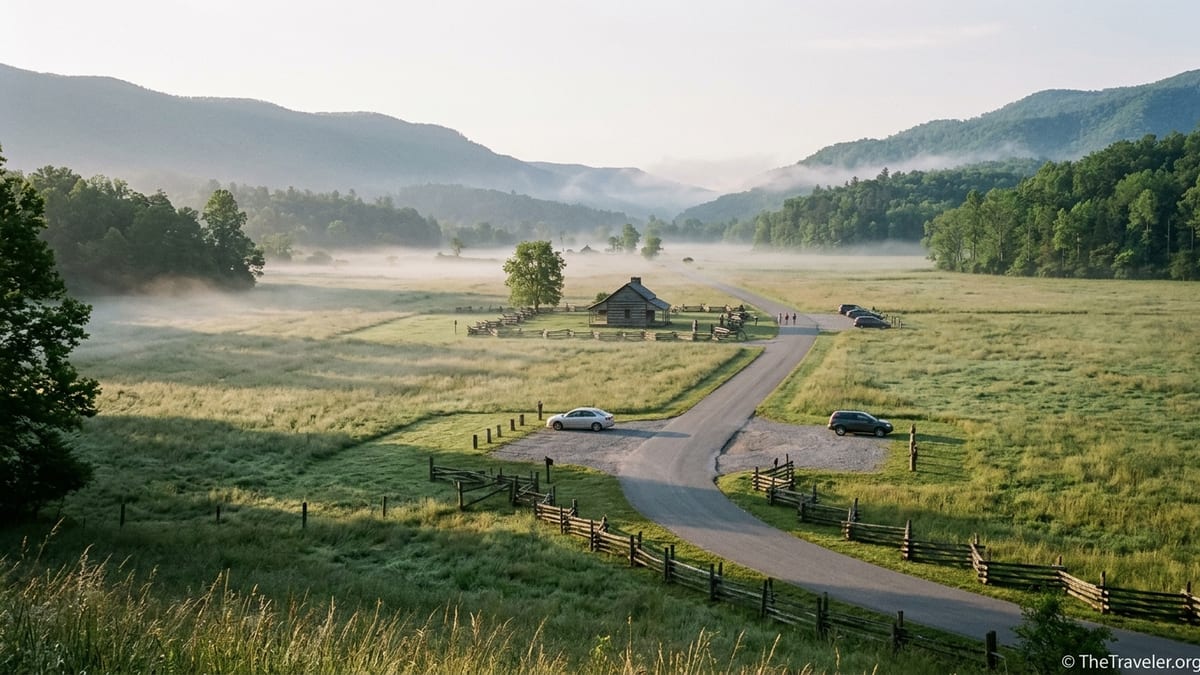
A Valley at the Heart of America’s Most Visited National Park
Great Smoky Mountains National Park is consistently the most visited national park in the United States, with recent annual attendance topping roughly 11 to 12 million people. In visitor surveys, Cades Cove shows up again and again as the single most commonly visited location inside the park, outpacing other marquee stops such as Sugarlands Visitor Center and Clingmans Dome. For many first-timers, the Smokies experience quite literally begins and ends with a slow drive around this one valley.
Cades Cove’s appeal starts with its shape. Unlike much of the Smokies, which can feel closed-in and wooded, the cove opens into a broad, flat valley ringed by mountains like Rich Mountain and Thunderhead Mountain. Drivers emerging from the forested approach road suddenly see hayfields, split-rail fences, and distant blue ridgelines in every direction. It is a cinematic reveal that feels almost designed, and it happens to every car that passes the entrance sign.
The scale of visitation is obvious on a typical October weekend. Parking pullouts fill before 9 a.m., the queue to enter the loop road can extend back along Laurel Creek Road, and it is not unusual for the 11-mile drive to stretch to two and a half or three hours when wildlife appears. Yet people keep coming, planning entire Smokies vacations around “a day in Cades Cove,” because the valley delivers a concentrated sample of what makes the region famous.
Cades Cove has effectively become the park’s brand ambassador. Tourism bureaus in nearby Townsend, Pigeon Forge, and Gatlinburg routinely feature sunrise photos from the cove in brochures and billboards. When travel magazines illustrate a Smokies story, the image is often of mist rising from Cades Cove’s fields, not of the park’s rugged backcountry. That constant visual presence has turned this once isolated farming community into a must-see symbol of the Smokies.
The Loop Road: Scenic Drive Turned Signature Experience
Central to the cove’s popularity is the Cades Cove Loop Road itself: an 11-mile, paved, one-way lane that circles the valley. Unlike many national park drives that simply connect two points, this loop is an attraction in its own right, with signed pullouts for historic cabins, churches, trailheads, and viewpoints. Visitors can commit to the loop knowing that they will not need four-wheel drive, special permits, or advanced hiking skills to enjoy the scenery.
For many families, the loop road is their first real national park auto tour. You might see a Florida minivan stopping at the John Oliver Cabin, a couple from Ohio unloading bicycles at the start of a vehicle-free Wednesday, and a rental SUV from Chicago pulling into the parking area at the Cable Mill historic district. They are all following the same simple route: enter once, circle counterclockwise, and exit at the same point. That clarity makes Cades Cove far less intimidating than the maze of unmarked gravel roads common in other mountain parks.
The park has leaned into this loop experience over time. Wayfinding signs highlight numbered stops. The Cades Cove Visitor Center and bookstore, located roughly halfway around the loop near the Cable Mill, sell inexpensive driving tour booklets that explain each historic site by mile marker. A family paying around 1 to 2 dollars for the booklet can hand it to a teenager in the back seat and turn the drive into a narrated tour, with each stop described in plain language and short anecdotes about the lives of the people who lived there.
Because the loop is one way and relatively narrow, it naturally slows visitors down. The posted speed limit is modest, but traffic patterns often make it even slower. While that can frustrate drivers used to interstate speeds, the unhurried pace is part of the cove’s draw. It gives passengers time to scan fields for deer, trace the outline of distant ridges, or watch morning fog lift from the pastures. Even the traffic jams, often called “bear jams” when wildlife is the cause, have become part of the lore of visiting Cades Cove.
Wildlife Viewing Made Remarkably Easy
In many national parks, seeing wildlife requires a measure of luck and effort: dawn hikes, remote gravel roads, or long waits at backcountry viewpoints. Cades Cove, by contrast, offers some of the most consistent and accessible wildlife viewing in the Eastern United States, and that reliability is a major reason it draws so many visitors. Wide open fields bordered by forest create ideal edges where animals feed at dawn and dusk, and those edges are visible right from the loop road.
Black bears are the star attraction. On a good June evening, it is common for visitors to spot one or more bears moving along the tree line or foraging in the fields. A family from Indiana might pull into a designated turnout after spotting a cluster of parked cars and rangers directing traffic, then watch through binoculars as a sow and cubs turn over logs in the distance. They never leave the pavement, yet they go home with a bear story that feels wild and unscripted.
White-tailed deer, wild turkeys, and coyotes also appear regularly. In late summer, bucks in velvet often graze in the meadows near sunrise, while flocks of turkeys cross the road in tight formation, creating the kind of close-range encounters that delight children leaning out van windows. In winter, when leaves drop, visitors can sometimes spot red-tailed hawks perched on snags at the forest edge or hear pileated woodpeckers hammering from nearby woods.
The abundance of wildlife has shaped how people plan their visits. Many cabin rental companies in Townsend and Wears Valley, for example, provide suggested Cades Cove “wildlife drives” to guests, advising them to enter the loop within an hour of sunrise or two hours before sunset for the best odds of seeing animals. Photography workshops based in Gatlinburg routinely advertise Cades Cove bear and deer sessions, with professional guides timing their visits around favorable light and animal movement.
America’s Largest Open-Air Museum of Mountain History
While the scenery and wildlife get much of the attention, Cades Cove’s historic landscape is equally important to its status as the park’s most visited area. Before the creation of Great Smoky Mountains National Park, the cove supported a small but thriving Appalachian farming community. Today, preserved cabins, churches, barns, and a working gristmill line the loop road, forming what some local historians describe as the largest open-air museum in the Smokies.
Visitors encounter history mere minutes after entering the loop. The John Oliver Cabin, one of the oldest structures in the park, stands in a field just off the road. On a typical afternoon, you might see school groups spilling out of yellow buses here, with rangers explaining how early settlers hand-hewed logs and chinked gaps with clay. Parents lean in as children test the weight of the cabin’s rough-hewn door or imagine living in a one-room house through a Smokies winter.
Farther along, three historic churches sit near the loop: the Primitive Baptist, Methodist, and Missionary Baptist churches. These modest white frame buildings, each with simple wooden pews and small cemeteries, attract visitors for both their architecture and their stories. It is common to see travelers from across the country pausing by gravestones to trace the names of long-ago residents, or destination wedding photographers quietly capturing portraits on the church steps when crowds thin.
The Cable Mill historic area near the midpoint of the loop brings the pioneer era to life in practical terms. The park maintains a working gristmill that, in season, demonstrates how corn was ground into meal using water power. On busy Saturdays, visitors might watch volunteers in period-appropriate clothing tending a blacksmith shop, walking through a cantilevered barn, or discussing how families smoked meat and stored crops. Gift shops here sell bags of cornmeal ground on-site, allowing travelers to take home a literal taste of the cove’s past.
Accessible Adventure: Hiking, Biking, and Vehicle-Free Days
Another reason Cades Cove dominates visitation statistics is that it caters to a remarkably broad range of activity levels. Visitors who never leave the driver’s seat can still see mountains, wildlife, and history. Those who want a bit more activity find easily accessed hiking trails and, increasingly, cycling opportunities built into the cove experience.
Several popular day hikes begin directly from the loop road. The trail to Abrams Falls, for example, starts from a clearly marked parking area near the back side of the loop. Families staying in Gatlinburg might drive in for the day, complete the roughly five-mile round-trip hike to the 20-foot waterfall, then finish the loop in the late afternoon. Shorter walks, such as the flat footpath to the Elijah Oliver homestead, give casual visitors a sense of backcountry quiet without demanding serious mileage or elevation gain.
Cyclists view Cades Cove as a rare place in the East where road biking and national park scenery come together. During the park’s weekly vehicle-free days, offered on select Wednesdays from late spring through early fall, the loop road closes to private cars for much of the day. In practice, that transforms the cove into an 11-mile rolling bike path. On a typical vehicle-free morning, you might see local residents who drove over from Maryville unloading road bikes, families renting cruisers near the campground, and out-of-state visitors wobbling through their first few pedal strokes since childhood.
For travelers without bikes, rental operations near the Cades Cove Campground offer an easy entry point. A visiting couple might reserve bicycles for two hours at rates that are competitive with other regional rentals, pedal the loop at a leisurely pace, and stop at several historic sites without competing with vehicle traffic. That mix of structured opportunities and freedom to explore keeps both casual and active travelers engaged, and encourages repeat visits.
Proximity, Infrastructure, and the Power of Word of Mouth
Cades Cove did not become the park’s most visited area by scenery alone. Its location and surrounding tourism infrastructure play a major role. The cove sits about 25 miles from Gatlinburg via Little River Road and Laurel Creek Road, and roughly the same distance from Pigeon Forge and Sevierville when approached through Townsend. Those gateway communities offer thousands of hotel rooms, rental cabins, RV sites, and vacation homes, many of which prominently advertise short drives to Cades Cove as a selling point.
It is common for renters scrolling through vacation platforms in January to encounter listings that promise “15 minutes to Cades Cove” or “direct route to the loop road.” Regional tour companies based in Pigeon Forge and Gatlinburg run guided van trips to the cove, pitching them to guests who prefer not to navigate mountain roads or parking on their own. On busy weeks like fall break in October or peak summer holidays, some operators run morning and evening wildlife tours, further reinforcing the cove’s reputation as the primary place to go.
Inside the park, facilities contribute to the cove’s status as a full-day destination. The Cades Cove Campground offers hundreds of sites within walking distance of the loop, allowing RVers and tent campers to base themselves in the valley. Adjacent picnic areas, restrooms, and the presence of a small camp store mean that families can spend an entire day there without returning to town. Compared with more remote corners of the park that lack services or paved access, Cades Cove feels approachable for first-time national park visitors.
Word of mouth has magnified these structural advantages. Generations of families across the Southeast treat a sunrise or sunset drive through Cades Cove as a ritual. Grandparents who came as children in the 1960s and 1970s now bring grandchildren, telling stories about watching farmers cut hay or counting the number of bears spotted in a single evening. Social media has updated that tradition: today, a single close-range bear video or autumn fog photo posted from the loop can inspire friends back home to add Cades Cove to their own Smokies itineraries.
Managing Popularity: Crowds, Conservation, and Evolving Policies
With popularity comes pressure, and Cades Cove’s status as the park’s most visited area has forced managers to balance visitor access with resource protection. On peak days, traffic backups can extend for miles, and “bear jams” form when drivers stop in the roadway for wildlife sightings. Rangers and volunteers often spend hours directing vehicles to pullouts, reminding visitors to stay at least several dozen yards from bears and other animals, and trying to keep the loop moving.
To ease congestion and improve safety, the park has experimented with operational changes. The introduction of weekly vehicle-free days was a direct response to both visitor demand and resource concerns, giving cyclists and pedestrians a quieter experience and reducing the cumulative impacts of constant engine noise and idling vehicles. Visitor education campaigns in recent years have put more emphasis on using designated pullouts, not blocking the single travel lane, and viewing wildlife from a safe distance rather than approaching for selfies.
Cades Cove has also become a focal point for broader discussions about sustainable tourism in the Smokies. Local businesses depend heavily on the steady flow of visitors into the valley, but there is growing recognition that unchecked growth could damage exactly what people come to see: open meadows, healthy wildlife populations, and intact historic structures. Park planning documents and community meetings increasingly cite Cades Cove when talking about shuttle systems, timed entry pilots, and infrastructure upgrades such as improved restrooms and expanded parking at key trailheads.
For travelers, this evolving management picture means expectations need to be realistic. On a busy October Saturday, they should anticipate long lines, limited parking, and the possibility that rangers may temporarily close the loop entrance to clear backups. Visiting at off-peak times such as early morning, midweek in spring, or winter days after fresh snow not only improves the personal experience but also spreads out use in a way that supports the park’s long-term stewardship goals.
The Takeaway
Cades Cove became the most visited area in Great Smoky Mountains National Park because it concentrates the park’s greatest hits into a single, easily navigated valley. Visitors can drive one paved loop and take in sweeping mountain vistas, spot bears and deer in open fields, step inside 19th-century cabins and churches, walk to a waterfall, and picnic under old shade trees, all without specialized gear or technical skills. That rare combination of accessibility and authenticity is powerful.
The cove’s fame has been amplified by its proximity to major tourist towns, the growth of nearby lodging and tour infrastructure, and generations of travelers recommending it as a must-see stop. At the same time, its popularity has forced park managers and visitors alike to reckon with crowding, traffic, and the need to protect fragile natural and cultural resources.
For modern travelers plotting a Smokies itinerary, Cades Cove remains a compelling centerpiece. With thoughtful timing, patience for slow roads, and respect for wildlife and history, it is still possible to experience the quiet beauty that first drew people into this valley long before it was a national park. In doing so, visitors help write the latest chapter in the evolving story of the Smokies’ most beloved place.
FAQ
Q1. Why is Cades Cove considered the most visited area in Great Smoky Mountains National Park?
Cades Cove combines easy access, dramatic open scenery, abundant wildlife, and well-preserved historic buildings, all linked by an 11-mile paved loop that most visitors can enjoy without hiking.
Q2. How long does it usually take to drive the Cades Cove Loop Road?
Without many stops, the 11-mile loop can take about 1.5 hours, but on busy days with traffic and wildlife sightings it can stretch to 2.5 or even 3 hours.
Q3. When is the best time of day to see wildlife in Cades Cove?
Wildlife is most active around dawn and dusk. Entering the loop soon after sunrise or a couple of hours before sunset often offers the best chances to see bears, deer, and turkeys.
Q4. Do I need a four-wheel-drive vehicle to visit Cades Cove?
No. The Cades Cove Loop Road is paved and suitable for standard passenger vehicles. Careful, slow driving is more important than specialized equipment.
Q5. Are there specific days when Cades Cove is closed to vehicles?
In the main visitor season, the park typically designates one weekday as a vehicle-free day so cyclists and pedestrians can use the loop without cars for much of the day. The exact schedule can vary by year.
Q6. What hiking options are available from the Cades Cove Loop?
Several trails start from the loop, including the popular Abrams Falls Trail, shorter walks to historic homesteads such as Elijah Oliver’s, and connector paths that climb toward the surrounding ridges.
Q7. Can I see historic buildings without doing a long hike?
Yes. Many cabins, churches, and barns sit just a short walk from roadside pullouts, so visitors with limited mobility or time can still explore the valley’s historic structures.
Q8. Is Cades Cove a good place for cycling?
Yes. On vehicle-free days especially, cyclists of varying experience levels ride the 11-mile loop, enjoying gentle hills, mountain views, and the ability to stop at historic sites without vehicle traffic.
Q9. How crowded does Cades Cove get during peak season?
During summer and October leaf season, the loop can be very crowded, with long entrance lines and slow traffic. Arriving early, visiting on weekdays, or choosing shoulder seasons can help avoid the worst congestion.
Q10. Why do some visitors recommend staying near Townsend for Cades Cove trips?
Towns like Townsend offer relatively quiet, convenient bases that are close to the Cades Cove entrance road, reducing drive times and making early-morning or late-evening visits easier.