


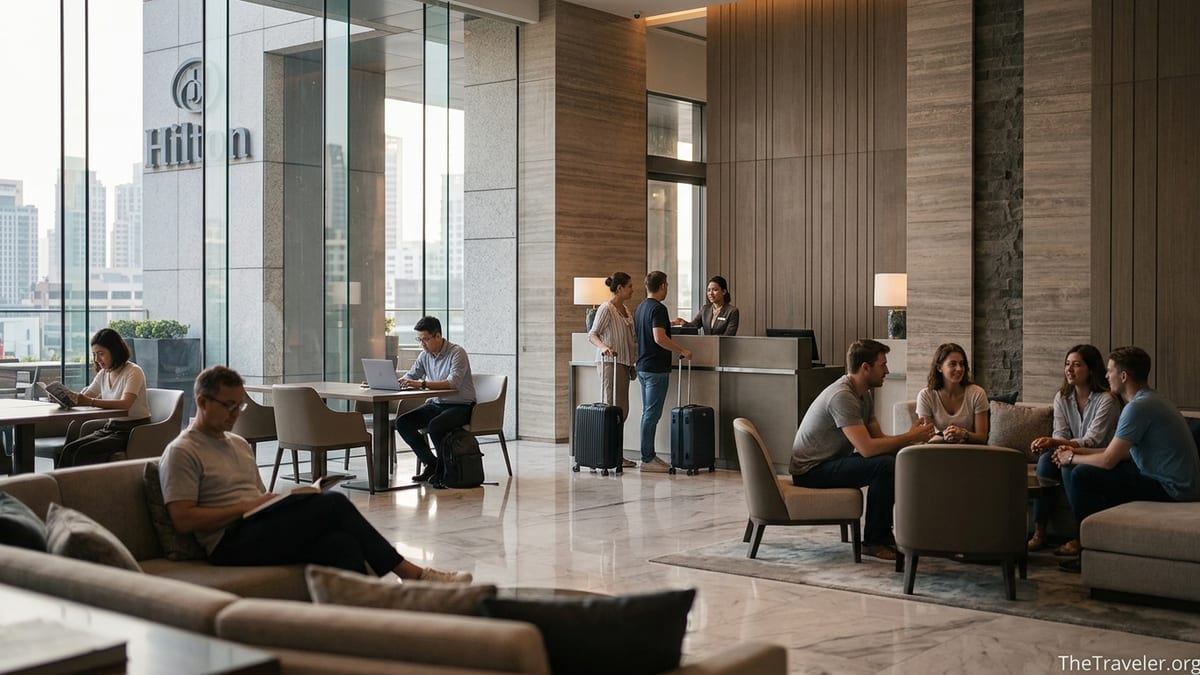
In a hotel landscape crowded with new brands and booking options, very few names still feel instantly reassuring when you touch down in an unfamiliar city. Hilton is one of them. From a roadside Hampton in rural America to a Waldorf Astoria overwater villa in the Maldives, the company has spent more than a century turning a logo on a building into a promise: your stay should feel predictable in the best possible way. In 2026, that promise continues to underpin why Hilton remains one of the most trusted names in global hospitality.
Get the latest updates straight to your inbox!
A Legacy Brand Backed by Modern Recognition
Trust in travel is never built overnight. Hilton traces its roots back to 1919, but its reputation is still being tested daily in more than 9,000 properties across roughly 140-plus countries and territories. Travelers do not keep returning to a brand of that size simply because it is familiar. They come back because, in practice, Hilton has repeatedly demonstrated that its standards, training and guest recovery practices hold up from airport hotels in Denver to beach resorts in Bali. That consistency is a core reason the name carries so much weight with both leisure and business guests.
Independent research continues to validate that perception. In 2026, market research firm Lifestory Research named Hilton America’s Most Trusted Hotel Brand, placing it ahead of long-time competitors in a crowded field. For frequent travelers deciding between similar nightly rates in the same city, that kind of broad-based consumer confidence often tips the balance. It means that previous guests, on average, felt their expectations were met or exceeded often enough to recommend Hilton when asked which brand they rely on most.
Industry awards tell a similar story at the property level. In the 2024 Travel + Leisure World’s Best Awards, nineteen Hilton properties across brands such as Waldorf Astoria, Conrad, LXR and Curio Collection appeared in various “best of” categories ranging from islands to urban hotels. These accolades, voted on by readers who have paid for and experienced the stays themselves, help reinforce Hilton’s positioning not just as a safe, midscale choice, but as a portfolio that also delivers at the top end of the market where expectations are highest.
For a traveler browsing booking sites before a trip to New York or Tokyo, these recognitions are more than marketing talking points. They act as a shorthand that the odds of a smooth experience are higher, whether you are checking into a mid-priced Hilton Garden Inn for a one-night work trip or a Conrad for a milestone anniversary.
Consistency Where It Matters Most: Rooms, Service and Problem Solving
Most travelers remember not the perfect stays, but how a hotel responds when something goes wrong. This is where Hilton’s systems and staff training have a direct impact on trust. For instance, if you arrive at a Hampton by Hilton off an interstate in Ohio at midnight to find that your non-smoking room smells of smoke, front desk teams typically have clear authority to switch your room immediately, offer additional cleaning, or, if sold out, provide partial credits or points as an apology. That kind of swift, predictable response turns a potential one-star review into a situation guests are willing to forgive.
Day to day, trust is also built through predictable basics: beds, showers, and cleanliness. Travelers landing at a DoubleTree in Phoenix after a five-hour flight largely know what to expect: a firm mattress with recognizable Hilton bedding, a hot shower with adequate water pressure, reliably functioning Wi-Fi, and, often, a small welcome cookie that signals a brand-wide culture of warm, repeatable gestures. The idea is that guests should not have to wonder if the Wi-Fi code will work or if the towels will be in short supply. By minimizing uncertainty around these essentials, Hilton makes it easier for travelers to focus on their meetings, family time or sightseeing.
Hilton’s internal guest-feedback platform, which continuously tracks satisfaction scores and loyalty intent at the property level, further reinforces consistency. While the technical details stay behind the scenes, the result is very visible: if a hotel near an airport in Dallas sees repeated complaints about noisy rooms or slow check-in, it is flagged and pushed to improve, often through staff retraining or operational tweaks. Over time, these corrections become part of the reason a Hilton sign tends to mean similar front-desk greetings and housekeeping standards in very different markets.
Real-world examples underline why this matters. A frequent business traveler flying weekly between Chicago and Atlanta may choose a specific Hilton Garden Inn near the airport because they know that, even arriving after 10 p.m., the lobby market will still sell simple meals and the staff will offer bottled water and quick digital check-in. When you replicate that same ease of arrival in dozens of cities around the world, the accumulated experience translates into long-term trust.
A Portfolio for Every Trip Type, Under One Trusted Umbrella
Another reason Hilton continues to inspire confidence is the breadth of its brand portfolio, which now spans luxury, lifestyle, full-service, focused-service and extended-stay options. At the very top, Waldorf Astoria and Conrad cater to guests seeking high-end rooms, polished service and destination restaurants, whether that is at the Waldorf Astoria Beverly Hills overlooking Los Angeles or Conrad Tokyo with its skyline views. For travelers planning honeymoons or once-in-a-decade vacations, choosing these Hilton luxury brands adds the reassurance that standards of cleanliness, safety and staff professionalism mirror what they experience in more everyday stays.
In the lifestyle space, brands like Canopy by Hilton and Motto by Hilton offer travelers something a bit more design-forward and localized. A Canopy property in Reykjavik, for example, might feature local artwork, bicycles available for exploring the city and welcome tastings of regional snacks, providing a distinct sense of place while still honoring Hilton’s service and safety basics. Motto properties lean urban and compact, positioning themselves in lively neighborhoods where friends might book multiple “flexible” room configurations for a concert weekend, again backed by familiar Hilton reservation systems and service norms.
At the midscale and budget-friendly end, Hampton by Hilton and the newer Spark by Hilton aim to deliver value without surprises. A family driving from Dallas to Orlando with three children might split their trip with a stop at a Hampton off the highway, drawn by the promise of included hot breakfast, clean rooms and friendly service. Spark, introduced to refresh older hotels into brighter, simplified properties, targets travelers looking for a clean bed, functional workspace and coffee, often at nightly rates that compete with independent motels but with stronger brand oversight.
Extended-stay and apartment-style brands, from Homewood Suites and Home2 Suites to the emerging apartment collection, appeal to guests relocating for work or traveling with families for a week or more. A consultant on a month-long project in Seattle, for instance, may choose a Homewood Suites because it includes a kitchenette, self-serve laundry nearby, and occasional evening socials, all of which soften the edges of long-term travel. The crucial point is that, regardless of segment, the same Hilton reservation channels, loyalty program and brand standards tie these diverse options together, giving travelers confidence that if they “book Hilton,” they will know what they are walking into.
Hilton Honors: Turning Stays Into Long-Term Relationships
For many travelers, trust begins the moment they sign up for Hilton Honors, the company’s loyalty program. Membership is free and provides immediate baseline benefits: access to discounted member rates when booking direct, the ability to earn points on eligible stays, complimentary standard Wi-Fi and digital tools like mobile check-in and digital key for many hotels. Even an infrequent traveler who stays at a Hilton property once or twice a year can see tangible value simply by ensuring their membership number is attached to every booking.
Hilton Honors is structured in multiple tiers, from Member through Silver, Gold, Diamond and the recently introduced Diamond Reserve. Higher tiers, earned through a combination of nights, stays or qualifying spend in a calendar year, unlock incremental perks such as a higher bonus on points earned, space-available room upgrades, late check-out and access to executive lounges in many full-service properties. For example, a Gold member staying at a Hilton in London may receive complimentary breakfast or a daily food and beverage credit, while a Diamond guest at a Hilton in Chicago might be upgraded to a higher-floor room and given access to an executive lounge with evening snacks and soft drinks.
Real-world value becomes clear for families and frequent travelers. A couple who books four nights at a resort in Hawaii using points might benefit from the program’s “fifth night free” policy for certain reward stays, effectively reducing their average nightly cost. Another traveler who spends much of the year on the road for sales meetings can rapidly accumulate points and use them for an aspirational redemption, such as a long weekend at a Conrad beach resort, paying only taxes and fees. Over time, these experiences often cement a preference for Hilton over rival chains, because guests feel that their loyalty is recognized and rewarded in ways that matter to them personally.
Importantly, Honors points now represent more than just future room nights. Partnerships with airlines, rideshare services and credit card issuers allow members to earn or redeem points in everyday life, from using a co-branded credit card for groceries to offsetting rides to the airport. This broad ecosystem helps keep Hilton at the top of mind between trips, reinforcing the brand as a long-term travel companion rather than a one-off booking.
Digital Tools That Remove Friction From the Journey
Trust increasingly hinges on technology as much as on smiles at reception. Hilton has invested heavily in its app and digital infrastructure, understanding that many guests now expect to manage much of their stay from their phone. Through the Hilton Honors app, members can typically check in digitally before arrival, select a specific room from a property map and, at many locations, use a digital key to bypass the front desk altogether. For a frequent traveler landing in a new time zone late at night, walking straight from rideshare drop-off to their room without standing in line can significantly improve the sense of efficiency and control.
These digital tools are not only about convenience; they are also about transparency and security. Being able to see room details and floor plans during digital check-in helps solo travelers choose rooms they feel safer in, such as those near elevators or away from external exits. Notifications in the app regarding late check-out approval, parking charges or folio summaries reduce the number of unpleasant surprises at check-out, when misunderstandings about extra fees can easily erode trust.
On the property side, Hilton’s systems allow staff to access guest profiles, preferences and previous-stay notes when permitted. That means that a regular guest who prefers extra pillows and a high floor at a Hilton in New York is more likely to see those same preferences acknowledged at a different Hilton in San Diego. Over time, this light personalization helps stays feel less transactional and more relationship-based, even in large, busy city hotels.
Hilton also uses back-end data from guest satisfaction and loyalty tracking to fine-tune how digital and in-person touchpoints work together. If guests at a particular property consistently mention in surveys that digital key activation is slow or confusing, corporate teams can intervene with technical support or training. These quiet adjustments, largely invisible to the traveler, collectively reinforce the feeling that Hilton listens and adapts when something is not working well.
Responsible Travel and Community Impact as Trust Builders
Modern travelers, particularly younger generations and corporate clients, increasingly judge hotel brands not only on the comfort of the rooms but also on how responsibly they manage their environmental and social footprint. Hilton’s long-running “Travel with Purpose” strategy is one of the ways the company addresses this expectation. Through it, Hilton sets goals around energy efficiency, water use, waste reduction and community engagement, tracking results across its portfolio through a proprietary platform that measures and manages performance at the hotel level.
In practice, guests see the results in small but meaningful details. Many Hilton properties have shifted to bulk bathroom amenities in pumps rather than single-use plastic bottles, provide in-room recycling where local infrastructure allows, and use LED lighting and smart thermostats to reduce energy use. At a beachfront Conrad or Hilton resort, guests may encounter signage explaining how the property protects local ecosystems, such as reducing light pollution during turtle nesting seasons or supporting reef-restoration projects. Business travelers attending conferences at large Hilton hotels may find that the venue can provide carbon and waste data for their events, helping corporate organizers meet their own sustainability reporting obligations.
Hilton’s community initiatives also feed into trust. Hotels routinely participate in local volunteering efforts, food donations and job-training programs, often tailored to the communities in which they operate. A DoubleTree in a mid-sized American city might partner with a nearby culinary school to offer internships, while a Hilton in Southeast Asia may run campaigns supporting local artisans by showcasing their products in the lobby and gift shop. For guests who care where their travel dollars go, knowing that a global brand incorporates this kind of local engagement can tip the scales when choosing between apparently similar options.
While no large company’s sustainability record is flawless, Hilton’s ongoing publication of ESG and Travel with Purpose reports offers a level of transparency that many travelers and corporate buyers now expect. Being open about progress and challenges helps sustain long-term credibility in a space where greenwashing is a growing concern.
Real-World Scenarios: Why Travelers Choose Hilton Again and Again
To understand Hilton’s enduring trust, it helps to look at specific travel scenarios. Consider a small business owner in Atlanta who travels monthly to meet clients across the United States. She consistently books Hilton Garden Inn or Hampton by Hilton properties near airports because she knows that breakfast will be straightforward, Wi-Fi will be reliable and she can earn points toward a family vacation. On trips where her children join her, she might book a Home2 Suites with a small kitchen and sofa bed so they can eat in some nights and spread out. For her, the trust equation is simple: Hilton rarely wastes her time or money.
Now imagine a couple planning a two-week honeymoon through Europe. They might start at a centrally located Hilton in London, where loyalty status could provide breakfast and a late checkout, before moving to a Curio Collection hotel in Rome that offers a more boutique vibe in a historic building. They finish at a Conrad on the coast in Portugal, using points earned from credit card spend to offset the higher nightly rates. Across all three stays, their Hilton Honors benefits carry over, and the company’s global reservations and customer-care structure means that if a flight cancellation delays their arrival in London, they can work with a single brand to adjust plans rather than juggling multiple independent hotels.
Families also rely heavily on predictability. A road-trip loop through national parks in the United States might include a mix of Hamptons, Tru by Hilton and Homewood Suites locations, chosen for included breakfast, pools for children and laundry facilities. Parents who have previously had poor experiences at independent motels, such as inconsistent cleanliness or surprise fees, often switch to booking only with major brands they trust, and Hilton is frequently at the top of that list. Over several summers, the positive pattern builds: friendly staff, similar room layouts, and points that eventually turn into a free-night weekend in a city like Chicago or San Diego.
On the corporate side, global companies often sign preferred-rate agreements with Hilton precisely because they need a partner that can deliver consistent standards on multiple continents. When employees travel to regional offices in Singapore, Frankfurt or São Paulo, booking into Hilton-branded hotels gives human-resources teams confidence about safety protocols, accessibility standards and data-security practices. That institutional trust, once earned, can last decades and withstand competitive pricing from rivals, because changing a travel program is disruptive and risky.
The Takeaway
Hilton’s enduring status as one of the most trusted names in global hospitality is not the result of a single innovation or marketing tagline. It is the cumulative effect of more than a century of consistent service, a deep and diverse brand portfolio, a loyalty program that turns frequent guests into long-term advocates, and visible commitments to technology and responsible travel. For individual travelers, that trust translates into something very practical: fewer unpleasant surprises and more confidence that each stay, whether at a roadside Hampton or a Waldorf Astoria resort, will meet a familiar baseline of comfort and care.
In an era when booking platforms can surface thousands of options in seconds, the reassurance that comes with a well-known, well-tested brand still matters. Hilton’s challenge, and opportunity, is to keep evolving without breaking the promise that has made its name so powerful: wherever you go in the world, checking into a Hilton should feel like placing a safe bet.
FAQ
Q1. Why do travelers often describe Hilton as a “safe” choice?
Travelers see Hilton as a safe choice because the brand delivers relatively consistent room quality, cleanliness and service standards across thousands of properties worldwide, reducing the risk of unpleasant surprises on important trips.
Q2. How does Hilton Honors help build trust with frequent guests?
Hilton Honors rewards repeat stays with points, discounts and tier-based perks like breakfast, room upgrades and late checkout, so guests feel recognized and valued rather than treated as one-time transactions.
Q3. Are Hilton’s budget brands as reliable as its luxury hotels?
While amenities differ by price point, brands such as Hampton and Spark by Hilton follow clear standards for cleanliness, safety and basic comfort, so guests can expect reliable essentials even at lower nightly rates.
Q4. What role does technology play in Hilton’s reputation?
Hilton’s app-based features, including digital check-in, room selection and digital key at many properties, remove friction from arrivals and departures and give guests more control over their stay, reinforcing confidence in the brand.
Q5. How does Hilton handle problems during a stay?
Hilton trains staff and sets policies so front-desk teams can usually resolve issues quickly through room changes, service recovery gestures or points, helping turn potential complaints into manageable inconveniences.
Q6. Does Hilton’s sustainability work really affect guest trust?
For many travelers and corporate clients, Hilton’s visible sustainability and community initiatives signal that the company takes broader responsibilities seriously, which can strengthen overall confidence in the brand.
Q7. Is Hilton equally trustworthy in international destinations?
Although experiences can vary by country and individual hotel, Hilton’s global brand standards, training and auditing programs aim to keep service and safety levels comparable whether you are in New York, Dubai or Bangkok.
Q8. Can occasional travelers benefit from choosing Hilton consistently?
Yes. Even guests who travel only a few times a year can earn points, access member discounts and enjoy familiar layouts and services, which simplifies planning and often reduces total trip costs over time.
Q9. How does Hilton compare with other major hotel chains on trust?
Independent surveys in recent years have placed Hilton at or near the top of trust rankings among major hotel brands, suggesting that, overall, guests feel particularly confident choosing Hilton compared with many competitors.
Q10. What types of trips are best suited to Hilton’s portfolio?
Hilton’s range of brands works well for everything from long-term work assignments in apartment-style suites to quick airport overnights, family road trips and high-end resort vacations, giving travelers a trusted option for nearly any itinerary.