


Travel insurance from a familiar brand like AMI can feel like a simple box to tick before you board a flight out of Auckland or Wellington. It is convenient, widely advertised and backed by a major New Zealand insurer. Yet the very familiarity that makes AMI appealing is also what worries me. Too many travellers click “add insurance” without ever opening the policy wording, then discover at claim time that their assumptions do not match AMI’s fine print. I would not buy AMI travel insurance blindly, and after looking closely at how its cover works in practice, I do not think you should either.
Get the latest updates straight to your inbox!
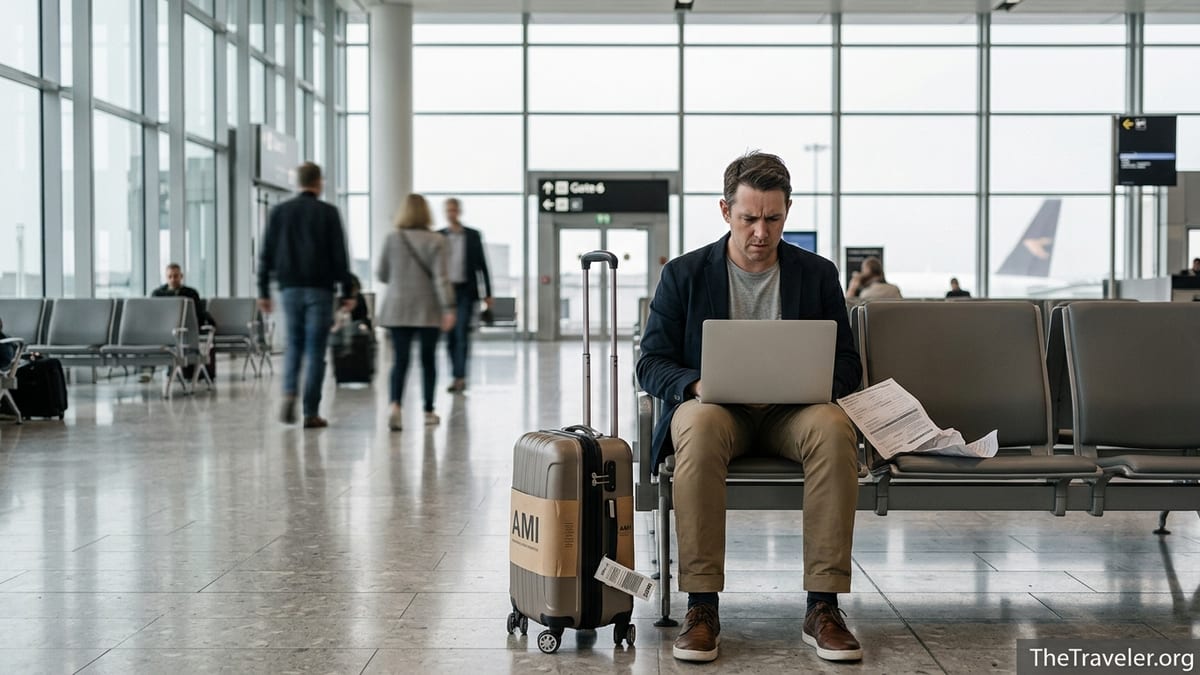
The Comfort of a Big Brand Can Be Misleading
AMI is a long established New Zealand insurer, now part of the IAG group, and its name appears on everything from car cover to house and contents. That brand familiarity creates a powerful sense of comfort. When you see AMI offering international travel insurance on the same website where you manage your car policy, it is tempting to assume the cover will be generous, flexible and forgiving if something goes wrong overseas. In reality, the travel product is a separate contract with its own rules, exclusions and dispute processes, and it should be judged on those terms, not on warm feelings about your car insurance.
A quick look at independent reviews shows how that comfort can clash with experience. On Trustpilot in mid 2026, AMI as a whole holds an overwhelmingly negative average score, with a large majority of reviewers giving the company one star and describing difficulty cancelling policies, confusion about billing and frustration in claim communication. While those reviews span all lines of business, not only travel, they are a useful reminder that a familiar logo does not guarantee an easy claim or responsive service when you are stranded in Bangkok with a missed connection.
Imagine a Wellington couple booking a three week Europe trip. They already insure their home with AMI, so when the site offers an international travel policy at checkout they accept it without reading beyond the headline promise of “unlimited medical cover overseas” and “cover for trip cancellation.” If a later medical complication or airline disruption triggers a claim, what matters is not the brand, but what is buried in the policy wording: definitions of pre existing conditions, limits for belongings, and strict conditions for when cancellation counts.
What AMI Travel Actually Covers, And Where The Traps Hide
AMI’s international travel policy wording, updated with an effective date in late 2023, looks generous at first glance. It advertises unlimited overseas medical expenses per person, unlimited additional expenses for things like extended accommodation after a medical event, and luggage cover up to around NZD 25,000 in total with typical sub limits of NZD 3,000 for a camera or laptop and NZD 1,500 for other single items. There is also cover for rental vehicle excess, delayed luggage, travel delays, missed connections and personal liability of several million dollars. For a standard two week holiday to Fiji or Australia, these headline figures sound reassuring.
The traps lie in the details. Many of the most eye catching benefits are tied to precise definitions and conditions. For example, AMI’s cancellation cover is limited to the amount you choose when buying the policy, so if you under estimate the non refundable cost of your flights, cruise and tours, any later claim may be capped at that lower figure. Luggage cover is subject to single item limits and requires proof of ownership and police reports for theft. The “unlimited” medical cover does not automatically include every pre existing condition, and limits apply to ongoing treatment back in New Zealand. In other words, the benefit table tells only half the story.
Consider a solo traveller from Christchurch who books a NZD 9,000 small group tour through Japan, along with NZD 2,500 in flights. To save a little on premium, she selects cancellation cover of NZD 7,500, thinking it roughly matches her flight cost. If she later needs to cancel for a covered medical reason, AMI will look at the declared cancellation limit, not the full amount she spent. Despite having NZD 11,500 at risk, she could find her payout capped well below that because she skimmed the application rather than checking each figure carefully.
Pre Existing Medical Conditions: The Most Common Pain Point
Pre existing conditions are the single biggest reason travel insurers either restrict cover or deny claims, and AMI is no exception. The policy wording devotes several pages to defining what counts as pre existing, which conditions are automatically covered, which must be declared, and which are simply excluded. Like other New Zealand travel insurers, AMI typically treats conditions as pre existing if you have had symptoms, sought treatment, taken medication, or if a reasonable person should have been aware of the issue before buying the policy.
This is not unique to AMI, but it is where buying blindly becomes dangerous. Suppose a 62 year old traveller from Tauranga has well controlled high blood pressure and type 2 diabetes. She buys AMI travel insurance for a cruise in the Mediterranean but does not complete the extra medical assessment, assuming that because she feels well, her conditions are not relevant. Halfway through the cruise she develops chest pain and is airlifted from a Greek island to Athens for treatment, racking up tens of thousands of euros in bills. When the claim is lodged, AMI reviews her medical history. If the conditions were never declared or assessed, the insurer could treat the heart issue as related to her pre existing cardiovascular risk and decline or drastically limit payment.
There are real world echoes of this scenario across the industry. Consumer advocates in New Zealand consistently warn that undeclared pre existing conditions are a major source of disputes, and overseas complaint cases show people having expensive claims rejected because a prior episode, scan or prescription brought a condition inside the definition. That is why I would never allow a parent with any meaningful medical history to buy AMI travel cover on autopilot. I would sit with the full medical questionnaire, phone the insurer if anything is unclear, and be prepared to pay a higher premium or accept a written exclusion rather than gamble on silence.
Even seemingly minor issues can matter. A traveller with recurring migraines who has seen a GP several times for new or worsening headaches before departure might find a later hospital visit in Singapore for a severe migraine treated as related to a pre existing condition. If the policy only automatically covers a short list of stable conditions and migraines are not among them, AMI could decline medical expenses. The time to discover that is before you enter your credit card details, not after an overseas hospital asks for a guarantee of payment.
Fine Print Around Covid, War And Other Exclusions
AMI, like most insurers, introduced detailed Covid 19 benefits and exclusions during the pandemic. Its Covid 19 benefits guide for travel sets out when cancellation or medical costs are covered if you, a travelling companion or in some cases a close relative tests positive. However, the guide also makes clear that limits, sub limits, conditions and exclusions apply. For example, cancellation because you are simply anxious about travelling after a news report of a new variant is not covered. Nor is a claim if you buy a policy for a destination where government advisories already warn against travel and then find your flights cancelled for reasons directly tied to that known risk.
Beyond Covid, AMI’s policy wording includes exclusions for events such as war, invasion, civil unrest, and knowingly travelling into regions where a government advisory recommends against travel. This mirrors what has been seen in overseas complaint forums, where travellers to conflict adjacent areas discovered that even indirect disruption could fall under a war or hostilities exclusion. A New Zealander booked on a tour through parts of the Middle East in a period of rising tension might have airlines cancel or reroute flights. If AMI determines that the root cause is an excluded war or warlike event, cancellation claims could be declined, even for travellers who never intended to enter an active conflict zone.
Another easy to miss exclusion relates to high risk activities. AMI usually covers common holiday sports such as snorkeling, recreational skiing at commercial resorts and guided hiking, but more extreme activities may be excluded or require special approval. A Queenstown bound visitor who assumes heli skiing or backcountry snowmobiling is automatically covered because “skiing” appears in the brochure may be in for a shock if an accident occurs off piste. The responsibility sits squarely with the traveller to check whether planned activities fall within the included list and whether any extra premium or written confirmation is required.
Service, Claims And Real World Friction
When everything goes smoothly, you do not see the inner workings of a travel insurer. It is only when luggage goes missing in Dubai, a connecting flight from Sydney is cancelled overnight, or a family member is hospitalised in Bangkok that you find out how the claims process feels in practice. AMI promotes phone based emergency assistance and online claims, but the lived experiences reported by customers paint a mixed picture. Some describe fast settlement of simple property claims, such as a damaged phone replaced within hours, while others talk about long waits, difficulties cancelling policies and frustration trying to get a straight answer on complex claims.
This pattern matches the broader travel insurance market, where industry sources estimate that only a minority of policyholders ever claim, and of those, a further subset experience delays or denials because of documentation gaps or policy misunderstandings. An AMI customer who delays reporting a theft, lacks police reports, or cannot produce receipts for a high value camera will likely face heightened scrutiny. If they also have a complicated itinerary with multiple airlines booked through different sites, reconstructing proof of delay or missed connections can be slow.
Imagine a family from Hamilton whose Bali holiday starts with a mechanical issue on their first leg from Auckland to Sydney. The airline rebooks them 24 hours later, causing them to miss their prepaid villa night and a day tour. They eventually arrive and lodge a travel delay and missed connection claim with AMI. The insurer requests written confirmation from the airline specifying the reason for the delay, proof of original and rebooked tickets, hotel invoices and evidence that the costs were not refunded by the airline. If the airline only issues a generic “operational reasons” letter and the family cannot show that the missed tour was non refundable, AMI may only pay part of the claim or decline the tour component entirely.
How I Would Approach AMI Travel Insurance Instead
None of this means AMI travel insurance is always a bad choice. For many New Zealanders booking a straightforward trip to Australia, Fiji or Europe with no significant medical history, it can offer solid protection at a competitive price. The point is that I would never treat it as a default add on. Instead, I would treat AMI’s travel policy the way a cautious buyer treats a mortgage or a used car contract: by reading the full Product Disclosure Statement, asking questions, and comparing alternatives before signing.
My starting point would be the official AMI travel policy wording and Covid benefits guide, not the brief marketing summary. I would look closely at the definitions section, the list of general exclusions, and the specific sections for pre existing medical conditions, high risk activities, and cancellation. If I take regular medication, see a specialist, or have had any diagnostic tests in the last year, I would assume that needs to be disclosed and assessed before purchase. If the online questionnaire feels unclear, I would phone AMI and insist on written confirmation of what is and is not covered for my condition.
I would then compare that information against other New Zealand travel insurers using independent comparison tools and consumer guides. If AMI offers unlimited medical but tight cancellation terms while a competitor offers slightly lower medical limits but more flexible “cancel for any reason” style options or wider automatic cover for common conditions, I might accept a slightly higher premium to reduce the risk of a future dispute. The goal is not to find a perfect policy, but to find one whose limitations I understand and can live with.
Practical Checks Before You Click “Buy”
Before I would buy any AMI travel policy, I would run through the same concrete checklist I use with friends and relatives. First, I would total every non refundable cost of the trip: flights, tours, cruises, hotels outside of free cancellation windows, and prepaid tickets. That figure would guide the cancellation cover I select, not a rough guess or an airline ticket price alone. Under insuring here is one of the simplest ways to set yourself up for disappointment if a serious illness or accident forces you to abandon the trip.
Second, I would go room by room in my house and roughly calculate the replacement value of the items I am actually taking, especially electronics and sports gear. If I am bringing a NZD 4,000 camera body and a NZD 3,000 lens, but AMI’s single item limit for camera equipment is NZD 3,000, I would either accept that gap, look into specified item cover, or shop around for a policy with higher limits. If I am carrying a work laptop, I would check whether my employer has its own insurance, and whether AMI’s wording quietly excludes business equipment unless declared.
Third, I would map out my itinerary and planned activities against the policy’s cover for cruising, rental vehicles and adventure sports. A cruise through the Pacific islands that ventures more than a set distance from shore, a rented scooter in Bali, or an off piste ski day in Niseko each introduce wrinkles that standard wording may treat differently. If AMI’s schedule shows a separate section for rental vehicle excess, for example up to NZD 10,000, I would verify whether that applies to motorcycles and scooters or only to traditional rental cars and campervans.
The Takeaway
AMI’s travel insurance offers real benefits: strong headline medical cover, clear benefits tables and the convenience of buying from a familiar New Zealand brand. Yet those strengths can lull travellers into a false sense of security. The policy wording is detailed, the exclusions are significant, and the most painful surprises tend to involve exactly the scenarios people most want cover for: illness linked to undeclared conditions, anxiety or unrest related cancellations, and high value gadgets lost or damaged in ways that do not match the definitions.
That is why I would never buy AMI travel insurance blindly. Used thoughtfully, with eyes wide open to its limits, it can be a sensible part of your travel risk plan. Bought in a hurry as a tick box on the way to checkout, it can leave dangerous gaps between what you think is covered and what the insurer is actually obliged to pay. Before your next overseas trip, give the fine print the same attention you give flight deals and hotel reviews. The hour you spend now could make the difference between a stressful but affordable mishap and a life changing bill.
FAQ
Q1. Is AMI travel insurance good value for most New Zealand travellers?
AMI can be good value for simple trips if you have no significant medical history and your plans fit comfortably within the standard policy limits. Its unlimited overseas medical cover is competitive, but value depends on your age, health, destination and how well the policy matches your specific plans. I would always compare AMI’s quote and wording against at least two other New Zealand providers before deciding.
Q2. Does AMI travel insurance automatically cover pre existing medical conditions?
No. Like most insurers, AMI distinguishes between automatically covered, assessable and excluded conditions. Some stable conditions may be covered without extra premium, others require a medical assessment and approval, and some high risk conditions may be excluded entirely. You should never assume a condition is covered without checking the policy and, if necessary, getting written confirmation.
Q3. Will AMI cover me if I cancel because of fear of Covid or general unrest?
Generally no. AMI’s Covid 19 benefits focus on specific events such as a confirmed diagnosis for you or a travelling companion that makes it unsafe to travel. Pure fear, unease about case numbers, or anxiety about political unrest without a covered event usually will not trigger cancellation cover. Always check the Covid and cancellation sections of the current policy before buying.
Q4. How strict is AMI about documentation when I make a claim?
AMI expects thorough documentation, similar to other major travel insurers. For medical claims, that means doctor’s reports and itemised bills. For luggage claims, you will need proof of ownership, such as receipts or photos, and police reports for theft. For delays or cancellations, the insurer will usually ask for written airline confirmations showing the reason for disruption. Missing paperwork is a common reason for delays or partial payouts.
Q5. Are adventure sports and activities covered by AMI travel insurance?
Some lower risk holiday activities like recreational skiing on marked runs, snorkelling and guided day hikes are typically covered, but higher risk pursuits may be excluded or require special approval. Activities such as heli skiing, mountaineering, off piste snowboarding, or hiring powerful motorbikes can fall outside standard cover. If your trip involves anything beyond ordinary sightseeing and resort activities, check the activity list in the policy and call AMI to confirm.
Q6. What happens if I under insure my trip costs with AMI?
If you choose a cancellation limit that is lower than your real non refundable trip costs, AMI will usually treat the lower figure as the maximum they can pay for a valid cancellation claim. For example, if your non refundable costs total NZD 12,000 but you only insure NZD 7,000, you risk a shortfall of up to NZD 5,000 if you have to cancel for a covered reason. It is important to match your declared amount to your actual exposure.
Q7. Does AMI travel insurance cover rental car excess overseas?
AMI’s international policy includes cover for rental vehicle insurance excess up to a stated limit, often around NZD 10,000. However, this usually applies to standard rental cars and campervans under certain conditions, and may not extend to motorcycles, scooters or luxury vehicles. You should read the rental vehicle section carefully and confirm with AMI or the rental company if you plan to hire anything unusual.
Q8. How does AMI handle claims related to war or political unrest?
AMI’s policy includes typical exclusions for war, invasion, civil unrest and travel into areas under official advisories against travel. If your trip is disrupted by events that fall under these categories, cancellation or interruption claims may be declined, even if you were not directly in danger. This is a standard practice across many insurers, which is why checking government travel advisories before booking and buying insurance is essential.
Q9. Is it better to buy AMI travel insurance directly or through a travel agent?
Buying directly from AMI gives you full access to the policy wording and makes it easier to contact the insurer with questions before you purchase. A good travel agent can help you interpret options, but they may not always highlight every exclusion. Regardless of where you buy, the contract is between you and the insurer, so you should personally read the Product Disclosure Statement and keep copies of everything you agree to.
Q10. What are the key things I should check in AMI’s policy before purchasing?
The most important checks are your cover for pre existing medical conditions, the total cancellation limit compared with your non refundable trip costs, the single item limits for valuables, the treatment of high risk activities, and the exclusions for pandemics, war and government advisories. If any of those areas do not match your situation or tolerance for risk, consider adjusting your cover or looking at alternative providers.