


Ask a Roman where they go when the city’s cobblestones start to feel too hot and crowded, and the answer comes quickly: Tivoli. Perched in the hills about 30 kilometers east of Rome, this small town of stone lanes, roaring waterfalls and grand villas has been the classic local escape since ancient times. Today, it remains one of the most beloved day trips from the capital, not for checklist sightseeing alone but for the slower, more authentic rhythm it offers in contrast to Rome’s intensity.
Get the latest updates straight to your inbox!
Why Tivoli Tops Local Day-Trip Lists
Part of Tivoli’s appeal is simply how easy it is to reach. Regular regional trains from Roma Tiburtina take about an hour to Tivoli’s station, and buses along Via Tiburtina leave even more frequently, giving Romans flexible, low-cost ways to slip away for the day. Typical one-way regional train fares are modest compared with high-speed lines, which makes a spontaneous Saturday escape feasible even for students and young families. For many locals, Tivoli is a habitual refuge rather than a once-in-a-lifetime destination.
Another reason Romans favor Tivoli is climate. Sitting in the Sabine Hills at a higher elevation than Rome, Tivoli tends to feel a few degrees cooler, especially in the evenings. In summer, when temperatures in the capital often linger around the mid-30s Celsius in the afternoon, a shaded table in Tivoli’s old town or the cool paths of Villa Gregoriana can feel like a small miracle. That combination of fresh air and greenery has drawn people out from Rome since the days when emperors built country retreats here.
Locals also appreciate that Tivoli offers a genuine small-town atmosphere despite its world-famous sights. After the day-tripping tour buses leave, the rhythm changes: children play in Piazza Garibaldi, older men talk football over espresso at bar counters, and restaurant owners greet regulars by name. Many Romans time their visit so they can enjoy this quieter side of Tivoli, arriving early or staying for dinner rather than squeezing everything into the middle of the day.
Finally, Tivoli simply feels like good value. Two major UNESCO World Heritage sites, Hadrian’s Villa and Villa d’Este, sit only a few kilometers apart, with a third landmark, Villa Gregoriana, carved around a dramatic river gorge. Ticket prices for each site are generally lower than for headline Roman monuments, and combination tickets or guided tours can make the day even more economical. Locals know that in a single outing they can enjoy ancient archaeology, Renaissance art and lush nature without traveling far or spending a fortune.
Hadrian’s Villa: The Emperor’s Country Escape
For many Romans, the day starts at Hadrian’s Villa, known in Italian as Villa Adriana, set in the countryside below Tivoli. Built in the 2nd century as Emperor Hadrian’s retreat from Rome, the site today is a sprawling archaeological park, with ruins of palaces, baths, libraries and gardens spread across a landscape roughly the size of a modern small town. Locals appreciate that even on busier days, the sheer scale of the complex gives room to wander in relative quiet compared with central Rome’s crowded Forums or Colosseum.
Walking the long cypress-lined paths, you move between iconic areas like the Canopus, a long reflecting pool lined with columns and statues, and the Maritime Theatre, a circular island once used as Hadrian’s private retreat. Guides often point out how the emperor drew on architecture he admired across the Mediterranean, with features inspired by Greece, Egypt and the wider Roman world. For architecture and history lovers from Rome, the villa represents a kind of open-air textbook showing how imperial tastes evolved.
Locals know a few practical tricks here. The site has minimal shade in some sections, so Roman families often bring hats, refillable water bottles and simple snacks. There are basic services near the entrance, but you will not find the dense cluster of cafes and souvenir stalls that crowd sights in central Rome. As a result, Hadrian’s Villa feels more like a peaceful park or countryside ruin than a tourist machine. Some Romans recommend visiting in spring or autumn, when the low sun, green fields and wildflowers make the ruins particularly atmospheric.
Getting to Hadrian’s Villa independently is straightforward enough that many locals skip organized tours. From the city of Rome, Cotral buses along Via Tiburtina often stop near the entrance, and some travelers prefer taking the regional train to Tivoli then a local bus or short taxi ride down the hill. This flexibility lets them set their own pace and linger longer on favorite corners, rather than rushing through with a strict schedule.
Villa d’Este: Fountains, Gardens and Hilltop Views
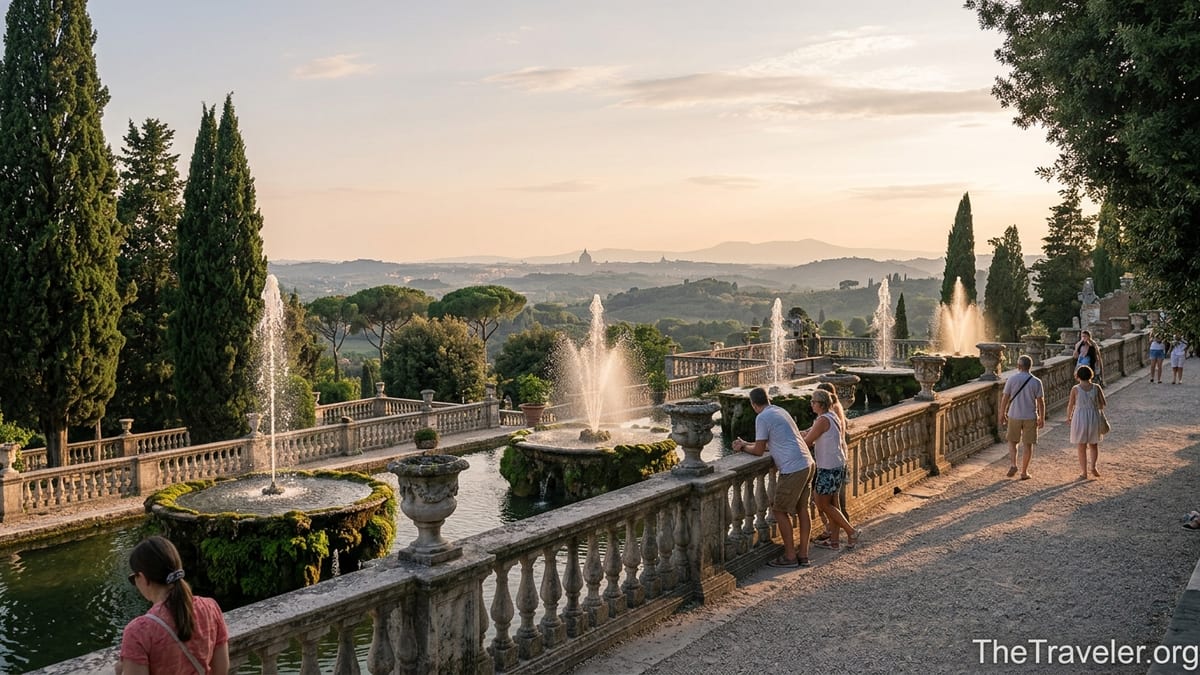
If Hadrian’s Villa is about imperial scale, Villa d’Este in Tivoli’s historic center is about sensory delight. Built in the 16th century for Cardinal Ippolito II d’Este, this hillside Renaissance villa is famous for its terraced gardens and extraordinary network of fountains powered entirely by gravity. For local visitors, the emotional memory of Tivoli is often the sound of water here: from the murmur of small jets in shaded corners to the roar of the dramatic Fountain of Neptune.
As you descend the garden terraces, you pass scenes that feel almost theatrical: the Hundred Fountains with their endless line of spouting masks along a moss-covered wall, the Oval Fountain framed by stone balustrades and cypresses, small grottoes decorated with shells and statues. Many Romans bring out-of-town friends here precisely because it offers a different side of Italian art than Rome’s churches and palaces. The interplay of architecture, water and plants creates vignettes that photographers, painters and casual visitors all respond to.
Practical details here matter to locals too. Villa d’Este sits right off Piazza Trento and close to Piazza Garibaldi, so it pairs naturally with lunch or aperitivo in the old town. Roman families often time their visit in the late afternoon, enjoying the gardens when the light softens and day-tour groups start to thin out. Some of the villa’s special features, such as historic water organs that occasionally play at set times, reward those who check updated schedules or ask staff on arrival.
Because Villa d’Este is so compact compared with Hadrian’s Villa, locals see it as the more relaxing half of the day. After a morning among the countryside ruins, they enjoy slowing down in the shaded alleys, stopping for gelato at a nearby bar, or simply sitting on a bench overlooking the valley with a view back toward Rome’s distant skyline on clear days. The overall experience is less about ticking off every fountain and more about allowing the gardens’ atmosphere to wash over you.
Villa Gregoriana and Tivoli’s Dramatic Nature
While visitors often focus on the two UNESCO villas, many locals insist that Tivoli is not complete without a walk in Villa Gregoriana, the dramatic park that hugs the steep gorge carved by the Aniene River below the town. Commissioned in the 19th century around a diverted waterfall, the park mixes natural cliffs and forest paths with viewpoints and small classical ruins. For Romans used to the flat Tiber banks, the sudden drop in landscape here feels striking and invigorating.
Paths lead down from an entrance near Tivoli’s acropolis into a world of fern-covered rocks, dripping grottos and the thunder of cascading water. Wooden railings guide you along switchbacks and narrow ledges, where glimpses of the Great Waterfall appear between trees. Locals with an eye for photography value the contrast: stone bridges and ancient temples above, the green canyon and foaming river below. It can feel surprisingly wild for a spot so close to the capital.
Practical-minded Romans know to wear proper walking shoes here, especially if the ground is damp, and to allow at least an hour or two to complete one of the looped routes. There are steps and some steep sections, so families with very small children or travelers with limited mobility may prefer to focus on the villa’s upper viewpoints rather than the full descent. Those who do tackle the paths are rewarded with a completely different perspective on Tivoli and the surrounding hills.
When combined with Hadrian’s Villa and Villa d’Este, Villa Gregoriana gives locals what they value most in a day trip: variety. In a single outing, you move from archaeological park to Renaissance gardens to wild gorge, with changing light, sounds and temperatures throughout the day. For Romans who repeat the trip over the years, switching the order of visits or spending more time in the park on hot days keeps Tivoli feeling fresh.
Experiencing Tivoli Like a Local
What sets the local experience of Tivoli apart is not only where people go, but how they move through the day. Many Romans start early, catching a morning train or bus that reaches Tivoli before the big tour groups. They might head straight to Hadrian’s Villa while the light is gentle and the ruins mostly quiet, then return to town by early afternoon for a long lunch and a leisurely wander around Villa d’Este or Villa Gregoriana.
Lunch itself is a key part of the day. Instead of grabbing a quick bite at a tourist-oriented spot near the main sights, locals look for simple trattorie on side streets near Via Colsereno or just off Piazza Garibaldi, where handwritten menus feature seasonal dishes. Common favorites include bucatini all’amatriciana, grilled lamb cutlets known as abbacchio, and local cheeses with honey. Prices are often comparable to a basic sit-down meal in Rome, but the pace and atmosphere feel more relaxed.
Afternoon is when Tivoli slows, and locals embrace that rhythm rather than fighting it. After visiting Villa d’Este or walking the gorge in Villa Gregoriana, many Romans enjoy a coffee or spritz at a bar with outdoor tables facing the valley. Watching the sun sink behind the distant outline of Rome while church bells ring in the town is part of the intangible charm that keeps them returning. For some, the day ends with gelato for the train ride back; for others, especially in summer, a late dinner in Tivoli followed by a cooler, quieter journey home is ideal.
Another local strategy is to spread Tivoli across multiple visits. Rome residents might come one weekend just for Hadrian’s Villa and a countryside lunch, then return weeks later to focus on Villa d’Este’s fountains and the old town, and another time for a dedicated hike in Villa Gregoriana. Day-trippers from abroad can borrow this mindset by accepting that Tivoli has more than can be comfortably absorbed in a single rushed visit and choosing a theme for their day rather than chasing everything at once.
Practical Tips for Planning Your Tivoli Day Trip
For travelers basing themselves in Rome, the logistics of reaching Tivoli are relatively straightforward. Regional trains from Roma Tiburtina to Tivoli station typically run at regular intervals, and the journey takes around 45 to 60 minutes depending on the service. From the station, it is a short walk uphill to the historic center and Villa d’Este, while local buses or taxis can take you out to Hadrian’s Villa and back. Many locals choose whichever option best matches their accommodation location and daily schedule.
Bus connections are particularly popular with commuters and budget-conscious travelers. Cotral services depart from stops along Via Tiburtina or near major transport hubs in Rome and arrive either in Tivoli town or near the entrance to Hadrian’s Villa. Tickets are generally purchased in advance at newsstands, bars or ticket counters rather than on board, a detail that visitors often learn the hard way. Roman day-trippers are used to this system and make sure they have both outbound and return tickets sorted before leaving.
If you prefer a more structured experience or have limited time, guided day tours remain a common choice. Many operators in Rome offer full-day excursions that include transport by coach, skip-the-line access where available and licensed guides at Hadrian’s Villa and Villa d’Este. Prices vary depending on group size and inclusions, but they can be attractive for those who want commentary and convenience without managing multiple local connections. Even many Romans, when hosting visiting relatives, opt for these tours to simplify group logistics.
When planning your own visit, consider the season. Spring and autumn are favored by locals for pleasant temperatures and softer light, while winter can offer quiet sites but shorter days. Summer brings longer opening hours and lush gardens, yet also higher heat and more crowds. Simple measures like starting early, carrying water, wearing a hat and choosing shaded paths in Villa Gregoriana can make a significant difference to your comfort, particularly if you aim to see all three major sites in one day.
The Takeaway
What keeps Tivoli at the top of Roman day-trip lists is not just its famous villas, but the way they come together to offer a complete escape. In the space of a single day, you can walk through the emperor Hadrian’s countryside retreat, descend terraces of Renaissance fountains in Villa d’Este and lose yourself in the cool gorge paths of Villa Gregoriana, all framed by views of the Lazio hills. For locals, this variety turns Tivoli into a place they return to repeatedly, not a one-time detour.
For travelers based in Rome, understanding why locals love Tivoli helps you shape a more satisfying visit. Take your time, plan a proper lunch, and resist the urge to squeeze in too many targets. Whether you come for imperial history, garden design, photography, or simply a breath of fresh air away from the city, Tivoli rewards a slower, more observant pace. Follow the Roman example, and your day here is likely to become one of your strongest memories from the region.
FAQ
Q1. How long does it take to reach Tivoli from central Rome?
Travel time is usually about 45 to 60 minutes by regional train from Roma Tiburtina, and a similar or slightly longer time by bus depending on traffic.
Q2. Can I visit Hadrian’s Villa, Villa d’Este and Villa Gregoriana in one day?
It is possible but makes for a full, fairly active day. Many locals recommend focusing on two sites, or starting very early and keeping a steady but relaxed pace.
Q3. Is Tivoli a good summer day trip from Rome?
Yes, especially because its hilltop position is usually a bit cooler than central Rome. Shaded gardens and the gorge in Villa Gregoriana can feel refreshing on hot days.
Q4. Do I need a guided tour to enjoy Tivoli?
Not necessarily. Independent visits by train or bus are straightforward, and on-site information panels help. Guided tours can be helpful if you want detailed history and easier logistics.
Q5. Are the main sights in Tivoli accessible on foot?
Villa d’Este and Villa Gregoriana are within walking distance of each other in the historic center, while Hadrian’s Villa is a few kilometers away and usually reached by bus or taxi.
Q6. What should I wear for a day trip to Tivoli?
Comfortable walking shoes, lightweight clothing in summer, and a hat and sunscreen are recommended. Villa Gregoriana includes steps and natural paths, so sturdy footwear is especially useful.
Q7. Is Tivoli suitable for families with children?
Yes, many families visit. Children often enjoy the fountains at Villa d’Este and the open spaces of Hadrian’s Villa, though young kids may tire on longer walks in Villa Gregoriana.
Q8. When is the best time of year to visit Tivoli?
Spring and autumn are particularly pleasant for mild temperatures and greenery. Summer offers long days but can be hot, while winter tends to be quieter but cooler and shorter.
Q9. Can I find good food in Tivoli or should I eat in Rome?
You can eat very well in Tivoli. Locals seek out small trattorie in and around the historic center, where seasonal dishes and local specialties are served at reasonable prices.
Q10. Is Tivoli worth visiting if I have only a few days in Rome?
Many travelers consider Tivoli one of the most rewarding day trips from Rome. If you enjoy history, gardens or natural scenery, dedicating a day to Tivoli is often time well spent.