


For years, frequent travelers faced the same headache every time they landed: hunt for a local SIM, argue with roaming fees, or risk spending the first evening in a new city offline. In 2026, a new name keeps coming up in airport lounges, on travel forums, and in digital nomad Slack channels: Saily, the eSIM app built by the team behind NordVPN. Its blend of flexible data plans, strong coverage, and baked-in security tools is turning it into a go-to connectivity option for people who cross borders regularly.
Get the latest updates straight to your inbox!
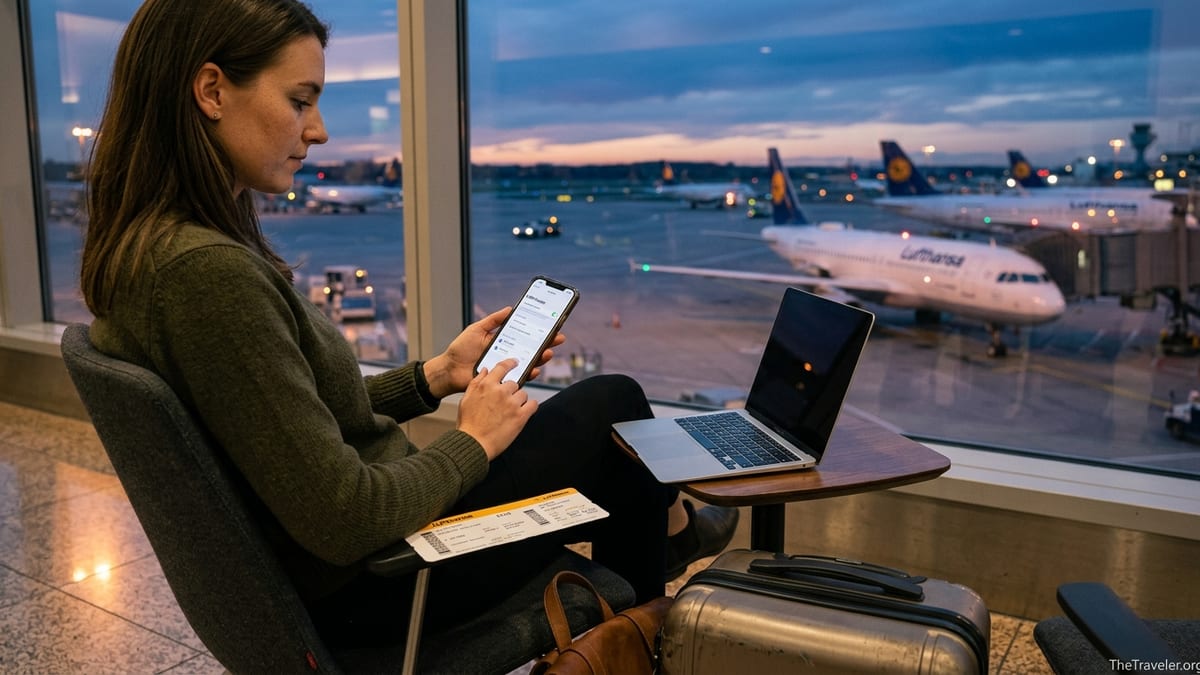
A New Kind of Travel eSIM Backed by a Familiar Name
Saily entered the travel scene in 2024 as a spin-off from Nord Security, the company best known for NordVPN. For frequent travelers, that pedigree matters. Many already rely on NordVPN to secure hotel Wi-Fi and airport networks, so an eSIM service coming from the same ecosystem feels like a natural extension rather than a risky new brand.
Instead of being just another reseller of local mobile data, Saily positions itself as a travel tech platform. The app is available on both the App Store and Google Play, and set-up is designed to be intuitive: you install a single eSIM profile, choose a destination, and buy data packs as you go. Travelers who tested Saily on multi-country trips through Western Europe and Southeast Asia report that the onboarding takes only a few minutes from download to active data, often while they are still in the airport arrivals hall.
That ease of use is especially relevant for frequent flyers who change countries several times a month. Rather than juggling physical SIM cards or multiple eSIM profiles, they can keep Saily as the constant layer on their phone. With NordVPN’s security background and a growing body of user reviews praising the smoothness of the app experience, Saily has quickly become a name that pops up whenever people ask for “a simple eSIM that just works.”
Flexible Pricing That Fits Real Travel Patterns
What is getting Saily particular attention among business travelers and digital nomads is not just that it works, but how it fits real-world travel itineraries. Saily uses a per-country, per-gigabyte, per-duration model instead of pushing everyone toward expensive unlimited plans. In practice, that means you might buy a 1 GB pack valid for 7 days for a quick city break, or a 10 GB or 20 GB pack for a month-long work trip, without being locked into a recurring subscription.
Recent reviews show entry-level prices starting under 2 US dollars for 1 GB over 7 days in some destinations, with common plans hovering around 3 to 5 US dollars for 1 GB in popular countries and regions. Longer-term or heavier-use packs scale up from there. A frequent traveler shuttling between New York, London, and Berlin, for instance, might load a 10 GB regional plan covering several European countries ahead of a two-week client tour, then top up with a small US pack for a few days back home. The key is that they pay only for the data blocks they actually need.
This structure contrasts with certain rivals that heavily promote “unlimited” packages at a premium price, only to apply speed restrictions or fair-use caps after a relatively low threshold. Saily’s approach tends to appeal to travelers who track their data usage closely: a remote worker streaming only a few video calls each day, for example, can stretch a 5 GB pack across an entire week in Lisbon or Chiang Mai by leaning on hotel and coworking Wi-Fi the rest of the time.
Importantly, Saily has introduced regional and global plans that can span 30, 60, or even 365 days in more than 150 countries and regions. That makes it particularly attractive to round-the-world ticket holders or airline crew who want a single, predictable connectivity solution as they cross borders repeatedly over many months.
Coverage That Mirrors How Frequent Travelers Actually Move
Coverage is another reason Saily is drawing eyes from seasoned travelers. Independent comparison sites now list Saily among providers that reach more than 150 to over 200 countries and regions, depending on the type of plan chosen. The catalog includes not just classic destinations like the United States, Canada, Japan, and most of Europe, but also many workation hotspots and emerging digital nomad hubs.
Take a typical nomad route: a month in Barcelona, a Schengen shuffle through Amsterdam and Berlin, a long stint in Bangkok, then a side trip to Vietnam. Reviewers report using Saily across multiple European countries without needing to reinstall an eSIM each time, simply activating a regional plan that follows them as they move. In Japan, a traveler who spent nine days bouncing between Hiroshima, Kyoto, and Takayama noted that Saily kept them connected on the “Golden Route,” where most visitors cluster.
There are still caveats, which serious travelers pay attention to. User reports from China and parts of rural Asia mention patchy speeds or inconsistent coverage, a reminder that Saily, like many eSIM providers, is ultimately dependent on local network partners. In practice, that means a business traveler heading to Shanghai for high-stakes meetings might still confirm coverage details or consider a local backup solution. Yet for the majority of mainstream destinations and urban routes, Saily is increasingly seen as “good enough to rely on,” especially when the alternative is paying unpredictable roaming fees.
For airline crew or consultants who crisscross continents several times a quarter, that broad coverage brings a welcome sense of continuity. They can leave their home SIM in place for calls and texts, run data through Saily, and touch down in new cities with a familiar, pre-tested setup.
Security, Privacy, and the NordVPN Connection
Security is where Saily stands out most sharply from traditional travel eSIM brands. Building on Nord Security’s heritage, the app layers in privacy and protection tools on top of basic connectivity. Recent reviews highlight built-in features such as ad and tracker blocking and web protection, with some tiers also incorporating a virtual location option that works alongside VPN usage.
In everyday terms, that matters whenever travelers join free Wi-Fi networks in airports, coworking spaces, or cafes. A consultant logging into a client’s financial dashboard from a layover lounge in Dubai, or a freelance designer uploading sensitive work from a hostel in Prague, is exposed to the usual risks of unsecured networks. Having data routed through an ecosystem designed by a security-focused company offers reassurance that goes beyond the simple “data only” proposition.
Past promotions have gone a step further by bundling NordVPN access with larger Saily plans. For example, buying a high-capacity or unlimited Saily data plan during special campaigns has included a month of NordVPN at various subscription tiers. Frequent travelers who already considered a VPN essential suddenly find that their eSIM and VPN tools are intertwined, often under a single app experience and, in some cases, a shared account login.
For remote workers juggling multiple client accounts or journalists moving through countries with restrictive internet environments, this convergence of secure data and connectivity in one ecosystem is a serious draw. It turns Saily from an interchangeable eSIM vendor into something closer to a travel security stack that just happens to start with mobile data.
New Features: Dedicated US Numbers and Business Solutions
Another reason Saily is on the radar of frequent travelers is its growing set of extras that solve everyday travel annoyances. In June 2026, the company introduced dedicated US phone numbers available directly inside the Saily app for a small monthly fee. That means a European or Asian traveler can buy a US data plan and attach a +1 number that receives calls and texts as if they were stateside.
In practice, this is hugely useful for frequent visitors to the United States. Think of a Canadian consultant who flies into New York and San Francisco several times a year. Instead of keeping a separate US SIM card alive or relying on patchy Wi-Fi calling, they can maintain a low-cost US number through Saily. They can give that same number to ride-hailing drivers, hotel front desks, and US-based clients, and it continues to work each time they land, even if they have switched their physical phone plan back home.
On the corporate side, Saily has also begun rolling out a business-focused offering. This is squarely aimed at companies with staff who travel frequently: tech startups sending engineers to conferences, consulting firms with region-hopping teams, or film crews on international shoots. A centralized eSIM platform lets travel managers pre-purchase data for specific destinations, assign it to staff, and track usage, instead of reimbursing miscellaneous roaming bills from multiple mobile carriers.
For frequent travelers inside those organizations, the benefit is simplicity. They open the Saily app, see that their company has already provisioned a 20 GB plan for their month in Singapore, and start using it immediately. No expense reports, no last-minute SIM card panic in the arrivals hall, and far fewer surprise roaming charges when they get home.
Real-World Experiences: Where Saily Shines and Where It Struggles
Behind the marketing, what keeps Saily in conversations among frequent travelers is the steady stream of real-world reviews. Tech publications describe Saily as a low-friction, good-value option in mainstream destinations, with particular praise for how quickly a first-time user can buy and activate a plan. Travel bloggers and reviewers who tested Saily on trips through Europe, Japan, and North America often report that they were online within minutes of landing and that speeds were comparable to local prepaid SIM cards.
In Portugal, for example, a traveler who had exhausted their T-Mobile high-speed roaming allowance turned to a Saily eSIM as a backup and found that it restored full-speed browsing and map usage for a fraction of the price of paying their home carrier for a roaming top-up. In Japan, another traveler shared that Saily performed reliably across several cities along busy tourist routes, making it easy to navigate trains, translate menus, and coordinate meetups without hunting for Wi-Fi.
The picture is not uniformly glowing. Some Reddit users have complained about discrepancies between data usage reported by their phone and by the Saily app, accusing the service of drawing down allowances faster than expected. Others have highlighted poor connectivity and frustrating customer support in more complex markets such as mainland China. There are also scattered reports from early adopters who found Saily underwhelming in the United States compared with established local carriers.
These mixed experiences are part of why Saily appeals most strongly to informed travelers who understand the limits of any roaming solution. Digital nomads and frequent flyers who treat Saily as a flexible data layer, keep an eye on usage, and maintain a backup option for high-risk destinations tend to be its most satisfied users. For them, the convenience gains and price predictability outweigh the occasional rough edges.
How Saily Compares With Other Popular eSIM Brands
Frequent travelers rarely look at Saily in isolation. They compare it with better-known names such as Airalo, Holafly, Nomad, and regional specialists. In that landscape, Saily tends to stand out on three fronts: simplicity, security, and value at entry-level data sizes.
Holafly, for instance, has built its reputation around generous “unlimited” data offers, which are appealing to heavy users who stream video constantly or rely on hotspotting. However, those plans can be significantly more expensive than Saily’s targeted data packs, and they often come with fair-use rules that effectively cap high-speed usage. For a business traveler who mostly needs email, messaging, and navigation, paying a lower, fixed price for 5 or 10 GB on Saily can feel more rational than buying into an unlimited package they will never fully exploit.
Airalo and Nomad, on the other hand, are often praised for extensive coverage and strong customer support, and they remain excellent options, especially in markets where Saily’s local partners are weaker. But Saily’s tight integration with Nord Security, along with features like US phone numbers and occasional VPN bundles, gives it a distinctive identity. For travelers who already pay for NordVPN or care deeply about privacy, Saily feels less like adding another app and more like expanding a familiar toolkit.
In real booking scenarios, savvy frequent travelers are starting to treat Saily as one card in a small connectivity deck. They might rely on Saily for most trips to Europe and North America, where reviews report solid speeds and pricing, then switch to a local specialist or carrier-provided eSIM for long stays in China or remote islands. The fact that Saily’s entry price is low and there is no long-term contract makes this mix-and-match strategy affordable.
The Takeaway
Saily is attracting attention among frequent travelers because it aligns neatly with how people actually move, work, and stay connected in 2026. It offers flexible, pay-as-you-go data packs that fit everything from a three-day city break to a six-month nomad stretch, coverage that follows common travel corridors across more than 150 countries and regions, and built-in security tools shaped by the same company that created NordVPN.
Its appeal is especially strong for frequent flyers, digital nomads, and corporate travelers who value predictability over unlimited promises. They want to land, scan a QR code, and be online in minutes, with a clear sense of what their data will cost for the duration of the trip. They also want reasonable speeds, broad coverage in mainstream destinations, and the comfort of knowing that someone with a security mindset has thought about what happens when they connect to a public network.
At the same time, Saily is not a magic solution. Reports of inconsistent performance in certain markets, occasional support frustrations, and data-usage disputes underline that it remains an app layered on top of complex local telecom infrastructures. The travelers who get the most from Saily are those who recognize these limits, monitor their usage, and keep it as part of a small toolkit rather than their only line of defense.
For now, though, the direction of travel is clear. As eSIM adoption grows, roaming fees retreat, and security concerns become mainstream, Saily’s blend of flexible pricing, wide coverage, and Nord-backed protection is likely to keep it on the lips of people who spend more nights in transit lounges than on their own sofa.
FAQ
Q1. What exactly is Saily and who is it best for?
Saily is a travel-focused eSIM app created by the team behind NordVPN. It is best for frequent travelers who want flexible, prepaid mobile data across many countries without dealing with physical SIM cards or long-term contracts.
Q2. How much does Saily typically cost for a trip?
Prices vary by country, data amount, and duration, but many popular destinations start with small packs under 5 US dollars for 1 GB over about a week, scaling up to larger plans for heavier use or longer stays.
Q3. In how many countries and regions does Saily work?
Recent comparisons list Saily with coverage in more than 150 countries and regions, with some global and regional plans spanning over 200 destinations, though exact availability depends on the plan selected.
Q4. Do I need a subscription, or can I pay as I go?
Saily primarily works on a pay-as-you-go model. You buy prepaid data packs for specific destinations and durations, and there is no requirement to maintain a recurring subscription for basic travel use.
Q5. Can I get a local phone number with Saily?
Yes, Saily has introduced a dedicated US phone number feature that lets travelers add a +1 number for a small monthly fee, useful for receiving calls and texts when visiting or working regularly in the United States.
Q6. How does Saily differ from other eSIM providers like Airalo or Holafly?
Saily emphasizes flexible data packs, built-in security features, and integration with the NordVPN ecosystem. Airalo and Holafly may offer different strengths, such as broader support options or heavily marketed unlimited plans, but Saily often wins on simplicity and value for moderate data users.
Q7. Is Saily reliable enough to use as my only connectivity option?
For many mainstream destinations and urban areas, travelers report that Saily is reliable for everyday use. However, performance can vary by country and network partner, so frequent travelers often keep a backup option, such as a local SIM or an alternative eSIM provider, for critical trips.
Q8. What kind of phone do I need to use Saily?
You need an eSIM-compatible smartphone, tablet, or other device. Most recent mid-range and flagship models from major brands support eSIM, but it is important to check your device settings or manufacturer documentation before relying on Saily for a trip.
Q9. Can I share Saily data with my laptop or other devices?
In many cases you can use your phone’s hotspot or tethering functions with a Saily plan, but local network rules and fair-use policies may apply. Travelers who depend heavily on hotspotting should confirm this in the app and test it before an important work session.
Q10. What should I watch out for when using Saily on long trips?
Monitor your data usage in both your phone settings and the Saily app, especially on longer or multi-country trips. It is also wise to confirm coverage for your specific destinations, keep important offline maps downloaded, and have a backup plan in case local network performance is weaker than expected.