


Salzburg is one of those cities many travelers think they already know. It is the Baroque postcard in a guidebook, the backdrop to The Sound of Music, a neat overnight stop between Vienna and Munich. In reality, Austria’s fourth largest city is far richer, quieter and more surprising than its reputation suggests. For travelers willing to linger beyond a single day, Salzburg reveals itself as one of Europe’s most underrated small cities: deeply historic yet lived in, scenic yet practical, cultural yet relaxed.
Get the latest updates straight to your inbox!
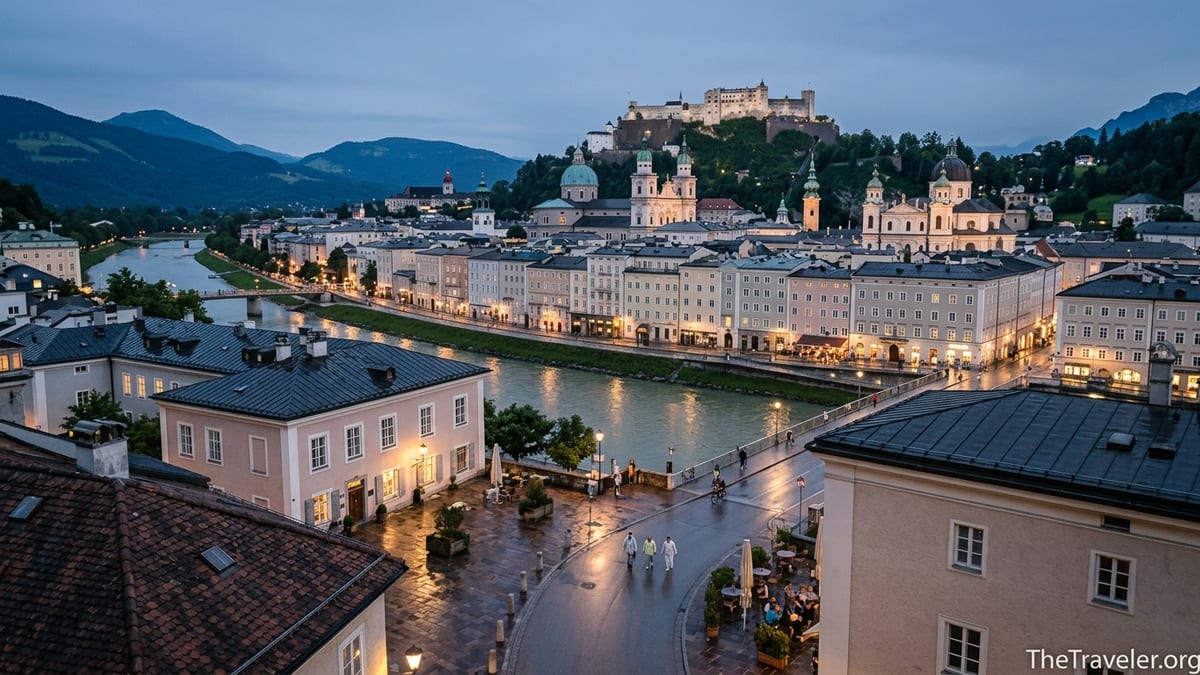
A World‑Class Historic Center That Still Feels Like a Town
The heart of Salzburg is its compact Altstadt, the historic center along the Salzach River that became a UNESCO World Heritage Site in the 1990s for its remarkably intact Baroque ensemble. Walking from the arcaded Residenzplatz to the shadowed lanes of the Kaiviertel takes minutes, yet every turn reveals courtyards, church towers and pastel townhouses that would be headline landmarks in larger European capitals. Unlike heavily rebuilt old towns elsewhere, much of Salzburg’s core emerged from history with relatively little destruction, which means the street grid, staircases and vistas still follow their pre‑modern rhythms.
What sets Salzburg apart is how this architectural pedigree coexists with a city that functions as a real home rather than an open‑air museum. You see it on an ordinary Tuesday morning when school groups swarm around the cathedral while residents push bikes past grocery vans on Getreidegasse. Public buildings like Mirabell Palace house the city administration as well as concert halls, and the riverside promenades fill with joggers and parents with strollers after work. Travelers who stay a few nights start to notice that many people they pass in the lanes are greeting shopkeepers by name rather than clutching a tour map.
Because the old town is hemmed in by green hills, everything remains remarkably walkable. From the cathedral square you can be at the cliff‑top Museum der Moderne on Mönchsberg in under 15 minutes, either by funicular or on a short but steep footpath, then descend on the other side directly into a residential neighborhood. This compressed geography means that visitors experience a genuine layering of city life: you might start the morning in a monastery courtyard, have lunch in a former goldsmith’s workshop turned rustic inn, and end the day drinking a local beer on the riverbank among students and office workers.
Despite this density of heritage, Salzburg receives far fewer multi‑day city‑break travelers than places like Prague or Florence. Official statistics show visitor numbers heavily weighted toward summer tour groups and day‑trippers rather than longer independent stays. That imbalance is precisely what makes the city appealing: early mornings and evenings can feel surprisingly calm, with church bells and the sound of the Salzach dominating the soundscape once tour buses have gone.
Fortress Views and Mountain Horizons on Your Doorstep
Salzburg’s skyline is dominated by the Hohensalzburg Fortress, one of Europe’s largest surviving castle complexes, set on a rocky ridge above the old town. Recent figures indicate the fortress attracts well over a million visitors a year, making it one of Austria’s most visited attractions, yet you rarely hear it mentioned alongside the continent’s marquee castles. The experience of riding the short funicular from the old town to the fortress courtyard, then looking back across a sea of Baroque domes to Alpine foothills, is as memorable as arriving at Prague Castle or the Alhambra, but with noticeably fewer crowds at opening and late afternoon.
Inside, the fortress has invested in modern exhibitions and family‑friendly displays in the last few seasons, from interactive rooms explaining medieval construction techniques to spaces where children can experiment with sound and simple machines. For travelers, this means the visit is not just a view stop but a genuinely engaging two‑ to three‑hour experience. Evening concert programs in the castle’s historic halls add another layer: a chamber orchestra playing Mozart as the city lights flicker on below is a Salzburg moment that feels both theatrical and authentic.
What makes Salzburg unusual among small European cities is how quickly the urban fabric gives way to open landscape. The same local bus network that carries commuters to work takes visitors to the foot of the Untersberg cable car in about 25 minutes from the center. Many travelers discover that purchasing a Salzburg Card or regional day ticket, which typically costs only a little more than the cable car round‑trip itself, covers both transport and the lift, making a half‑day mountain excursion a spontaneous, good‑value option even on a tight schedule. Within an hour of leaving a café in the old town, you can be walking along panoramic trails above 1,700 meters with views into Germany’s Berchtesgaden Alps.
These local mountains are not just scenic backdrops but integrated into daily life. On weekends, the trails around Gaisberg and the lake district of the Salzkammergut are filled with Salzburg families heading out with backpacks, while paragliders drift above the city edge. Travelers encounter few tourist trappings on these outings: refreshment huts sell simple dishes like Kaspressknödel soup and elderflower syrup; local buses run on regular timetables rather than special tourist shuttles. For visitors used to Alpine resorts where every viewpoint is monetized, Salzburg’s easy access to honest mountain landscapes feels refreshingly understated.
Music Heritage That Lives Beyond The Sound of Music
Salzburg’s global image is dominated by a Hollywood film and a single composer, which paradoxically contributes to the city being underrated. Many travelers assume the music offering begins and ends with Sound of Music tours and a couple of Mozart houses. In reality, music is woven into the city’s cultural life year‑round in ways that go far beyond nostalgia. The Salzburg Festival, launched in the 1920s, remains one of the world’s most influential classical festivals, transforming the city each summer with opera, drama and orchestral performances staged in venues from the Felsenreitschule’s rock‑hewn arcades to the modern Haus für Mozart.
Outside festival weeks, the performance calendar stays surprisingly rich for a city of under 200,000 residents. Chamber orchestras and choirs perform weekly in churches like the Kollegienkirche and Franziskanerkirche, often with modest ticket prices compared with major capitals. Restaurants and hotels host intimate dinner concerts where works by Mozart and his contemporaries are played in historic rooms lit by chandeliers rather than stage lights. At St. Peter Stiftskulinarium, for example, guests can dine in vaulted abbey halls while musicians in period dress perform arias that once resonated through the same cloisters centuries ago.
For those interested in Mozart himself, Salzburg offers a more grounded picture than the mythologized child prodigy narrative. His Geburtshaus on Getreidegasse, the mustard‑yellow townhouse where the family lived for over two decades, contains period instruments, letters and family portraits that highlight the practical realities of 18th‑century professional musicianship: contracts, travel arrangements, financial worries. The family’s later residence across the river, now the Mozart‑Wohnhaus, focuses on the composer’s young adult years and collaborations. Visiting both in a single afternoon provides a tangible sense of Mozart as a working artist embedded in the city’s social fabric rather than a statue on a square.
Perhaps most telling, contemporary music and youth culture quietly thrive at the city’s margins. Student bars and smaller venues on the right bank host jazz nights, indie bands and electronic sets that rarely make tourist brochures. While locals sometimes joke that Salzburg can feel sleepy during the week, the presence of universities and art schools ensures there is always some corner of the city where rehearsals, jam sessions or experimental performances are happening, even if they require a little curiosity for visitors to find.
A Food Scene That Blends Tradition and New Ideas
Salzburg has long been known for hearty inn cooking and café cakes, yet in recent years its food scene has evolved into an appealing balance of traditional Gasthaus culture and innovative, sustainability minded kitchens. Classic spots such as the rustic s’Herzl, attached to the historic Hotel Goldener Hirsch, continue to serve local specialties like Tafelspitz and Wiener Schnitzel in wood‑paneled rooms that feel almost unchanged from the 19th century. St. Peter Stiftskulinarium, set within one of the world’s oldest monastery complexes, offers multi‑course menus that reinterpret monastic recipes with modern presentation, illustrating how the city’s long culinary lineage is being adapted rather than simply preserved.
At the same time, a new generation of chefs has started to reshape expectations. Projects like Das Schrei, which evolved from a pop‑up into a permanent fine‑dining restaurant in the Gneis district, exemplify a playful approach to Austrian ingredients. Here, young teams craft seasonal tasting menus that might pair locally caught fish with foraged herbs or transform classic dumpling components into minimalist plates, attracting both visiting gourmets and curious locals. Sustainability‑focused venues such as VOI.bio emphasize organic regional produce and low‑waste kitchens, showing that Salzburg’s culinary scene is keeping pace with broader European trends while staying closely tied to its agricultural hinterland.
For travelers watching their budget, Salzburg delivers plenty of character without fine‑dining prices. Mid‑range neighborhood restaurants often serve generous lunch menus for prices that compare favorably with similar sized European cities, especially if you step a few blocks away from the most photographed streets. Many visitors discover that a set lunchtime menu in a smaller side‑street Gasthaus can cost not much more than a takeaway sandwich in more famous capitals, yet includes a hearty main course, salad and sometimes dessert. Coffee culture is equally accessible: independent cafés on both banks of the Salzach serve locally roasted beans and pastries in light‑filled spaces that attract students with laptops as much as tourists seeking strudel.
Dessert lovers find that Salzburg’s sweet reputation goes further than mass‑market Mozartkugeln. Confectioners that specialize in handmade versions of the pistachio‑marzipan chocolates often hide on side streets off the main shopping lanes, and stepping inside reveals glass cases of meticulously crafted truffles and pralines sold by weight. Small ice‑cream parlors open from spring to fall, offering flavors from local apricots to dark chocolate flecked with Alpine salt. Food markets and delicatessens showcase cheeses, smoked hams and pumpkin seed oils from across the Salzburger Land region, making it easy to assemble impromptu picnics for riverside lunches.
Easy Logistics, Human‑Scale Transport and Good Value
Part of Salzburg’s underrated charm is how straightforward it is to navigate. The international airport sits just a short trolleybus ride from the center, with regular electric buses connecting terminals to the main station and old town in roughly 20 to 25 minutes. For many hotels and guesthouses, especially on the right bank or near Mirabell, arriving passengers can realistically step off a plane and check in within an hour without needing taxis. The main railway station is similarly close to the historic core, and direct trains link Salzburg with Vienna in about two and a half hours and with Munich in closer to one and a half, making the city an easy rail hub for multi‑stop itineraries.
Within the city, public transport is integrated under the Salzburger Verkehrsverbund network, which has introduced updated ticket structures in recent years. Day tickets for the city zone are priced to encourage unlimited use rather than single rides, and regional day cards extending into the wider province cost only a little more. This makes it economical for visitors to combine urban sightseeing with countryside excursions in a single day without worrying about stacking individual fares. Those staying in some surrounding towns and valleys receive a guest mobility ticket via their accommodation, granting free or heavily discounted use of buses and trains throughout the province for a small nightly tourism levy.
Compared with larger European hotspots, accommodation and daily expenses in Salzburg can still represent good value, especially outside peak festival weeks and Advent weekends. Family‑run pensions and mid‑range hotels on the right bank or slightly uphill from the old town often include breakfast buffets of breads, cheeses and cold cuts that can keep travelers going well into the afternoon. Many museums and attractions participate in the Salzburg Card scheme, which bundles free admission and public transport for a flat fee. In practice, a traveler who plans to ride the fortress funicular, visit a couple of museums and take a boat trip on the Salzach often finds the card pays for itself while simplifying logistics.
Crucially, the city’s scale supports a less stressful travel rhythm. Most major sights are within a 20‑minute walk of each other, and car traffic is restricted in much of the historic center. Cyclists share riverside paths with pedestrians, and bike rental services allow visitors to explore residential districts and parks at a human pace. After a day of sightseeing, many travelers realize they have covered substantial ground without ever descending into a metro station or spending long stretches in traffic, which contributes to Salzburg’s overall sense of calm accessibility.
Seasons of Atmosphere, From Quiet Courtyards to Advent Lights
Unlike cities whose tourism is heavily concentrated in a single season, Salzburg offers distinct experiences throughout the year, each with its own understated magic. Spring brings fresh green to the city hills and the first café tables spilling onto squares; by late April, Mirabell Gardens explode with carefully composed flowerbeds, and locals reclaim benches at the Kapuzinerberg viewpoints as temperatures climb. Travelers who visit in May and early June often enjoy long daylight hours and relatively gentle visitor numbers, ideal for combining urban walks with first hikes in the nearby lake district.
Summer is the festival season, when opera and classical music take center stage and hotel rates reflect global demand. Yet even in these busy weeks, it is easy to escape by crossing to quieter neighborhoods or climbing one of the city hills. The Salzach riverbanks become informal beaches where residents sit with takeaway food, and shaded courtyards of abbeys and cloisters provide moments of contemplative cool between performances. Many visitors discover that simply wandering away from the tight triangle between cathedral, Getreidegasse and Mozartplatz quickly leads to empty cobbled lanes and residential streets.
Autumn may be Salzburg’s most underrated season. September and October often deliver stable weather, crisp air and golden light on the surrounding hills, while vineyards and forests in the region turn shades of copper and red. Cultural life remains rich after the main festival’s close, with smaller series of concerts and exhibitions firing up as locals return from summer holidays. Prices for flights and accommodation usually ease compared with August, and day trips to nearby lakes like Fuschlsee or Wolfgangsee showcase mirrored reflections of snowy peaks behind still‑warm water.
Winter, of course, brings Advent markets that are atmospheric without yet having the notoriety of bigger Central European Christmas capitals. The main Christkindlmarkt around the cathedral square is one of the oldest in the region and celebrated a milestone anniversary recently, but visitors often remark that it retains a village‑like feel: wooden stalls selling hand‑carved nativity figures, woolen socks and gingerbread shaped like Salzburg landmarks, choirs singing from church steps and the smell of roasted chestnuts and Glühwein in the air. Smaller markets at Mirabellplatz and the palace grounds of Hellbrunn offer more intimate experiences. Many of these markets open from the third week of November through to New Year’s Day, allowing travelers flexible timing for a festive city break.
Day‑Trip Depth: Lakes, Gorges and Cross‑Border Adventures
Another reason Salzburg remains underrated is that many visitors underestimate how much varied landscape lies within an hour or two of the city center. The Salzkammergut lake district, beloved of Austrian holidaymakers, begins practically at Salzburg’s doorstep. Lakes such as Fuschlsee, Mondsee and Wolfgangsee are accessible by regular buses from the main station, making them easy day trips without a car. In summer, travelers can swim from grassy public lidos with changing cabins and snack kiosks, rent small boats or simply walk lakeside promenades lined with traditional villas and boat houses.
The region’s mountains and gorges appeal to walkers of different abilities. Cable cars like the one on Schafberg or local chairlifts near Salzburg’s satellite villages open up panoramic hiking at altitudes normally associated with more remote Alpine resorts. Well marked trails lead to viewpoints, waterfalls and alpine pastures where simple huts serve food and drink. On rainy days, salt mines in nearby Hallein and elsewhere in the region offer underground tours that explain the mineral wealth which financed Salzburg’s historic splendor, complete with wooden slides and boat rides on subterranean brine lakes that appeal to children and adults alike.
Cross‑border adventures into Germany’s Berchtesgaden region expand the options further. Regular buses and regional trains link Salzburg with Königssee, the emerald lake encircled by towering rock walls, and with Obersalzberg, where the documentation center and remains of the Nazi leadership retreat offer a sobering historical counterpoint to the city’s Baroque harmony. Many travelers base themselves in Salzburg for several nights and alternate between city days and nature days, discovering that this combination allows for a richer, less hurried itinerary than trying to string together a series of more famous but disconnected destinations.
Because these excursions rely largely on standard public transport rather than bespoke tourist infrastructure, they remain relatively affordable. Regional day tickets can cover round‑trip travel to a lake or mountain area plus local buses at the destination, and in some cases even cross the border into neighboring German networks. This public setup encourages spontaneous decisions based on weather: clear morning skies might inspire a quick look at the departure board and a last‑minute decision to spend the day walking along a lakeshore instead of indoors.
The Takeaway
Salzburg’s understated reputation has less to do with what the city lacks and more to do with how it presents what it has. There are no flashy skylines, few social‑media megasights, and relatively modest marketing compared with larger European hubs. Instead, visitors find a harmonious small city where Baroque architecture, music heritage, everyday Austrian life and accessible nature sit in close, almost seamless proximity.
For travelers willing to stay beyond a single rushed day, Salzburg rewards with a calm intensity: fortress walls that open onto mountain horizons, abbey courtyards where classical notes float into the air, cafés where students and festivalgoers share tables, and riverside paths that link city streets to lakes and gorges. Logistics are easy, prices can still feel reasonable by Central European standards, and the pace invites deeper engagement rather than box‑ticking.
In a continent crowded with headline cities, Salzburg succeeds quietly, by being deeply itself. That very quietness is precisely why it is one of Europe’s most underrated urban gems and why its mixture of history, culture and landscape tends to linger in the memory long after more obvious destinations have blurred together.
FAQ
Q1. How many days do I really need in Salzburg?
Most travelers find that two full days cover the main sights at a relaxed pace, while three to four days allow time for a lake or mountain day trip without rushing.
Q2. Is Salzburg expensive compared with Vienna or Munich?
Prices are moderate rather than cheap. Accommodation can spike during festival weeks, but outside those periods mid‑range hotels, public transport and restaurant lunches often cost slightly less than in Vienna or Munich.
Q3. Do I need a car to explore the areas around Salzburg?
No. The regional bus and train network is extensive, and many popular spots such as Fuschlsee, Wolfgangsee, Untersberg and Berchtesgaden are easily reached using standard public transport or regional day tickets.
Q4. Is Salzburg worth visiting outside the summer festival season?
Yes. Spring and autumn offer mild weather, thinner crowds and good value, while winter brings atmospheric Christmas markets and snow‑dusted hills. Only January can feel very quiet, which some travelers actually enjoy.
Q5. Are Sound of Music tours the best way to see Salzburg?
They are fun for fans but not essential. You can experience most of Salzburg’s core beauty on foot, then use a tour or bus trip as an optional extra rather than the main event.
Q6. What is the best area to stay in for first‑time visitors?
The right bank near Mirabell and the river balances convenience and calm, with easy walking access to the old town and good public transport. Staying directly inside the Altstadt is atmospheric but can be noisier and pricier.
Q7. Is Salzburg suitable for families with children?
Very much so. The fortress, salt mines, Haus der Natur science museum and nearby lakes all have interactive elements and space to run around, and distances in the city are short for little legs.
Q8. How walkable is Salzburg for older travelers or those with limited mobility?
The city center is compact and largely flat along the river, with benches in major squares. Some viewpoints involve hills or stairs, but many key sights offer lifts or funiculars to reduce climbing.
Q9. Do I need to book attractions and concerts in advance?
For major festival performances and popular dinner concerts, advance booking is strongly recommended, especially in July and August. For most museums, fortress visits and standard city sightseeing, buying tickets on the day is usually sufficient.
Q10. Is English widely spoken in Salzburg?
Yes. Staff in hotels, restaurants, museums and transport generally speak good English, and menus often include translations. Learning a few basic German phrases is appreciated but not essential for getting around.