


In a world where airport lounges are getting bigger, brasher, and often busier, a quieter contender has been quietly winning over frequent flyers: Aspire Lounges. Operated by Swissport, Aspire has grown into one of Europe’s largest independent airport lounge brands, yet it remains noticeably more personal and grounded than many of its higher-profile competitors. From London to San Diego and Calgary, some travelers now actively seek out Aspire over giant networks like Plaza Premium or crowded credit card lounges. The reasons why say a lot about how lounge expectations are changing.
Get the latest updates straight to your inbox!
Aspire in Context: The “Quiet Middle Ground” of Airport Lounges
Aspire sits in an interesting position in the lounge landscape. It is not a tiny one-off independent space, nor is it a mega-brand that dominates every terminal. Backed by Swissport, one of the world’s largest ground-handling companies based in Switzerland, Aspire has spent more than three decades building a network that now spans dozens of airports across Europe, North America and beyond. Travelers will encounter Aspire at places such as London Heathrow, Manchester, Amsterdam Schiphol, Copenhagen, Calgary and San Diego, alongside joint-venture spaces like Club Aspire in London Gatwick.
For many passengers the brand represents a “quiet middle ground” between generic Priority Pass partner lounges and major house brands like Plaza Premium. At Heathrow Terminal 5, for instance, Priority Pass cardholders typically choose between Club Aspire and Plaza Premium. While Plaza Premium is better known worldwide, repeat visitors often describe Club Aspire as calmer in peak periods, with more of a traditional lounge vibe and fewer queues at the door. That perception of relative calm is a recurring theme in traveler feedback from airports as different as Copenhagen and San Diego.
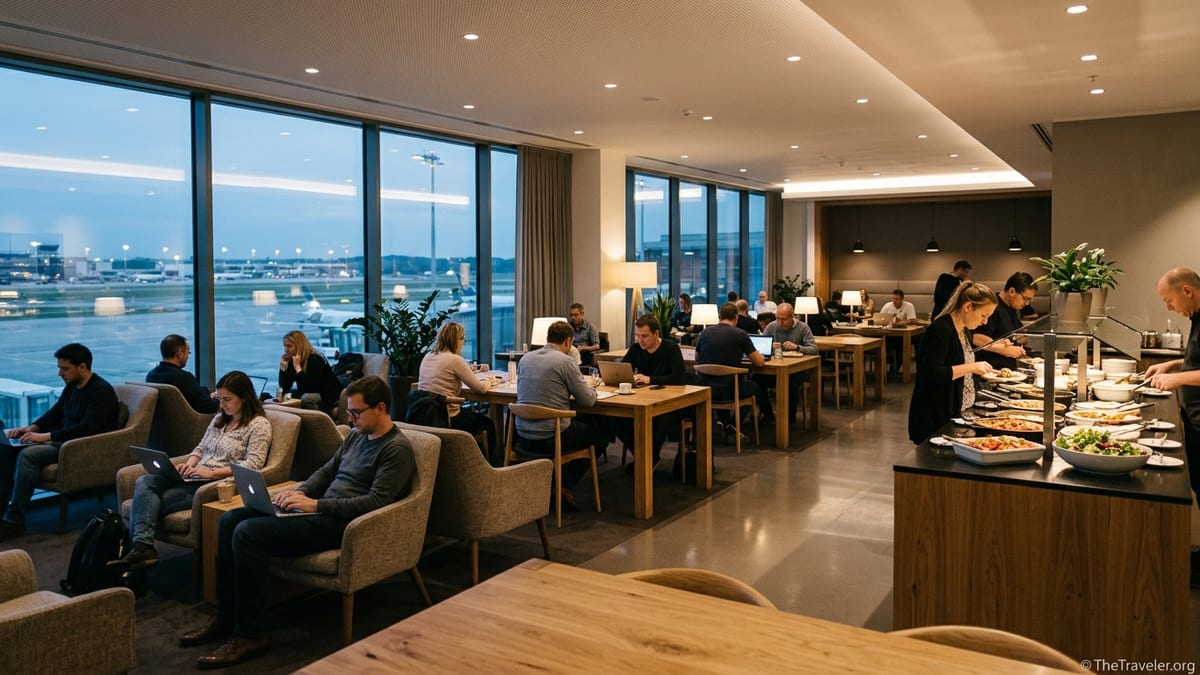
Because Aspire usually operates one or two lounges per airport rather than trying to cover every hall and pier, its spaces rarely feel like mass factories. Walk into the Aspire Lounge at Copenhagen Airport near the A gates and you will find a single, moderately sized room with large windows, work tables with power outlets, and a compact buffet. At Calgary, Aspire’s recently opened garden-themed lounge with WestJet uses greenery and softer lighting to create a more intimate feel than many of the cavernous contract lounges used by multiple alliances.
That balance appeals especially to travelers who feel squeezed between overcrowded credit card lounges and airline-branded clubs that restrict entry to premium cabins. Aspire remains pay-per-use and card-access friendly, but without chasing maximum capacity at all costs. In practice, that can make the difference between a stressful pre-flight scrum and a genuinely restorative stop.
Entry Options, Pricing, and the Value Equation
One reason Aspire wins fans is that it remains relatively straightforward to access. In many locations travelers can simply pre-book a visit online, arrive with a Priority Pass or DragonPass membership, or walk up and pay at the door if space allows. At San Diego International Airport’s Terminal 2, for example, the Aspire Lounge typically accepts both advance reservations and walk-in guests. Door rates in similar U.S. locations often hover around the mid-40-dollar mark per adult, placing Aspire in the same price band as many Plaza Premium and airline-operated lounges.
For frequent lounge users based in the United Kingdom and parts of Europe, Aspire also sells its own annual memberships. One common option covers a network of lounges across the UK, Canada, Denmark and the Netherlands for a set yearly fee in the low hundreds of pounds. For someone who passes through Manchester, Amsterdam and Copenhagen multiple times a year, that can work out cheaper than paying single-entry fees or relying solely on one credit card’s benefits, especially as some card-linked programs cut partners or tighten guest rules.
Travelers also value Aspire’s relatively transparent pricing. At many airports, signage clearly lists the walk-in cost, discounted rates for children, and any special prices for military or emergency services personnel. In California, Aspire has explicitly promoted lower “thank you” rates for military members at its lounges, making it easier for families to budget a comfortable stop before long flights. Compared with some larger competitors that bundle access into opaque airline fares or premium credit card packages, Aspire’s straightforward menu of options can feel refreshingly clear.
Perhaps most importantly, the value equation often tilts in Aspire’s favor when crowds are taken into account. A traveler at Heathrow may face a 30-minute queue just to get into a flagship credit card lounge, where food and seating are stretched thin. By contrast, the same passenger might walk straight into Club Aspire with their Priority Pass or paid booking, find a free armchair by the window, and enjoy a hot breakfast. The absolute quality of food or design may not be dramatically higher, but the experience relative to time and stress often is.
Smaller Footprint, Calmer Vibe
Size matters in airport lounges, but not always in the way travelers expect. Bigger lounges can offer more zones and amenities, yet they also tend to attract larger crowds, especially when they are heavily promoted as signature experiences. Aspire lounges are typically more modest in scale than many Plaza Premium flagships or airline-branded clubs, and that smaller footprint plays to their advantage for travelers who prize peace and quiet above everything else.
Take the Aspire Lounge in Copenhagen as a concrete example. Regular visitors often describe it as compact but functional: a mix of lounge chairs, café-style seating and a small set of workstations, with runway views from one side. During shoulder periods, such as mid-morning on weekdays, travelers report that the space feels relaxed, with easy access to power outlets and only a light hum of conversation. In contrast, Priority Pass users passing through larger regional hubs in Asia or the Middle East often comment online that long queues and noisy crowds have become the norm at some of the biggest-brand lounges.
In San Diego’s Terminal 2, the Aspire Lounge occupies a space once operated under a different brand. After a refurbishment, it emerged with a clearer division between seating zones, an improved buffet layout, and floor-to-ceiling windows overlooking the apron. Frequent flyers on U.S. forums have compared it favorably to other Priority Pass options in the same airport, noting that while the food is not extravagant, the seating is comfortable, the Wi-Fi is reliable, and the atmosphere is less chaotic than some of the busier alternatives.
This calmer vibe can mean that Aspire feels more aligned with what many travelers actually want during a layover: enough space to sit comfortably, good light, and the ability to hear boarding announcements without shouting over the bar crowd. For remote workers and business travelers who need to jump onto a video call between flights, the trade-off between a smaller buffet and a quieter environment is an easy one to make, and Aspire’s lounges often come out ahead.
Consistency and the “Good Enough” Standard
Another reason some travelers prefer Aspire is not that it delivers the most spectacular lounges, but that it consistently meets a solid “good enough” standard. While individual locations vary, frequent flyers report a broadly similar experience across cities: basic but decent hot and cold food, complimentary alcoholic drinks within local norms, self-serve coffee machines, reliable Wi-Fi, plentiful power outlets, and staff who keep tables cleared and buffets replenished.
At London Gatwick’s Club Aspire lounge, for example, morning visitors can usually expect a spread that includes pastries, cereals, yogurt, fruit and a hot selection like scrambled eggs, bacon and sausages. Later in the day, the buffet rotates to soups, salads and a small number of hot mains. Manchester and Amsterdam’s Aspire lounges follow a similar pattern, with local touches here and there, such as Dutch cheeses at Schiphol or regionally influenced hot dishes in the UK. None of these offerings are likely to win culinary awards, but they reliably deliver a filling pre-flight meal without surprises.
Consistency also shows up in design and amenities. Many Aspire lounges follow a now-familiar palette of muted colors, laminate wood surfaces and upholstered chairs, with subtle branding on walls and partitions. Seating typically mixes solo armchairs, high-top communal tables and banquette-style booths, making it easier for couples, solo travelers and work groups to each find a suitable spot. Showers feature at some flagship locations, such as San Diego and select European lounges, adding another layer of practicality for long-haul connections.
For travelers who have been burned by unpredictable third-party lounges in a big network, that kind of dependable adequacy is more attractive than occasional brilliance surrounded by inconsistency. If you know an Aspire lounge is unlikely to be extraordinary but very likely to be clean, functional and reasonably calm, it becomes a safe choice on a tight connection or a long travel day. Many flyers would rather have “quietly pretty good” every time than roll the dice on something flashier that may turn out to be overcrowded or poorly managed.
Escaping the Crowds of Credit Card and Airline Lounges
In the last decade, large bank-branded lounges and airline flagship clubs have turned the airport lounge space into a status battlefield. Credit card issuers tout access to premium spaces as a key perk, while airlines increasingly restrict their own lounges to higher-fare passengers. The result at many major hubs has been predictable: long lines at the door, time limits, and signs turning away cardholders during peak hours. Against this backdrop, Aspire’s more low-key presence is part of its appeal.
At some terminals in London, Heathrow’s Club Aspire lounges have effectively become an escape valve for Priority Pass members who find themselves shut out of more heavily marketed spaces. Stories are common of travelers turned away from a credit card-branded lounge due to capacity limits who then walk a few minutes further to find a seat at Club Aspire. The food may be simpler, but they trade down on brand cachet in exchange for actually getting a chair and a drink.
A similar dynamic plays out in secondary North American airports. In San Diego, for instance, travelers who once relied on a single crowded common-use lounge now have the option of an Aspire space that often feels less busy, especially outside peak transcontinental bank times. Flyers connecting through Canadian airports where Aspire partners with airlines or operates under co-branded arrangements, such as at Calgary, report that these lounges often feel more like traditional, quiet clubs than the bustling “third spaces” that some newer brands aim to be.
For families, Aspire’s calmer approach can be a particular advantage. Parents with young children often find that a slightly smaller, less intensely designed lounge is easier to manage: fewer staircases or mezzanines, clearer sightlines, and straightforward buffet layouts where kids can quickly choose snacks. While Aspire doesn’t market itself as a family lounge brand, the reality on the ground is that a less theatrical space is sometimes the most child-friendly option.
Local Partnerships and Thoughtful Design Touches
Although Aspire operates a standardized global brand, it has increasingly leaned into local partnerships and design cues that make each lounge feel rooted in its home airport. The garden-themed Aspire | WestJet lounge at Calgary is a clear example, with greenery, natural textures and a layout that brings daylight deep into the space. Similar regional nods are visible in European lounges, where artwork and decorative elements often reference the host city rather than recycling a generic international-airport aesthetic.
Food and beverage programs also incorporate local twists. At some UK locations, for instance, travelers can expect familiar comfort dishes like cottage pie, while continental sites might feature regional cheeses, cured meats or pastries. The aim is not to deliver a destination restaurant but to give passengers a small taste of where they are. For long-haul flyers connecting from one Aspire lounge to another, these subtle differences can make each stop feel distinct rather than interchangeable.
Partnerships with airlines and alliances further shape the experience. Aspire is involved in joint-venture or partner lounges with carriers in Canada and Europe, including spaces that serve as primary lounges for certain airlines while still accepting paid and program-based guests. These agreements often bring investment in better seating, more differentiated zones, and in some cases made-to-order dishes or upgraded bars, blurring the line between traditional contract lounges and airline-branded clubs.
From a traveler’s perspective, these local touches mean that choosing Aspire over a larger competitor does not always mean choosing something bland. At its best, the brand balances a consistent base standard with modest but meaningful customization, giving the spaces character without the cost and complexity that can sometimes lead to operational headaches at larger, more heavily themed lounges.
The Takeaway
In airports where Aspire competes directly with bigger lounge brands, the choice for many travelers comes down to priorities. Those who want the flashiest bar, a la carte dining or spa services may still gravitate toward Plaza Premium flagships, airline first-class lounges or exclusive credit card spaces. But a growing number of flyers care less about headline features and more about whether they can reliably find a seat, a hot meal and a calm corner to recharge.
Aspire’s appeal lies in being predictably “good enough” in the ways that matter most. Its lounges are rarely the star of the terminal, yet they often deliver a better overall experience than better-known competitors once crowding, access rules and stress are factored in. Straightforward pricing, broad compatibility with membership programs, and a generally calmer atmosphere have earned Aspire a loyal following among business travelers, families and frequent economy-class passengers alike.
As airports continue to add bigger and more theatrical lounge spaces, the quiet success of Aspire suggests there is still strong demand for something simpler. For many travelers, the ideal pre-flight experience is not a showpiece bar but a comfortable chair, decent food and enough peace to prepare for the journey ahead. On that score, Aspire often delivers exactly what its name promises.
FAQ
Q1. What is Aspire Lounge and who operates it?
Aspire Lounges are independent airport lounges operated by Swissport, a Swiss aviation services company. They provide pay-per-use and membership-based access across multiple airports worldwide.
Q2. How is Aspire different from bigger competitors like Plaza Premium?
Aspire lounges tend to be smaller and calmer, with a focus on consistent comfort rather than showpiece design. Many travelers choose Aspire to avoid crowds and queues that can plague larger, heavily promoted lounges.
Q3. Where can I find Aspire Lounges?
Aspire has a strong presence in Europe and a growing footprint in North America and other regions. Examples include London Heathrow and Gatwick, Manchester, Amsterdam Schiphol, Copenhagen, Calgary and San Diego.
Q4. How much does it typically cost to access an Aspire Lounge?
Walk-in prices vary by airport, but in many locations adult entry is priced in the same range as other independent lounges, often in the mid-40-dollar bracket in North America or equivalent local pricing in Europe.
Q5. Can I use Priority Pass or other membership cards to get into Aspire?
Yes, many Aspire lounges accept access from programs like Priority Pass and DragonPass, as well as certain premium credit cards. Availability can vary by location and time of day, so checking in advance is sensible.
Q6. Are Aspire Lounges good for getting work done?
Generally yes. Most Aspire locations offer reliable Wi-Fi, plentiful power outlets and a calmer atmosphere than some busier lounges, which makes them popular with business travelers and remote workers.
Q7. What kind of food and drinks can I expect in an Aspire Lounge?
You can usually expect a buffet with hot and cold items, snacks, soft drinks, tea and coffee, along with complimentary alcoholic drinks in many countries. The selection is typically solid and filling rather than gourmet.
Q8. Do Aspire Lounges have showers?
Some flagship Aspire lounges, such as those at major international gateways, offer shower facilities, but not every location does. It is best to check the specific lounge details at your departure airport.
Q9. Are Aspire Lounges family-friendly?
Yes. Aspire lounges generally welcome children and often appeal to families because their spaces are smaller, easier to navigate and usually less hectic than some larger, high-profile lounges.
Q10. Why do some frequent flyers actively prefer Aspire over airline or bank lounges?
Frequent flyers who prioritize peace, predictability and straightforward access often prefer Aspire. They value being able to get in without long waits, find a seat, enjoy a meal and relax before departure, even if the space is not the most luxurious in the terminal.