


If you hold a Velocity-linked American Express card or an Amex that transfers to Velocity, there is a good chance you are leaving serious value on the table. Between confusing earn rates, poorly timed redemptions, forgotten benefits and misunderstood transfer bonuses, even seasoned travellers often use their Velocity Amex in ways that quietly cost them hundreds of dollars in lost flights each year. The good news: a few practical tweaks can dramatically change the value you get from every swipe.
Get the latest updates straight to your inbox!
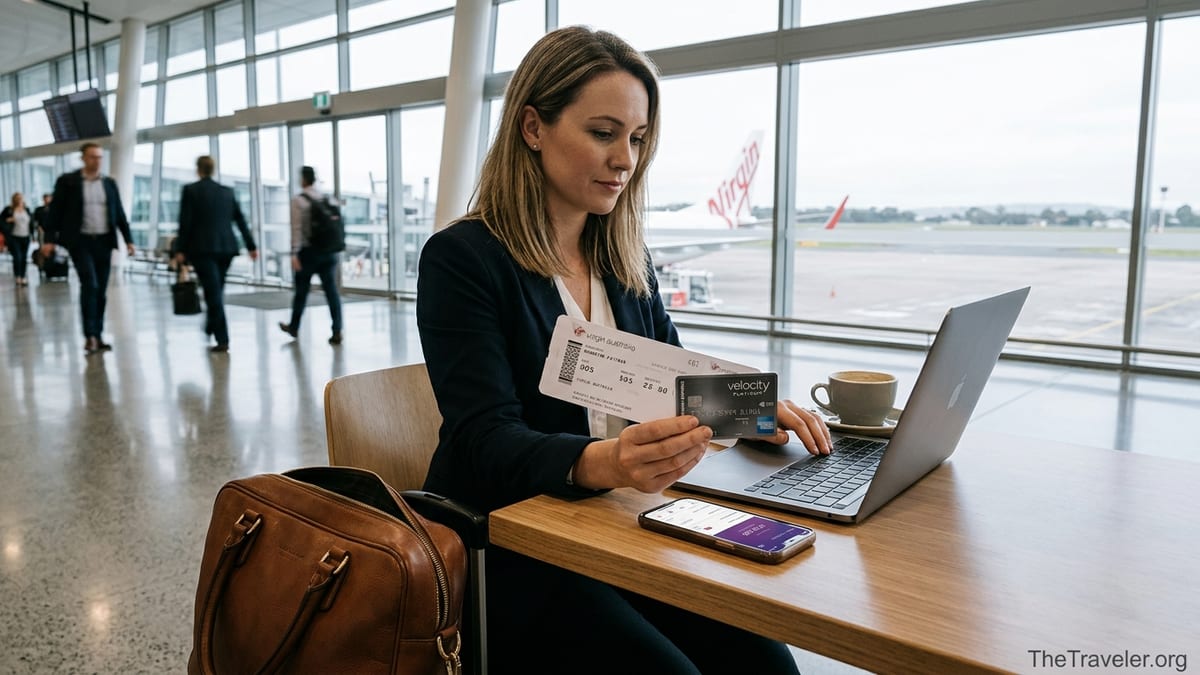
You’re Treating All Velocity Amex Cards As If They’re The Same
The first mistake many cardholders make is assuming all Velocity American Express products behave alike. In reality, Amex issues dedicated Velocity-branded cards, such as the American Express Velocity Platinum Card and Velocity Escape Plus, alongside Membership Rewards cards that can transfer to Velocity. These products earn at different rates, have different caps and thresholds, and offer very different side benefits.
For example, Amex’s own guidance shows that the Velocity Platinum Card typically earns a higher rate on Virgin Australia spending than on everyday purchases, while also offering lower earn for government payments. Someone paying a large ATO bill with a Velocity Platinum is earning at a significantly reduced rate compared with tapping the same card at Woolworths, but many people never adjust their payment habits to reflect that.
Compare that to a Membership Rewards card like the Platinum Charge or Explorer, which earn flexible Amex Membership Rewards points that can then be transferred to Velocity at a 2:1 rate for Australian cardholders. These cards may not say “Velocity” on the front, but the effective earn rate to Velocity can be highly competitive, especially if you later catch a targeted transfer bonus.
If you do not know whether your Amex earns direct Velocity points or Membership Rewards points, and you cannot quote your card’s earn rate on Virgin Australia, supermarkets, overseas spend and government payments, you are almost certainly using it in a suboptimal way.
You’re Ignoring Category Earn Rates And Caps
The second way people misuse their Velocity Amex is by tapping it everywhere without considering category earn rates or caps. Australian Amex cards routinely pay different Velocity (or Membership Rewards) earn rates for government bodies, utilities and insurance compared with everyday retail. Those “slow earn” categories can drag down your average return if they dominate your monthly spend.
Take a household that spends around 3,000 AUD per month on everyday retail and dining, plus 2,000 AUD per quarter on rates and ATO bills. If all of that goes on a Velocity Amex that earns 1.25 Velocity points per dollar on general purchases but only 0.5 on government, they may assume they are collecting roughly 1.25 points across the board. In reality, once the low-earning tax payments are included, their blended earn could fall closer to 1 point per dollar for the year.
A more precise strategy might be to keep the Velocity Amex for higher-earning categories like Virgin Australia fares, supermarkets, fuel and travel, while routing big ATO and council payments to a different rewards card or even a fee-free debit option, depending on surcharges. The goal is not necessarily to avoid those payments on Amex entirely, but to be conscious of when paying a surcharge for low earn simply does not make sense.
On top of that, some Velocity-earning cards bring in thresholds where your earn rate drops after a certain number of points are accumulated in a calendar year. If, for instance, your everyday earn drops after 12,000 Velocity points, your strategy for big annual purchases like a new laptop or family holiday might be very different in January than in November.
You’re Transferring Membership Rewards To Velocity At The Wrong Time
If you hold a Membership Rewards-earning Amex that can transfer to Velocity, one of the most expensive mistakes is moving those points to Velocity whenever your balance “looks big enough,” without waiting for a transfer bonus or confirming award availability. Amex’s own transfer rules highlight that transfers are final and typically take 1 to 3 days, so timing matters.
Recent Velocity promotions have offered targeted 10 to 20 percent bonuses on transfers from major banks, including Amex, with minimum transfer amounts, such as 2,000 or 3,000 points from some partners. In practice, that means 100,000 Membership Rewards points that might usually convert to 50,000 Velocity points could become 55,000 or even 60,000 Velocity points if you wait a few weeks and move them during a bonus campaign.
Consider a traveller planning a Melbourne to Tokyo trip in premium economy. Suppose the Velocity award you want costs 75,000 points plus taxes one way. Transferring 150,000 Membership Rewards points at the standard 2:1 rate gives the 75,000 Velocity you need. If you instead wait for a 20 percent bonus, those same 150,000 Membership Rewards become 90,000 Velocity points, enough for the seat plus a cushion for a future upgrade or short domestic hop. Nothing about your underlying spend changed; you simply waited for the right window.
The fix is to keep Membership Rewards points at Amex until you have a specific redemption in mind and either see a transfer bonus or have reason to believe one is unlikely soon. Before moving anything, log into Velocity and confirm that reward seats exist on the dates and cabins you want. Then transfer only the amount you actually need, nudged slightly up to account for taxes, fees and any future devaluations.
You’re Using Your Velocity Amex For The Wrong Kind Of Redemptions
Another common misstep is redeeming directly through Amex or Virgin Australia for low-value options instead of targeting high-value flight rewards. Amex itself makes it clear that Membership Rewards points can be spent like cash for gift cards, online shopping or statement credits, but these redemptions often yield considerably less per point than classic flight rewards once you factor in typical airfare prices.
For instance, a Membership Rewards guide recently noted that transferring around 140,000 Membership Rewards points to Velocity could secure a return business class reward from Melbourne to Queenstown, pricing at roughly 70,000 Velocity points each way plus taxes. Compare that with using the same 140,000 Membership Rewards points for a 700 AUD shopping voucher. If the cash price of those business class flights would be around 2,500 AUD, your per-point value is far higher when used for flights.
Velocity-linked Amex cardholders who earn direct Velocity points face similar choices. You can burn 12,000 or 18,000 Velocity points on a one-way domestic economy flight that sometimes sells for 120 AUD on sale, or you can bank those points and put them toward a long-haul premium cabin redemption or upgrade where cash fares might be 3,000 AUD or more.
The practical rule is simple: treat your Velocity points as a travel currency, not a cash substitute. If the cents-per-point value for a redemption looks close to 0.5 cents or lower, it is usually a poor use of a hard-earned currency that can be worth 1.5 to 3 cents per point on the right long-haul or partner itinerary.
You’re Forgetting About Companion Flights, Lounge Access And Status Credits
Velocity Amex cards, particularly the Velocity Platinum, come with side benefits that many cardholders never fully exploit. The product disclosure for the Velocity Platinum refers to benefits like an annual complimentary domestic Virgin Australia return economy flight between selected cities, Virgin Australia lounge access for the primary cardholder and even opportunities to earn bonus Velocity Status Credits under specific spend and flight conditions.
These perks can quietly swing the value equation in your favour. Imagine a Sydney-based cardholder who pays a 375 AUD annual fee for a Velocity Platinum Amex but forgets to use their complimentary return flight from Sydney to Brisbane. If sale fares on that route are around 200 to 250 AUD return, forgetting that benefit effectively doubles the real cost of holding the card.
Lounge access is another overlooked perk. When properly activated and used, 12 months of Virgin Australia domestic lounge access for the primary cardmember can cover dozens of pre-flight visits in major airports like Sydney, Melbourne and Brisbane. At typical door prices that can be around 65 AUD per visit when purchased casually, even 5 or 6 visits in a year can wipe out much of your card’s annual fee before you have even counted points.
Finally, some promotions allow Velocity Amex spending to contribute toward Status Credits, which in turn help you reach or maintain Silver, Gold or Platinum status. A carefully planned year of spend and flying might secure or extend lounge access, priority boarding and extra baggage even if you do not fly as often as you used to. Ignoring those campaigns means you may end up buying status with more expensive fares later.
You’re Not Coordinating Velocity Earning Across Your Household
Velocity is unusually friendly to pooling, which allows you to combine family members’ points and Status Credits into one account. Many Australian households hold more than one Velocity-earning card, including Amex, yet continue to redeem from scattered individual balances that never reach the threshold for meaningful long-haul rewards.
Think of a couple who both have Velocity-linked Amex cards. One has a Velocity Platinum earning direct Velocity points, while the other carries a Membership Rewards card that periodically transfers to Velocity. If they each sit at 60,000 Velocity points by year’s end, they may assume they are stuck with domestic economy rewards or a single one-way upgrade. In reality, by enabling Velocity Family Pooling, they could consolidate to 120,000 points, potentially enough for a one-way business class reward to the United States or Europe on a partner airline when seats are available.
Coordinating goes further than just pooling. If one partner travels often for work and earns Status Credits plus flight points, while the other does more of the day-to-day card spend, directing that spend onto the frequent traveller’s Velocity-linked Amex can accelerate their path to Gold or Platinum status, which then benefits the whole family through guest lounge access and higher odds of complimentary upgrades.
Households with children or relatives who fly Virgin Australia occasionally should also consider adding them into a pooling arrangement. Even small balances from occasional economy trips or school holiday flights can quietly accumulate into a shared family balance, bringing business class redemptions within reach far sooner than if everyone redeems alone.
You’re Overlooking Transfer Times, Availability And Devaluations
Many Amex cardholders treat Membership Rewards transfers to Velocity as instant, but Amex itself warns that most airline and hotel transfers take 1 to 3 days and that you should allow up to 5 business days. If you are trying to grab a single remaining business reward seat on a popular school holiday date, assuming instant transfers can end with your points arriving after the seat disappears.
A practical example: you spot two business reward seats from Brisbane to Fiji during peak winter school holidays, pricing at 67,000 Velocity points each way per person. You have 60,000 Velocity points already and 120,000 Membership Rewards points. If you trigger a transfer Friday afternoon hoping to book on Sunday, there is a real risk the seats are gone before your Velocity balance updates. The smarter play is to either move points well in advance of likely travel dates or hold a flexible Membership Rewards balance and be ready to pounce on availability outside peak periods where seats are less volatile.
There is also the risk of program changes. While a recent analysis of the December 2025 Membership Rewards changes in Australia highlighted that transfers to Qantas and Velocity were not directly nerfed, airlines and banks can and do change both award charts and earn rates over time. If you sit on a giant Velocity balance for years waiting for a “perfect” redemption, you increase the chance that a devaluation erodes your buying power before you use it.
The healthy middle ground is to aim for a rolling 12 to 24 month plan. Hold flexible points at Amex until you see a specific trip you would be happy to book within the next year or two. Once transferred, aim to spend those Velocity points on high-value flights rather than hoarding them indefinitely like a savings account.
The Takeaway
Used thoughtfully, a Velocity-linked American Express card can fund trips that would otherwise be unaffordable, from domestic long weekends to lie-flat business class beds on the way to Europe. Misused, the same card quietly bleeds value through low-earning categories, poorly timed transfers, weak redemptions and neglected benefits.
The key is to think of your Velocity Amex as part of a broader travel strategy, not just a convenient way to tap and go. Know your earn rates by category, understand whether you are earning direct Velocity points or flexible Membership Rewards, keep an eye on transfer bonuses, and always check award availability before you move points. Layer in your card’s companion flights, lounge access and any Status Credit offers, and coordinate with your household so that points and status build in one direction instead of five.
None of this requires complicated spreadsheet models or constant forum-watching. A short annual check-up of your card mix, travel plans and upcoming transfer promotions is often enough to turn an underperforming Velocity Amex into a powerful tool that reliably buys you more comfort, more flexibility and more memorable trips every year.
FAQ
Q1. What is the difference between a Velocity Amex and an Amex Membership Rewards card?
Velocity-branded Amex cards earn Velocity points directly into your Velocity account each month, while Membership Rewards cards earn flexible Amex points that you can later transfer to Velocity and other airline or hotel partners.
Q2. How many Membership Rewards points do I need to transfer to get Velocity points?
For most Australian Amex cards, Membership Rewards transfer to Velocity at a 2 to 1 ratio, so 2,000 Membership Rewards points typically become 1,000 Velocity points, subject to Amex’s current transfer rules.
Q3. How long do Amex Membership Rewards transfers to Velocity usually take?
Amex guidance suggests most airline transfers, including to Velocity, take around 1 to 3 days, but you should allow up to 5 business days to be safe when chasing limited award seats.
Q4. Are transfer bonuses from Amex to Velocity common?
Velocity has periodically run promotions offering around 10 to 20 percent extra points on transfers from major bank programs, including Amex. These are not guaranteed each year, but they appear often enough that it is usually worth waiting if your travel plans are flexible.
Q5. Is it better to redeem Velocity points for flights or gift cards?
In most cases, flights offer significantly better value. Long-haul premium cabin reward seats can deliver a much higher cents-per-point value than gift cards, statement credits or shopping redemptions.
Q6. What is the annual free flight on the Velocity Platinum Amex worth?
The complimentary domestic return economy flight can easily be worth 200 to 300 AUD or more on busy routes like Sydney to Brisbane or Melbourne to Gold Coast, depending on when you book and travel.
Q7. Can my family combine Velocity points earned from different Amex cards?
Yes. Velocity allows family pooling so you can direct points and sometimes Status Credits from multiple family members into a single Velocity account, even if they earn from separate Amex or bank cards.
Q8. Should I use my Velocity Amex to pay government and tax bills?
Only if the maths works. Many Velocity Amex products earn reduced points on government payments and may attract surcharges, so you should compare the cost of the fee with the value of the points you will earn.
Q9. Do Velocity points earned from an Amex card expire?
Velocity points do not expire as long as your Velocity account has eligible earn or redemption activity at least once every 24 months, so regular Amex earning or occasional redemptions keep your balance alive.
Q10. What is the single biggest mistake people make with Velocity Amex cards?
The most common mistake is using the card without a plan: ignoring category earn rates, transferring points to Velocity without checking award availability or bonuses, and forgetting to use companion flights and lounge benefits that can offset the annual fee.