


Vancouver International Airport (YVR) is the main gateway to Whistler, one of North America’s busiest year-round mountain resorts. Whether you are landing with ski bags in January or hiking gear in July, choosing the right transfer from the airport to Whistler can save money, reduce stress and set the tone for your entire trip. This guide compares the main options, from Skylynx-style coaches and pre-booked shuttles to private SUVs and rental cars, with a special focus on winter conditions, luggage, travel time and real-world costs.
Get the latest updates straight to your inbox!
Understanding the YVR to Whistler Route
The journey from Vancouver International Airport to Whistler is about 135 kilometers along British Columbia Highway 99, better known as the Sea to Sky Highway. In summer, the drive can take around 2 to 2.5 hours in light traffic. In winter, especially on weekends and during heavy snowfall, it can stretch closer to 3 hours. Shuttles and coaches typically advertise a 2.5 to 3 hour journey to allow for weather and congestion.
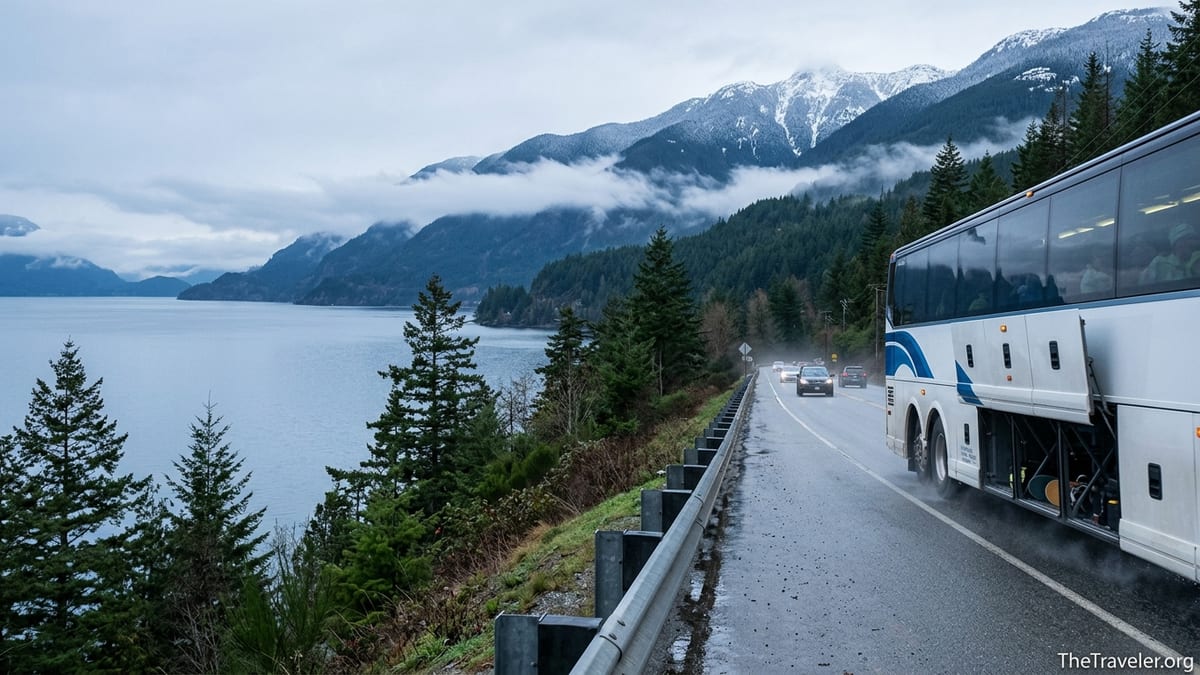
The Sea to Sky Highway itself is part of the experience. It traces the edge of Howe Sound, climbs past Squamish and continues into the mountains toward Whistler. The route was significantly upgraded before the 2010 Winter Olympics to improve capacity and safety, but it is still a genuine mountain highway with steep grades, curves, and variable weather. In January you may encounter slush near sea level and full winter snowpack an hour later at higher elevations.
Because of these conditions, transfers on this corridor are specialized. Coach companies like YVR Skylynx and Whistler Shuttle operate year-round services timed to flight arrivals. Many vehicles have luggage holds sized for skis and snowboards, and drivers are familiar with winter conditions. Private transfer firms run late-night and early-morning trips for international flights and offer door-to-door service to Whistler hotels and condos.
The first decision most travelers face is whether to rely on a shared coach-style transfer, book a dedicated private vehicle or rent a car and drive themselves. Each option trades off price, convenience, flexibility and comfort, and those trade-offs look different for a solo snowboarder than for a family of five with ski bags.
Skylynx-Style Coaches and Scheduled Shuttles
For most visitors, Skylynx-style coaches are the default way to get from YVR to Whistler. YVR Skylynx is the official airport partner and runs multiple daily departures from the airport and downtown Vancouver to Squamish, Creekside and Whistler Village. On typical dates, a one-way adult fare from the airport to Whistler often falls in the approximate range of 40 to 60 Canadian dollars, with lower prices sometimes available from downtown Vancouver. These modern highway coaches include under-floor luggage bays for ski bags, onboard washrooms, and Wi-Fi, and many have extra legroom compared with city buses.
Schedules vary by season, with more departures in peak winter and summer periods. In ski season, it is common to find early morning and evening departures that match transpacific and transcontinental flight banks. For example, you might land at YVR in late morning, clear customs, and join a mid-afternoon Skylynx bus that runs directly from the airport to Whistler in around 2.5 to 3 hours depending on road conditions. On busy Saturdays, some services run close to every few hours, while shoulder seasons may see reduced frequencies.
Alongside Skylynx, other scheduled operators focus more on transfers between Vancouver city and Whistler, such as Epic Rides. Epic Rides is popular with budget-conscious travelers willing to take the Canada Line train or a taxi from the airport into downtown to catch their bus. As an example, a rider might take the Canada Line from YVR to Burrard Station and connect with an Epic Rides departure that costs roughly the price of a casual dinner in Vancouver, often cheaper than a direct airport coach, especially for round trips.
The main advantages of coach-style transfers are simplicity and predictable pricing. You pre-book a seat online, show up at the kiosk or designated bay at YVR, load your luggage, and are dropped at Whistler Village, Creekside, or another central stop. It is ideal for solo travelers and small groups who do not need door-to-door service. The trade-offs are shared space, a fixed schedule and the possibility of intermediate stops in Squamish or Creekside that add a little time.
Private Transfers: Door-to-Door Comfort
Private transfers fill the gap between shared coaches and self-driving. These services typically use SUVs, sprinter vans or small minibuses, and provide direct, door-to-door travel from Vancouver Airport to your specific Whistler address. Companies that specialize in this route often quote pricing per vehicle rather than per person. As of recent seasons, a private SUV or van transfer from YVR to Whistler commonly starts in the ballpark of 500 to 800 Canadian dollars each way for up to 4 to 6 passengers, with larger luxury vehicles or minibuses priced higher.
For example, a family of five with two adults, three children, ski bags, and grocery stop requests might choose a private transfer at around 700 Canadian dollars. When split between the group, it can be competitive with five individual coach tickets, especially if your flight lands late at night when fewer buses are running. Many private operators are accustomed to international arrivals and monitor flight delays, adjust pick-up times accordingly and meet guests in the terminal with a sign.
Private transfers are especially attractive for travelers who value time and convenience. You avoid waiting for scheduled departure times, do not share space with strangers, and can go direct to a specific condo in areas like Upper Village, Blueberry Hill, or Nordic without a second shuttle. Many services will include brief stops at supermarkets in Squamish or at Whistler’s main grocery stores so guests can stock up before checking in, which is helpful for longer ski holidays.
The main downsides are cost and limited flexibility once booked. During peak holiday periods such as Christmas to New Year or Presidents’ Day week, private transfer prices can rise, and vehicles book out quickly. It is wise to secure reservations several weeks ahead for major holidays. If your party is small and flexible with timing, a shared coach is almost always cheaper, but for groups of 4 to 10 with lots of luggage, private transfers often deliver strong value relative to their per-person cost.
Rental Cars and the Realities of Winter Driving
Renting a car at YVR to drive to Whistler offers the most independence but also the most responsibility. Major rental brands at the airport offer a full range of vehicles, from compact cars to SUVs and minivans. Daily rental rates fluctuate by season, but a mid-size SUV in peak winter skin season can reasonably land in the range of 70 to 150 Canadian dollars per day, before fuel, insurance, and parking. Over a 7-night ski trip, the total cost can rival or exceed return coach fares for a couple, but may be attractive for a family who plans multiple day trips or onward travel after Whistler.
Winter driving on the Sea to Sky Highway is not comparable to a flat urban freeway. From October 1 to around the end of March or early April, British Columbia requires winter tires or mud-and-snow rated tires on this route. Tire requirements are enforced at checkpoints and through signage. Some rental agencies equip a portion of their fleet with proper winter tires carrying the mountain snowflake symbol, while others rely on all-season tires that meet the minimum mud-and-snow standard. If you intend to drive in mid-winter, it is important to reserve a true winterized vehicle in advance and confirm tire type directly with the rental agency.
Conditions can change quickly. A January afternoon may begin with rain and clear roads near Vancouver, shift to wet snow around Lions Bay, then transition to compact snow and ice closer to Whistler. Drivers unused to winter mountain driving need to be prepared for reduced visibility, slushy ruts and black ice on shaded corners. Whistler Blackcomb’s own travel guidance emphasizes slowing down, allowing extra time and leaving additional following distance. Local radio stations often provide highway updates, and many residents check road webcams or DriveBC advisories before setting out.
Despite these challenges, renting a car works well for certain travelers. If you are comfortable with winter driving, want the freedom to ski Whistler Blackcomb and then explore further north to Pemberton, or plan to stop at attractions like the Sea to Sky Gondola near Squamish and the Brandywine Falls viewpoint, a rental car can be rewarding. It is also useful for families staying outside the main village or those with early morning lessons, as they can drive directly to the base instead of relying on shuttles. For less experienced winter drivers or visitors from warm climates, however, the stress and risk may outweigh the flexibility.
Travel Time, Reliability and Seasonal Patterns
Travel time between YVR and Whistler is influenced by season, day of the week and time of day more than by the specific mode of transport. Both coaches and private transfers use the same highway, and even a rental car cannot bypass an accident or heavy snow. On a clear weekday in October, the drive can be consistently under 2.5 hours. On a snowy Saturday during peak ski season, 3 hours or more is common, especially in the afternoon when both weekend skiers and resort changeover traffic are on the road.
Scheduled coach operators have one advantage: experience with the corridor’s rhythm. Skylynx-style services plan departure times with typical conditions in mind and communicate realistic journey durations. Tourism and resort websites often advise allowing up to 3 hours between YVR and Whistler during winter. For departing flights, YVR Skylynx guidance often suggests leaving Whistler at least 5 to 6 hours before your flight time. For example, if you have a 5 pm international departure from YVR in January, booking a mid-morning bus from Whistler gives a comfortable buffer for weather and check-in lines.
Private transfers can sometimes make slightly faster journeys if they run non-stop and the driver adjusts departure time to dodge known rush-hour periods. A private SUV that leaves Whistler at 6 am on a weekday might reach YVR in just over 2 hours, while the same trip at 3 pm on a Sunday could stretch closer to 3 hours. Rental cars offer similar flexibility, but only if the driver is comfortable setting off early or late to avoid peak congestion.
Seasonal patterns also affect service availability. In high winter (roughly December to March) and summer holiday periods, there are more daily coaches, and private transfer companies may run nearly around the clock. In shoulder months like April or November, some services reduce frequency, and last departures from the airport may be earlier in the evening. Travelers arriving on late-night flights in those months are more likely to rely on private transfers or spend a night in an airport hotel before catching a morning coach to Whistler.
Ski & Bike Gear: How Each Option Handles Luggage
The YVR to Whistler corridor is built around mountain travel, so most operators are used to guests traveling with bulky equipment. On Skylynx-style coaches and the Whistler Shuttle, skis, snowboards and large duffels are usually stored under the bus in dedicated luggage compartments. Many companies allow one large suitcase and one ski or snowboard bag per person, sometimes with additional fees for extra items. Boards and skis should be in bags to prevent damage and to make loading more efficient.
In practice, a group of four skiers arriving with four ski bags, four boot bags and four rolling suitcases will fit comfortably on a typical coach, as long as they respect baggage policies and pre-book tickets. During prime weeks such as Christmas or school holidays in February, buses can be full and drivers may enforce limits more strictly. It is worth double-checking baggage allowances while booking, especially if you plan to travel with oversized items like double ski bags or bike cases for summer downhill riding.
Private transfers tend to be more flexible about luggage, but capacity still matters. A luxury SUV might handle three or four large suitcases plus three ski bags easily, but a party of six with six bike cases in July will need a larger van or a trailer. Many private operators invite guests to specify the quantity and type of gear at the time of booking so they can assign an appropriate vehicle. Some even provide roof boxes or cargo trailers in winter, particularly for large families staying for more than a week.
Renting a car brings the tightest constraints on luggage. A compact car may struggle with two people and full ski gear, while a mid-size SUV or crossover often works well for three or four. If you arrive with four adults, four ski bags and groceries, it can require careful packing and perhaps folding down a seat. When comparing rental quotes, travelers should consider trunk size and whether they prefer an SUV with a roof rack or a minivan with flexible seats. Booking a slightly larger car than you think you need often pays off in winter, when you are dealing with heavy wet gear, boot bags and extra layers.
Costs, Value and When Each Option Makes Sense
Choosing the best value transfer from YVR to Whistler depends heavily on group size and travel style. For a solo traveler or couple coming for a week of skiing, a Skylynx-style coach or Whistler Shuttle is usually the most economical. Two one-way coach tickets plus a shared village taxi or hotel shuttle at the Whistler end generally cost significantly less than renting a car for a week once fuel, insurance and overnight parking are factored in.
For a family of four staying in a condo just outside the central village, the math shifts. Four return coach tickets can add up quickly, and taxis or local shuttles may be needed for groceries, ski school drop-offs and evening dinners. In that situation, a private transfer on arrival and departure can reduce stress, and a smaller local rental car for a couple of specific days might be more economical than a full-week car rental from YVR. Families who visit primarily to ski and plan to spend most days on the mountain often find that they can manage without a car entirely, especially if they choose accommodation on a shuttle route or within walking distance of the lifts.
Group size is where private transfers really shine. For six adults traveling together, a private van at 700 to 900 Canadian dollars each way can work out to roughly 120 to 150 dollars per person round trip, which may not be much more than the combined cost of six coach tickets, especially in peak season. Add in the convenience of door-to-door drop-off and no need to handle luggage multiple times, and private transfers become attractive for groups celebrating a big ski week or wedding party.
Rental cars represent good value when you plan to use the vehicle regularly during your stay or when your trip extends beyond Whistler. For instance, a couple flying into YVR for ten days might ski Whistler for five days, drive to Pemberton and Lillooet for a road-trip segment and then continue to Vancouver Island. In that case, the cost of a ten-day rental and fuel might compare favorably with multiple transfers and regional buses. On the other hand, if you are flying in for a four-night ski break and plan to park the car in a hotel garage for most of the trip, a rental is often the most expensive way to handle the transfer.
The Takeaway
From Vancouver International Airport to Whistler, there is no single “best” transfer option, only the one that matches your priorities and circumstances. Shared coach services like YVR Skylynx and Whistler Shuttle provide the most economical, straightforward choice for solo travelers and couples, with regular departures, ski-friendly luggage policies and travel times that are competitive in most conditions. Epic Rides and similar downtown-based services offer even lower prices if you are comfortable making your own way from the airport into the city.
Private transfers offer premium convenience at a higher upfront cost, and become particularly compelling for families and groups of four or more, or for those arriving late at night or carrying lots of gear. Rental cars deliver maximum independence, enabling side trips and flexible schedules, but they demand confidence with winter mountain driving and a willingness to navigate parking and weather in one of Canada’s snowiest resorts.
In winter, the Sea to Sky Highway deserves respect. Factor in extra time, follow local advice on tires and driving practices, and remember that conditions can change quickly between sea level and alpine village. Whether you settle into a coach seat, slide into a private SUV or take the wheel yourself, planning ahead, booking early for busy dates, and understanding the balance of cost, comfort and risk will help you turn the transfer from YVR to Whistler into a smooth, almost scenic prologue to your ski or mountain holiday.
FAQ
Q1. How long does it usually take to travel from Vancouver Airport to Whistler?
The journey typically takes around 2.5 to 3 hours by road, depending on traffic, weather and the number of stops your coach or transfer makes.
Q2. What is the most affordable way to get from YVR to Whistler?
Shared coach services such as Skylynx-style buses or shuttles that connect from downtown Vancouver usually offer the lowest per-person cost, especially for solo travelers and couples.
Q3. Are there direct buses from Vancouver International Airport to Whistler?
Yes. Operators like YVR Skylynx and Whistler Shuttle run direct services from the airport to Whistler with multiple departures daily in peak seasons.
Q4. Is it safe to drive from Vancouver to Whistler in winter?
It can be safe for drivers who are experienced in winter mountain conditions, use proper winter or mud-and-snow tires and allow extra time. However, conditions can change quickly and some visitors may prefer professional drivers.
Q5. Do I need winter tires to drive the Sea to Sky Highway?
Yes. From fall through early spring, British Columbia regulations require winter or mud-and-snow rated tires on the Sea to Sky Highway. Rental car drivers should confirm tire type when booking.
Q6. Can I bring skis or a snowboard on the airport coaches?
Most airport coaches and shuttles accept skis and snowboards, typically stored in under-floor compartments. Equipment should be bagged, and some operators may charge extra for additional or oversized items.
Q7. When does it make sense to book a private transfer instead of a bus?
Private transfers are often best for groups of four or more, families with young children, travelers arriving late at night or anyone who wants door-to-door service with minimal waiting.
Q8. Is renting a car from YVR worth it for a Whistler ski trip?
It can be worthwhile if you plan day trips beyond Whistler or value full independence. For visitors who will mostly walk or use resort shuttles, a car often adds cost and winter driving responsibility without much benefit.
Q9. How far in advance should I book my transfer to Whistler?
For busy winter and holiday periods, booking several weeks in advance is wise for both coaches and private transfers. In shoulder seasons, a shorter lead time is usually sufficient but advance booking still secures better schedules.
Q10. Are there late-night options from YVR to Whistler if my flight arrives late?
Late-night options are more limited. In peak seasons you may find evening coaches, but travelers on very late arrivals often rely on pre-booked private transfers or stay overnight near the airport and travel to Whistler the next morning.