


Zayed International Airport’s Terminal A has transformed Abu Dhabi’s main gateway into a modern global hub, with Etihad Airways at its core. Opened to full operations in November 2023, the terminal concentrates almost all scheduled flights under one vast roof, which changes how passengers check in, connect, shop, eat and relax in the capital of the United Arab Emirates. This guide walks you through how Terminal A works in real life, from check in and security to gates, lounges, transfers and baggage claim, using concrete examples to help you plan your journey with confidence.
Get the latest updates straight to your inbox!
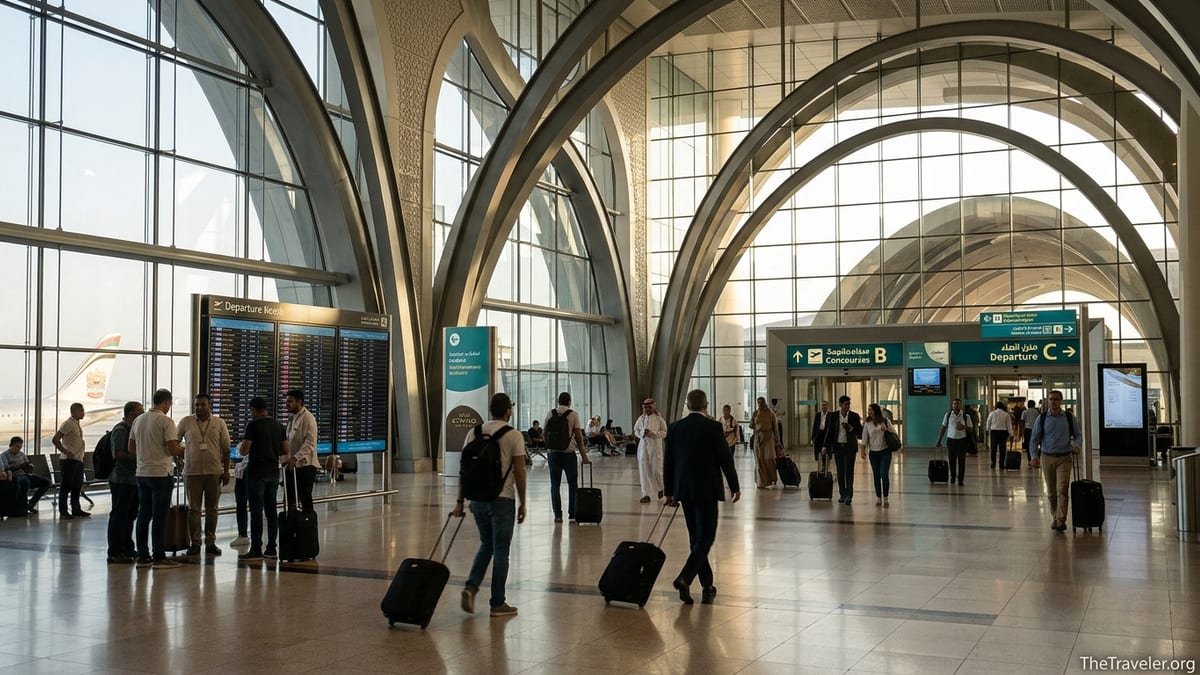
Terminal A at a Glance: Layout and Etihad’s Hub Operations
Terminal A at Zayed International Airport is a single, very large terminal building with multiple gate “piers” rather than separate terminals. In practice, you will see three main gate zones: A, B and C, plus a D pier used for some remote and bus gates. A typical long haul Etihad flight to London or New York, for example, might depart from the C20s or C30s range, while regional flights to cities such as Muscat or Bahrain may use gates in the B10s or B20s. The design is meant to keep connections within one building, even if walking distances can be long compared with the old airport.
Etihad Airways uses Terminal A as its primary hub, operating the majority of flights and handling most connecting traffic. If you are flying Sydney to Paris via Abu Dhabi on Etihad, both flights will arrive and depart from Terminal A, which means you typically do not need to change terminals or recheck baggage. Other major airlines, including European and regional carriers, also use Terminal A, but Etihad has the dominant presence, particularly in the central and C pier gate areas.
The terminal is built on several levels. Departures and check in are on the upper level, security and outbound immigration lead directly into a central duty free and dining hall, and the three gate piers extend out from there. Arrivals flow on a lower level with immigration, baggage claim carousels and customs in a straight line, followed by landside transport and parking. This separation of arriving and departing flows is important when you are planning where to meet arriving passengers or how much time you need to reach your gate.
From the moment you step inside, expect an emphasis on scale: the main departure hall is large and open with high ceilings, LED displays and multiple security channels. For Etihad hub operations, this means the airport can handle several widebody aircraft arriving within minutes of each other during the busy overnight connecting bank, similar to how Emirates uses Dubai International’s Terminal 3. Peak times, especially between late evening and early morning, can be busy, so building extra time into your schedule is wise.
Check In, Security and Departures: Step by Step
When you arrive at Terminal A by car, taxi or rideshare, vehicles drop passengers in front of the departures entrance. Short stay parking and valet options sit in multi storey structures directly opposite the terminal, so if you are driving yourself you can park and reach check in within a few minutes on foot. Inside departures, check in is organized into large zones, with Etihad occupying the most prominent areas. Premium check in for Business and First, along with Etihad Guest elite counters, are grouped together and usually have noticeably shorter queues than economy lines.
For a typical Etihad flight, you can check in at the airport three hours before departure for long haul and two hours for regional services, although online check in is strongly recommended. Bag wrapping services are available near the check in islands for travelers who want extra protection for their luggage, which is useful if you are checking in items like baby strollers or hiking gear that may pick up scuffs in transit. Oversized baggage counters are clearly signposted, helpful for passengers carrying golf bags or large suitcases common on routes from Europe during holiday seasons.
After check in, you proceed to security and exit immigration. Terminal A has multiple lanes, including dedicated queues for families, premium cabins and sometimes fast track users. On a moderately busy evening with several Etihad widebody departures, you should plan for 20 to 40 minutes from the start of the security queue to reaching the main departures hall, although off peak midday departures can be much faster. Families with young children, passengers with limited mobility and those carrying large amounts of hand luggage should build in additional time to avoid rushing.
Once you clear immigration, you arrive in a bright central hall with duty free, dining and seating. This is where the layout starts to matter: the entrances to gate piers A, B and C branch out from this zone. Flight information screens show walking times and boarding status, so you can see, for example, that your Etihad flight to Frankfurt at gate C32 is approximately a 12 to 15 minute walk from the central hall at a normal pace. If you need to shop, eat or pray before boarding, it is sensible to move at least towards your correct pier before you settle in.
Understanding Gates, Walking Distances and Connections
Terminal A is one of the larger single airport terminals globally, and passengers are often surprised by the amount of walking required, especially for gates at the far ends of the B and C piers. From the security exit in the central hall to a mid range gate like C27, most travelers will need around 10 to 15 minutes of steady walking. For the very far end gates, such as C40s or remote bus departures in the D pier, you may need closer to 20 minutes, particularly if you are traveling with children or carry on bags with limited wheels.
Signage to the gate zones is generally clear, with large overhead indicators pointing you towards A, B, C and D. Each pier includes moving walkways, which can save several minutes. However, it is easy to underestimate the distance when you are distracted by duty free and dining, so boarding calls for Etihad flights typically start 45 minutes to one hour before departure. For example, if your flight to Tokyo departs at 22:00 from gate C35, you will often see a first boarding call around 21:05 to account for the time it takes for passengers to stream from the central area down the pier.
For connections, the new terminal layout significantly improves the process compared with the old split terminal system. If you are arriving from, say, Mumbai and connecting to Milan on Etihad, you will typically remain airside. Transfer passengers follow purple or clearly marked “Transfer / Connections” signs instead of “Arrivals.” You pass through a dedicated security checkpoint and then emerge once again into the departures hall or at one of the piers, without needing to clear UAE immigration or collect baggage. In normal conditions, a well timed Etihad to Etihad connection can be completed in about 45 minutes, although the airport and airline often sell connections of 60 to 90 minutes to allow for delays.
For passengers connecting between Etihad and another carrier, such as a European airline or a low cost carrier using Terminal A, the process is similar as long as the ticket is on one booking and baggage is checked through. If you have separate tickets or need a visa to enter the UAE, you might need to clear immigration, collect baggage and recheck, which will add substantial time and walking. In these cases, having at least three hours between flights is more comfortable, especially during peak traffic times late at night.
Arrivals, Baggage Claim and Ground Transport
Arrivals into Terminal A are designed to be straightforward. After disembarking, you follow the “Arrivals” signs along spacious corridors that lead to immigration. For many nationalities, smart gates and e-gate facilities speed up the process, but at busy bank times you should still expect a queue. For example, when several Etihad flights from Europe and Asia arrive between 23:00 and 01:00, immigration lines can reach 20 to 40 minutes. Families, passengers requiring assistance and premium cabin travelers may find shorter, dedicated lanes depending on staffing at the time.
Once you clear immigration, you reach the baggage claim hall, where large carousels are arranged in a wide space with digital displays. Carousels handle multiple flights, so you will see screens listing flight numbers such as “EY 20 London Heathrow” or “EY 871 Manila” alongside estimated belt times. In general, baggage from long haul Etihad flights is delivered in around 20 to 30 minutes, although during peak waves this can sometimes extend beyond half an hour. Oversized baggage, including strollers and sports equipment, is usually placed near dedicated collection points clearly marked in the hall.
Nearby services include baggage wrapping counters, porter services and a left luggage facility run by a specialist baggage company on the arrivals concourse level. This is useful if you have a daytime layover and want to explore Abu Dhabi city without dragging suitcases. For instance, a traveler arriving from Paris in the morning and departing late at night to Bangkok can store a medium sized suitcase for several hours while visiting Yas Island or the Sheikh Zayed Grand Mosque.
After collecting your bags, you pass through customs and enter the public arrivals area, where you will find meet and greet zones, taxi stands, app based ride pickups and bus connections. Airport buses link the terminal to central Abu Dhabi and some surrounding districts, with services typically running day and night at regular intervals. Taxis are metered and provide a quicker option; depending on traffic, a ride to downtown Abu Dhabi often takes around 30 minutes, while the journey to nearby Yas Island, home to attractions like Ferrari World and Yas Marina Circuit, usually takes under 20 minutes. Many Etihad premium passengers can also pre book chauffeur services that pick them up right outside the arrivals hall, with staff directing you to the correct car waiting area.
Lounges, Airport Hotel and Places to Relax
Terminal A offers a strong lounge scene, led by Etihad’s flagship lounges for premium passengers. Etihad operates separate spaces for Business and First Class, with the main lounges located airside in Terminal A close to the central area and C pier. Business Class lounges typically offer buffet and a la carte dining, quiet zones, showers and family rooms, while the First Class lounge adds more private spaces, a premium bar and more elaborate dining. For example, a passenger flying Etihad First from Abu Dhabi to New York can arrive several hours early, enjoy a cooked to order meal in the lounge’s restaurant and shower before boarding the ultra long haul flight.
Access to Etihad lounges is primarily limited to passengers flying in Business or First Class, or Etihad Guest elite members traveling on Etihad operated flights. Day passes are sometimes sold, but they tend to be expensive and capacity controlled, so travelers on economy tickets should not rely on last minute access. Online discussions suggest pricing around the low hundreds of US dollars for several hours in some cases, which is comparable to booking a day room at a nearby hotel, so consider your priorities before committing.
For travelers using independent lounge programs or certain premium credit cards, Terminal A includes additional lounges, such as the Pearl Lounge located in the D pier area. This facility caters to Priority Pass and other lounge membership holders, as well as paying guests. Features usually include hot and cold buffet options, showers, workstations, prayer rooms and a bar area. For a long layover, especially overnight when many landside cafes are closed, these lounges are often the most comfortable option for economy passengers.
If you need real rest, Terminal A also integrates an airside hotel with direct access from the departures and transfer area. This is particularly valuable for connecting passengers facing layovers of eight hours or more. For instance, a traveler flying from Chicago to Manila via Abu Dhabi with a nine hour overnight layover might choose to book a six or eight hour block in the airside hotel, sleep in a proper bed and then return to the gate about 90 minutes before departure, avoiding the hassle of clearing immigration and leaving the airport.
How the New Layout Affects Transfers, Families and Special Needs
The consolidation into Terminal A makes many aspects of hub travel smoother, but passengers should factor in the larger walking distances. For able bodied travelers, the main adjustment is time management. If your boarding pass for an Etihad flight to Rome shows boarding at 01:10 from gate B18, aim to be at the gate area at least 10 to 15 minutes before that time, not still in the central duty free. For people traveling with children, the large spaces and moving walkways can be both a blessing and a challenge, so using available strollers or keeping younger children in a travel stroller can save your energy.
Families will find baby changing rooms, play areas and family seating zones scattered through the terminal, including near some gates. These are helpful if you are connecting from a long overnight flight and need a calm spot for children before boarding another sector. For example, a family flying from Jakarta to Paris with a three hour stop in Abu Dhabi can use a family room in one of the Etihad lounges if they have access, or public play zones in the piers if they do not.
Passengers with reduced mobility or medical needs benefit from upgraded infrastructure in Terminal A, but the sheer size of the building makes advance planning important. If you know you will need wheelchair assistance, it is essential to request it through your airline before travel rather than at check in. On arrival, assistance staff can meet you at the aircraft door and escort you through transfer security or to baggage claim and ground transport, which eliminates the stress of long walks along the piers.
For travelers who are anxious about connections, it is also possible to book paid meet and assist services that provide a dedicated escort through the terminal. A typical use case would be a passenger connecting from a regional flight from Amman to a long haul Etihad flight to Chicago with only 70 minutes between scheduled arrival and departure. The escort meets the passenger at the gate, helps them navigate transfer security and ensures they reach the long haul gate in time, which can be reassuring during busy overnight banks.
Planning Your Time: Realistic Minimums and Practical Tips
To make the most of Terminal A and avoid stress, it helps to work with realistic time assumptions. For departing passengers starting in Abu Dhabi, arriving at the airport three hours before a long haul Etihad flight is usually comfortable. This window allows time for check in, a possible queue at security and immigration, a brief stop in duty free or a snack, and then an unhurried walk to a distant pier like C30s. For shorter regional flights, two hours can suffice in off peak times, although holidays and major events in the UAE can lengthen queues and traffic on the roads approaching the airport.
For connecting Etihad passengers staying airside, a 60 to 90 minute connection is generally workable in Terminal A, assuming on time arrival. A 45 minute connection is technically possible in well organized cases, particularly for Etihad to Etihad transfers that use adjacent gates or the same pier, but it leaves little room for delay. If your inbound flight is late, the airline may proactively rebook you or provide staff to shepherd tight connections, especially if there are several passengers on the same itinerary.
Travelers who plan to leave the airport between flights should add more time. Clearing immigration, collecting luggage and traveling into Abu Dhabi city can easily take an hour from gate to hotel door, and the return journey to clear check in and security will require at least another 90 minutes. For example, on a 12 hour daytime layover between Frankfurt and Bangkok, it can make sense to check into a city hotel, visit a nearby mall or the Corniche, and then return, but on a 6 hour layover, remaining airside and perhaps using a lounge or the airport hotel is often more practical.
Finally, remember that the size and high ceilings of Terminal A can make it feel cooler or warmer in different sections, so wearing comfortable layers and good walking shoes is advisable. The terminal’s design, with extensive glass and open views of the apron, makes it pleasant to spend a few hours watching aircraft movements, especially Etihad’s widebody fleet, but only if you are not stressed about missing your boarding call. Setting a simple reminder on your phone for 45 minutes before departure can be a low tech but effective way to keep your plans on track.
The Takeaway
Zayed International Airport’s Terminal A has reshaped the Abu Dhabi travel experience into a modern, consolidated hub that is particularly well suited to Etihad’s global network. The new layout centralizes check in, departures and arrivals into one large terminal, which simplifies connections compared with the older multi terminal setup, even though it introduces longer walking distances to far end gates. For most travelers, especially those on Etihad itineraries, this means fewer confusing terminal changes and a more predictable journey.
To get the best from Terminal A, approach it with a simple strategy. Arrive with generous time for check in and security, especially during the busy late evening and early morning banks. Pay attention to gate assignments and walking times, moving towards your pier before indulging in shopping or dining. If you have lounge access, take advantage of Etihad’s flagship spaces or independent lounges to rest, shower and eat between flights, and consider the airside hotel for very long layovers.
For families, passengers with reduced mobility and those on tight connections, the key is to plan in advance. Use airline assistance services, strollers and family rooms, and avoid last minute terminal dashes by heading to your gate early. With its scale, upgraded facilities and strong Etihad presence, Terminal A is built to handle complex itineraries, from short Gulf hops to ultra long haul journeys. A bit of preparation goes a long way in turning this vast new hub into an efficient and even enjoyable part of your trip.
FAQ
Q1: How early should I arrive at Zayed International Airport Terminal A for an Etihad flight?
For long haul Etihad flights, aim to arrive around three hours before departure, and about two hours for regional flights, adding extra time during holidays or peak overnight banks.
Q2: Are all Etihad flights using Terminal A now?
Yes, Etihad has moved its operations into Terminal A, so both arrivals and departures for regular scheduled services use this terminal unless you are specifically notified otherwise.
Q3: How long does it take to walk to the farthest gates in Terminal A?
From the central departures hall, most travelers need about 10 to 15 minutes to reach mid range gates and up to around 20 minutes for the farthest B or C pier gates.
Q4: What is the minimum safe connection time for Etihad to Etihad transfers?
Connections as short as about 45 minutes can be possible within Terminal A, but 60 to 90 minutes provides a more comfortable buffer for delays and walking distances.
Q5: Can economy passengers access lounges at Terminal A?
Economy passengers can access independent lounges such as the Pearl Lounge or purchase Etihad lounge access when available, though prices can be high and access subject to capacity.
Q6: Is there an airside hotel in Terminal A for long layovers?
Yes, Terminal A includes an airside airport hotel that offers short stay rooms, which is especially useful for overnight layovers when you prefer to rest without leaving the terminal.
Q7: How long does baggage claim usually take on arrival?
After clearing immigration, baggage from Etihad flights typically begins appearing within roughly 20 to 30 minutes, though at very busy times it may take slightly longer.
Q8: What is the best way to get from Terminal A to central Abu Dhabi?
Metered taxis and app based rides are the most convenient and take about 25 to 35 minutes to downtown, while scheduled airport buses offer a cheaper but slower alternative.
Q9: Is Terminal A suitable for travelers with reduced mobility?
Yes, Terminal A is modern and accessible, but its size makes advance wheelchair or assistance requests important so staff can help with long walking distances and transfers.
Q10: Are there family friendly facilities in Terminal A?
Families will find baby changing rooms, play areas and family seating zones throughout the terminal, and Etihad lounges also offer family rooms for eligible passengers.