


Zayed International Airport in Abu Dhabi is a major gateway to the United Arab Emirates and an increasingly popular alternative to flying into Dubai. Opened in late 2023 as the new main hub for Etihad Airways, its state of the art Terminal A is designed to handle up to 45 million passengers a year. For first time visitors, the scale, new layout and transport choices can feel a little overwhelming. This guide walks you step by step through what to expect, from landing and clearing immigration to getting into Abu Dhabi or onward to Dubai, plus where to sleep, eat and relax in the airport itself.
Get the latest updates straight to your inbox!
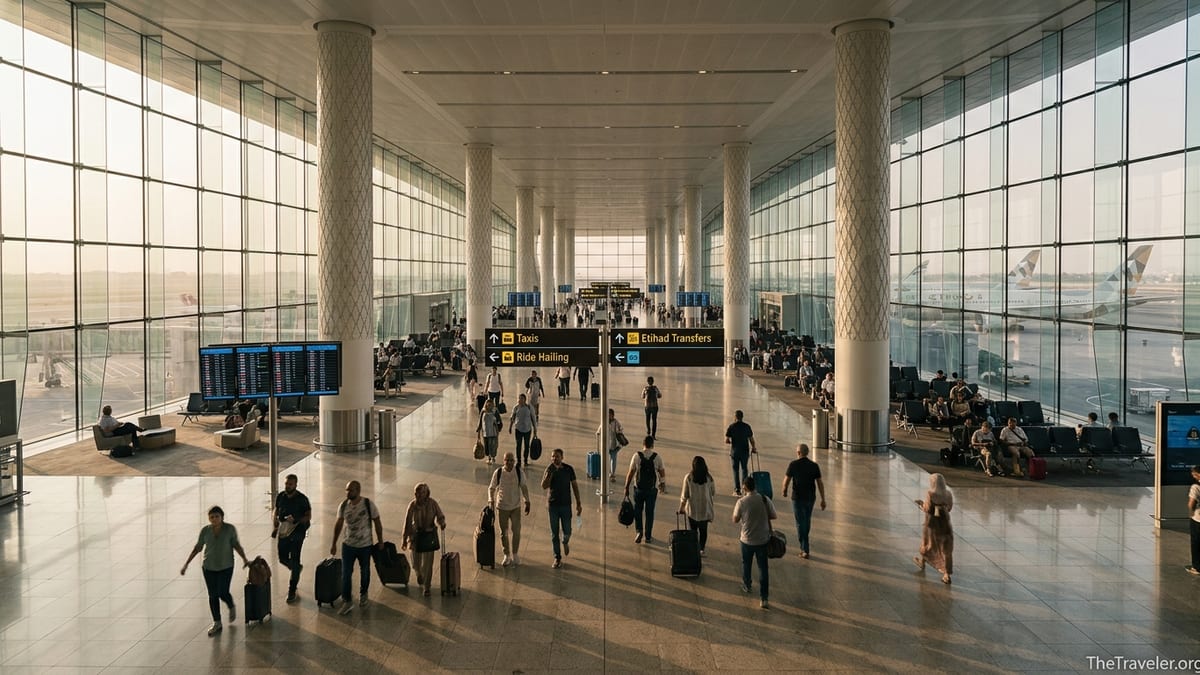
Understanding Zayed International Airport and Terminal A
Zayed International Airport, still often called Abu Dhabi Airport by locals, is the primary airport for the emirate of Abu Dhabi. The centerpiece is Terminal A, a vast X shaped building with high ceilings, plenty of natural light and long walking distances. All Etihad Airways flights, along with most other international carriers, now operate from Terminal A, so if you are flying into Abu Dhabi on Etihad you will almost certainly arrive and depart here.
Terminal A is divided into three main piers off a central hall. After you clear security and immigration on arrival, you will walk into a large landside arrivals area with clear signage for baggage claim, taxis, ride hailing, buses and car rental. From the gates to passport control can easily be a 10 to 20 minute walk depending on where your aircraft parks, so factor that in if you have tight connections or pre booked transport waiting for you.
The terminal is designed around extensive self service and biometric technology. Many Etihad passengers departing from Abu Dhabi will use automated check in kiosks, bag drops and e gates for immigration. On arrival, however, most first time visitors will pass through a staffed immigration counter unless they are eligible for the UAE’s smart gates. Expect the process to feel more like a large European or Asian hub than a small regional airport.
Because the airport is new, some mapping apps still label it as Abu Dhabi International Airport or AUH. When booking transport or searching directions, look for “Zayed International Airport” or simply “AUH” in your app. If you see references to older terminals, such as Terminal 1 or Terminal 3, you can safely ignore them for regular passenger use, as Terminal A consolidates almost all commercial flights today.
Flying Etihad: Check In, Transfers and Special Services
Etihad Airways is the anchor airline at Zayed International Airport and has tailored many of the terminal’s features around its operations. If you start your journey in Abu Dhabi, Etihad check in desks are grouped together in the main departures hall of Terminal A, with separate counters for Economy, Business, First and Etihad Guest elite members. For most long haul flights, check in opens around three hours before departure, but Etihad often allows earlier bag drop, especially during busy overnight waves.
Transit passengers connecting through Abu Dhabi usually remain airside. After deplaning, follow the purple “Transfers” signs instead of “Arrivals.” You will pass through security screening before entering the departures level again. Terminal A was designed to make connections smoother than at the former terminals, but walking distances can still be long. For example, a passenger arriving from London and connecting to Sydney on Etihad may need 15 to 25 minutes to walk between gates with a brief hand luggage scan in between.
Etihad also offers ancillary services that influence how you use the airport. Eligible premium passengers and some Etihad Guest elite members have access to Etihad Chauffeur within the UAE, which provides a pre booked car to or from Zayed International Airport. After landing, these passengers are typically directed to an Etihad Chauffeur reception area near the baggage belts, where a driver meets them once luggage is collected. For many first time visitors staying in central Abu Dhabi, this can remove the need to navigate taxis or ride hailing on their first night.
For travelers heading beyond Abu Dhabi, Etihad operates a complimentary Etihad Shuttle coach to Dubai and Al Ain for those on Etihad operated flights. This service must be reserved after you purchase your ticket and is subject to set schedules and capacity limits, so you cannot simply walk up to the coach on arrival and board. For instance, a passenger landing in Abu Dhabi around 20:00 might choose a coach departure to downtown Dubai roughly two hours later, allowing time for immigration and baggage claim. This can be a cost effective alternative to a private taxi across emirates.
Arrivals, Immigration and Baggage Claim: What to Expect
When your aircraft parks at Terminal A, you will disembark either via airbridge or bus gate and follow signs to “Arrivals.” The corridors are long but clearly marked in English and Arabic. Along the way, you will pass duty free shops and restrooms, but it is best to head directly to passport control to avoid potential queues, especially during the late evening bank of arrivals when many European and Asian flights land.
At immigration, most Western European, UK, US, Canadian, Australian and many other nationalities receive a visa on arrival, typically in the form of a stamp indicating their permitted stay. You present your passport, arrival form if required, and may be asked basic questions about your stay. Queues vary. On a busy Friday night in peak season you might wait 30 to 45 minutes, while on a midweek morning you could be through in under 10 minutes. Families with young children and passengers with reduced mobility often have dedicated lanes.
After immigration you descend to baggage claim. Large digital screens show flight numbers above each carousel. Because many flights operate with wide body aircraft, belts can be crowded. It is common for bags from a full Boeing 787 or Airbus A350 to take 20 to 30 minutes to start appearing, especially during peak hours. Free baggage trolleys are widely available, and customs officers stand at the exits to wave most passengers through a green channel for those with nothing to declare.
Before you exit into the public arrivals area, you will pass several practical services. Mobile operators usually have kiosks selling UAE SIM cards and eSIM activations, which can be a convenient place to get local data for ride hailing apps. Currency exchange counters and ATMs are also available, though exchange rates at airports are often less favorable than in the city. If you plan to use local buses or pay a taxi in cash, withdrawing a modest amount of dirhams at the airport can still be sensible.
Getting from Zayed International Airport to Abu Dhabi City
Once you emerge into the arrivals hall, you will see clear signage to taxis, ride hailing pick up zones, car rentals and buses. For most first time visitors staying in central Abu Dhabi, a regulated airport taxi is the simplest option. Taxis queue outside the terminal and operate with a meter that includes a higher starting fare for trips originating at the airport. As a rough example, a metered taxi ride from Zayed International Airport to the Corniche area in central Abu Dhabi is often in the range of 70 to 100 dirhams in light traffic, depending on time of day and exact destination.
Ride hailing services such as Uber and Careem also operate at the airport. You can request a car through the app and follow the in app instructions to the designated pick up point, which is usually a short walk from the terminal exit. Prices for ride hailing are shown upfront and can be similar to or slightly higher than regular taxis, especially during periods of high demand or when surge pricing applies. For example, a mid afternoon Uber or Careem trip to the city might quote around 80 to 120 dirhams, while during very busy times, such as major events on Yas Island, the same trip might rise significantly.
Budget conscious travelers can use the public bus network, although options are more limited than in Dubai and journeys take longer. A common pattern is to take a local bus from the airport to a transport hub in the city and then change to another route or taxi. This can reduce costs to a fraction of a taxi fare, but may add an hour or more to your journey, particularly if you are arriving late at night when frequencies are reduced. For solo backpackers or students, this trade off can be worthwhile, while families with luggage usually prefer the simplicity of a taxi.
Car rental desks are located in the arrivals area for those who prefer to drive themselves. International firms such as Hertz, Avis and Budget operate alongside regional brands. Renting a car can make sense if you plan to explore beyond Abu Dhabi, for example a road trip to the Liwa desert or multiple day trips around the emirate. Keep in mind that local driving standards, multilane highways and complex junctions can be stressful for jet lagged first timers, so many visitors postpone car rental until the day after arrival.
Travel between Abu Dhabi and Dubai: Shuttles, Coaches and Taxis
Many travelers use Zayed International Airport as a gateway for stays in Dubai, either because flights into Abu Dhabi are cheaper or because they are flying on Etihad. The distance between the airport and central Dubai is around 130 kilometers, and you have several realistic options for covering it. Your choice will depend on budget, schedule and comfort level.
Etihad’s complimentary Etihad Shuttle coach is the headline option for passengers booked on Etihad operated flights. When available, it connects Zayed International Airport with a coach stop in Dubai, commonly in areas with good onward taxi and metro links. You reserve a seat after buying your Etihad ticket, and coaches run at fixed times that broadly match Etihad’s major arrival and departure waves. For instance, a traveler landing in Abu Dhabi in the early morning might find a shuttle to Dubai departing roughly one to two hours later, giving enough time to clear formalities and walk to the coach desk.
Without access to the shuttle, you can choose regular intercity buses or private road transport. Some travelers take a local bus or taxi from the airport to Abu Dhabi’s main bus station, then connect to a coach to Dubai’s Ibn Battuta or Al Ghubaiba bus stations, followed by a short metro or taxi ride to their hotel. This can cost only a small fraction of a direct taxi but involves multiple steps and can take three hours or more door to door. It is a realistic choice for backpackers or long stay visitors with flexible schedules.
For a direct route, airport taxis, Uber and Careem will all take you door to door between Zayed International Airport and Dubai. In practice, many residents report paying in the region of 250 to 350 dirhams to reach areas like Dubai Marina or Business Bay from the airport in normal traffic, with higher fares for larger vehicles or premium categories. The journey normally takes around 70 to 90 minutes, but can be longer during peak rush hours or on holiday weekends. When comparing prices, always check the quoted fare in your app and consider any night surcharges or tolls that may apply.
Airport Hotel, Sleeping Options and Lounges
If you have a long layover or arrive late at night, Zayed International Airport offers several options for rest. Inside Terminal A’s airside area there is an airport hotel that caters to transit passengers who prefer not to clear immigration. Rooms are available for short blocks of time, often starting from around six hours, allowing travelers on overnight connections to lie flat, shower and adjust to the time zone without leaving the secure zone. This can be particularly helpful for those connecting from North America to Asia or Australia via Abu Dhabi.
For landside stays, there is a Premier Inn located close to the airport, typically a short shuttle or taxi ride from Terminal A. This hotel appeals to travelers catching early morning flights or arriving very late who prefer an affordable, familiar mid range brand. For instance, a family with children landing after midnight might choose to go straight to the Premier Inn, sleep until mid morning, then transfer into Abu Dhabi city once rested. This avoids waking children again after a further 30 to 40 minute drive into town.
Within Terminal A, Etihad operates flagship lounges for its premium passengers and eligible frequent flyers. The main Etihad Business and First Class lounges offer hot meals, showers, quiet zones and dedicated family spaces. These lounges typically open long hours aligned with Etihad’s departure banks and are located near the main security and immigration points in departures. For example, a Business Class passenger flying Abu Dhabi to Paris in the early morning might check in three hours early to enjoy breakfast and a shower in the lounge before boarding.
In addition to airline operated lounges, Zayed International Airport also has pay in lounges that accept walk in guests or access through membership programs like Priority Pass. These lounges usually provide comfortable seating, basic hot and cold food, soft drinks, Wi Fi and showers. Prices vary, but a typical walk in rate for three hours of access might be in the range of 180 to 250 dirhams. For economy passengers on long layovers, this can be a worthwhile alternative to buying multiple meals and coffees in the public terminal areas.
Uber, Careem and Local Taxis: How to Choose
First time visitors are often unsure whether to rely on traditional taxis or app based services like Uber and Careem at Zayed International Airport. In Abu Dhabi, all three coexist. Airport taxis are regulated, metered and queue directly outside arrivals, which makes them the most straightforward option if you have just cleared customs and want to reach your hotel quickly without fiddling with your phone.
Careem and Uber function broadly as they do in other major cities, with upfront pricing, multiple vehicle categories and cashless payment options. To use them effectively from the airport, make sure you have mobile data or Wi Fi access. After requesting a ride, the app will direct you to a designated pick up point, often slightly away from the main taxi rank to keep traffic orderly. In practice, travelers sometimes choose airport taxis when they see a long wait time in the apps, then lean on Uber or Careem later in their stay when moving around the city.
Price differences between taxis and ride hailing can be modest on city trips but grow on long intercity journeys such as airport to Dubai. Some residents report that a standard airport taxi to central Abu Dhabi in normal traffic can be a little cheaper than an Uber in a similar size vehicle, while ride hailing might offer more predictable pricing during off peak times or for premium categories. During very busy events, such as the Abu Dhabi Grand Prix on Yas Island, surge pricing and heavy demand can push app based fares much higher than usual, so booking earlier or using regular taxis can save money.
For safety and reliability, both traditional taxis and the main ride hailing platforms are considered secure and well regulated in Abu Dhabi. Drivers are used to tourists and will generally know the main hotel names and districts. When taking a taxi, it is good practice to have your hotel name and address written down or ready in a maps app to show the driver, especially if you are heading to a newer development or serviced apartment complex.
First Time Arrival Tips for Abu Dhabi and the UAE
Beyond the mechanics of the airport itself, first time visitors to Abu Dhabi benefit from some basic orientation to local customs and practicalities. The UAE is a conservative but cosmopolitan country. Dress codes are relatively relaxed in the airport and major hotels, but modest clothing that covers shoulders and knees is advisable when you begin exploring the city itself, particularly in malls, mosques and government buildings. On arrival, you will see residents and expatriates in everything from business suits to traditional Gulf attire, so you are unlikely to stand out.
Weather is a key factor. Many long haul flights arrive late at night or early in the morning, but if you step outside during the day, especially between May and September, expect very high temperatures and humidity. When planning your ground transport, consider that a simple taxi queue outdoors can feel intense in summer. Zayed International Airport is largely air conditioned, and taxi queues are usually shaded, but having water in your bag and dressing in light breathable fabrics will make the transition easier.
Payment and connectivity are generally straightforward. Credit and debit cards are widely accepted across Abu Dhabi, including at airport shops, taxis and most restaurants. Having a small amount of cash in dirhams remains useful for tips, small purchases and occasional taxis that prefer cash. Buying a local SIM or activating an eSIM at the airport will make it much easier to use map apps, translation tools and ride hailing as soon as you land, which is particularly helpful if your hotel is not well known to drivers.
Finally, give yourself extra time for your first departure from Zayed International Airport. On your way out of the UAE, aim to arrive at Terminal A at least three hours before your flight, more if you are returning a rental car or traveling during peak holiday periods. Security and outbound passport control are efficient but can back up when multiple wide body departures are scheduled close together. Arriving earlier also gives you time to explore the terminal’s dining options or relax in a lounge rather than rushing straight to the gate.
The Takeaway
For first time visitors, Zayed International Airport combines the scale and sophistication of a major global hub with a layout that is still settling into travelers’ mental maps. Understanding how Terminal A is organized, what to expect at immigration and baggage claim, and how ground transport choices differ in price and convenience will make your arrival in Abu Dhabi far smoother. Whether you plan to stay in the capital or use the airport as a springboard to Dubai, a bit of advance planning goes a long way.
In practical terms, most visitors will find that taking a regulated airport taxi to central Abu Dhabi, or using the Etihad Shuttle if eligible and heading for Dubai, hits the best balance of cost and simplicity. Those with long layovers can sleep in the airport hotel or recharge in a lounge, while app based ride hailing services provide flexibility once you have local data and a feel for typical fares. By the time you depart, Terminal A’s wide glass halls and X shaped piers are likely to feel much more familiar than they did on arrival.
Abu Dhabi itself is a welcoming, safe and increasingly popular destination, and Zayed International Airport is the front door. Stepping off your Etihad flight, clearing immigration with confidence, and choosing the right onward transport sets the tone for the rest of your trip, whether you are heading to a beachfront resort on Saadiyat Island, a conference near ADNEC, or a weekend in Dubai. Treat the airport as your first mini lesson in how the UAE works, and the rest of your journey will unfold more smoothly.
FAQ
Q1. Is Zayed International Airport the same as Abu Dhabi International Airport?
Yes. The airport previously known as Abu Dhabi International Airport has been renamed Zayed International Airport, and its main passenger hub is now Terminal A. Locals and some websites still use the old name, but the airport code remains AUH.
Q2. How long does it usually take to get from the airport to central Abu Dhabi?
In normal traffic, a taxi or ride hailing trip from Zayed International Airport to central Abu Dhabi, such as the Corniche area, typically takes around 30 to 40 minutes. During peak rush hours it can take longer, especially if there are incidents on the main highway.
Q3. How much should I expect to pay for a taxi from the airport to Abu Dhabi city?
Fares vary with distance, traffic and time of day, but many visitors report paying somewhere around 70 to 100 dirhams for a standard metered taxi from the airport to central Abu Dhabi. Larger vehicles or trips at night may cost more.
Q4. Can I use Uber or Careem at Zayed International Airport?
Yes. Both Uber and Careem operate at Zayed International Airport. After booking through the app, you follow signs or in app directions to a designated pick up area. Prices are shown upfront and may be similar to or slightly higher than regular taxis, depending on demand.
Q5. What is the Etihad Shuttle and who can use it?
The Etihad Shuttle is a complimentary coach service for passengers traveling on Etihad operated flights that links Zayed International Airport with Dubai and Al Ain. Seats must be reserved after you purchase your Etihad ticket, and the service runs on fixed schedules that connect with major Etihad arrivals and departures.
Q6. Are there hotels inside or near Zayed International Airport?
Yes. There is an airside airport hotel inside Terminal A for transit passengers who do not want to clear immigration during layovers. Nearby, a Premier Inn close to the airport offers convenient landside accommodation for late night arrivals or early departures, reachable by short shuttle or taxi.
Q7. Do I need cash, or can I pay by card for transport?
Most airport taxis, ride hailing services and hotel transfers accept card payments, and cards are widely used throughout Abu Dhabi. However, carrying some cash in dirhams is still useful for tips, small purchases and occasional situations where card systems are offline or not available.
Q8. How early should I arrive at Zayed International Airport before my departing flight?
For international flights, plan to arrive at Terminal A at least three hours before departure. This allows time for check in, security, passport control and potential queues. During busy holiday peaks or for very long haul flights, giving yourself three and a half to four hours provides extra margin.
Q9. Is the airport easy to navigate for first time visitors?
Terminal A is large but clearly signed in English and Arabic, with color coded directions to arrivals, transfers and ground transport. The main challenge is distance, as some gates require a 10 to 20 minute walk. If you have reduced mobility or tight connections, request assistance in advance.
Q10. Is Abu Dhabi safe to arrive late at night?
Yes. Abu Dhabi is widely considered a very safe city, and late night arrivals at Zayed International Airport are routine. Taxis operate around the clock, the terminal is well lit and staffed, and solo travelers, including women, commonly arrive in the middle of the night without issues.