


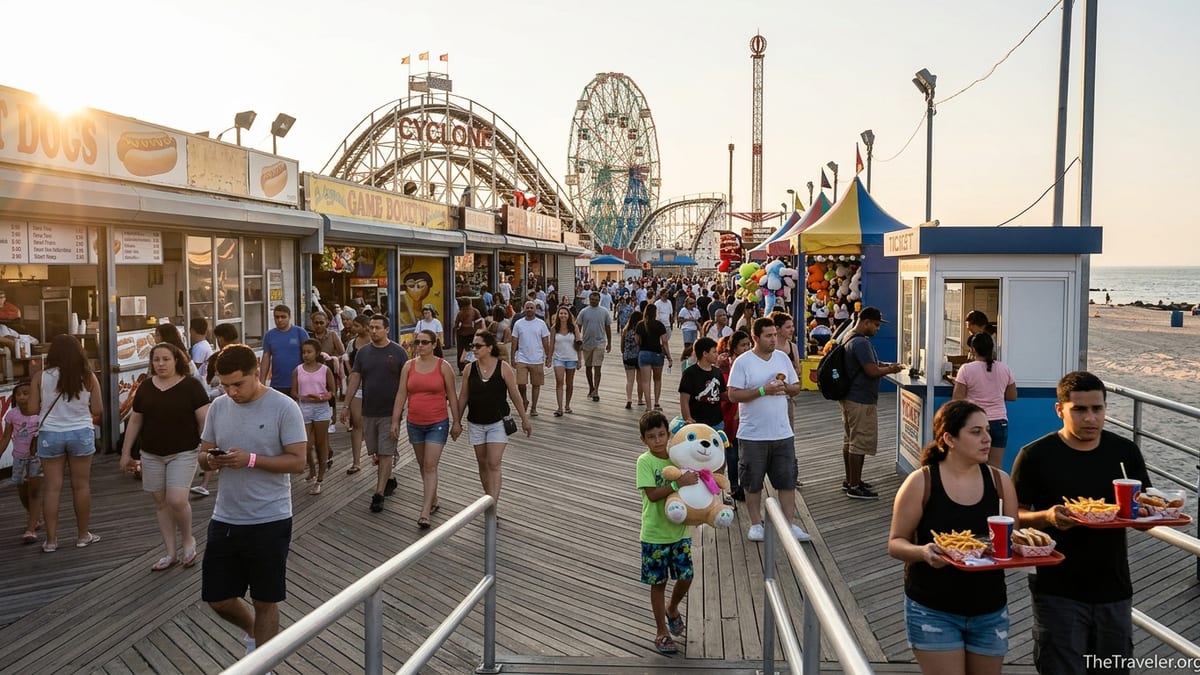
Coney Island still sells itself as a democratic day at the seaside, the people’s playground at the end of the New York City subway. The beach is free, the boardwalk is open to everyone, and the roller coasters and neon signs look like something out of a vintage postcard. Yet many visitors step off the train assuming the outing will be cheap, only to discover by late afternoon that the cost of rides, food, transport, and extras has climbed far beyond what they imagined. A day at the Coney Island theme park now feels, to many, more like a mid‑range theme park vacation than a nostalgic bargain.
From Nickel Rides to Modern Pricing
Part of the surprise at Coney Island comes from its mythology. For generations, guidebooks and movies have portrayed it as a rough‑edged but affordable escape where anyone with subway fare could ride the Cyclone and eat a hot dog. The current reality is more complicated. The beach and boardwalk remain free, but the cluster of parks and independent rides that most people think of as “Coney Island theme park” now operate on a contemporary pricing model much closer to a regional amusement park than an old‑fashioned fairground.
Today’s visitor is not paying a single gate fee at a unified park. Instead, Coney Island is a patchwork of operators: Luna Park, Deno’s Wonder Wheel Amusement Park, the separately run Cyclone wooden coaster, arcades, go‑kart tracks, and independent kiddie rides. Each charges its own rates, often through a mix of pay‑per‑ride credits and timed wristbands. That fragmented system makes it easy to underestimate the total price of a day, because spending is broken into small decisions instead of one up‑front ticket.
Sticker shock is especially common for visitors who last came a decade or more ago. Ride prices have risen, ride packages have become more structured, and the neighborhood around the amusement area now includes trendier bars and quick‑service restaurants with New York City prices. On a sunny summer Saturday, the atmosphere still feels joyfully chaotic, but the economics look far more like a modern leisure destination than a bargain beachside funfair.
The result is a disconnect between expectation and reality. Many travelers arrive picturing a casual, low‑budget outing and discover that to ride several headline attractions, buy food and drinks, and cover transportation for a family, they are looking at a total that rivals a full‑day visit to a traditional theme park in other parts of the United States.
What Rides Really Cost in 2026
Coney Island does not have a single admission fee. You walk into the amusement district and onto the boardwalk for free, then pay for what you choose to ride. At Luna Park, the largest operator, visitors can buy single‑ride credits, timed wristbands, or all‑day passes. Recent pricing guides indicate that basic ride packages typically start somewhere around forty dollars per person for limited access, with peak‑day or broader‑access wristbands climbing into the fifty to sixty dollar range for adults. Some premium experiences and special event days can push the price higher.
That range can catch visitors who were expecting something closer to a neighborhood carnival. A family of four buying mid‑range wristbands can easily spend two hundred dollars just to get through the turnstiles for the day’s core thrills. That does not include separate charges for standalone attractions like the historic Cyclone coaster, often priced around ten dollars per ride, or the iconic B&B Carousell, which may be sold through special combined tickets. Families who decide spontaneously to “just hop on a few extra rides” can see another fifty to one hundred dollars vanish over the afternoon.
Deno’s Wonder Wheel Amusement Park, which operates independently, uses its own ticketing system, with ride credits or wristbands sold separately from Luna Park. The famous Wonder Wheel itself is often priced as a premium attraction compared with kiddie rides. It is common for visitors to buy a ride package at Luna Park, then walk next door and discover they need to spend again for Deno’s, even though the two parks visually blend together into one continuous midway. That duplication is a major source of the feeling that Coney Island “costs more than expected.”
Then there are all the smaller, independently run attractions scattered between and around the major parks. A go‑kart track, a sling‑shot ride, a haunted house, small roller coasters and dark rides, and multiple arcades each post their own prices, often ten to twenty dollars for a single premium attraction or a few dollars per play at the games. Individually, none of these looks outrageous, but a couple of spur‑of‑the‑moment rides per person can quietly turn a relatively contained day into a far more expensive one.
The Hidden Price of Getting There and Getting Around
For most visitors, the cost of a Coney Island day starts before they see the ocean. In 2026, the base fare for a New York City subway or local bus ride is about three dollars for a standard adult. That means a round trip from Manhattan to Coney Island for two adults already approaches twelve dollars, and a family with teenagers paying full fare can easily spend close to twenty dollars simply getting to the park and back.
Those staying in hotels in Midtown or Long Island City often also face the cost of transferring from an airport. A couple arriving at John F. Kennedy International Airport might pay for an AirTrain journey and then connect to the subway, adding another twenty to thirty dollars to their transit costs before they even check into their hotel. While that is not specific to Coney Island, it shapes the overall perception of cost. By the time visitors step onto the Coney Island boardwalk, they are often already feeling the cumulative hit of New York’s transportation prices.
For those who prefer not to use public transit, the numbers increase sharply. Driving from another borough or from New Jersey involves bridge or tunnel tolls that can run into the high teens or more in each direction for standard passenger vehicles, depending on the route, time of day, and whether congestion pricing is in effect. Parking near the amusement area on a busy summer day typically means paying a private lot anywhere from twenty to forty dollars for several hours, sometimes more on holiday weekends. Choosing rideshare instead can lead to surge‑priced trips that easily exceed fifty dollars each way from central Manhattan on peak summer Saturdays.
Surprised visitors often comment afterward that they expected the “affordable” part of Coney Island to start the moment they reached Brooklyn. In reality, the combined cost of subway fares or tolls, parking, and possible rideshare connections means that transportation alone can consume a noticeable slice of a family’s day‑trip budget. When added to ride packages and food, transport makes the overall experience feel much more expensive than the classic image of a cheap day at the beach.
Boardwalk Food and Treats Add Up Fast
Food is one of the most common budget pitfalls at Coney Island. The classic experience includes a hot dog from a famous stand, crinkle‑cut fries in a cardboard tray, soft‑serve ice cream on the boardwalk, and maybe a funnel cake dusted with powdered sugar. Individually, each of these feels like a small indulgence, but modern prices add up quickly, especially for families and groups of friends.
At popular boardwalk concessions, a basic hot dog might cost in the ballpark of six to eight dollars, with specialty versions climbing higher. A soda or bottled water typically runs three to five dollars, while beer at a casual seafront bar can be ten dollars or more per cup. A slice of boardwalk pizza can hover around four to six dollars, and a basket of fries plus a couple of drinks for two people can easily reach twenty dollars without anyone ordering a full meal. Sitting down at a casual restaurant just off the boardwalk, a burger and fries with a soft drink might land in the fifteen to twenty dollar range before tax and tip.
Desserts and snacks follow a similar pattern. A single soft‑serve cone with sprinkles might be priced around six dollars, while fancy milkshakes or sundaes reach ten dollars or more. Cotton candy, churros, and novelty treats sold from carts often cost five to eight dollars each. For a family of four grazing their way through the day, buying a couple of snacks in the morning, lunch on the boardwalk, and a sweet treat in the afternoon can easily total eighty to a hundred dollars, particularly if the adults also purchase alcoholic drinks.
Travelers used to more modest boardwalk towns elsewhere on the East Coast are often astonished at how New York City’s general cost of living shows up in Coney Island’s food prices. Even small conveniences, like buying sunscreen from a beach shop or paying a few dollars to use a restroom at a business when public facilities are crowded, add to the sense that the day costs more than anticipated. The trick is not to avoid enjoying the food but to recognize early that it is priced like the rest of New York, not like a small‑town fair.
How Extras and Incidentals Inflate the Bill
Beyond rides, transportation, and food, a host of incidentals contribute to the feeling that Coney Island is more expensive than visitors expect. Many families, for instance, underestimate how much they will spend on midway games. On a summer afternoon, the barkers calling out from balloon‑dart booths, ring‑toss games, and basketball stands are part of the essential Coney Island soundtrack. Games usually cost just a few dollars per play, but to win the larger plush toys that kids crave, multiple attempts are often required.
Consider a parent who gives each child twenty dollars in cash to spend on games. A handful of tries at five dollars each can burn through that quickly, especially at games designed to encourage repeat plays. If the family circles back later in the day for “one more try,” the total for games alone may reach fifty to eighty dollars before anyone realizes it. Because these purchases are scattered an hour or two apart and often paid in cash, they tend not to register as a major line item in the moment, but they significantly raise the total cost of the outing.
Souvenirs tell a similar story. Coney Island’s gift shops and boardwalk stands sell logo T‑shirts, retro‑style posters, snow globes, keychains, and novelty items. A T‑shirt can easily run thirty dollars or more, and even small items like magnets or shot glasses often cost ten dollars each. If everyone in a group decides to bring home “something small,” that decision can add another fifty to one hundred dollars to the day, especially when paired with printed photo souvenirs from rides, which frequently cost fifteen to twenty dollars per digital or physical copy.
On top of these planned expenses, there are the purely incidental costs that come with any seaside visit: renting a locker to store bags during rides, buying a beach umbrella or folding chairs from a vendor, or purchasing an extra towel because someone forgot theirs at the hotel. Even something as simple as paying for an extra subway ride because a traveler exits the station at the wrong stop can contribute to the perception that the day is full of small but relentless charges that add up.
Realistic Sample Budgets: What a Day Actually Costs
To understand why Coney Island often ends up costing more than expected, it helps to walk through a few realistic scenarios. Consider a budget‑conscious couple visiting from another U.S. city. They take the subway from Midtown Manhattan, spending about twelve dollars total for round‑trip fares. At Luna Park, they decide to buy mid‑tier wristbands at roughly fifty dollars each to enjoy a range of thrill rides without counting credits. That is one hundred dollars on rides. They share a quick lunch on the boardwalk consisting of two hot dogs, fries, and two soft drinks for roughly thirty dollars, then later buy two ice creams and a bottle of water for about twenty dollars more.
That couple has now spent around one hundred sixty dollars for a fairly modest day: subway rides, wristbands, simple lunch, and a couple of snacks. If they add a ride on the Cyclone for about ten dollars each and stop for two beers at sunset, which might cost another twenty to twenty‑five dollars, their total creeps toward two hundred dollars without any souvenirs, arcades, or sit‑down restaurant meals. While not outrageous for a full day of entertainment in a major city, it is noticeably higher than what many first‑time visitors picture when they imagine “a quick, cheap visit to Coney Island.”
A family of four feels the effect even more strongly. Suppose two adults and two children take the subway, spending close to twenty dollars round trip. They purchase ride wristbands for the kids at around forty‑five dollars each and for the adults at fifty‑plus dollars each, reaching roughly one hundred ninety dollars on rides. Lunch at a casual boardwalk restaurant, with four main dishes, drinks, and shared appetizers, could easily land in the ninety to one hundred ten dollar range after tax and tip. Add two rounds of snacks and drinks over the afternoon, roughly forty to sixty dollars, and the bill is already at around three hundred fifty dollars before anyone steps into an arcade or plays a midway game.
If the children then spend thirty dollars each on games and souvenirs, while the adults share a cocktail at a beach bar for twenty to twenty‑five dollars, the family’s total for the day can approach four hundred fifty to five hundred dollars. That total still assumes they used the subway rather than paying for parking or rideshare. For an international traveler who pictures Coney Island as a “cheap” attraction compared with headline experiences like the Empire State Building or a Broadway show, that number can be startling.
Strategies to Enjoy Coney Island Without Breaking the Bank
All of this does not mean that Coney Island has to be unaffordable. It does mean that enjoying it economically requires deliberate planning instead of the purely spontaneous approach that its nostalgic image suggests. One of the most effective strategies is to decide in advance what kind of visit you want. If your priority is a full theme park day, treating Luna Park much like any regional amusement park, then budgeting for a substantial ride package and planning to spend several hours there makes sense. If, on the other hand, your main goal is to experience the beach, stroll the boardwalk, and ride one or two iconic attractions, you can likely skip the high‑priced wristbands and rely on a handful of individual ride tickets.
Timing matters as well. Visiting on a weekday outside of peak summer or avoiding major holiday weekends can sometimes lead to slightly lower ticket prices and less pressure to buy express options. Arriving earlier in the day also gives you more time to enjoy the beach and boardwalk, which are free, before committing to ride packages. Many travelers find it helpful to set a firm budget for games and souvenirs, particularly with children. For example, giving each child a prepaid amount and explaining that when it is gone, it is gone, helps prevent repeated small charges from turning into a large, unplanned expense.
Food planning can also make a noticeable difference. Travelers staying in apartments or hotels with simple kitchen facilities might eat a substantial breakfast before heading to Coney Island, then rely on one main meal and a couple of snacks instead of multiple full‑price boardwalk meals. Bringing a refillable water bottle and checking where public fountains are available reduces the number of drinks you need to buy. If your group does want to experience a classic Coney Island institution such as a famous hot dog stand, you might share a few items instead of ordering whole meals there, then eat a more budget‑friendly sit‑down meal farther from the amusement core, where prices may be slightly lower.
Finally, be clear with yourself about which “extras” matter. If riding the Wonder Wheel at sunset or buying a retro Coney Island poster is meaningful to you, build those specific treats into your budget and skip less important temptations. The key is to replace the assumption that Coney Island will be cheap by default with an intentional plan that reflects its current, big‑city pricing.
The Takeaway
Coney Island remains one of New York City’s most evocative day‑trip destinations, a place where roller coasters roar above a century‑old boardwalk and the Atlantic stretches out just beyond the neon. What has changed is not the essential character of the place but the economics surrounding it. Visitors who arrive expecting vintage prices to match the vintage atmosphere are likely to feel blindsided by the cumulative cost of rides, boardwalk food, transportation, and all the little extras that define a full day at the seaside.
Approached with realistic expectations and a clear budget, though, Coney Island can still feel like a fair‑value outing rather than an unexpectedly costly one. Acknowledge from the outset that ride packages will be priced at modern theme park levels, that food and drinks carry standard New York City markups, and that transportation and games will eat into your funds. With that understanding, you can decide intentionally how much to spend and where to splurge, ensuring that your memories center on the sea breeze and bright lights instead of on sticker shock.
For travelers willing to plan their visit as thoughtfully as they would any other major urban attraction, the amusement parks and boardwalk of Coney Island still offer the joy and spectacle that made them famous, just at a twenty‑first‑century price. Knowing that in advance is the difference between a day that feels quietly expensive and one that feels richly rewarding.
FAQ
Q1. Is there an admission fee to enter Coney Island or the boardwalk?
There is no general admission fee to enter the Coney Island neighborhood, beach, or boardwalk. You pay only for rides, attractions, food, and other purchases.
Q2. How much should I realistically budget for a day at the Coney Island theme park?
For a typical full day including ride wristbands, subway transport, meals, snacks, and a few extras, many visitors find that budgeting around 150 to 200 dollars per adult and somewhat less per child is realistic.
Q3. Are ride wristbands at Coney Island worth the cost?
If you plan to ride many attractions at Luna Park over several hours, wristbands can be better value than paying per ride. If you only want one or two rides, individual tickets may be cheaper.
Q4. Can I visit Coney Island cheaply if I skip most rides?
Yes. If you focus on the free beach, strolling the boardwalk, and perhaps one or two pay‑per‑ride attractions, your main expenses will be food and transport rather than ride packages.
Q5. Is it cheaper to drive or take the subway to Coney Island?
For most visitors, the subway is usually cheaper once you factor in tolls, parking fees, and possible congestion charges. Driving can be more convenient but often costs significantly more overall.
Q6. Are food and drinks on the Coney Island boardwalk expensive?
Food and beverages are generally priced in line with the rest of New York City. Expect higher prices than at small‑town boardwalks, especially at popular or branded stands.
Q7. How can families keep costs under control during a visit?
Set a clear budget for rides, games, and souvenirs; consider sharing snacks and meals; use the subway; and limit high‑priced extras to a few meaningful splurges.
Q8. Are there any free or low‑cost attractions besides the beach?
Yes. People‑watching along the boardwalk, enjoying street performances, exploring nearby murals and public art, and simply walking the pier are all free or low‑cost ways to experience Coney Island.
Q9. Do prices at Coney Island change depending on the day or season?
Ride pricing structures and promotions can vary by day, time, and season, with peak summer weekends and holidays typically being the most expensive and most crowded.
Q10. Is Coney Island still worth visiting if it costs more than I expected?
Many travelers feel it is, as long as they arrive with realistic expectations and a planned budget. The mix of history, seaside atmosphere, and rides is hard to duplicate elsewhere in New York City.