


Few places in New York City inspire as much nostalgic debate as Coney Island. Its seaside roller coasters, blinking lights and century-old boardwalk have defined summer in Brooklyn for generations. Yet many modern visitors arrive wondering the same thing: in 2026, with so many sleek parks and urban attractions competing for attention, is Coney Island’s theme park experience still worth the detour to the very end of the subway line?
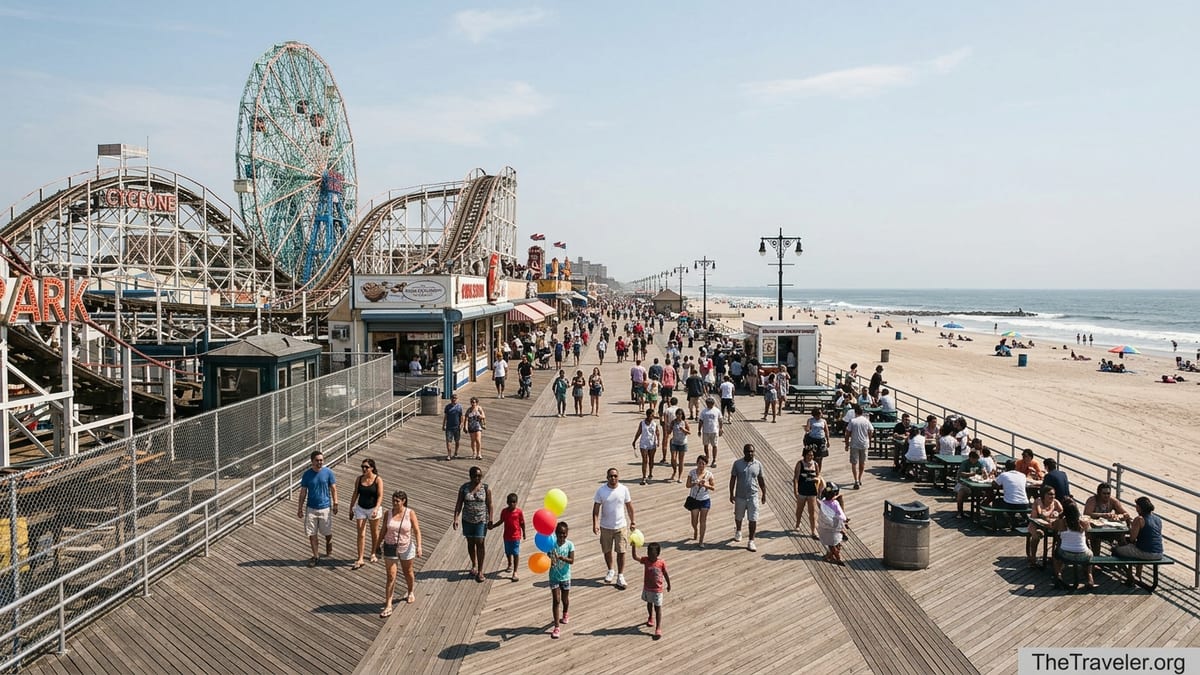
The Coney Island Theme Park Experience in 2026
When people talk about “Coney Island theme park,” they are usually referring to the cluster of amusements centered around Luna Park and Deno’s Wonder Wheel Amusement Park, plus a few legacy independent rides and arcades along Surf Avenue and the Riegelmann Boardwalk. This is not a single gated resort like Disney World. Instead, it feels like an old-school seaside funfair stitched together: separate operators, pay-per-ride attractions, food stands, sideshows and game booths all piled into a few electric blocks beside the Atlantic.
In 2026, that patchwork is part of the charm. You might start with the historic Cyclone wooden coaster rumbling along Surf Avenue, pivot to the sleek Thunderbolt steel coaster closer to the beach, then wander into Deno’s Wonder Wheel Park to ride the 1920 Ferris wheel that still dominates the skyline. The experience is less about a seamless master-planned park and more about drifting between islands of nostalgia and modern thrills, with the beach and boardwalk always a few steps away.
What surprises many first-timers is how compact the area feels. You can walk from the Cyclone to the Wonder Wheel in under ten minutes and see most major rides from almost anywhere in the district. That makes it easy to sample a few attractions even on a short visit, but it also means crowds, loud music and overlapping ride soundtracks are part of the constant backdrop, especially on peak summer weekends.
Whether that is “worth it” depends heavily on what you expect. Travelers seeking a polished, immersive destination comparable to major Orlando or California parks often find Coney Island scruffier and more chaotic. Visitors who love layered history, urban grit and the sight of a roller coaster racing alongside an elevated subway line usually walk away thrilled by how uniquely New York the whole scene feels.
Key Rides, Attractions and What You Actually Get
Luna Park remains the main draw for thrill seekers. Its headline rides include the historic Cyclone wooden roller coaster, which has been operating since 1927 and is still one of the most intense woodies in the country thanks to its tight, low-slung layout and buzz-bar restraints. Across the midway, the modern Thunderbolt offers a very different personality: a steel coaster with a vertical lift and inversions that loom over the boardwalk and beach. Families gravitate to gentler attractions like the Soarin’ Eagle flying coaster or the various spinning and swinging rides scattered along the park’s central spine.
Deno’s Wonder Wheel Amusement Park sits slightly closer to the water and skews more family-friendly. The centerpiece is the Wonder Wheel itself, a 150-foot tall Ferris wheel that mixes traditional fixed cars with sliding cars that roll along interior tracks as the wheel turns. Many visitors consider a ride in one of the swinging cars, with views spanning from the Verrazzano-Narrows Bridge to the Manhattan skyline on a clear day, the single most essential Coney Island experience. Deno’s also offers classic attractions such as Spook-A-Rama, a short but surprisingly eerie dark ride, and a collection of kiddie rides that make it easy for parents with young children to spend an hour or two without ever leaving the park’s compact footprint.
Beyond the two main parks, the broader amusement district still hosts a scattering of independent attractions. You will find small arcades with claw machines and skee-ball, midway games offering oversized plush prizes, and seasonal installations that can include go-kart tracks or VR experiences. While none of these alone justifies a long trip, they contribute to the sense that Coney Island is more seaside carnival than conventional theme park. The proximity of the New York Aquarium, just a short walk along the boardwalk near the West 8 Street subway station, adds another family-friendly anchor that some visitors pair with a half-day of rides.
It is worth noting that certain experiences are strongly seasonal. Friday-night fireworks over the beach are a staple of the high summer calendar, and special events such as the annual sand sculpting competition and reggae or DJ concerts on the boardwalk create evenings where the rides, ocean breezes and live entertainment blend into a single atmosphere. If you time your visit around one of these events, the overall value of the trip can feel significantly higher.
Costs, Tickets and How Far Your Money Goes
Pricing is where many travelers realize Coney Island is not the budget day out it might have been in their grandparents’ stories. Luna Park typically offers both pay-per-ride options via a reloadable card and time-limited wristbands that grant access to most rides for a set window, often four hours. Recent seasons have seen wristband prices that land in the same rough range as a full-price ticket to a smaller regional park, especially on peak weekends, and there may be surcharges or separate tickets for premium attractions like the Cyclone or specialty rides. This means a family of four can easily spend a few hundred dollars if everyone wants to ride freely for an afternoon.
Deno’s Wonder Wheel Amusement Park generally uses a point system, where you purchase a card loaded with credits and each ride deducts a specific number of points. The Wonder Wheel itself usually sits at the higher end of the scale compared with kiddie rides. Visitors who only care about riding the Wonder Wheel and perhaps a dark ride or two can keep costs relatively contained by buying a modest allotment of points and avoiding impulse top-ups. However, the fact that Deno’s and Luna Park operate as separate entities means passes are not interchangeable, and it is easy for costs to double if you intend to sample each park’s headline attractions.
On top of ride prices, food and drink follow typical New York City boardwalk economics. A meal at the original Nathan’s Famous on Surf Avenue, perhaps the most iconic food stop in the neighborhood, can quickly add up once you include a hot dog, fries and a drink. Beach bars along the boardwalk sell cocktails and beer at prices similar to what you would expect in a Brooklyn waterfront bar, and souvenir stands offer T-shirts, hats and novelty items aimed at tourists. None of this is wildly out of line with other major urban attractions, but travelers expecting small-town carnival pricing often feel the pinch.
Budget-conscious visitors can still make Coney Island work by strategizing. One common approach is to treat the area as a beach and boardwalk destination first and a theme park second: ride a single signature attraction like the Wonder Wheel or Cyclone, then spend the rest of the day enjoying the free sand and surf, street performers, and people-watching. Another is to visit on a weekday in shoulder months, when promotional pricing and shorter lines mean you can sample more rides without feeling rushed or spending as heavily on skip-the-line style advantages.
Location, Access and How Coney Fits Into a New York Itinerary
Coney Island’s greatest strength and weakness is its location at the very southern edge of Brooklyn. From Midtown Manhattan, the subway ride on the D, N, F or Q lines commonly takes around 45 to 60 minutes, depending on where you start and whether your train runs express in Brooklyn. These trains terminate at Coney Island–Stillwell Avenue or nearby West 8 Street, both a short walk from the boardwalk. For many visitors, that elevated stretch in Brooklyn, where the subway emerges above ground and rattles past row houses and small shops before turning toward the sea, is a memorable part of the adventure.
The flip side is the opportunity cost. Spending two hours round-trip on the subway for a neighborhood that can be explored in half a day may feel like a poor trade-off for travelers on very short visits, such as a three-day first-time stay in New York. Those with five or more days, or repeat visitors who have already checked off the core Manhattan sights, often feel much more comfortable dedicating a morning or afternoon to what is effectively a mini beach getaway within city limits.
Because the amusement area sits right beside three miles of public beach, it is easy to structure the day to suit your priorities. Some families arrive around opening time, ride until mid-afternoon, then spend a couple of hours on the sand before heading back uptown. Others do the reverse, starting with a picnic and swim, then hitting the rides as lights come on and the skyline over the water shifts from blue to gold. In summer, you can often stay well into the evening, grabbing a final hot dog or ice cream on the boardwalk before catching a late train home.
For visitors based in Brooklyn neighborhoods such as Park Slope, Fort Greene or Williamsburg, travel times can be shorter and the psychological barrier smaller. In those cases, Coney Island can function as a spontaneous after-work or weekend outing, especially on hot days when the promise of an ocean breeze and a quick spin on the Wonder Wheel is more appealing than another night at a neighborhood bar.
Atmosphere, Crowds and Safety Considerations
The question of whether Coney Island is “worth it” is closely tied to whether you will enjoy its particular atmosphere. On sunny summer weekends, the boardwalk can feel like an outdoor street festival. Local families push strollers past clumps of tourists snapping photos of the Cyclone. Older Brooklyn residents claim bench space overlooking the water, while teenagers cluster around arcade entrances and food counters. Barkers in front of game booths call out challenges. Music drifts from multiple directions at once, from salsa and hip-hop to classic rock. The sensory overload is part of the appeal for many, but it can be tiring for visitors who prefer quieter, more curated environments.
Crowds peak on holiday weekends such as Memorial Day and the Fourth of July, as well as during marquee events like the Mermaid Parade and Friday-night fireworks in high summer. Lines for headliner rides can stretch to 45 minutes or longer at these times, and finding a patch of sand near the central boardwalk may be difficult after midday. Shoulder-season visits in late May, early June, September or even warm October weekends often provide a more relaxed experience, with enough energy to feel lively but not overwhelming.
Safety is a common concern for visitors who have heard conflicting reports. Crime statistics for the broader Coney Island neighborhood show rates that are higher than some other parts of Brooklyn, with fluctuations year to year, and some data sources place the area in a lower safety percentile compared with the borough as a whole. At the same time, the amusement district and boardwalk on busy summer days are heavily trafficked, with a strong visible presence of police, park staff and other workers. For most tourists, the practical precautions are the same as in any major urban entertainment area: avoid flashing valuables, stay aware of your belongings in crowds and be cautious on late-night walks far from the main illuminated stretches of the boardwalk.
Families visiting during daytime hours usually report feeling comfortable, especially when sticking close to the main rides, the aquarium and the most active food and game zones. Those planning to stay late for fireworks or concerts often choose to leave in groups and head directly to the subway stations, which remain busy well into the evening on event nights. As always in New York, checking recent local news and using your own comfort level as a guide is wise.
Who Will Love Coney Island (and Who Might Not)
Coney Island shines for certain types of travelers. If you are drawn to living history, you will likely be fascinated by the way century-old attractions sit beside contemporary thrill rides and new high-rise developments. Stepping onto the Wonder Wheel or the Cyclone is not just about the ride itself but about participating in a ritual generations of New Yorkers have shared. Photographers and urban explorers often find the juxtaposition of faded signage, street art, ride infrastructure and the open Atlantic Ocean compelling, especially around golden hour when the light softens and ride silhouettes pop against the sky.
Families with school-age children who are comfortable on moderate thrill rides can extract significant value from a day of mixed activities: a couple of coasters at Luna Park, a spin on the Wonder Wheel, an hour in the aquarium and unstructured time building sandcastles or playing arcade games. Teenagers and young adults often appreciate the independent feel of the place, where it is easy to break off for an hour with friends to ride something intense while parents or older relatives linger on the boardwalk with a drink and a view.
By contrast, Coney Island may disappoint travelers who equate theme parks with meticulously themed lands, cutting-edge attractions and synchronized shows. There are no immersive fantasy worlds here, and ride lineups, while enjoyable, are not as deep as larger regional parks in neighboring states. Visitors who are particularly sensitive to noise, crowds or visual clutter may also find the area overstimulating, especially in peak season. If your idea of a perfect vacation day is a quiet, pristine beach with minimal commercial activity, you may be happier choosing a calmer stretch of Long Island or the Jersey Shore.
The park is also a tougher sell for those on extremely tight schedules. With so much to see in Manhattan and inner Brooklyn, some first-time visitors with only two or three days in the city decide, reasonably, that traveling an hour each way for a few rides does not make sense. In those cases, Coney Island is better reserved for a second or third visit to New York, when the urge to check off the biggest landmarks has faded and you are seeking more local, lived-in experiences.
Practical Tips to Make Your Visit Worthwhile
To tilt the experience in your favor, timing is everything. If you have flexibility, aim for a clear, warm weekday in late spring or early fall. Rides usually operate with shorter lines outside of school holidays, and the combination of milder temperatures and less intense sun can make a full afternoon on the boardwalk more pleasant. If a weekend is your only option, arriving close to park opening helps you experience headliner rides before midday crowds peak, leaving the afternoon for lower-stakes attractions, the beach or the aquarium.
Plan your transit with the same care you would devote to ticket choices. Before leaving, check the Metropolitan Transportation Authority’s service updates for any weekend construction that might affect the D, N, F or Q lines. Service changes are common, and unplanned detours can lengthen what is already a substantial ride from Manhattan. Consider bringing a refillable water bottle and lightweight layers, as the temperature on the exposed boardwalk and beach can feel cooler than inland neighborhoods, especially in the evening.
Once you arrive, it often pays to decide early whether you will commit to a wristband or stick with select pay-per-ride experiences. If your group includes both ride enthusiasts and non-riders, splitting strategies can help: the thrill seekers purchase wristbands to maximize their time on coasters and high-intensity rides, while others buy just enough points for the Wonder Wheel or a family coaster and spend more time on the sand, in cafes or people-watching along the promenade.
Finally, build in some flexibility to simply wander. One of Coney Island’s pleasures lies in its small surprises: a street performer drawing a crowd near the subway entrance, a local dance group practicing routines on a quiet patch of boardwalk, or kids playing in the surf at sunset while neon lights reflect on the wet sand. These unscripted scenes are where the neighborhood reveals its personality, and they can be as memorable as any official attraction.
The Takeaway
So is Coney Island’s theme park scene worth visiting in 2026? For travelers who value polished theming, tightly controlled environments and long rosters of cutting-edge rides, the answer may be a cautious maybe, especially if time in New York is limited. The amusement district is compact, the ride lineup is good but not world-class, and the journey from central Manhattan requires a meaningful time investment.
However, for visitors interested in the cultural fabric of New York, the equation shifts. Coney Island is one of the few places where you can step off the subway directly into a living piece of the city’s history, ride a nearly century-old wooden coaster beside a contemporary steel cousin, eat a hot dog at a century-old brand’s original location, and end the evening watching fireworks over the Atlantic. When combined with time on the beach and boardwalk, a carefully planned half-day or full day here can feel not only worthwhile but essential to understanding a side of the city beyond skyscrapers and museums.
Ultimately, Coney Island rewards those who arrive with calibrated expectations. It is at its best when treated as a quirky, energetic seaside neighborhood with rides, rather than a traditional theme park destination. If that framing appeals to you, and your itinerary can spare the hours, then yes: Coney Island’s theme park district remains very much worth the trip to the end of the line.
FAQ
Q1. Is Coney Island safe for tourists during the day?
During daytime and early evening, the amusement district and main boardwalk are generally busy and feel comfortable for most visitors, especially when sticking to well-trafficked areas near the rides, beach and aquarium. As with any big-city entertainment zone, it is wise to stay aware of your belongings and avoid poorly lit side streets at night.
Q2. How much time should I plan for Coney Island’s theme parks?
Most visitors find that a half day is enough to ride a few key attractions, walk the boardwalk and spend some time on the beach. Enthusiasts who want to sample many rides at both Luna Park and Deno’s, visit the aquarium and linger for fireworks or evening events may prefer to dedicate a full day.
Q3. Do I need to buy tickets in advance for Luna Park or Deno’s Wonder Wheel?
Advance purchasing is not always required, but buying wristbands or passes online ahead of time can sometimes provide modest savings and help you avoid queuing at ticket booths during peak hours. It is still possible to walk up and purchase ride credits or passes on most days, especially outside of major holidays and event weekends.
Q4. Are there good options for small children at Coney Island?
Yes. Deno’s Wonder Wheel Amusement Park in particular has a strong lineup of gentle kiddie rides, and both parks offer family-friendly attractions alongside their larger coasters. The adjacent beach and boardwalk also provide plenty of low-cost, low-intensity entertainment for younger children who may tire of rides quickly.
Q5. What is the best time of year to visit the Coney Island rides?
The core season typically runs from spring through early fall, with the most consistent operations in late May, June, July and August. For pleasant weather and slightly lighter crowds, many travelers favor late spring or early fall weekdays, provided the parks are scheduled to be open.
Q6. Can I visit Coney Island if it is not beach weather?
Yes, but the experience changes. On cooler days, the beach may be less appealing, and some rides may operate on reduced schedules or remain closed outside peak season. In those conditions, it is smart to check each park’s calendar in advance and focus your visit on open attractions, the boardwalk atmosphere and nearby indoor options like the aquarium or local eateries.
Q7. Is Coney Island worth it for serious roller coaster fans?
Dedicated coaster enthusiasts often come specifically for the Cyclone’s history and intense ride profile and to sample modern coasters like Thunderbolt. While the lineup is not as extensive as at major regional parks, many fans consider a few laps on the Cyclone and a ride on the Wonder Wheel essential experiences, particularly because of their unique setting beside the Atlantic.
Q8. How crowded does Coney Island get, and how can I avoid long lines?
Crowds swell on sunny weekends, holidays and during events like the Mermaid Parade or Friday fireworks, which can lead to long waits for signature rides. To minimize lines, aim for weekday visits, arrive close to opening time or return in the evening after the hottest part of the day, when some families have already left.
Q9. Is Coney Island a good choice for budget travelers?
Coney Island can be managed on a budget if you prioritize free or low-cost experiences such as walking the boardwalk, enjoying the beach and choosing one or two key rides instead of all-day wristbands. Food and rides, however, are priced at typical big-city attraction levels, so planning and restraint are necessary to keep costs under control.
Q10. Does Coney Island work as a rainy-day activity?
Heavy rain or storms can significantly limit ride operations and dampen the boardwalk experience, so it is not an ideal rainy-day destination. Light showers may be manageable if you have flexible timing and can duck into eateries, arcades or the aquarium, but in general Coney Island is best enjoyed when the weather allows you to spend extended time outdoors.