


More news on this day
By late 2026, major travel platforms and search engines have embedded AI trip planners directly into how people search for and book stays, a shift that researchers say is already reshaping which hotels appear in recommendations and pushing many independent boutique properties to the margins unless they actively optimize for these new "generative" channels.
Get the latest news straight to your inbox!
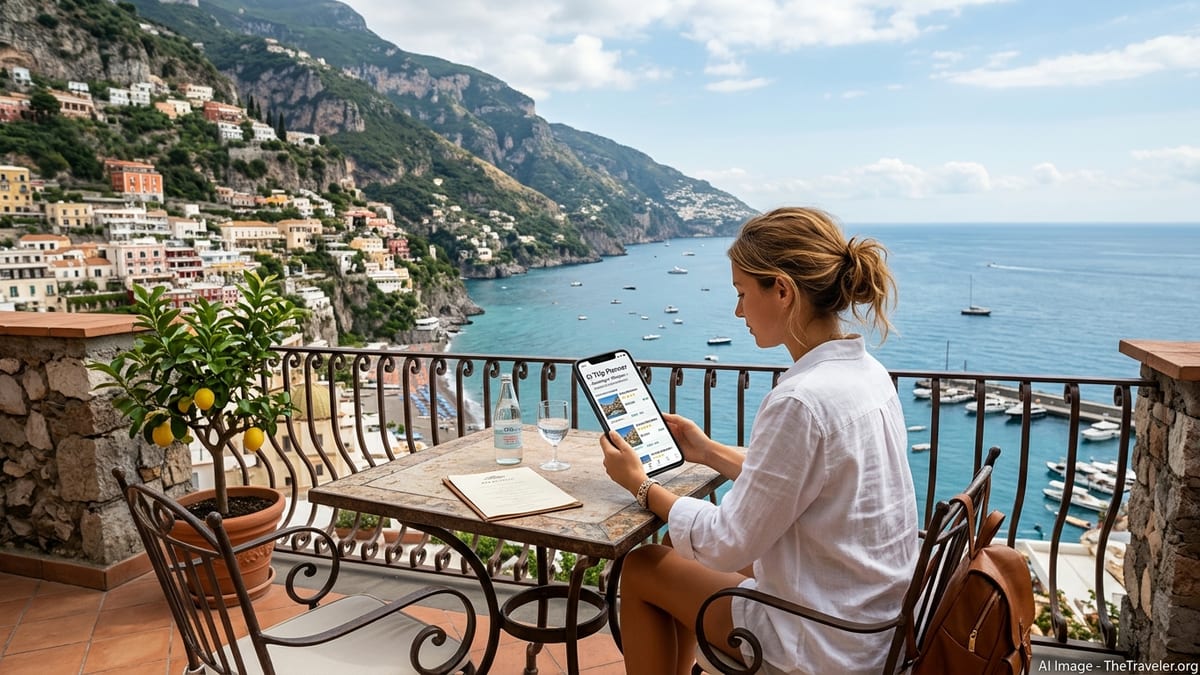
The Core Shift: AI Trip Planners Now Sit Between Travelers and Hotels
Since June 2023, Booking.com has been rolling out an AI Trip Planner in its app, built with OpenAI technology, that lets users describe their ideal trip in natural language and then receive a short list of bookable stays, flights and activities inside the platform. Booking.com and OpenAI both highlight that this planner is now part of a wider suite of AI tools which move travelers from vague ideas to specific, on-platform hotel options without sending them back to general web search.
Other large intermediaries have followed a similar path. Expedia announced conversational trip planning with OpenAI in 2023 and has since positioned AI as the biggest change in its customer experience since mobile, tying its assistant into features like Microsoft’s Copilot Actions so that a single prompt can result in a ready-to-book itinerary. More recently, Q3 2026 shareholder remarks from Booking Holdings describe the launch of Vayo, a proactive AI travel agent, and a new Agoda AI assistant operating across 21 markets, both designed to guide travelers from inspiration through booking using each brand’s own accommodation inventory.
At the search layer, Google introduced AI Overviews in 2024 and, according to industry research in 2025, the share of flight and hotel queries that surface these generative summaries has multiplied within six months. Separate academic audits of Google’s Gemini hotel responses in 2026 show that travelers increasingly see a synthesized answer with a handful of cited sources and hotel options at the top of the page, compressing the space where boutique properties once relied on organic links and traditional metasearch.
Together, these developments form the central, verifiable shift: discovery and early-stage comparison for hotels are moving into AI-driven interfaces operated by Booking, Expedia, Google and a handful of other platforms. That does not mean boutique hotels are literally being “erased,” but it does mean that visibility increasingly depends on how these systems ingest and rank hotel data rather than on classic search engine optimization alone.
What Research Shows About Which Hotels AI Agents Prefer
Several academic studies published in 2025 and 2026 provide early evidence about which types of hotels large language model agents are most likely to recommend. One audit of more than 150 hotel queries in Tokyo examined 1,300-plus citations from Google’s Gemini and found a pattern the authors call an "intent-source divide": AI answers drew heavily on hotel websites and authoritative sources to ground their text, but often surfaced booking options via large online travel agencies rather than the hotels’ own direct channels. For independent hotels, that means the AI may describe their property using their site, yet still push travelers to book through an intermediary.
Another 2026 paper investigating reputation signals in LLM-assisted hotel selection tested how factors like review scores, brand affiliation and price affected the likelihood of a hotel being recommended. While methodologies vary, the findings broadly suggest that strong review scores and clear category positioning substantially increase a property’s chance of being picked by an AI assistant, while very small or poorly documented hotels appear less often. Crucially, these studies analyze recommendation probabilities, not booking volumes, so the evidence speaks to visibility in AI answers rather than confirmed shifts in revenue.
Outside academia, hospitality data provider Lighthouse reported in 2025 that referral traffic from AI platforms to hotel websites jumped by more than 50 percent in the weeks after ChatGPT began including more outbound links in its responses. Their analysis emphasizes that independent properties can benefit disproportionately if they are among the limited set of hotels the AI is confident enough to cite directly. Combined with Google’s own introduction of Search Console reports for generative AI visibility, this indicates that AI agents are becoming measurable discovery channels, even though their long term share of bookings is still uncertain.
There is also countervailing evidence that fully autonomous AI agents have not yet become a dominant booking channel by late 2026. Public comments from consumer platforms such as Airbnb and ride-hailing firms suggest that only a small minority of customers currently complete their transactions through end-to-end AI agents rather than via standard apps or websites. For boutique hotels, the near term risk is therefore less about an overnight collapse in direct bookings and more about a gradual re-routing of early research and comparison into AI environments where they may not appear at all unless their data is correctly structured.
From SEO to GEO: Why Traditional Visibility Tactics Are No Longer Enough
Industry bodies and hotel marketing specialists increasingly describe this shift as a move from SEO, or search engine optimization, to GEO, or generative engine optimization. A mid-2026 briefing for hotel marketers in Washington, DC, defines GEO as the set of strategies used to improve a property’s presence in generative search engines and AI experiences, building on but not replacing core SEO work. The focus is on making hotel content clearer, more authoritative and easier for AI tools to parse across the many sources they consult, from the official website and Google Business Profile to third party listings and editorial roundups.
Cvent’s 2026 guidance for hospitality businesses draws a similar distinction. Traditional SEO has aimed to lift a hotel’s ranking on a page of blue links. GEO, by contrast, aims to ensure the hotel is selected and recommended when a planner asks an AI tool for, for example, "a 30-room design-focused boutique hotel with a rooftop bar and meeting space in Lisbon." The AI response may only display a small number of properties that match these constraints, so gaps in structured data, missing amenity descriptions or outdated photos can have an outsized impact on whether a boutique hotel appears in the shortlist.
Search platforms themselves have begun to acknowledge this new layer. In 2026, Google added performance reporting for its generative search features inside Search Console, allowing site owners to see how often their pages are shown within AI-powered results compared with standard search listings. Separate documentation from major AI developers outlines how their crawlers, such as OpenAI’s OAI-SearchBot and similar bots from other providers, index public hotel sites unless they are explicitly blocked, reinforcing that technical accessibility is a prerequisite for appearing in AI answers.
For boutique properties that have historically relied on word of mouth, design press or local search rankings, these shifts mean that simply having a visually appealing website and positive guest reviews is no longer sufficient. Their information architecture, schema markup and distribution across trusted directories now influence how often AI trip planners can confidently surface them when travelers describe specific preferences rather than search for a brand name.
Practical Visibility Steps Boutique Hotels Can Take Now
Marketing organizations working with independent hotels emphasize that adapting to AI booking agents does not require bespoke integrations with every platform, but it does require disciplined attention to public data. One common recommendation is to ensure that the hotel’s website is technically open to major AI and search crawlers, including those used by large language models, unless there is a strong privacy or security reason to restrict access. Reports from hotel-focused SEO practitioners in 2026 suggest that a noticeable minority of properties still unintentionally block AI-oriented crawlers via legacy robots.txt settings or security tools, making it impossible for those hotels to be cited or recommended in LLM responses.
Another widely cited tactic is to strengthen and standardize business profiles on key discovery platforms, particularly Google’s local listings, mapping services and major regional booking sites. Because generative systems aggregate signals from multiple sources, inconsistent names, addresses, categories or amenity lists can reduce a hotel’s perceived reliability. Conversely, complete and verified profiles, clear star or category information and a steady stream of recent reviews can all act as reinforcing signals that an AI agent can trust when composing both narrative descriptions and recommendation lists.
Some independent hotels and local associations are also experimenting with monitoring tools that track how often properties appear in AI-generated answers to specific location or theme-based prompts. While these products vary and are still maturing, their emergence reflects a broader shift toward treating AI environments as measurable, optimizable channels alongside metasearch and social media. Early adopters report that even small changes, such as adding explicit information about room counts, meeting capacity or unique amenities in machine-readable formats, can improve how accurately AI assistants categorize and surface a property.
However, experts caution against expecting immediate booking surges from any single adjustment. The current evidence shows that AI assistants influence the discovery and research stages rather than guaranteeing conversions. For boutique hotels with limited budgets, the most cost effective approach is often to align existing content and technical setups with GEO principles over time, rather than to chase every new AI feature or build proprietary chatbots that duplicate what larger platforms already provide.
What Travelers And Hoteliers Should Watch Through 2027
For travelers, the growing presence of trip-planning prompts inside Google Search, Google Maps, Booking.com, Agoda and Expedia means that a single text query increasingly produces both narrative advice and a constrained set of recommended stays. This can reduce the need to open multiple tabs, but it also narrows the field of visible options, especially in cities where many small independent hotels operate outside major chains. Travelers who wish to support boutique properties may want to cross check AI suggestions against local tourism board sites or direct searches for "boutique hotel" combined with the neighborhood they are visiting, at least until there is clearer evidence that AI agents consistently surface a broad range of smaller operators.
For hoteliers, the key milestones to monitor over the next year are less about new AI launches and more about how existing systems are tuned. Google’s continued refinement of AI Overviews and associated reporting tools, Booking Holdings’ rollout of Vayo and Agoda’s assistant across additional markets, and any changes in the way ChatGPT and similar models attribute and link to hotel sources could all materially affect discovery patterns. Industry research is still catching up, and there is not yet a definitive dataset quantifying how much independent hotel revenue has shifted because of AI agents alone.
In the meantime, the most actionable steps remain grounded in verified technical and content practices: keep hotel websites crawlable and fast, maintain accurate and richly detailed profiles in key directories, encourage honest guest reviews, and regularly test how the property appears when querying major AI and search tools from a traveler’s perspective in another city. This will not guarantee top placement inside every AI booking interface, but it gives boutique hotels a far better chance of staying visible as discovery continues to migrate into generative assistants through 2027.