


More news on this day
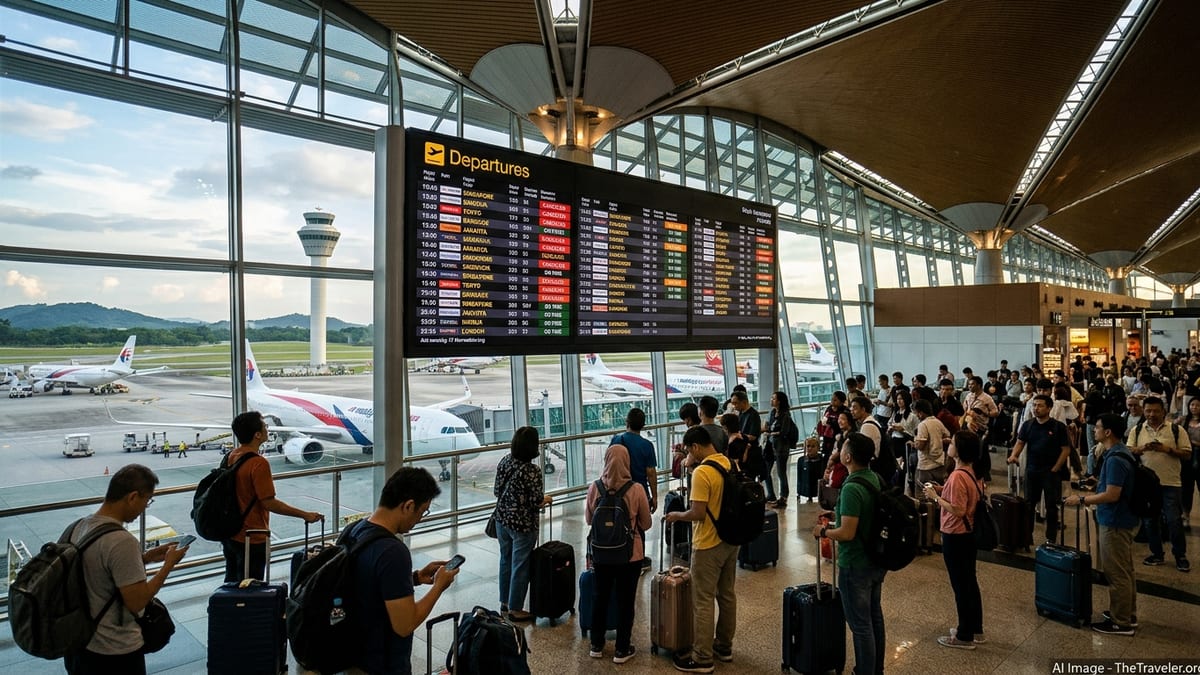
Hundreds of flights across Asia, including at Kuala Lumpur International Airport, have been canceled or delayed between November 13 and 17 after a nationwide air traffic control failure in the United States forced airlines to reshuffle aircraft and crews worldwide, creating knock-on disruption for travelers across the region.
Get the latest news straight to your inbox!
The key development: US ground stop triggers global ripple into Asia
The central verified development behind the current disruption is the nationwide Federal Aviation Administration ground stop in the United States on November 13, 2026. The FAA has confirmed that a telecommunications failure flooded parts of its network with data and temporarily cut key communications and radar feeds, prompting regulators to halt most departures across the country for several hours while systems were stabilized. Aviation authorities and multiple news outlets report that more than 12,000 flights were canceled in the US on November 13 alone, followed by thousands more cancellations and delays over the weekend as airlines tried to recover their schedules.
Because many long haul aircraft and crews that normally operate Asia and transpacific rotations are based in, or routings pass through, the United States, the sudden loss of so many flights left airlines with aircraft out of position worldwide. Schedules into and within Asia have consequently seen secondary disruption in the days that followed, with tracking services on November 16 and 17 recording hundreds of cancellations and thousands of delays for flights involving Asian airports, including Kuala Lumpur, Singapore, Bangkok, Tokyo and Seoul.
The figures cited in some industry reports of around 497 canceled and more than 4,200 delayed flights should be understood as a snapshot drawn from live trackers such as FlightAware and similar services, rather than an official regional total. These platforms aggregate status data from airlines and air navigation sources in real time; while they give a useful indication of scale, the numbers can change throughout the day and may not include every carrier or airport. What is firmly established is that the FAA ground stop has produced several days of elevated disruption globally, and that Asia is among the regions affected.
How Kuala Lumpur and other Asian hubs are being affected
At Kuala Lumpur International Airport on November 17, live departure and arrival boards from services such as Airportia, Trip.com and FlightStats show a generally functioning schedule with pockets of disruption rather than a system-wide breakdown. For much of the day, most flights have operated close to schedule, but individual services have been marked as canceled or delayed, especially in the late evening bank. Examples include several regional flights on low cost and full service carriers showing delays of 30 minutes or more, and a handful of cancellations on routes to Indonesian and domestic Malaysian destinations.
Over the 10 day period leading to November 15, statistics compiled by Airportia for Kuala Lumpur International indicate an average departure delay of just under half an hour and a cancellation rate of around one in a thousand scheduled departures. That suggests that, despite visible disruption on certain days, operations at Kuala Lumpur have not experienced the kind of systemic shutdown seen in the United States on November 13. Instead, the Malaysian hub appears to be managing localized impacts as airlines adjust their fleets and crews after the US event.
Other major Asian hubs are experiencing similar patterns. Flight tracking summaries for airports such as Singapore Changi, Bangkok Suvarnabhumi and Tokyo’s Haneda and Narita show elevated numbers of delayed departures and arrivals on the first weekend after the US ground stop, but with most scheduled flights still operating. The disruption is most noticeable on long haul operations linked, directly or indirectly, to North America, as well as on regional flights that rely on aircraft rotating in from those long haul sectors.
What is known, what is estimated and where data is limited
Several different data sources are being used to describe the impact of the US failure on Asia, and it is important to separate confirmed figures from approximations. The FAA and US government have published official tallies for domestic disruption on November 13 and the following days, drawing on mandatory reports from US and foreign airlines operating in US airspace. These figures form the most authoritative account of how many flights were halted or canceled within, into or out of the United States.
By contrast, the regional numbers being cited for Asia, including the reference to 497 cancellations and 4,222 delays, are derived from commercial tracking platforms that aggregate real time flight status messages. These services are valuable, but they are limited by how quickly airlines transmit cancellation notices, whether codeshare services are counted once or multiple times, and how early terminated delays are handled. Flight tracking companies themselves note that their counts can underestimate cancellations where airlines fail to send formal messages or where last minute aircraft swaps occur.
There is currently no single official Asian wide total for cancellations and delays linked to the November 13 US ground stop, and regional regulators such as Malaysia’s Civil Aviation Authority have not yet released specific statistics tying local disruption directly to the US outage. As a result, any attempt to present Asia wide numbers should be treated as indicative rather than definitive. What is clearly established is the pattern: an initial wave of disruption centered on US airports, followed by several days where Asian and other international operations have been affected as airlines reposition aircraft, crews and spare capacity.
Why this matters to travelers using Kuala Lumpur and other Asian airports
For travelers, the practical effect of the US ground stop’s ripple into Asia is a higher-than-normal chance that flights may not run exactly as booked, even where local weather and airport conditions appear normal. Passengers flying from Kuala Lumpur or connecting through the airport into or out of long haul routes touching North America are most exposed to knock-on delays, missed connections or last minute schedule changes as carriers work through backlogs and reposition aircraft.
Travelers departing or arriving in Asia over the coming days may encounter issues such as retimed departures by one or two hours, substitution of different aircraft types, or in some cases an overnight stay if a missed connection cannot be rebooked the same day. Airlines have been publishing irregular operations policies after the US failure, including waiving change fees for affected tickets or allowing rerouting via alternative hubs where seats are available, although the exact options differ from one carrier to another and can change as the situation stabilizes.
Passengers using Kuala Lumpur in particular should not assume that the airport itself is experiencing a crisis level event, even if they see multiple delayed flights on departure boards. Current operating statistics indicate that the vast majority of services are still taking off and landing, but that recovery from the US disruption is adding strain to an already busy November travel period. The most immediate impact is therefore on reliability and connection risk, rather than on the availability of flights or a long term change in fares or route networks.
What travelers should do next and how long the disruption may last
Based on previous large scale air traffic disruptions, including system outages and severe weather events, it typically takes several days for global airline networks to fully recover once aircraft and crews have been thrown off their planned rotations. The FAA has already lifted the ground stop and major US airports report a return to near normal operations, but residual delays and occasional cancellations continue as airlines work through displaced passengers and aircraft. In Asia, this could mean intermittent disruption persisting into the middle of the week of November 17, with conditions gradually improving as schedules stabilize.
Travelers with flights to, from or through Kuala Lumpur and other Asian hubs in the next few days should treat any connection involving North America with particular caution. It is advisable to check flight status directly with the airline before leaving for the airport, monitor mobile app notifications closely on the day of travel and allow extra connection time where possible, especially for complex itineraries that involve multiple carriers or alliances. Where airlines have published flexible rebooking policies linked to the US outage, passengers whose plans are not time critical may wish to shift to later dates when operations are expected to be more robust.
Looking ahead, regulators in the United States have already indicated that they will investigate the root technical cause of the November 13 failure and assess whether further investment or procedural changes are needed to reduce the risk of a similar nationwide ground stop in future. Any concrete regulatory or infrastructure responses will take time to design and implement, and their eventual impact on reliability for Asia bound travelers is not yet known. For now, the main concern for passengers using Kuala Lumpur and other Asian airports is short term: staying informed, allowing margin in their plans and understanding that elevated disruption over these few days stems from a specific US systems event rather than from ongoing structural problems at Asian hubs.