


More news on this day
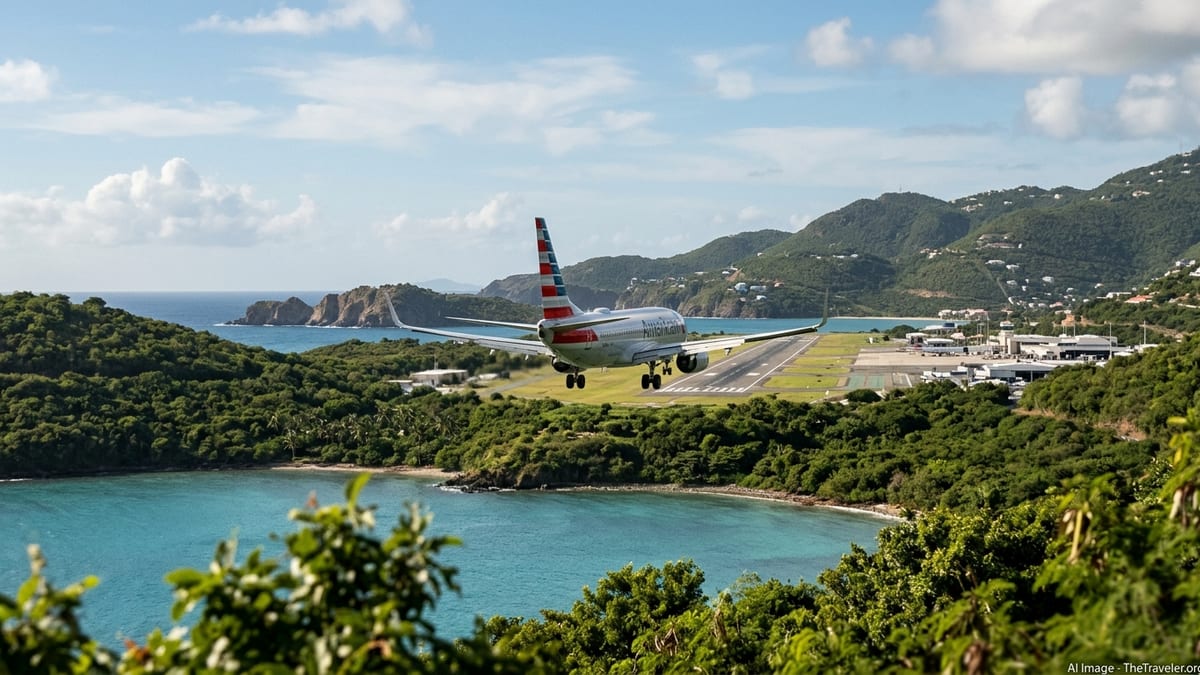
American Airlines is expanding its winter schedule to the U.S. Virgin Islands with four daily nonstop flights to St. Thomas from Charlotte, Dallas, Chicago and Philadelphia during the 2025 to 2026 peak season, increasing mainland access to Cyril E. King Airport and giving travelers more options beyond the carrier’s long established Miami service.
Get the latest news straight to your inbox!
The Core Development: Four Daily Winter Flights Into St. Thomas
The central confirmed development is that American Airlines is concentrating its expanded winter schedule on St. Thomas by operating four daily flights from four mainland hubs: Charlotte Douglas (CLT), Dallas Fort Worth (DFW), Chicago O’Hare (ORD) and Philadelphia (PHL). This build up sits alongside, rather than replacing, the airline’s separate Miami schedule, which remains the primary year round gateway between the continental United States and Cyril E. King Airport (STT).
Key elements of this uplift were telegraphed in several stages. The U.S. Virgin Islands Department of Tourism highlighted American’s growing commitment as early as December 2023, when the airline confirmed that summer 2024 would see doubled daily Charlotte to St. Thomas service, adding a second CLT flight from June 5, 2024. Subsequent tourism testimony and marketing materials from the territory reference American’s decision to introduce Chicago to St. Thomas and additional Dallas flying in the winter season, reflecting a broader strategy to diversify access beyond the traditional East Coast gateways.
By late 2025, the tourism board’s American Airlines page and related government communications describe a winter pattern under which Charlotte, Miami, Dallas, New York and Philadelphia all return with nonstop flights to St. Thomas, while Chicago O’Hare is added with daily winter service. This combination, together with Miami flights handled as a separate baseline, effectively yields four additional daily winter frequencies beyond the existing Miami schedule, concentrated in the peak months when leisure demand is strongest.
It is important to distinguish what is confirmed from what remains planned. The four daily flights are tied to American’s published winter schedules and territorial tourism announcements, which together form the most authoritative description of frequencies and gateways. Exact operating days and aircraft types may vary across the season, and timetable adjustments are still possible, particularly at the edges of the winter period, but the pattern of four daily mainland nonstops into St. Thomas, beyond Miami, is now an established feature of American’s peak season network.
How the New Flights Fit Into American’s Broader USVI Strategy
American’s additional winter flying to St. Thomas does not exist in isolation. Over the last several years, the carrier has been steadily building its presence in the U.S. Virgin Islands, and government testimony has repeatedly identified American as one of the territory’s key partners for air access from the mainland. Budget documents from the Department of Tourism catalog a progression from primarily Miami based flying to a more multi gateway approach including New York, Dallas and Charlotte, followed by the Chicago expansion.
Separate American Airlines corporate communications on its Chicago expansion strategy show that the airline has treated warm weather leisure destinations in the Caribbean as a priority for incremental capacity out of O’Hare. In statements about broader network growth, American notes that it has roughly doubled its winter service to Mexico, the Caribbean and Central America from Chicago, positioning the hub as a significant northern origin point for sun destinations. St. Thomas slots into this pattern as a relatively high yield Caribbean market that benefits from Chicago’s large population base.
On the territorial side, the U.S. Virgin Islands government has publicly linked new American Airlines routes to its wider economic and tourism plans. In a Government House briefing, officials pointed to the forthcoming Chicago O’Hare to St. Thomas service as evidence of growing confidence among mainland carriers, grouping the American expansion with other airlines’ decisions to enter or increase flying to the territory around 2025 and early 2026. The tourism department’s strategy documents describe direct engagement with American route planners at major industry conferences to secure both new routes and higher frequencies.
The result is a layered network into St. Thomas that now draws on several American Airlines hubs rather than relying on a single gateway. For the airline, this spreads demand risk and allows it to tap different catchment areas in the Midwest, Mid Atlantic and Southeast. For the territory, this reduces over dependence on any single connecting point and potentially softens the impact of weather or congestion disruptions affecting one hub.
What Changes For Travelers Heading To St. Thomas
For travelers, the immediate consequence of the four daily winter flights is a wider choice of nonstop options and potentially shorter overall journey times, particularly from the central and northeastern United States. Historically, many visitors from cities such as Chicago, Dallas, Philadelphia or points beyond would connect through Miami or another Caribbean hub to reach St. Thomas. The additional winter frequencies from these hubs now allow more itineraries with a single domestic connection, or in some cases a true nonstop.
Chicago based travelers stand to see one of the most visible changes. Instead of routing via Charlotte or Miami, they can book a direct O’Hare to St. Thomas service in the winter season, avoiding an extra connection and reducing the risk of missed flights in peak holiday periods. Similarly, Dallas Fort Worth and Philadelphia area passengers gain additional seat capacity on their own nonstop routes, which can be particularly significant around Christmas, New Year and school holiday peaks when Caribbean flights often sell out.
Charlotte’s expanded role also affects connecting passengers from smaller markets in the eastern and central United States. American already uses Charlotte Douglas as a major domestic hub, with extensive feeder traffic from mid sized cities. With the St. Thomas schedule ramped up beyond summer and into a more robust winter pattern, many travelers from secondary cities now have realistic one stop options via Charlotte instead of needing to thread a longer path through Miami or New York.
That said, the extra capacity does not automatically guarantee lower fares. Publicly available fare data for heavily banked hubs such as Charlotte and Dallas shows that prices can remain relatively high even where frequencies are strong, reflecting both monopolistic hub dynamics and strong leisure demand. Early booking remains important for peak winter dates, and travelers should expect that nonstops on the most popular Saturdays and holiday periods will still command premium pricing compared with shoulder season or midweek departures.
Operational Details, Seasonality And Limitations
Although territorial tourism material describes Chicago, Dallas, Charlotte and Philadelphia as daily winter services, the fine print matters. American’s Caribbean flying is strongly seasonal, and in previous years both Chicago and Dallas to St. Thomas have operated as winter only routes, typically concentrated between roughly late November and late March or early April. Within that window, airlines sometimes vary day of week patterns, upgauge or downgrade aircraft and make schedule tweaks in response to bookings and operational constraints.
Travelers therefore need to verify exact operating dates and days for their intended trip rather than assuming that “daily winter” equates to daily year round service. Some days at the outer edges of the season may see fewer flights, and shoulder months can be more variable. Official Virgin Islands Port Authority information on airlines and destinations warns that all flight schedules are subject to change and urges passengers to confirm with carriers directly, a reminder that tourism board marketing language often simplifies patterns for consumer messaging.
Capacity is also finite. Even with four daily American flights in the winter, St. Thomas remains a relatively small airport compared with major Caribbean hubs. Irregular operations in the mainland, such as snowstorms at Chicago or Philadelphia or severe weather in North Texas, can quickly cascade into cancellations or delays on Caribbean routes. Discussions on traveler forums and social media in recent winters highlight how a single day of mass disruption on the mainland can leave passengers in St. Thomas scrambling for hotel rooms and rebookings when several flights are canceled at once.
Finally, not every mainland city benefits equally from the expanded schedule. The four daily flights are concentrated on American’s own hubs rather than new point to point services from secondary markets. Passengers from the West Coast or interior West will usually still require at least one connection, and in some cases two, to take full advantage of the new capacity. For these travelers, the main change is a greater choice of connection points and times rather than a brand new nonstop option.
What To Check Before Booking Winter Trips To St. Thomas
Looking ahead, travelers planning winter 2025 to 2026 or later trips to St. Thomas should treat the four daily American flights as a strong but still adjustable framework rather than an immovable guarantee. Airlines regularly fine tune schedules 60 to 90 days before departure, and past American schedule changes have included shifts between nonstop and one stop itineraries or adjustments in departure times as the carrier balances fleet and crew resources.
Practical steps include confirming that a chosen itinerary is indeed nonstop into Cyril E. King Airport and not a mixed connection routed through Puerto Rico or another island, checking whether the outbound and return dates fall deep within the peak winter period where daily service is more firmly established, and reviewing fare rules to understand change and cancellation flexibility in case of schedule alterations. Booking tools and reservation confirmations should list the operating flight number, origin, destination and aircraft type, which can help distinguish a true mainline flight from a regional connection.
It is also sensible to consider hub choice when deciding between otherwise similar itineraries. For example, a passenger from the Midwest might weigh the risk of winter weather disruption at Chicago against a slightly longer but potentially more reliable routing via Dallas, or opt for Charlotte if it offers the best balance of connection time and weather exposure. No hub is entirely immune to disruption, but understanding the geography and typical winter patterns can help reduce risk.
Finally, because the four daily American flights are a seasonal concentration rather than a permanent structural minimum, travelers looking at trips outside the core winter months should not assume the same level of choice. Spring and autumn schedules into St. Thomas can look quite different from January and February. Checking current schedules close to the time of booking, rather than relying on a single announcement or past winter pattern, remains essential for anyone planning a Caribbean escape built around these expanded American Airlines services.