


More news on this day
The United Arab Emirates has secured billions of dollars in financing for a new wave of megaprojects stretching from Dubai to Abu Dhabi and Ras Al Khaimah, with officially backed schemes such as the $5.1 billion Wynn Al Marjan Island resort and the Dubai 2040 Urban Master Plan helping to attract record volumes of international real estate capital and reshaping where global investors and future visitors look for new destinations.
Get the latest news straight to your inbox!
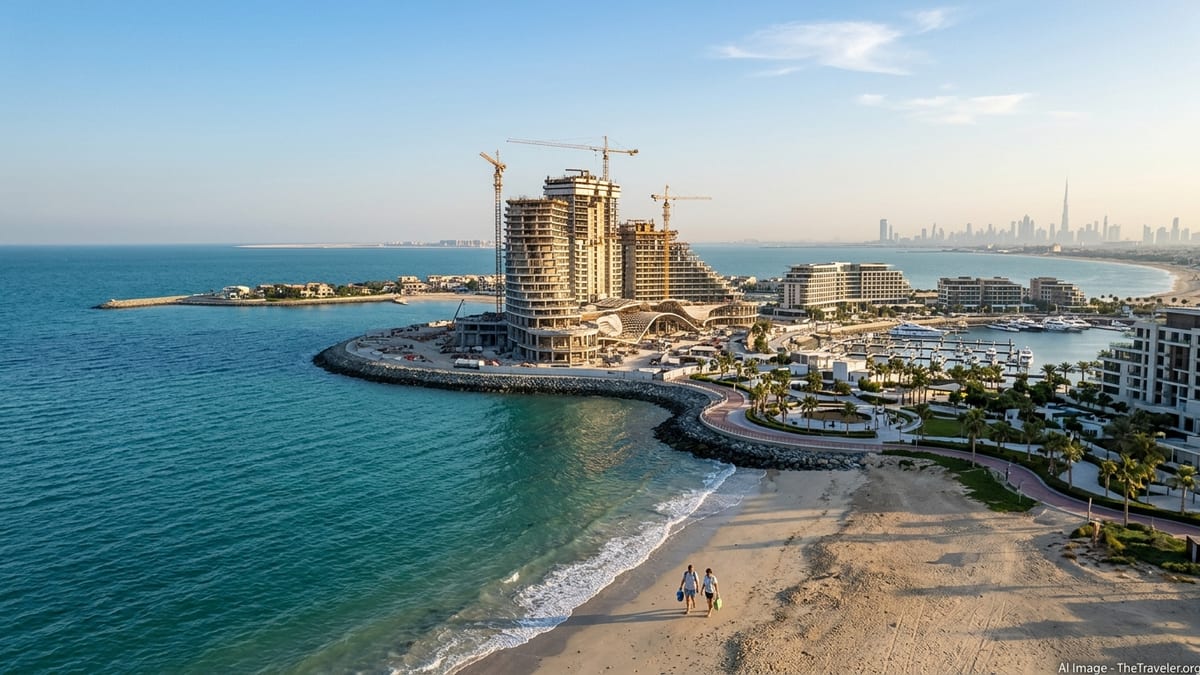
Key Development: Billions Secured For UAE’s First Integrated Gaming Resort
The single most concrete development underpinning the UAE’s global real estate role is Wynn Resorts’ confirmation that Wynn Al Marjan Island in Ras Al Khaimah has locked in a 2.4 billion dollar construction loan with a syndicate of international lenders, completing the core financing package for what is expected to be a 5.1 billion dollar integrated resort. Wynn announced the financing facility in an investor statement dated 6 June 2025, describing it as one of the largest hospitality financing deals in the UAE and confirming that the funds will cover the bulk of construction costs for the beachfront complex.
Located on the manmade Al Marjan Island, around 45 to 50 minutes by road from Dubai International Airport, the resort is scheduled to open in 2027 as the country’s first federally licensed integrated resort with regulated commercial gaming. Ras Al Khaimah authorities and Wynn have positioned the project as an anchor for a broader tourism-led real estate push in the northern emirate, combining a large luxury hotel tower, branded residences, entertainment venues and a gaming floor within a single master-planned waterfront site.
The project also reflects a wider regulatory shift. In 2023 the UAE federal government created the General Commercial Gaming Regulatory Authority to oversee commercial gaming and license operators, and in October 2024 the authority granted Wynn the country’s first commercial gaming facility operator licence for the Al Marjan project. That regulatory clarity, alongside the 2025 financing, has turned what began as a concept announcement into a fully capitalised construction effort that international property and hospitality investors can now model with much greater confidence.
For travelers, the immediate impact is limited because the resort will not open until at least 2027, and detailed booking information is not yet available. However, the confirmed financing and licence mean the project has moved past the speculative stage. The combination of direct road access from Dubai, the promise of a large-scale beach resort and the novelty of regulated gaming in the UAE is already influencing how tour operators, cruise lines and high-end travel agencies plan future product for the Gulf in the second half of the decade.
Dubai And Abu Dhabi Megaplans Are Reshaping Real Estate Geography
While Wynn Al Marjan Island is the clearest single project milestone, it sits within a much broader megaproject pipeline that is changing the geography of tourism and investment across multiple UAE regions. In Dubai, the government’s 2040 Urban Master Plan calls for the land area allocated to hotels and tourist activities to increase by around 134 percent compared with today, alongside major expansions in public beaches, green space and business hubs. Official strategy documents position these land-use changes as a foundation for long-term real estate demand tied to both residents and international visitors.
Abu Dhabi has followed a similar path on the capital’s coastline, with large master-planned schemes such as Jubail Island and the Saadiyat Cultural District funneling new investment to previously underused waterfront areas. The Abu Dhabi Real Estate Centre has reported steady growth in residential and mixed-use supply on these islands in recent years, while the government-backed developer Miral recorded about 38 million visits to Yas Island in 2024, a 10 percent increase on 2023, alongside record hotel occupancy. Cultural and leisure projects there, including teamLab Phenomena Abu Dhabi and the planned Natural History Museum Abu Dhabi, are designed to support a larger resident and tourist base.
Ratings agencies and international consultants increasingly link these megaplans to macroeconomic performance. Fitch Ratings, for example, has highlighted tourism and construction, including Al Marjan Island in Ras Al Khaimah, as key drivers of non-oil growth. The International Monetary Fund, in its 2025 Article IV report for the UAE, estimated that real estate and construction together accounted for roughly one fifth of the country’s real non-oil GDP in 2024, underscoring how closely the UAE’s diversification strategy is tied to physical development of tourism corridors, new districts and mixed-use communities.
For travelers, these plans translate into a wider choice of districts and accommodation types beyond the traditional cores of Downtown Dubai and central Abu Dhabi. Over the rest of the decade, more stays are likely to be clustered around islands and waterfronts such as Dubai’s newer coastal developments, Yas and Saadiyat in Abu Dhabi, and Al Marjan in Ras Al Khaimah. That could gradually spread visitor flows across a larger area, potentially easing pressure on some central locations while creating emerging hotspots that currently have limited hotel capacity and public transport.
Global Capital Is Following The Megaprojects
International capital flows suggest investors are already responding to the UAE’s megaproject pipeline. Property consultancy Knight Frank reported that total real estate transactions across all sectors in Dubai reached about 207 billion dollars in 2024, with residential deals alone accounting for around 100 billion dollars. The firm also estimated that at least 10 billion dollars of announced new global private capital is specifically targeting Dubai’s real estate market, much of it focused on prime and waterfront developments that tie directly into new master communities and tourism zones.
Other data points confirm that this is not purely a local phenomenon. The Dubai Land Department has reported that the aggregate value of property deals in the emirate has continued to grow, and an official investment portal cites an annual increase of around 20 percent in the value of transactions, with hundreds of thousands of deals completed in the latest full year of data. The International Real Estate & Investment Show in Abu Dhabi has also highlighted property’s role in attracting foreign investors, noting that a large share of the more than 200,000 long-term “Golden Visas” issued in 2024 went to buyers who obtained residency through real estate investment rather than other channels.
From a global perspective, this capital is being deployed across several distinct asset types. In addition to integrated resorts like Wynn Al Marjan Island, international hotel brands and institutional investors are increasingly backing “branded residences” in the UAE that place luxury apartments or villas under hotel flags. Research from brokerage Savills indicates that Dubai and Ras Al Khaimah are among the leading global markets for such branded residential projects, a trend driven by waterfront megadevelopments and the appeal of combining real estate investment with access to resort-style amenities and professional management.
Travelers are unlikely to see the financing structures behind these projects, but they will encounter the outcomes in the form of more branded apartments for rent on long or medium stays, expanded loyalty-program networks and higher service standards in newly built districts. At the same time, heavy investor interest has contributed to rising prices and rents, meaning budget-conscious visitors may find central and waterfront areas more expensive and need to look at emerging secondary locations or book further ahead, particularly during peak event seasons.
How These Projects Could Change The Experience For Visitors
The UAE’s megaprojects are designed around integrated experiences that combine transport, hospitality, entertainment and residential space, and this shapes how future visitors may move around the country. Al Marjan Island is being developed as a “destination within a destination,” with planned marinas, beach clubs and promenades that allow guests to stay on the island for most of their trip. Similar logic underpins Abu Dhabi’s Yas and Saadiyat islands, where theme parks, museums, resorts and retail districts sit within short driving distances, reducing the need for visitors to cross the wider metropolitan area every day.
At the same time, national and emirate-level infrastructure schemes support these clusters. Consultancy reports on the UAE construction market highlight big-ticket transport projects such as the Dubai Metro Blue Line and the federal Etihad Rail network as central components of current construction activity. While full passenger timelines for some of these schemes extend into the second half of the decade and beyond, their completion would shorten journey times between key urban areas and new districts, potentially enabling visitors to base themselves in one emirate while making same-day leisure or business trips to another without relying solely on highways.
For individual travelers planning trips over the next two to three years, the immediate practical takeaway is that several headline projects remain under construction, even if financing is now in place. The 2027 target opening for Wynn Al Marjan Island, the end-2025 completion goal for the Natural History Museum Abu Dhabi and ongoing work on new coastal communities in Dubai all mean that some of the most heavily promoted future attractions and neighborhoods are not yet open. Prospective visitors should therefore check whether specific museums, districts or resorts are operating before building entire itineraries around them.
There are also potential downsides. Rapid build-out and rising global demand have pushed up accommodation costs in prime areas, and transport links to newer islands and outer districts can feel patchy until permanent public transit is complete. Construction activity can affect views, noise levels and road access in emerging neighborhoods. Travelers who prioritise quiet or mature surroundings may prefer established areas where major building work has already finished, while those interested in seeing the newest attractions may accept some disruption in exchange for early access to new waterfronts, entertainment venues and cultural institutions.
What To Watch Next If You Are Planning A UAE Trip
The next hard milestone for the UAE’s current wave of megaprojects is the cluster of openings and completions expected around 2025 to 2027. In Abu Dhabi, tourism authorities have flagged late 2025 as the target for finishing the Natural History Museum Abu Dhabi on Saadiyat Island, which would further strengthen the island’s line-up alongside the Louvre Abu Dhabi and other cultural venues. Travelers considering culture-focused trips for late 2025 or 2026 should watch for official opening announcements and ticketing details from the emirate’s Department of Culture and Tourism closer to the time.
In Ras Al Khaimah, Wynn and its local partners continue to guide a 2027 opening date for Wynn Al Marjan Island, though as with any large construction project there is scope for schedules to move. Prospective visitors drawn by the gaming component should note that commercial gaming in the UAE is tightly regulated at the federal level, and final details of gaming floors, age limits and other guest policies will depend on the resort’s eventual licence conditions and implementing regulations from the General Commercial Gaming Regulatory Authority. Until those are confirmed, it is prudent to treat details about the gaming offering as indicative rather than guaranteed.
In Dubai, implementation of the 2040 Urban Master Plan will unfold over many years, and its implications are therefore gradual rather than tied to a single opening date. For the near term through about 2028, continued expansion of hotel capacity, branded residences and mixed-use coastal districts is likely, supported by strong transaction volumes and sustained interest from foreign buyers identified by consultants such as CBRE and Deloitte. Travelers planning trips during this period can expect a steadily widening set of neighborhood choices and property types, but they should also anticipate that pricing in prime waterfront and downtown areas may remain firm while demand stays high.
Across all emirates, the most reliable way to track the practical impact of these megaprojects is to check official tourism board and operator announcements as travel dates approach. Many of the headline schemes now have financing and regulatory structures in place, which makes eventual completion more likely, but opening dates, operating hours, ticket prices and access rules are still subject to change. Treat current timelines as guidance rather than promises, and if a particular new resort or museum is central to your trip, look for direct confirmation from the operator or tourism authority before committing to nonrefundable flights or accommodation.