


More news on this day
As Business Travel Show Asia Pacific 2026 opens in Singapore on 14 and 15 April, artificial intelligence is emerging as the defining theme in how corporations plan, book and manage business travel across the region.
Get the latest news straight to your inbox!
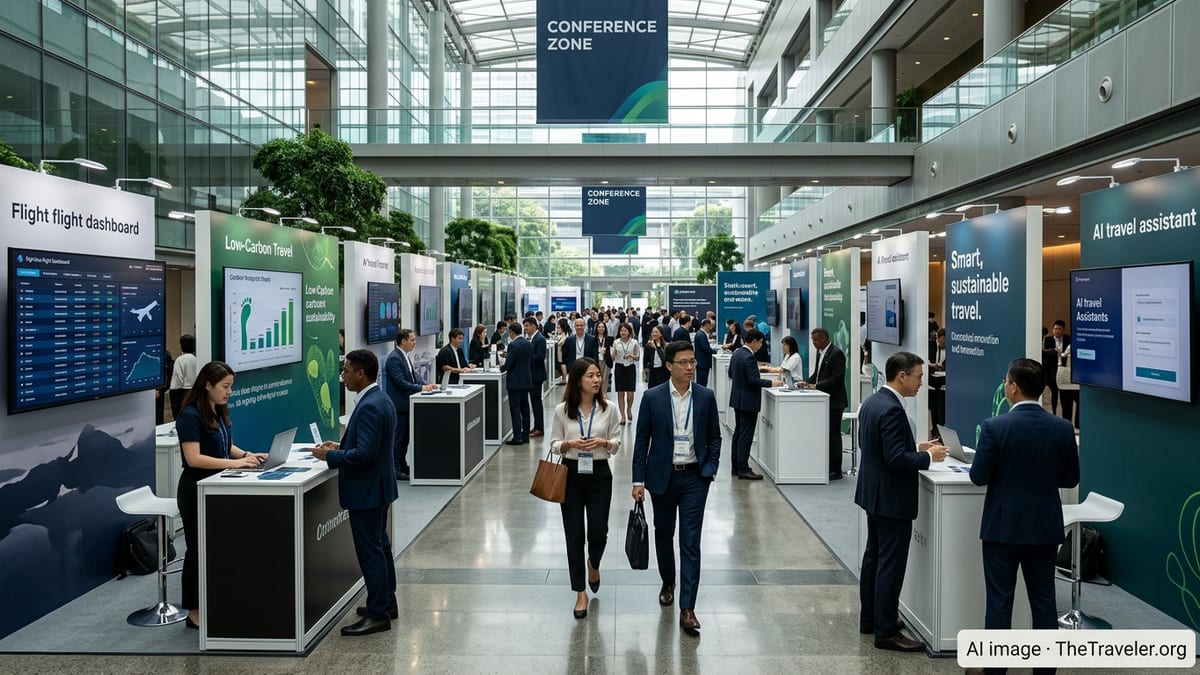
Singapore show spotlights AI in corporate travel programs
Business Travel Show Asia Pacific, held at Marina Bay Sands in Singapore and organised by Northstar Travel Group, is positioning itself as a regional hub for the fast‑evolving world of corporate travel management. The 2026 edition’s conference programme places artificial intelligence at the forefront, reflecting how quickly the technology is moving from experimental pilots into day‑to‑day tools for travel buyers and managers.
According to published coverage of the agenda, multiple sessions focus on AI’s role in reshaping policies, improving traveller experience and optimising spend. Topics range from practical demonstrations of automated booking flows to strategic discussions about data governance, risk, and how far decision‑making should be delegated to algorithms.
The show’s organisers describe the event as a place where corporate travel and meetings professionals from across Asia Pacific can connect with technology providers, travel management companies and airlines to understand what AI can already do and where it is heading next. The emphasis is on actionable use cases rather than abstract theory, signalling a shift toward implementation at scale.
The timing is significant for Asia Pacific, which market analyses identify as the fastest‑growing region for business travel. As companies ramp up cross‑border trips after several years of disruption, interest is rising in tools that can keep costs in check while accommodating renewed demand from sales teams and project staff.
Innovation Faceoff showcases AI‑native travel tools
One of the clearest indicators of AI’s momentum at the show is the Business Travel Innovation Faceoff, which returns in 2026 as a headline feature. The competition highlights early‑stage and emerging products designed to “move the needle” in corporate travel and meetings, with AI‑driven platforms prominent among this year’s finalists.
Event information lists Nowadays, an AI‑powered meetings and events platform, among the 2026 contenders. The tool uses natural‑language inputs to structure requests for proposal, then automates outreach, follow‑up and negotiations with venues across a proprietary global database. Organisers say the approach is intended to reduce manual work and consolidate data that is often scattered across emails, spreadsheets and separate booking systems.
Reports on previous editions of the show and its associated content hubs also point to AI‑enabled expense and travel platforms, such as Travog and WegoPro, as examples of a new wave of end‑to‑end corporate travel solutions. These tools combine trip booking, policy controls and expense capture, with AI supporting functions like automated policy checks, anomaly detection and personalised hotel or flight suggestions.
For travel managers attending the Singapore event, the Faceoff serves as a concentrated view of where venture funding and product development are heading. The prominence of AI‑first platforms suggests that future travel stacks may be built around intelligent orchestration layers, rather than the traditional combination of offline agencies and legacy online booking tools.
From booking bots to policy engines: how AI is being used
Beyond the headline launches, the conference programme outlines a range of practical AI applications that are already reaching corporate travel teams. Session descriptions reference tools that read and interpret complex travel policies, proactively flag non‑compliant options during search, or surface cheaper but policy‑compliant alternatives before bookings are confirmed.
Travel management content associated with the wider Business Travel Show portfolio describes emerging uses of generative AI for tasks such as drafting travel communications, summarising supplier contracts and answering traveller questions via chat interfaces integrated into booking platforms or mobile apps. These assistants are often trained on company‑specific policies and preferred supplier lists, allowing them to respond with tailored guidance.
Analytics is another focus. Newer AI engines are being used to ingest large volumes of historical bookings, expense data and external signals such as fare trends. The goal is to give travel buyers forward‑looking insights into likely cost spikes, opportunities for advanced purchase savings, and routes where shifting share to different suppliers could improve programme value.
In meetings and events, vendors highlighted around the show are promoting AI tools that analyse past venue choices, attendance and satisfaction scores to recommend destinations and hotels for future gatherings. Automated venue sourcing platforms are pitched as ways to reduce “leakage,” where teams book outside approved channels, by making compliant options faster and easier to access.
Opportunities and concerns for Asia Pacific travel buyers
For corporate travel buyers in Asia Pacific, the shift toward AI offers both promise and complexity. Regional reports on business travel adoption indicate strong interest in automation to tackle fragmented supplier landscapes, multiple currencies and fast‑changing border rules, all of which place heavy administrative burdens on travel teams.
At the same time, commentary around the 2026 programme notes that travel managers are asking pointed questions about data privacy, algorithmic bias and transparency. Many companies in the region operate under different regulatory regimes, meaning AI tools must reconcile local data protection rules with global reporting needs.
Another frequently cited challenge is change management. Published interviews and opinion pieces about corporate travel digitalisation suggest that while senior leaders may be enthusiastic about AI for cost control, travellers and travel arrangers remain accustomed to established habits, including booking directly with consumer sites. Providers exhibiting at Business Travel Show Asia Pacific are positioning intuitive interfaces and embedded guidance as ways to encourage adoption without heavy training.
Despite these concerns, planners in Asia Pacific appear to see AI as essential for coping with renewed travel volumes. Industry analyses predict that automation of routine tasks, such as matching invoices to trips or checking visa requirements, will be necessary to prevent travel teams from being overwhelmed as corporate itineraries grow more complex.
What travel managers need to know now
The central message emerging from Business Travel Show Asia Pacific is that AI in corporate travel is shifting from experimentation to execution. The tools on display in Singapore focus less on flashy demonstrations and more on specific outcomes, such as cutting time spent on manual bookings, tightening policy compliance and capturing cleaner data for negotiations with airlines and hotels.
Travel managers evaluating these solutions are being encouraged by industry commentators to start with clear objectives: whether that is reducing out‑of‑policy bookings, shortening approval cycles, or consolidating spend across regions. The consensus in published coverage is that AI works best when deployed against well‑defined problems, supported by quality data and realistic expectations.
Vendors at the show are also promoting integration readiness as a key differentiator. Many AI‑enabled platforms are built to connect with expense systems, human resources databases and security providers, aiming to create a more unified view of traveller movements and costs. For global organisations with sizeable footprints in Asia Pacific, this integration focus is framed as critical for scaling AI capabilities beyond pilot markets.
As delegates navigate the aisles at Marina Bay Sands, the prominence of AI‑centric branding, product demonstrations and education sessions suggests that the technology is becoming a core pillar of corporate travel strategy in the region. For travel buyers, the task ahead will be to translate that promise into practical deployments that serve both their companies’ objectives and the needs of travellers on the road.