


More news on this day
Air Canada has formally taken delivery of its first Airbus A321XLR, introducing the airline’s new Glowing Hearted cabin with lie-flat Signature Class seats and paving the way for expanded transatlantic links such as Montréal–Toulouse.
Get the latest news straight to your inbox!
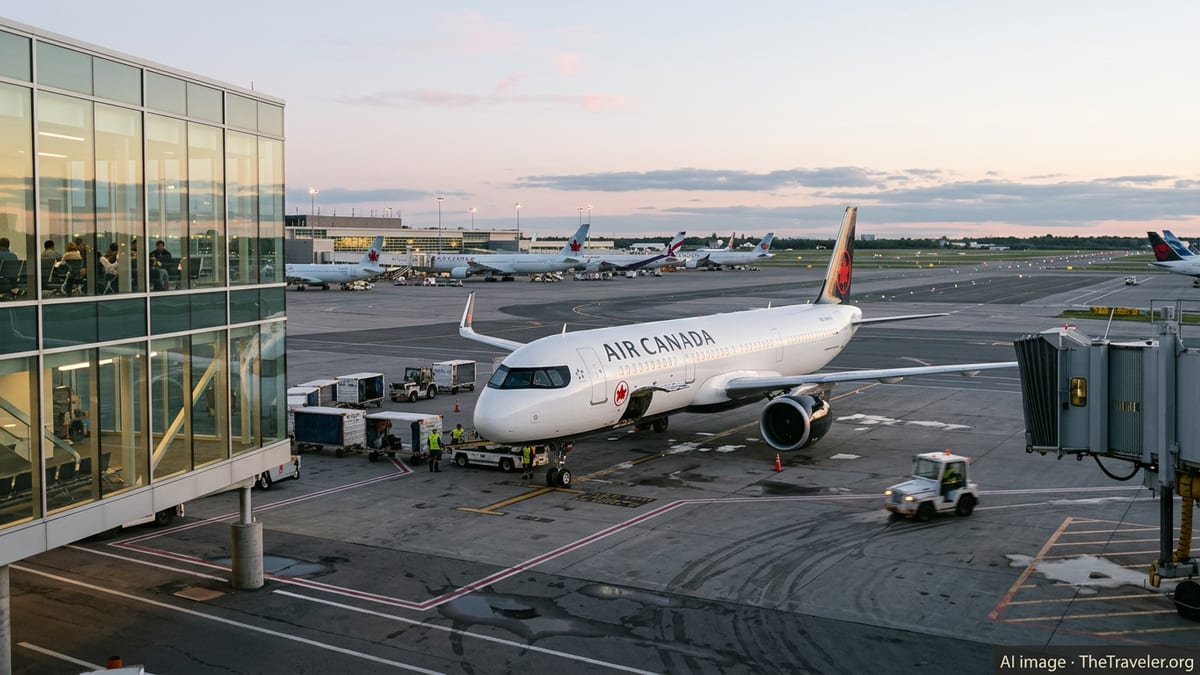
Next-Generation Narrowbody Arrives in Canada
The new A321XLR, handed over to Air Canada in Hamburg in April 2026, marks the carrier’s first example of Airbus’s long-range single-aisle type and the first of 30 on order. Publicly available information indicates that the aircraft is configured with 182 seats, designed to operate routes traditionally flown by widebodies but with greater fuel efficiency.
Manufacturer data and airline materials describe the A321XLR as capable of flying up to around 4,700 nautical miles, a range that comfortably covers key city pairs between Eastern Canada and Western Europe. For Air Canada, this capability is expected to unlock new nonstop markets and add frequencies on existing transatlantic routes from hubs such as Montréal and Toronto.
Reports from industry publications note that the aircraft is being positioned as a cornerstone of Air Canada’s fleet renewal strategy. The type is intended to bridge the gap between short-haul narrowbodies and long-haul widebodies, allowing the airline to right-size capacity on thinner long-distance routes while maintaining premium offerings.
The arrival of the first A321XLR comes after certification and production delays at the program level, which affected multiple airlines. With deliveries now under way, Air Canada appears set to deploy the aircraft into scheduled service from summer 2026, with initial emphasis on high-demand transatlantic markets.
Glowing Hearted Cabin Sets New Interior Standard
The debut of the A321XLR coincides with the rollout of Air Canada’s new Glowing Hearted cabin design, a next-generation interior concept that will gradually extend across parts of the fleet. According to design-focused coverage, the cabin palette draws on warm woods, deep blues and soft greys, aiming to create a more residential, less industrial atmosphere at cruising altitude.
Lighting systems are described as highly programmable, with scenarios that transition through softer tones to help passengers adjust to time zones on long sectors. Cabin finishes reference Canadian landscapes, aligning the product with a broader brand strategy that emphasizes a modern, premium interpretation of national identity.
Technical information released by the airline and its partners indicates that the A321XLR’s Glowing Hearted cabin incorporates Airbus Airspace features, including larger overhead bins and redesigned sidewalls for a greater sense of space. Across all cabins, passengers will find larger, higher-resolution in-flight entertainment screens, Bluetooth audio connectivity and power outlets at every seat.
The carrier also highlights upgraded connectivity, including fast onboard Wi-Fi available to Aeroplan members at no additional charge on this aircraft type. Industry analyses suggest that these enhancements are intended to position Air Canada competitively on longer narrowbody routes, where passenger comfort has become a key differentiator.
Lie-Flat Signature Class on a Single Aisle
One of the headline changes on the new A321XLR is the introduction of Air Canada Signature Class in a single-aisle layout. Publicly available fact sheets describe a 14-seat premium cabin arranged in a 1-1 configuration, with each seat converting into a fully flat bed and offering direct aisle access.
The bespoke Aurora suite, developed with Collins Aerospace for this fleet, is reported to deliver many of the hallmarks of a widebody business-class product. Trade press coverage notes privacy-enhancing shells, large tray tables and integrated storage spaces intended for laptops, documents and personal items, along with adjustable armrests to maximize sleeping surface when in lie-flat mode.
Unlike some competing products, the suites on the A321XLR are understood not to feature closing doors, a design choice that observers suggest may preserve a greater sense of openness while still delivering a high degree of separation between passengers. Textures and color accents in Signature Class mirror the broader Glowing Hearted concept, including subtle red stitching and metallic highlights.
For Air Canada, offering lie-flat business seats on a narrowbody marks a significant step in elevating the passenger experience on routes where the economics of deploying a widebody can be challenging. Industry commentary points out that this move aligns with a wider trend among global carriers, which are increasingly using long-range narrowbodies to bring premium products to secondary transatlantic city pairs.
Strengthening Montréal–Toulouse and Transatlantic Connectivity
Route planning analyses indicate that Air Canada intends to use the A321XLR to bolster connectivity between its Canadian hubs and mid-size European cities, with Montréal–Toulouse frequently cited as a prime candidate for the new aircraft. Toulouse’s role as a major aerospace center and home to Airbus gives the route particular strategic significance for both business and leisure traffic.
The extended range and lower trip costs of the A321XLR are expected to make it easier to sustain year-round service on city pairs like Montréal–Toulouse, which may not always justify the capacity of a widebody jet. Aviation industry reports suggest that such routes stand to benefit from increased frequency and schedule flexibility once the new aircraft is fully deployed.
By pairing a long-range narrowbody with lie-flat Signature Class and an upgraded economy cabin, Air Canada’s strategy appears focused on attracting higher-yield corporate travelers as well as connecting passengers via Montréal–Trudeau. Analysts highlight that this approach could reinforce Montréal’s role as a transatlantic gateway while complementing Toronto’s existing long-haul network.
Beyond Toulouse, published network overviews point to additional potential markets such as Berlin and Edinburgh, with the aircraft also earmarked for select transcontinental services within North America. This mix of missions is expected to improve asset utilization and broaden the range of destinations accessible with a consistent onboard product.
Implications for Aviation Growth and Passenger Experience
The introduction of the A321XLR with Glowing Hearted cabins is widely viewed in the aviation press as a signal of Air Canada’s ambitions in the next phase of transatlantic competition. By combining fuel-efficient aircraft with a high-spec interior, the airline is positioning itself to capture demand in markets where passengers increasingly compare comfort and technology alongside schedule and price.
From a broader industry perspective, Air Canada’s move underscores the growing importance of long-range narrowbodies in reshaping international networks. Airports such as Montréal and Toulouse, which may not always fill a large twin-aisle aircraft, can nonetheless support nonstop links enhanced by lie-flat business cabins and upgraded economy products.
Passenger advocacy and review platforms are expected to closely watch early operations of the A321XLR, particularly on overnight eastbound crossings where the value of a fully flat bed in Signature Class will be most visible. At the same time, feedback on seat comfort, legroom and onboard service in the main cabin will likely influence how travelers perceive long-haul narrowbody flying in practice.
As additional A321XLRs join the fleet through 2026 and beyond, Air Canada’s ability to leverage the type for both network expansion and fleet simplification will be a key storyline. The first delivery, and its deployment on routes such as Montréal–Toulouse, signals the beginning of a new chapter where single-aisle aircraft play a central role in Canada’s long-haul aviation growth.