


More news on this day
Air Canada has postponed the restart of its flight operations to Monday evening after the union representing more than 10,000 flight attendants refused to comply with a Canada Industrial Relations Board order to return to work, prolonging a nationwide shutdown that has stranded hundreds of thousands of travelers.
Get the latest news straight to your inbox!
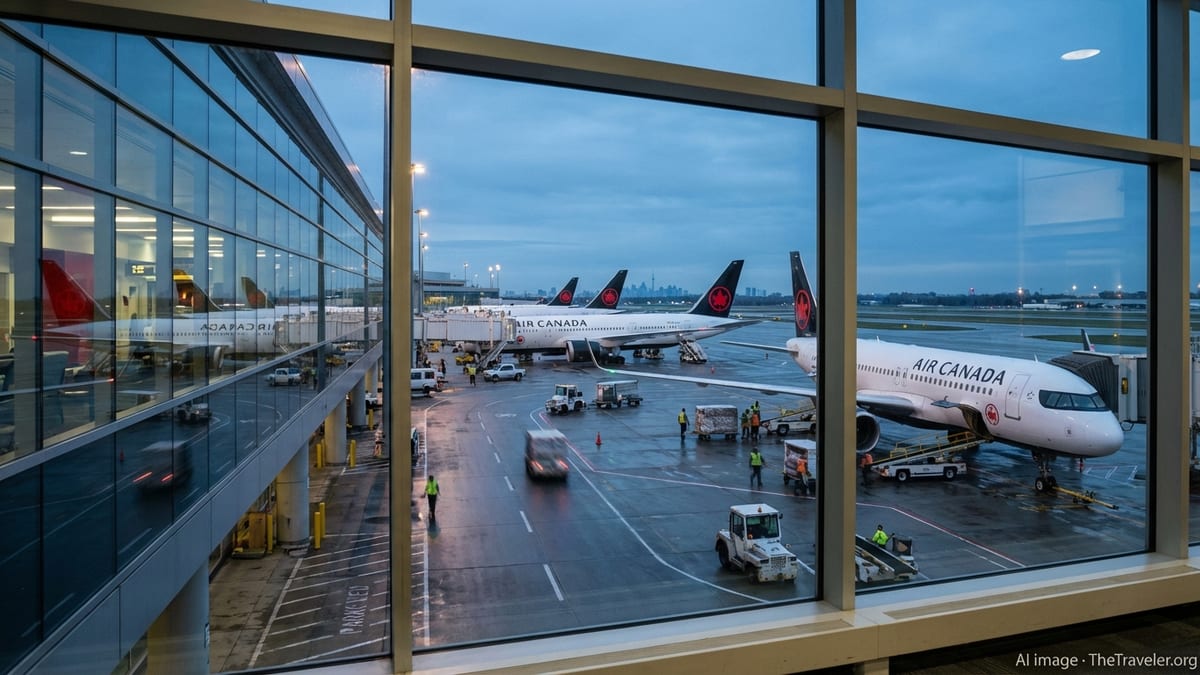
Return-to-Work Order Met With Open Defiance
According to published coverage, the Canada Industrial Relations Board (CIRB) declared the flight attendants’ strike unlawful after a federal back-to-work directive and ordered staff to resume duties by Sunday afternoon. The directive was intended to trigger a gradual restart of flights later that day, following a three-day walkout that had already brought Air Canada’s network close to a standstill.
Instead, reports indicate that the Canadian Union of Public Employees (CUPE) instructed its flight attendant members to remain off the job, describing the work stoppage as a necessary stand in a dispute over pay, scheduling, and unpaid duties during boarding and deplaning. Publicly available information shows that union leaders framed the CIRB order as government overreach into collective bargaining, signaling they were prepared to absorb legal risks rather than immediately end the work stoppage.
The decision to ignore the order extended the disruption into a fourth day and set up a rare confrontation between a major national union, a federally regulated employer, and Canada’s industrial relations framework, which is designed to prevent prolonged stoppages in essential transport sectors.
Restart Moves From Sunday to Monday Evening
Air Canada had initially outlined plans for a controlled restart of service on Sunday, once the back-to-work order took effect. Operational notices described a phased approach meant to minimize further chaos, with limited flights operating first to reposition aircraft and crew before a wider resumption of the schedule.
Those plans were abruptly suspended when it became clear that cabin crews would not return as directed. Travel bulletins and media reports state that approximately 240 flights that had been expected to operate beginning Sunday afternoon were instead canceled, adding to a growing backlog of grounded aircraft and displaced passengers.
Following the union’s defiance, the airline revised its timetable, indicating that flights were now scheduled to resume on Monday evening, subject to staffing levels and safety requirements. Industry observers note that even if flights do begin to depart at that point, a full normalization of the network is likely to take several days, given the complexity of reconnecting aircraft, pilots, cabin crew, and airport resources across a global schedule.
For travelers, the shift from a Sunday relaunch to a Monday evening target adds another layer of uncertainty, as rebooking options tighten and alternative routes on other carriers fill up quickly amid peak summer demand.
Wide-Ranging Impact on Passengers and Summer Travel
The walkout and extended shutdown are hitting during one of the busiest travel periods of the year for Canada’s largest airline. Based on figures cited in recent coverage, hundreds of thousands of passengers have already seen flights canceled or significantly delayed since the strike began, with disruptions radiating across North America, Europe, and key long-haul markets.
Travel insurance and consumer advocates quoted in public reports highlight a complex landscape for affected customers. Depending on policy terms and local regulations, coverage for strikes can vary, and travelers may face out-of-pocket costs for hotels, meals, and replacement tickets even when compensation from the carrier is available. Consumer guidance circulating online emphasizes the importance of documenting expenses and monitoring official advisories as the situation evolves.
At major hubs such as Toronto Pearson, Montreal Trudeau, and Vancouver International, images and accounts shared in published reports describe long lines at check-in counters and customer service desks, as passengers seek clarification about rebooking, refunds, and how long the shutdown will last. Some travelers have turned to rail or long-distance bus services, while others opt to delay trips entirely until the labour dispute shows clearer signs of resolution.
With the restart now targeted for Monday evening, analysts suggest that even passengers booked later in the week should expect potential knock-on effects, including last-minute schedule changes, aircraft swaps, and continued crowding at key connection points.
Labour Showdown Tests Canada’s Industrial Relations System
The decision by CUPE flight attendants to openly defy the CIRB order is being described in expert commentary as one of the most significant challenges to federal back-to-work interventions in recent decades. Legal and labour policy analyses note that back-to-work legislation and related board directives are typically seen by employers as a reliable mechanism to end strikes viewed as economically or socially disruptive.
In this case, government-directed arbitration and the subsequent CIRB ruling were expected to end the stoppage and allow contract issues to be resolved at the bargaining table or through an arbitrated award. Instead, the continued strike highlights underlying frustration within the workforce over wages, scheduling pressures, and the growth of unpaid responsibilities, trends that unions argue have intensified across the airline industry since the pandemic.
Publicly available commentary from labour scholars suggests that the episode could shape future disputes in federally regulated sectors, influencing how unions weigh the risks of defying legal orders against the leverage gained from extended strikes. The confrontation also raises questions about what additional enforcement steps, if any, the federal government and the CIRB may pursue if non-compliance continues.
For Air Canada, the standoff complicates its efforts to reassure investors and customers that it can preserve operational stability while navigating contentious contract talks. The airline has previously pointed to earlier government interventions in rail, port, and aviation disputes as a precedent for decisive action to protect the broader economy and traveling public.
What Monday Evening Means for Travelers
With flight operations now tentatively scheduled to resume Monday evening, passengers face a challenging mix of hope and caution. Travel advisories circulating through news outlets and social media urge anyone booked on Air Canada in the coming days to check their flight status frequently, consider flexible arrangements, and be prepared for additional changes as the carrier rebuilds its schedule.
Analysts say the practical effect of a Monday evening restart will depend on how many flight attendants return to duty, how quickly planes and pilots can be repositioned, and whether new flashpoints emerge at the bargaining table. Even as the company works to relaunch services, the core contractual dispute remains unresolved, leaving open the possibility of further pressure tactics or work-to-rule campaigns.
For now, the combination of a defied back-to-work order and a delayed restart underlines how fragile recovery can be in a tightly wound global airline network. Travelers watching their itineraries shift from Sunday to Monday evening and beyond are experiencing firsthand how labour relations, government interventions, and operational logistics intersect, often at short notice, with personal plans and long-awaited trips.