


More news on this day
Millions of Muslims planning to travel to Mecca for Hajj 2026 are confronting a perfect storm of geopolitical tension and surging travel costs, as the Iran war and the broader West Asia crisis disrupt aviation networks, fuel prices and pilgrimage planning across the globe.
Get the latest news straight to your inbox!
Geopolitics Collide With One of the World’s Largest Gatherings
Hajj 2026 is scheduled to fall in June 2026, but the buildup is already being reshaped by events far beyond Saudi Arabia’s borders. The Iran war, the associated Strait of Hormuz crisis and renewed attacks on Red Sea and Gulf shipping have combined to create one of the most severe energy and aviation shocks in recent decades. Publicly available information from energy agencies describes the current disruption as a historic blow to global oil supplies, with the Strait of Hormuz effectively constrained and traffic through the Red Sea periodically rerouted around Africa.
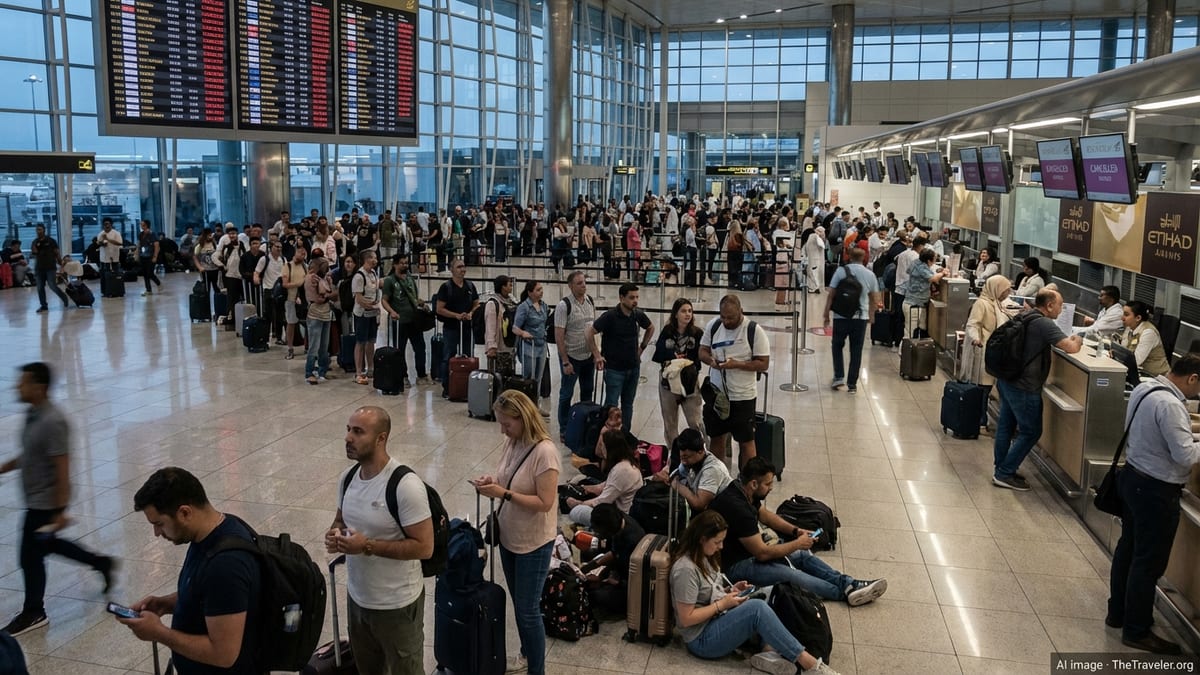
This backdrop is especially significant for Hajj, which depends heavily on long haul air capacity from Asia, Africa, Europe and the Americas into Jeddah and Madinah. In late February and early March 2026, airspace closures and missile strikes led to the temporary suspension or restriction of commercial flights at key Gulf hubs, including Dubai International Airport, Abu Dhabi and Doha. Coverage of the conflict shows thousands of passengers and religious pilgrims stranded or rerouted as airlines canceled or diverted services across the region.
While Saudi Arabia itself has prioritized keeping direct access to Jeddah and Madinah open, the regional network that usually feeds those flights is under strain. Airlines that previously relied on Gulf hubs to connect pilgrims from Southeast Asia, the Indian subcontinent and Western markets are now restructuring schedules, lengthening routes and in some cases cutting capacity while security risks remain elevated.
Industry forecasts cited by tourism and aviation groups suggest that the Middle East could lose tens of millions of visitors in 2026 compared with prior expectations, with a significant share of the impact concentrated on transit traffic that would normally pass through Gulf hubs on its way to other destinations, including Saudi Arabia. For would be Hajj pilgrims, that translates directly into fewer options and a more complex journey.
Jet Fuel Shock Drives Airfare Pain for Pilgrims
The most immediate effect of the West Asia crisis on Hajj travel is visible in fuel and ticket prices. Data aggregated by airline and energy analysts in March and April 2026 shows jet fuel trading at more than double its pre conflict level, driven by disrupted Gulf oil exports and the rerouting of tankers away from threatened sea lanes. Aviation trade bodies report that jet fuel, which already accounts for around a quarter of airline operating costs in normal conditions, is now consuming a significantly larger share of budgets.
Reports from major carriers in North America, Europe and Asia indicate that long haul routes to and around the Middle East are bearing the brunt of price volatility. Some airlines have introduced fuel surcharges on international tickets, while others have opted for broad base fare increases or higher ancillary charges such as baggage fees. Recent disclosures by several carriers show checked baggage prices climbing, with company statements explicitly linking the changes to the jump in fuel costs tied to the conflict.
For Hajj pilgrims, especially those booking late or from countries where route options have narrowed, the impact is being felt in higher economy fares and limited availability on peak dates. Travel data firms tracking global bookings describe a pattern of sharp price spikes around summer 2026 departures to Saudi Arabia and alternative routings that avoid Gulf hubs. In some instances, travelers are choosing multi stop itineraries through secondary airports in Asia, Africa or Europe to keep costs manageable, adding hours and complexity to what is already a demanding journey.
Specialist pilgrimage operators say in public briefings and marketing materials that packages excluding international flights are gaining traction as a way to shield customers from the most volatile component of the trip. However, this shifts the burden onto individual travelers to secure tickets in a fast changing marketplace, where last minute disruptions remain a real possibility.
Hajj Package Prices Edge Higher Across Key Markets
Even before airfares are added, Hajj 2026 pricing is climbing in many sending countries. In Indonesia, parliamentary documents and local media reports on budget deliberations show the official 2026 Hajj cost per regular pilgrim set in the range of tens of millions of rupiah, with a slight nominal decrease versus 2025 but still significantly higher than pre pandemic levels. The gap between the government financed component and the amount paid directly by pilgrims continues to be a central political issue, reflecting both currency pressures and rising service costs in Saudi Arabia.
In South Asia, ministries and religious affairs boards are publishing provisional Hajj package structures for 2026 that explicitly reference cost assumptions from the previous year plus projected increases in accommodation, catering and transport within the kingdom. One South Asian financial news outlet notes that its national Hajj packages have been framed using last year’s Saudi cost base, pending final invoices, and warns that any later upward adjustment in Saudi fees would be passed through to pilgrims.
In the United Kingdom, independent travel advisories and consumer investigations into Hajj 2026 suggest that realistic package prices for mid range offerings now sit well above 6,000 pounds per person, compared with roughly 3,200 to 3,800 pounds for budget packages before 2020. Analysts attribute the rise to a mix of Saudi value added taxes on tourism services, upgraded infrastructure at sites such as Mina and Arafat, and the evolution of the official booking platforms that concentrate demand into a single digital marketplace.
For pilgrims traveling from North America, specialist agencies and Nusuk linked guidance highlight indicative 2026 package ranges starting around 4,500 to 5,000 US dollars for the most basic options, with many packages for shorter stays or premium locations in Mecca and Madinah priced substantially higher. Several operators openly caution prospective pilgrims that they should budget for an additional increase of around 4 to 8 percent between 2025 and 2026, depending on inflation, exchange rates and final Saudi charges for transport and services.
Digital Platforms, Quotas and the New Hajj Scramble
Beyond pure price pressure, the mechanics of booking Hajj 2026 are also evolving under the strain of demand and geopolitical uncertainty. Since the rollout of the Nusuk Hajj platform, most overseas pilgrims are required to secure their packages through official online channels, rather than via traditional local tour operators alone. Public guidance for 2025 and 2026 stresses that applications, payments and package selection must flow through the central system, with specified phases in which different national quotas are released.
Online forums used by prospective pilgrims in North America and Europe show intense competition for popular packages within minutes of each sales phase opening. Contributors describe scenarios where verified applicants log on as soon as the system activates, only to find that seats under their preferred packages are sold out almost immediately. Advice repeatedly shared among users includes topping up Nusuk wallets in advance and having backup package choices ready in case prices surge or availability vanishes mid transaction.
Some national delegations are publishing more detailed breakdowns of their 2026 quotas and cost structures in an effort to manage expectations. An Indonesian parliamentary briefing, for example, outlines a total quota of more than 220,000 pilgrims for 2026 and specifies the share of costs covered by state funds versus individual contributions. Similar discussions are underway elsewhere in Asia and Africa, where waiting lists can stretch for years and the combination of higher prices and finite seats is prompting renewed debates over age limits, savings schemes and subsidy formulas.
For Saudi domestic pilgrims, separate online systems and locally targeted packages offer more flexibility, but these too are becoming more structured. Recent domestic announcements describe tiered Hajj categories with estimated price ranges based on previous seasons, along with disclaimers that final prices may change once definitive 2026 cost inputs such as catering and transport contracts are confirmed.
Safety Concerns and Route Diversions Add to Anxiety
The regional security picture is also shaping perceptions of risk around Hajj 2026. Coverage of the Iran war and related strikes in early 2026 details drone and missile attacks on infrastructure in Gulf states, including airfields and commercial shipping corridors. In response, several governments have issued advisories urging citizens in parts of the Middle East to leave while commercial options remain available, and airlines have temporarily suspended flights through what were previously among the world’s busiest transit hubs.
Although Saudi Arabia’s main pilgrimage gateways have so far avoided prolonged closure, the memory of stranded Umrah pilgrims during earlier phases of the conflict is fresh. News reports from March 2026 describe Muslims who traveled to the kingdom for the year round Umrah pilgrimage finding themselves unable to return home as regional routes closed, with some paying high prices for scarce charter or alternative flights. These events are feeding into risk assessments by both individual Hajj planners and national authorities responsible for organizing group travel.
Aviation analysts suggest that even if hostilities ease before the peak Hajj travel window, lingering security concerns could keep insurance and operating costs elevated on certain routes. Some carriers may opt for more southerly or northerly corridors that add flight time but avoid the most sensitive airspace over the Gulf and parts of the Levant. That, in turn, could lock in higher fares for 2026, given the additional fuel burn and crew hours involved.
For now, the consensus emerging from publicly available industry and policy commentary is that prospective Hajj 2026 pilgrims should prepare for a more expensive and less predictable journey than in previous years. With fuel markets volatile, hubs under periodic pressure and package prices edging up across multiple regions, the spiritual ambition of performing Hajj is increasingly intertwined with global geopolitical and economic forces far beyond any traveler’s control.