

More news on this day
Air Canada has entered a new phase of fleet modernization with the first commercial flight of its Airbus A321XLR, inaugurating the carrier’s Glowing Hearted era and introducing lie-flat seating on a single-aisle aircraft for the Canadian market.
Get the latest news straight to your inbox!
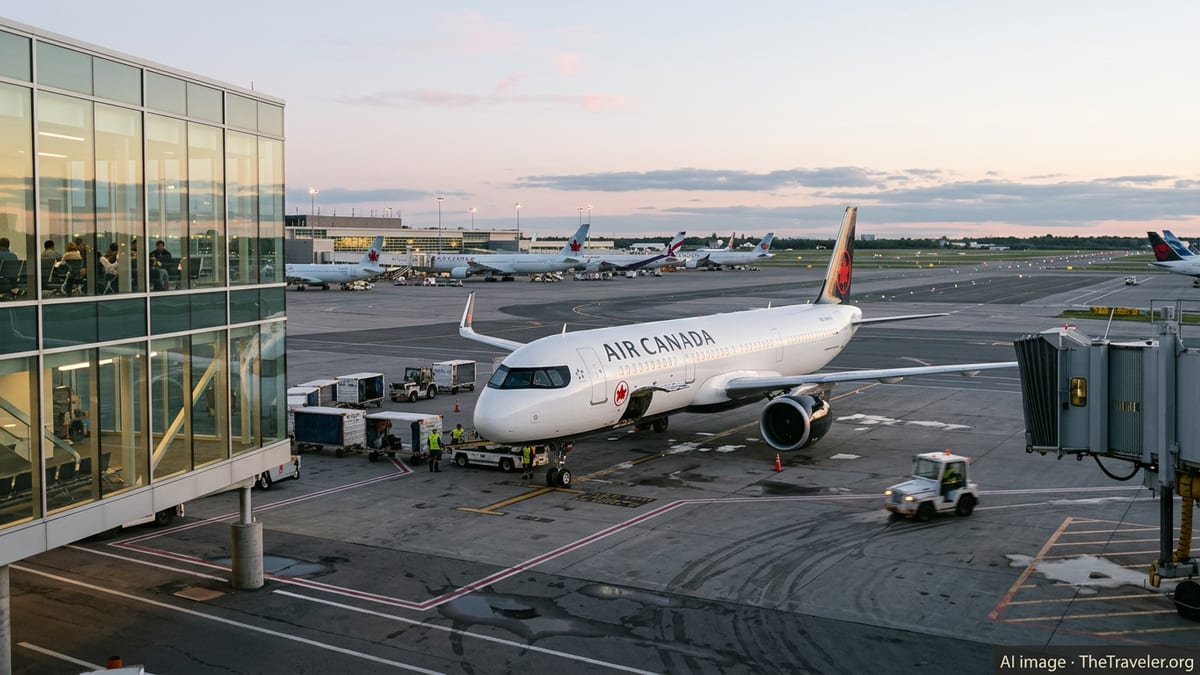
Launch flight marks new chapter for Air Canada
According to published coverage and company statements, the first A321XLR revenue flight operated on June 9, 2026 as AC413 between Montréal and Toronto, carrying 182 passengers. The short-haul sector was selected as a showcase for the new narrowbody type, allowing the airline to demonstrate the cabin concept to domestic travelers before the jet begins longer missions.
Reports indicate that the aircraft will spend its initial days cycling through select Canadian routes as crews gain experience with the new type and onboard systems. Industry analyses describe the entry into service as a milestone in Air Canada’s broader renewal program, which combines new-generation Airbus narrowbodies with ongoing updates to its widebody fleet.
While the first outing was a familiar hop along one of Air Canada’s busiest corridors, the airline is positioning the A321XLR as a long-range workhorse that will eventually stretch its wings across the Atlantic and deeper into leisure and secondary business markets. The Montréal to Toronto debut is being framed as the ceremonial first step in that longer-term strategy.
Glowing Hearted cabin debuts with lie-flat seats
The A321XLR is the launch platform for Air Canada’s Glowing Hearted cabin standard, an interior design language that blends the Airbus Airspace cabin with a refreshed brand aesthetic. Publicly available information on the configuration shows a total of 182 seats, including 14 in Air Canada Signature Class and 168 in Economy Class.
The Signature Class section introduces fully lie-flat suites to a single-aisle Canadian aircraft for the first time, according to aviation trade coverage. The seats are arranged in a premium layout with direct aisle access from most positions and integrated privacy features aimed at mirroring the experience traditionally found on widebody aircraft.
In Economy Class, each seat is equipped with an individual 4K OLED screen, reported to be 13 inches in size, while Signature Class screens extend to 19 inches. Bluetooth audio connectivity, in-seat power and ambient lighting form part of the Glowing Hearted package, which is designed to highlight Canadian landscape motifs and a more residential style of finish.
Reports also note that Aeroplan members will benefit from fast, complimentary Wi-Fi supported by Bell on the A321XLR, with the airline promoting the aircraft as a “calm, comfort and connectivity” platform. The combination of upgraded hardware and enhanced digital services is being presented as a key differentiator on both short and long flights.
Network ambitions: from domestic showcase to transatlantic workhorse
Air Canada has ordered 30 Airbus A321XLRs, with deliveries scheduled to continue through the second half of the decade. Industry briefings describe the type as a cornerstone of the carrier’s growth strategy, enabling thinner long-haul routes and greater seasonal flexibility compared with larger widebody jets.
According to previously released scheduling details, the first international A321XLR route is set to begin on June 15, 2026, linking Montréal with Toulouse. The choice of a French regional hub underscores Air Canada’s intent to connect Canadian cities with secondary European destinations that may not support daily widebody service but can be sustained by an efficient single-aisle aircraft.
Earlier announcements also identified Palma de Mallorca as a forthcoming A321XLR destination from Montréal starting this summer, further signaling a push into leisure markets that benefit from the jet’s extended range and lower fuel burn. Aviation analysts note that these deployments align with industry-wide trends, as airlines use long-range narrowbodies to open new city pairs and add frequency on established routes.
Domestically, the aircraft is expected to rotate through major hubs such as Montréal, Toronto and potentially western Canadian gateways as additional frames arrive. Observers suggest that the A321XLR could eventually support overnight transcontinental services and premium-heavy flights where the lie-flat product and enhanced Wi-Fi offering can command a revenue premium.
Competitive context in the long-range narrowbody market
The Airbus A321XLR is the longest-range variant of the A321neo family, capable of flying significantly farther than standard narrowbody aircraft. Aviation reference sources indicate that the type was launched in 2019 and has been positioned by Airbus as a replacement for aging mid-market jets on routes up to approximately 4,700 nautical miles, depending on configuration.
Air Canada joins a growing list of global carriers incorporating the A321XLR into their fleets to serve transatlantic, Middle Eastern and deep Latin American markets from medium-sized hubs. For the Canadian flag carrier, the aircraft arrives as competitors in North America, Europe and Asia also prepare to deploy similar long-range single-aisle jets, intensifying competition on routes traditionally flown by smaller widebodies.
Industry analysis suggests that Air Canada’s decision to pair the A321XLR with a full lie-flat business cabin is a deliberate competitive move, aiming to attract corporate travelers who might otherwise prefer larger aircraft. By aligning onboard comfort with that of its Boeing 777 and 787 fleets, the airline is attempting to ease customer concerns about flying longer journeys on a single-aisle jet.
The investment in an upgraded cabin standard also provides a template that can be extended to other aircraft types. Public discussions surrounding Air Canada’s product roadmap indicate that elements of the Glowing Hearted design, including the Aurora business suites, are likely to migrate across parts of the widebody fleet over time, offering a more consistent experience across multiple aircraft families.
Passenger experience and sustainability considerations
The A321XLR’s entry into service comes amid ongoing pressure on airlines to balance network growth with environmental goals. Airbus promotes the model as a more fuel-efficient alternative to older-generation aircraft on similar routes, and independent commentary highlights the potential for reduced emissions per seat when the jet is operated at high load factors.
For passengers, the combination of new seating, 4K in-flight entertainment, Bluetooth compatibility and expanded overhead storage is expected to deliver tangible improvements over legacy cabins. Early reactions shared in public forums prior to launch have focused on the size of the screens, the updated finishes and the prospect of more consistent access to power and connectivity throughout the cabin.
Air Canada is presenting the Glowing Hearted concept as both an aesthetic and functional evolution, aimed at creating a noticeably warmer experience than the more utilitarian interiors of previous generations. Ambient lighting scenes, textured materials and a color palette inspired by Canadian geography are intended to reinforce a sense of place on board.
As additional A321XLRs join the fleet and more routes are announced, traveler feedback will help determine whether the new standard meets rising expectations for comfort and technology. For now, the launch of AC413 marks a visible milestone: the start of a Glowing Hearted era that positions Air Canada at the forefront of long-range narrowbody operations in the Canadian market.