


More news on this day
Etihad Airways is set to double flights between Abu Dhabi and Kabul from July 15, 2026, shifting its new Afghanistan route to a twice-daily schedule as demand on the corridor accelerates only months after launch.
Get the latest news straight to your inbox!
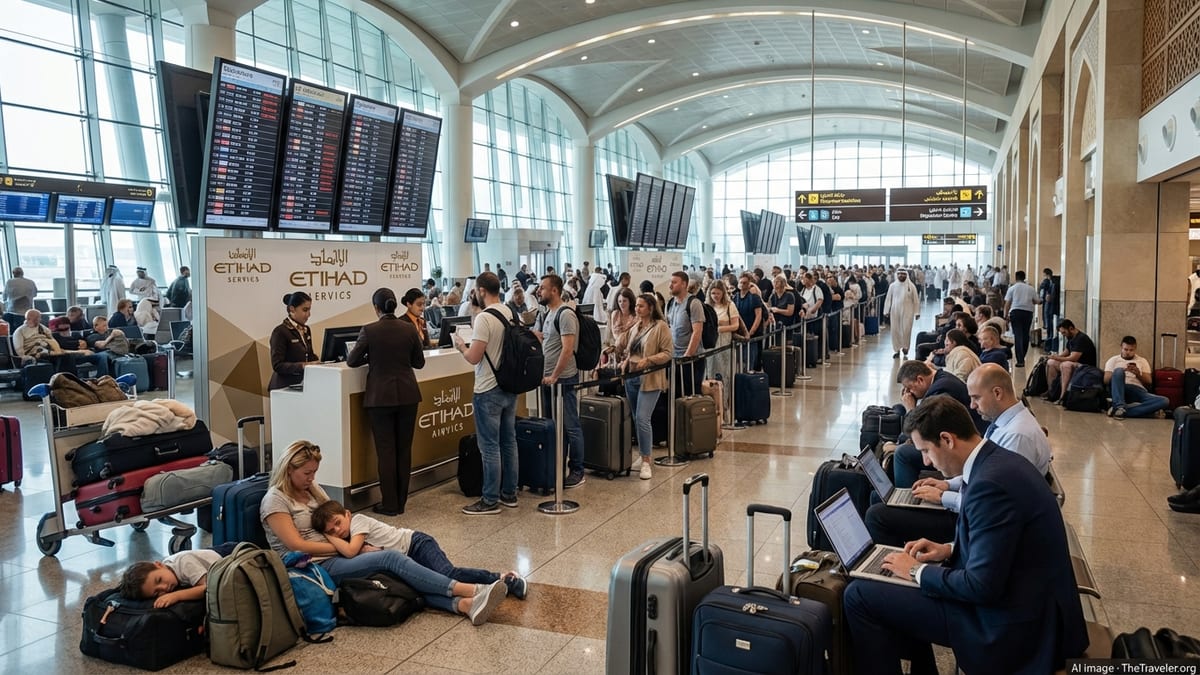
Second daily service marks rapid ramp-up on new route
Publicly available information shows that Etihad’s Abu Dhabi–Kabul route, which joined the carrier’s network in March 2026, will see capacity increase to two flights per day in each direction from mid-July. The move follows an initial ramp-up from four weekly services to daily operations, making this the second frequency increase within roughly four months of the route’s debut.
The schedule enhancement means passengers traveling between the United Arab Emirates and Afghanistan will have greater flexibility on departure and arrival times, with services spread across the day rather than concentrated in a single rotation. Industry reports indicate that demand for both point-to-point travel and onward connections via Abu Dhabi has significantly exceeded early projections.
The route is being operated by Airbus A320 aircraft configured with 8 seats in Business Class and 150 in Economy. By adding a second rotation, Etihad will be able to accommodate a higher volume of travelers during peak summer months while maintaining a narrow-body gauge suited to the market’s current size.
Network analysts note that the accelerated ramp-up underlines how quickly new routes can evolve from test markets into core regional links when booking trends outpace expectations. The decision to move to twice-daily service suggests that the airline sees sustained structural demand rather than a short-lived spike.
Strong diaspora and trade ties underpin demand
Reports from regional media point to deep-rooted economic and social ties between Afghanistan and the United Arab Emirates as a key driver of traffic. The UAE is home to a sizable Afghan diaspora, including business owners, traders and skilled workers who rely on reliable air links for family visits and commercial activity.
The expanded schedule is expected to support flows of visiting friends and relatives alongside small- and medium-sized enterprises active in sectors such as construction, retail, logistics and professional services. With Kabul now plugged into Etihad’s hub at Zayed International Airport, travelers from Afghanistan gain one-stop access to wider networks across the Gulf, Europe and parts of North America and Asia.
Aviation industry coverage notes that enhanced air connectivity can help facilitate trade in both directions, from consumer goods and electronics heading into Afghanistan to agricultural and niche export products moving out. While freight capacity on narrow-body aircraft is limited compared with widebody jets, the addition of a second daily flight effectively doubles bellyhold cargo opportunity on the route.
Travel specialists add that, beyond commercial ties, more frequent flights can play a role in supporting humanitarian workers, non-governmental organizations and development agencies that maintain a presence in Afghanistan and rely on stable links to regional hubs.
Abu Dhabi hub strategy focuses on high-potential regional links
According to published coverage of Etihad’s broader network plan, the Kabul upgrade aligns with a strategy of targeted growth in markets that can quickly feed the Abu Dhabi hub. Rather than adding large numbers of new destinations at once, the carrier has increasingly prioritized measured expansion where demand data justifies additional capacity.
By moving Kabul to twice-daily service soon after launch, the airline is effectively deepening connectivity on a route that can generate both origin-and-destination traffic and connecting flows. More frequencies typically improve schedule attractiveness for business travelers, who value options to depart in the morning or evening, and can also smooth passenger loads across the day.
Abu Dhabi’s role as a connecting hub is central to this approach. Travelers from Kabul can use the expanded timetable to access onward flights to key markets such as the Gulf states, the Indian subcontinent and Europe, with shorter layovers and better alignment to banked departure waves. This, in turn, can make the route more competitive against itineraries routed via other regional hubs.
Industry observers suggest that the Kabul decision may serve as a template for how Etihad evaluates other emerging markets. If a new or relaunched route shows similar strength in early booking performance, the carrier may prioritize additional frequencies ahead of deploying larger aircraft.
Summer timing and operational details
The increase to twice-daily service is scheduled to take effect on July 15, 2026, coinciding with peak summer travel patterns. This period typically sees heightened demand from expatriate communities taking extended holidays, as well as stronger leisure and VFR traffic across the Gulf and South Asia.
Based on timetables published across aviation and travel platforms, the enhanced schedule will feature two daily rotations operated by Airbus A320s. One set of flights is structured around an earlier daytime pattern, while the second offers later departures and arrivals, giving passengers more choice when planning trips for business, family or onward connections.
Travel trade coverage highlights that the consistent use of a single aircraft type can simplify operations and maintain a uniform product on the route, including cabin layout and service standards. For travelers, this can translate into clearer expectations regardless of which of the two daily departures they book.
Airline planners also view frequency increases as a flexible way to manage demand across seasons. If booking trends continue to strengthen beyond the summer peak, maintaining twice-daily operations into subsequent schedules could help consolidate the route’s position within Etihad’s regional portfolio.
Competitive and regional aviation context
The move to double daily flights into Kabul comes against a backdrop of evolving aviation dynamics across the wider region. Several Gulf carriers have been reassessing their route structures, adding capacity where travel demand has rebounded strongly and trimming or reshaping services in more challenging markets.
For Afghanistan specifically, the restoration and expansion of international air links have been gradual and closely watched. Each additional route or frequency introduced by regional airlines contributes to rebuilding the country’s connectivity with major hubs, which in turn supports mobility for residents, diaspora communities and international organizations.
Analysts note that Etihad’s decision places Abu Dhabi in a stronger position as a gateway for travel to and from Afghanistan, complementing services offered by other carriers through neighboring hubs. The extra capacity may also encourage more competitive pricing and itinerary options for travelers who previously faced longer routings or limited seat availability during busy periods.
While the long-term trajectory of demand on the Abu Dhabi–Kabul corridor will depend on broader economic and geopolitical factors, the rapid shift to twice-daily service suggests that, for now, passenger appetite for travel between the two cities is robust enough to support a meaningful expansion in capacity.