


More news on this day
Avianca has activated an overnight recovery operation after dense fog caused significant disruptions at Bogotá’s El Dorado and Medellín’s main airports on 20 November 2026, adding 28 extra flights and 6,682 seats across its Colombian network to help stranded passengers reach their destinations ahead of the Copa Sudamericana football final in Barranquilla.
Get the latest news straight to your inbox!
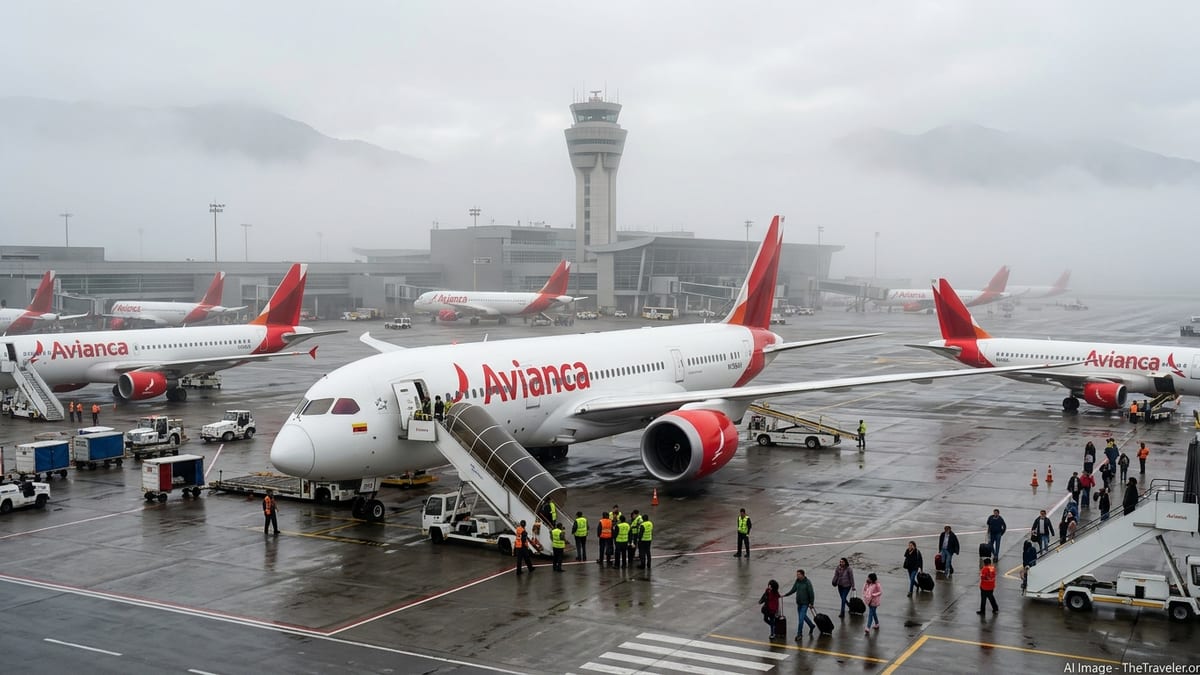
Weather Restrictions Cut Capacity at Two of Colombia’s Busiest Hubs
The disruption began on the morning of Friday 20 November, when dense fog reduced visibility at Bogotá’s El Dorado International Airport and at José María Córdova International Airport, which serves Medellín. Colombia’s civil aviation authority introduced temporary operating restrictions and intermittent runway closures, limiting the number of take offs and landings that could be handled at both airports while the weather persisted.
Local media and aviation authorities reported delays of up to several hours, diversions and cancellations affecting both domestic and international traffic. Some inbound international services to Bogotá were diverted to other Colombian airports, including Cali and Pereira, and to Panama City, while airlines adjusted flight plans in response to the reduced capacity and changing weather conditions.
Although visibility improved later in the day and airport operations gradually recovered, knock on effects rippled through airline schedules. Aircraft and crews were left out of position, connecting passengers misconnected from onward flights, and evening services quickly filled as airlines attempted to re accommodate travellers whose morning flights had been delayed, diverted or cancelled.
Avianca’s Contingency Plan: 28 Extra Flights and Larger Aircraft
In a statement dated 20 November, Avianca confirmed that it had activated a contingency plan in response to the weather related closures at Bogotá and Medellín. As part of that plan, the airline scheduled 28 additional flights during the night of 20 November and the early hours of Saturday 21 November, supplementing the regular timetable in order to absorb the backlog of affected passengers.
According to figures subsequently reported by Colombian business and broadcast outlets, the extra flights and associated aircraft changes created a total of 6,682 additional seats systemwide. Avianca achieved this both by operating new recovery sectors and by substituting larger equipment on some existing departures to high demand destinations.
The airline’s statement and local reporting indicate that ten flights originally planned with smaller aircraft were upgauged. Six services scheduled with Airbus A320 family aircraft were reassigned to widebody Boeing 787 Dreamliners, increasing capacity on those rotations, while four flights that had been due to use Airbus A319 aircraft were switched to the larger A320. The substitutions were focused on routes linking Bogotá with key Colombian cities including Barranquilla, Medellín, Cali and Cartagena, where the impact of the morning weather disruption was most acute.
Pressure from Copa Sudamericana Final Travel Demand
The timing of the disruption added complexity for both airlines and travellers. Barranquilla was hosting the 2026 Copa Sudamericana final on Saturday 21 November 2026 at the Estadio Metropolitano Roberto Meléndez, attracting large numbers of domestic and international football supporters. The final, played between Atlético Mineiro and Boca Juniors, had prompted carriers and local authorities to plan additional transport capacity in the days leading up to the match.
In the weeks before the event, Avianca had already announced special flights linked to the final, including direct services between Buenos Aires and Barranquilla on 19 and 20 November and additional Bogotá Barranquilla frequencies around the match date. Those planned extras were designed to meet the tournament related demand, independently of any weather issues at Colombia’s main hubs.
The fog related restrictions on 20 November therefore struck on a day when demand for flights into Barranquilla and for internal Colombian connections was already elevated. Colombian news reports noted that many of the passengers affected by cancellations and long queues in Bogotá and Medellín were attempting to reach Barranquilla in time for the final. Avianca’s overnight recovery flights and the deployment of widebody aircraft on busy domestic routes were intended in part to ensure that supporters who had been delayed by the weather could still travel before kickoff.
Passenger Rebooking Policies and On the Ground Response
Alongside the additional capacity, Avianca introduced flexible rebooking measures for customers whose itineraries were disrupted on 20 November. The airline’s protection plan allowed eligible passengers to change to alternative flights without paying change penalties, subject to available seats, reflecting the fact that the disruption was caused by weather and air traffic restrictions outside the carrier’s direct control.
To manage the irregular operation, Avianca reinforced its staffing at affected airports and in its contact centres. The airline said it had increased the presence of customer service teams at Bogotá and Medellín to provide information, assist with rebookings and help coordinate accommodation on later flights. Colombian media footage from El Dorado on Friday showed lengthy queues at airline counters during the height of the disruption, but by Saturday morning local outlets were reporting that lines had shortened as operations stabilised and passengers were redistributed onto the added services.
Authorities also reminded travellers that, in situations caused by adverse weather or airspace restrictions, airlines are required to reprogramme flights and provide information and assistance, but are constrained by airport capacity and safety regulations. With multiple carriers needing to reposition aircraft and crews once visibility improved, recovery efforts were expected to continue into 21 November even after the worst of the fog had lifted.
What Travellers Should Check After the Disruption
The 20 November episode underlines how quickly adverse weather at major connecting hubs such as Bogotá and Medellín can affect travel plans across Colombia and beyond. Even relatively short term visibility restrictions can trigger a chain of delays, diversions and missed connections that take at least one or two days to fully resolve, particularly on busy weekends or around major events like the Copa Sudamericana final.
Passengers with bookings around 20 and 21 November whose journeys included Bogotá or Medellín were advised by both the civil aviation authority and airlines to monitor their reservations closely and to verify any schedule changes before travelling to the airport. For some travellers, especially those on multi segment international itineraries, re timings or re routings may continue to appear in booking systems as airlines adjust rotations and return aircraft to their normal patterns.
Looking ahead, travellers using Colombian hubs during the local fog season or coinciding with large scale events may wish to build in additional connection time and to register contact details with their airline so that schedule changes and rebooking options can be communicated quickly. While Avianca’s 28 recovery flights and 6,682 extra seats have helped to clear the immediate backlog from the 20 November disruption, further operational fine tuning is likely over the following days as regular timetables are restored and aircraft and crews return to their standard routes.