


More news on this day
Air France has resumed passenger services to Dubai and Riyadh after a six-month disruption triggered by Gulf airspace closures and heightened regional tensions, reconnecting Paris with two of the Middle East’s key aviation and business hubs.
Get the latest news straight to your inbox!
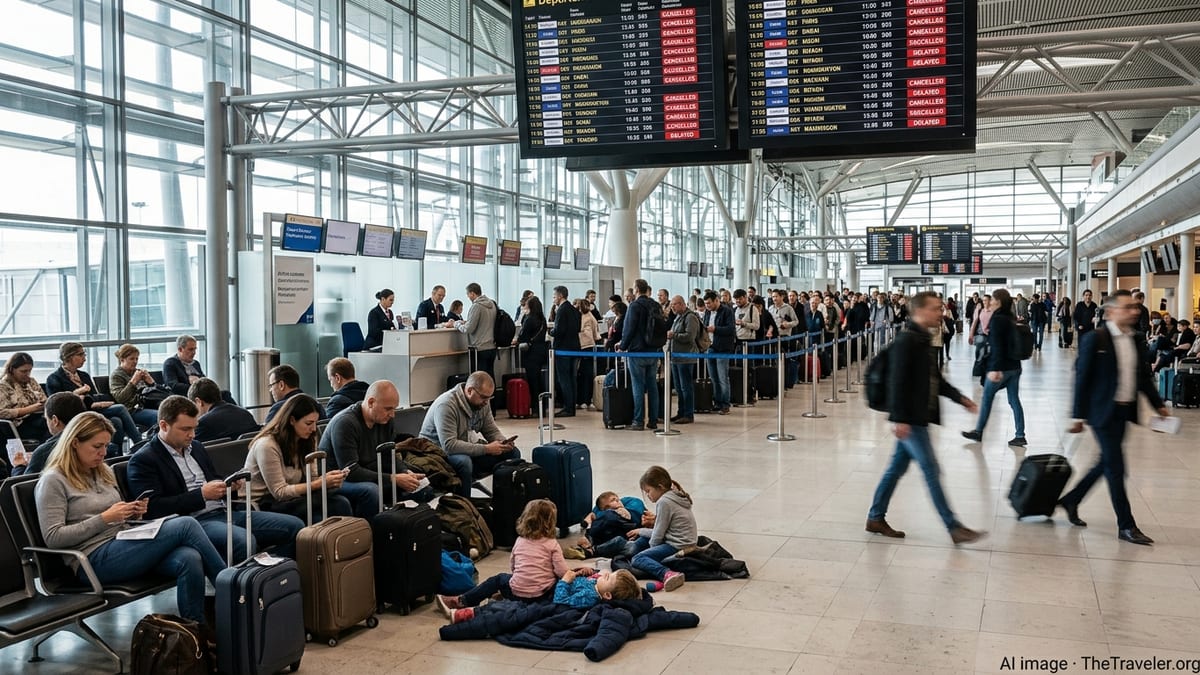
Key Gulf routes return as regional skies gradually reopen
Publicly available flight information indicates that Air France’s Paris Charles de Gaulle services to Dubai International Airport and Riyadh’s King Khalid International Airport restarted on 26 August 2026, following a prolonged suspension that began in late February. The pause coincided with widespread closures of Gulf airspace during the Iran conflict, which sharply reduced traffic through Dubai and other regional hubs.
Coverage of Dubai International’s second-quarter performance shows how severely the disruption hit the region, with passenger numbers falling as travelers and airlines routed around the Gulf. The restart of Air France’s services adds long-haul capacity back into a market where Gulf carriers such as Emirates, Etihad and Qatar Airways moved more quickly to restore operations after an April ceasefire.
In previous network updates issued in March, Air France had flagged that flights to Dubai and Riyadh would remain suspended into the 2026 summer season, with any restart dependent on security assessments. Subsequent advisories from European regulators, including conflict-zone bulletins covering the skies over the UAE and Saudi Arabia, contributed to a cautious approach and a series of rolling extensions to the suspension dates.
Regional travel trackers and operational summaries now show both routes back on sale and operating, marking one of the first full-scale resumptions by a major European network carrier on these specific city pairs since the start of the crisis.
Six months of rolling suspensions and shifting restart dates
The six-month gap in Air France’s Dubai and Riyadh schedules was marked by several announced but delayed restart targets as the security situation evolved. Brief windows for limited flights were repeatedly narrowed as risk assessments changed, frustrating passengers who had booked on initially advertised return dates in May and June.
Timeline reconstructions from aviation briefings and media reports show that Air France first extended its Dubai and Riyadh suspensions into March, then again through late June, and later into late July in response to renewed alerts over Gulf airspace. A further update in July pushed the hiatus into late August, effectively turning what was initially presented as a matter of weeks into a six-month absence from both markets.
During that period, other European airlines also maintained restrictions or outright bans on flying through parts of the Gulf, even after some regional airspace reopened on a limited basis. Industry digests note that these decisions reflected not only overflight risk but also the operational complexity of reestablishing long-haul schedules that rely heavily on reliable corridor access.
The final decision to resume on 26 August appears aligned with broader regional patterns identified in recent travel advisories, which point to a gradual but uneven normalization of air services across the Middle East as carriers regain confidence in route stability.
What the restored Dubai and Riyadh links mean for travelers
The return of Air France’s Dubai flight puts another European network carrier back into one of the world’s busiest long-haul markets at a time when demand for travel to and through the UAE is climbing again. Passenger data from Dubai points to steady month-on-month recovery after the worst of the disruption, with capacity additions by Gulf-based airlines beginning to ease pressure on fares and availability.
For travelers between Europe and the Gulf, the reinstated Paris–Dubai route adds a familiar option that integrates with Air France’s wider transatlantic and European network. This is likely to be particularly significant for corporate and connecting traffic, which often relies on through itineraries via Paris to North America, Africa and other parts of Europe.
In Saudi Arabia, the resumed Riyadh flights dovetail with the kingdom’s broader aviation and tourism expansion, in which Riyadh is being positioned as a growing hub for both business and leisure travel. Network data listing Air France’s destination map confirms Riyadh as a scheduled passenger station, and the restored service is expected to support flows tied to large-scale projects and conferences hosted in the capital.
Travel industry commentary suggests passengers are being advised to continue checking their flight status close to departure, as occasional last-minute adjustments remain possible while airlines and regulators monitor the security backdrop and airspace routing options.
Operational constraints and ongoing security considerations
Although flights have restarted, the broader context for operations across the Gulf remains sensitive. The European Union Aviation Safety Agency’s conflict-zone bulletins continue to urge airlines to exercise caution when flying through airspace over or near the UAE and Saudi Arabia and to maintain robust contingency planning. Carriers are expected to keep alternative routings ready in case of renewed restrictions.
Earlier in the year, industry reports described how airspace closures over parts of Iran, Iraq, Bahrain, Qatar, Kuwait and Jordan forced airlines to redesign their flight paths, sometimes lengthening journeys and increasing fuel burn. In that environment, Air France opted for a conservative stance on Dubai and Riyadh, even as some regional carriers resumed activity more quickly.
Logistics-focused operational updates still characterize the Air France–KLM presence in the Middle East as subject to route-specific controls, underscoring that the return of Dubai and Riyadh does not yet signal a full normalization across all destinations. Beirut, for example, remains suspended in the near term under the latest published schedules, with a later target date for any restart.
Analysts tracking airline capacity into the Gulf note that any renewed spike in tensions could again reshape traffic flows, but the restoration of these two Air France routes is seen as a vote of confidence in the current security picture and in the resilience of demand for travel between Europe and the Gulf.
Competitive landscape as European capacity returns
Air France’s move to reinstate Dubai and Riyadh services comes as other European airlines reassess their own Middle East footprints. Some group carriers have postponed full returns to the region until later in 2026 or beyond, while others have opted for phased resumptions or seasonal operations on key routes.
Travel coverage tracking airline decisions indicates that Gulf-based carriers were first to restore much of their long-haul reach, followed by a more gradual re-entry by European competitors constrained by regulatory guidance and internal risk models. The differing timelines have created opportunities for airlines already active in the region to capture market share and premium traffic.
For Air France, the restored services allow it to reassert a presence on city pairs that link Paris with two major nodes in the Gulf’s aviation ecosystem. Industry observers note that the ability to rebuild consistent schedules through the remainder of 2026 will be crucial in determining whether the airline recovers lost ground in connecting flows that temporarily shifted to other hubs during the disruption.
Forward-looking network plans published earlier in the year had already signaled Air France’s intention to grow long-haul capacity in 2026, particularly on transatlantic routes. The restart of Dubai and Riyadh adds another piece to that strategy by reopening gateways to a Middle East region that remains central to global east–west travel.
Gulf News: Air France resumes Dubai flights after six-month disruption, Riyadh services also return
Euronews: Middle East flights – Air France suspends routes to Riyadh, Dubai and Beirut
The National: Middle East flights cancellations and resumptions update