


More news on this day
Hundreds of passengers traveling between Australia and New Zealand have faced significant disruption in August 2026, with publicly available flight-tracking data indicating 303 delays and cancellations affecting services at Sydney and Auckland airports across the month.
Get the latest news straight to your inbox!
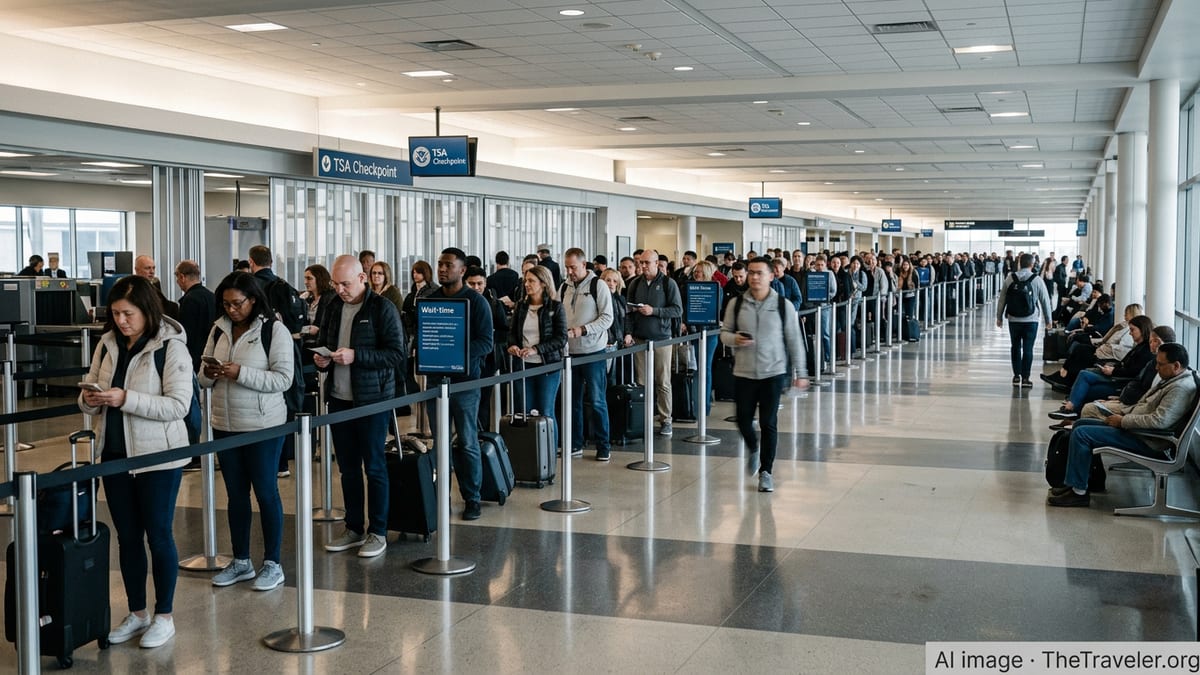
Delays Accumulate Across Trans-Tasman Schedules
Flight-status platforms tracking operations at Sydney Kingsford Smith and Auckland International indicate that a combined 303 services experienced either substantial delays or outright cancellations during August 2026 on key routes, most notably the busy Sydney–Auckland corridor. Aggregated listings for Air New Zealand, Qantas, Jetstar and codeshare services show repeated late departures and a run of mid-month cancellations that rippled through daily schedules.
Recent examples on the Sydney to Auckland route illustrate the broader pattern. Air New Zealand flight NZ112 departed Sydney on August 25 and arrived in Auckland nearly half an hour behind schedule, following several earlier days marked by late arrivals and at least one cancellation on August 23, according to Airportia’s historical log. Similar trends appear on companion service NZ110, which flight-tracking data describe as averaging delays approaching an hour over recent operations despite some on-time arrivals.
Jetstar’s JQ201, another key trans-Tasman link, has generally operated with modest delays, including a mid-morning departure from Sydney on August 26 that left 16 minutes behind schedule but was forecast to arrive in Auckland slightly ahead of timetable. While individual services may land close to or earlier than scheduled, the cumulative effect of rolling delays and scattered cancellations has been mounting congestion at both ends of the route.
New Zealand’s Ministry of Transport has previously identified the Sydney–Auckland pairing as vulnerable to punctuality issues in its on-time performance reporting, noting that even in 2024 the route recorded relatively high proportions of late arrivals and cancellations compared with other international links. Those earlier patterns provide a backdrop for this August’s elevated disruption figures across the two hubs.
Staffing Constraints and Weather Intensify Disruptions
Operational pressures behind the August disruptions appear to reflect a mix of staffing constraints in air traffic management and typical late-winter weather. Coverage from the Australian Broadcasting Corporation in early August reported Sydney Airport preparing travelers for widespread delays as Airservices Australia managed roster limitations in the control tower, with more than 150 flights impacted on a single Saturday. While those figures covered the broader domestic and international network, they contributed directly to knock-on issues for trans-Tasman operations.
Similar air traffic management challenges have been widely reported in recent years, as airlines and service providers rebuild workforces and adjust rosters. When control authorities reduce arrival or departure rates for safety or staffing reasons, high-frequency routes such as Sydney–Auckland are particularly susceptible to cascading delays, as aircraft and crews miss subsequent rotation windows.
Seasonal conditions have also played a role. Late-winter weather across the Tasman Sea regularly brings strong winds, low cloud and rain, conditions that can require increased separation between aircraft, slower approach patterns or diversions. Although individual weather events are not always specified in flight-tracking summaries, elevated delay statistics in August align with the period when New Zealand’s on-time performance reports have historically recorded higher disruption rates on trans-Tasman sectors.
Industry data from a 2024 New Zealand aviation punctuality bulletin, which highlighted above-average cancellation rates on the Auckland–Sydney and Sydney–Auckland routes, indicate that these links are sensitive to operational shocks. The latest August 2026 figures at Sydney and Auckland suggest that persistent structural and seasonal factors remain at play, even as airlines attempt to restore reliability.
Individual Cancellations Highlight Passenger Impact
Behind the headline numbers are individual flights that never left the gate. On August 25, a Sydney–Auckland service operated by Air New Zealand as NZ104 and marketed by Air Canada as AC6105 was recorded as cancelled in FlightStats’ tracker, with no revised departure time published and passengers advised to seek information directly from the carrier. Trip.com’s parallel listing for NZ104 similarly flagged the flight on August 26 as disrupted, underlining the uncertainty facing travelers relying on this particular rotation.
Low-cost operations have not been immune. Jetstar flight JQ203, scheduled to depart Sydney for Auckland at 11:00 on August 26 and arrive mid-afternoon, was marked as cancelled in Trip.com’s real-time status feed, with boarding and arrival details removed and passengers directed to airline channels for alternatives. The cancellation stood out amid generally punctual performance for the airline on other Sydney–Auckland services during the same week.
These cancellations have practical consequences well beyond the initial sector. Many Sydney–Auckland passengers connect onward to North America, Asia or domestic New Zealand destinations, and a missed trans-Tasman leg can cause travelers to forfeit entire itineraries. Publicly available data from compensation advisory sites and airline customer advisories point to increased demand for rebooking, refunds and, where applicable, delay-related claims when services are significantly disrupted or cancelled at short notice.
As flights stack up with delays, schedule recovery typically requires spare aircraft and crew that may not always be available in tight late-winter rosters. This can result in airlines pre-emptively cancelling selected services to protect the integrity of the remaining schedule, helping to explain why some days in August show clusters of cancellations on particular flight numbers.
Historical Performance Underscores Structural Challenges
The current month’s disruptions are occurring against a backdrop of already challenging on-time performance for trans-Tasman travel. New Zealand aviation statistics for 2024 show that the Sydney–Auckland route recorded one of the higher cancellation rates among major international links serving the country, with around 3 percent of services cancelled during peak disruption periods. On-time arrival rates on the same route lagged well behind the overall international average, illustrating how sensitive the corridor is to operational strain.
Earlier reporting in those datasets also highlighted persistent delays for several carriers on both sides of the Tasman. Air New Zealand and Qantas, which operate the bulk of Sydney–Auckland frequencies, reported relatively low proportions of flights arriving exactly on schedule on this route, compared with better punctuality on some other trans-Tasman and Pacific services. Jetstar’s performance metric, while stronger, was still affected by a minority of late-running or cancelled flights.
August 2026’s figure of 303 delayed and cancelled flights across Sydney and Auckland therefore appears less like a one-off anomaly and more like an escalation of an established pattern. With traffic volumes having largely recovered, even marginal disruptions in air traffic control staffing, ground handling or weather can quickly push an already constrained corridor beyond its punctuality limits.
Conversations among aviation enthusiasts on public forums in August have also referenced diversions and unusual routings on services linked to Auckland when significant disruption has occurred, suggesting that airlines sometimes opt for creative solutions such as repositioning aircraft or rerouting long-haul services when local capacity is constrained.
What Travelers Can Expect in the Coming Weeks
With August drawing to a close, there are indications that some of the most acute weekend congestion at Sydney may ease as rostering adjustments take effect, though no formal timetable for a full return to normal operations has been published in the sources reviewed. Flight-status dashboards for late August and early September continue to show a mix of on-time departures, moderate delays and isolated cancellations across the Sydney–Auckland route and other trans-Tasman sectors.
Publicly available guidance from airlines and airports consistently emphasizes the importance of checking flight status before leaving for the terminal, particularly for early-morning and late-evening departures when staffing or weather-related restrictions are more likely to affect operations. Travelers connecting onto long-haul services from Auckland or Sydney are being encouraged, through online advisories and booking tools, to allow generous connection times while disruption levels remain elevated.
Given the historical volatility of on-time performance on the route, analysts following aviation punctuality data often recommend that business travelers favor earlier departures in the day, when schedules are typically less congested and recovery options are more plentiful. For leisure travelers, patterns in August’s disruption data suggest that flexibility on travel dates and times can significantly improve the chances of a smooth journey.
For now, the 303 delays and cancellations recorded in August 2026 serve as a reminder that even mature, high-frequency corridors such as Sydney–Auckland can experience sustained operational strain. As airlines, airports and air traffic managers move into the Southern Hemisphere spring, performance on this vital link between Australia and New Zealand will remain a closely watched barometer of regional aviation resilience.
ABC News: Sydney Airport faces delays, as passengers advised to check with airlines
FlightStats: AC6105 / NZ104 Sydney to Auckland flight status