


More news on this day
An Air India flight landing at Bengaluru’s Kempegowda International Airport has been reported to have suffered a tailstrike during touchdown, triggering technical inspections and renewed attention on safety standards across India’s fast-growing aviation sector.
Get the latest news straight to your inbox!
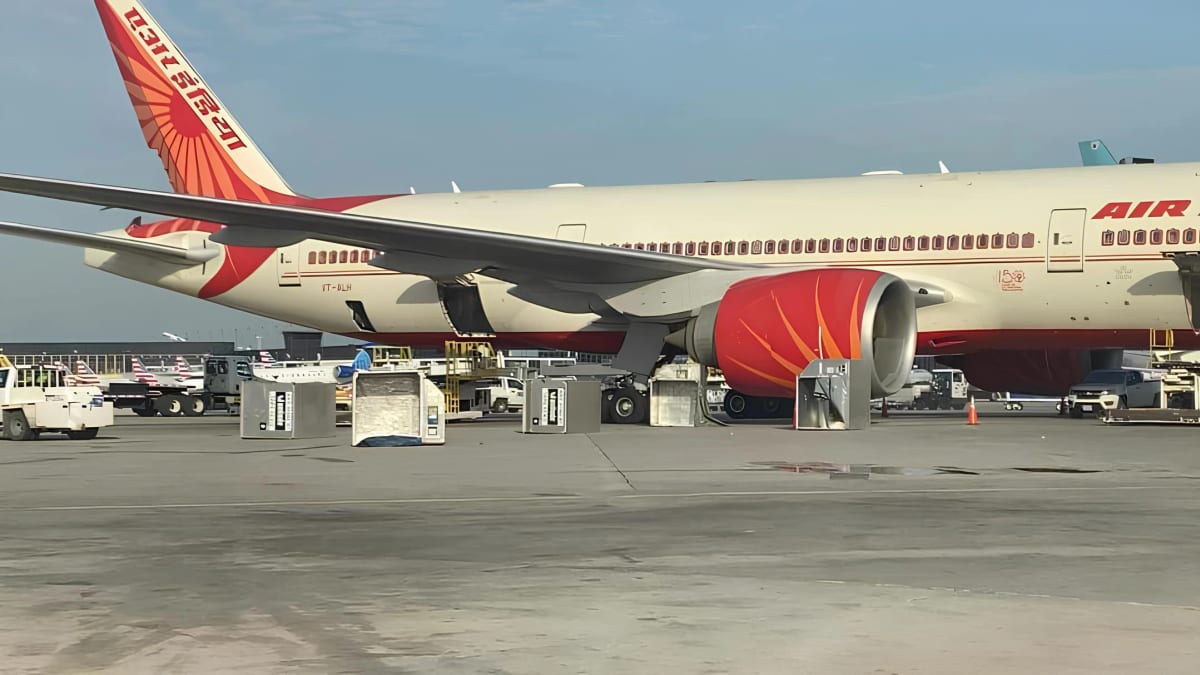
Incident reported during Bengaluru arrival
Initial reports indicate that the tailstrike occurred as the Air India aircraft was completing its landing roll on approach to Kempegowda International Airport, Bengaluru. The jet reportedly contacted the runway surface with its tail section, a type of occurrence that typically happens when the aircraft’s nose is raised too high during landing or rotation.
Publicly available flight-tracking and operations data show that the aircraft completed its landing and subsequently taxied off the active runway under its own power. No immediate injuries have been reported among passengers or crew, according to early media coverage surrounding the event.
Published coverage suggests that airport operations at Bengaluru were not significantly disrupted, with other arrivals and departures continuing after a brief period of checks and coordination. Tailstrike events, while treated as serious, do not always require an emergency evacuation if systems remain stable and there is no indication of structural compromise in critical areas.
The specific phase of the landing in which the tail contact occurred, as well as the exact extent of any resulting damage, had not been fully detailed in open sources at the time of writing. Those points are expected to form part of the technical assessment now under way.
What a tailstrike means for an aircraft
A tailstrike occurs when the rear fuselage or tail cone of an aircraft scrapes the runway surface during takeoff or landing. In modern jetliners, that area is structurally reinforced, but any contact with the runway can still damage the aircraft’s skin, frames, or pressure bulkhead, which may require in-depth inspection and repairs before the plane returns to service.
Such events can range from superficial scraping of the protective paint and skin to more serious deformation of underlying structures. Even if the damage appears minor from the outside, engineering teams generally carry out detailed non-destructive tests around the rear fuselage, aft pressure bulkhead and nearby systems to rule out hidden damage.
In many jurisdictions, tailstrikes are categorised as incidents that must be reported to national safety regulators. In India, occurrences of this nature typically draw the attention of the Directorate General of Civil Aviation, which may review flight data, cockpit procedures and runway conditions to assess whether corrective actions are necessary for the operator or crew.
Commercial operators usually maintain specific maintenance and inspection procedures for tailstrike scenarios, including manufacturer-recommended checklists. Until those procedures are completed and engineers sign off the aircraft as airworthy, it is generally withdrawn from regular passenger service.
Runway operations and safety focus at Kempegowda
Bengaluru’s Kempegowda International Airport is among India’s busiest hubs, handling a rapidly growing mix of domestic and international flights. In this context, any operational occurrence involving a major carrier tends to draw close scrutiny from the travelling public and aviation observers.
According to publicly available information, the airport has invested in expanded runway capacity and upgraded navigation aids to support higher traffic volumes. Even with these enhancements, line pilots must manage a range of factors on approach and landing, including weather conditions, runway occupancy and strict adherence to approach profiles designed to keep the aircraft within safe pitch and speed margins.
Tailstrike events can be influenced by multiple operational factors, such as unstable approaches, late flare, excessive pitch attitude, or attempts to land firmly within a limited touchdown zone. Training programmes for flight crews at major airlines generally include simulator scenarios that address these risks, emphasising stable approach criteria and go-around decisions when parameters are outside acceptable limits.
The reported tailstrike at Bengaluru adds to a series of recent technical and operational events across India’s aviation market that have kept regulators and airlines focused on runway safety, aircraft handling and crew training standards.
Air India’s safety record and regulatory scrutiny
Air India, now part of the Tata Group, has been engaged in a multi-year fleet and service transformation programme. Alongside cabin upgrades and network expansion, the airline has placed particular emphasis, in public communications, on operational reliability and safety culture as it integrates new aircraft types and retrains crews across a growing route map.
Recent months have nonetheless seen a number of high-visibility occurrences involving aircraft operated by the Air India Group and other Indian carriers, ranging from technical malfunctions to minor ground collisions and precautionary returns to airports. Published coverage shows that such events have prompted India’s aviation regulator to announce targeted checks, technical reviews and updated oversight on selected systems and procedures.
Safety specialists generally note that incident reports, when transparently handled, can contribute positively to systemic safety by identifying trends and enabling data-driven improvements. For a legacy airline like Air India, each occurrence becomes a test of how effectively internal reporting, crew training and maintenance disciplines work together to mitigate risk and prevent recurrence.
While the reported tailstrike at Bengaluru appears to have resulted in no immediate injuries, the episode reinforces the level of public attention now directed at major carriers and their handling of even minor or moderate operational events.
Impact on passengers and next steps for the investigation
For passengers on board the affected flight, the tailstrike was likely experienced, at most, as a firm or slightly unusual landing rather than an obvious emergency. Most tailstrike events do not involve sudden loss of control or evacuation, particularly when the aircraft’s primary structures and systems remain intact.
Standard practice after such an occurrence typically includes a post-flight technical inspection, documentation of the event by the crew, and possible interviews with maintenance and operations personnel as part of the internal review. Depending on findings, the airline may coordinate with the aircraft manufacturer to determine the scope of repair and any further recommendations for pilot training or procedures.
In the short term, the aircraft involved may be temporarily grounded while checks proceed, leading to potential rescheduling or substitution of equipment on affected routes. For a large carrier with a sizable fleet, this kind of disruption can usually be managed through spare aircraft and schedule adjustments, though some passengers may experience delays or rebookings.
Further details on the Bengaluru tailstrike, including the aircraft registration, the route of the flight and the precise nature of the damage, are expected to emerge as technical assessments progress and additional information appears in public aviation databases and official bulletins.