


More news on this day
Thousands of travelers across the United States are facing mounting disruption as publicly available tracking data shows at least 2,387 flights delayed and 659 canceled, with major hubs in New York, Chicago, Dallas, Boston, Miami, Nashville and Phoenix particularly affected and Delta Air Lines, Southwest Airlines, SkyWest and American Airlines among the most impacted carriers.
Get the latest news straight to your inbox!
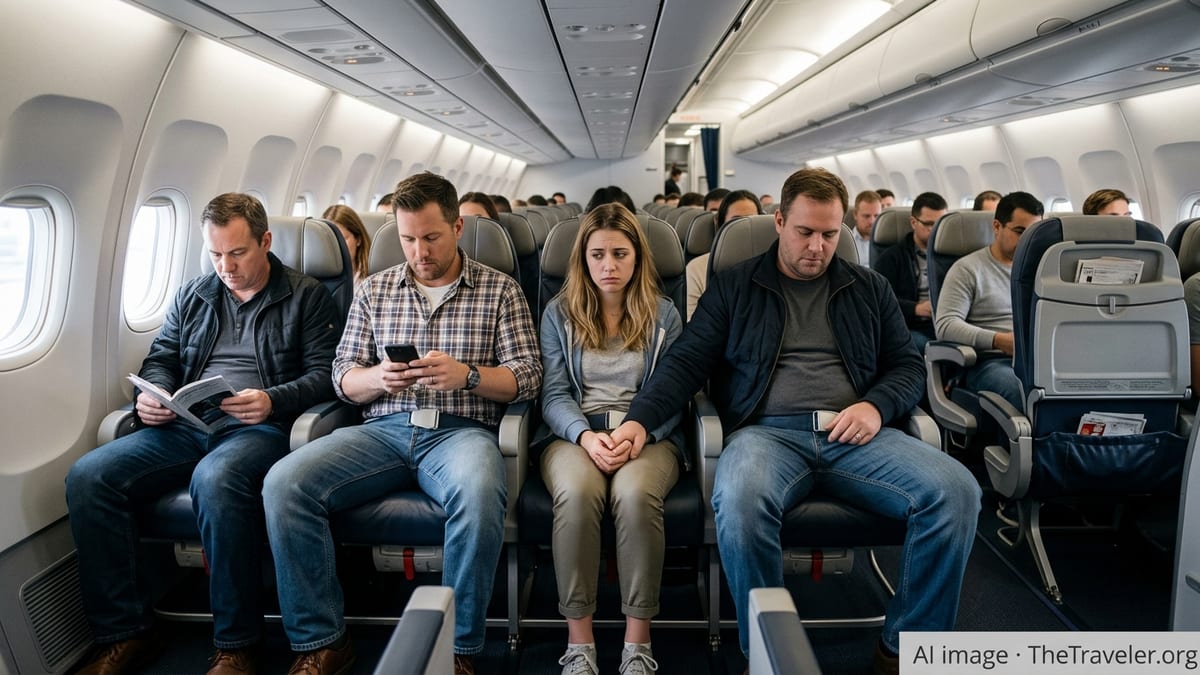
Major Hubs Across the Country Struggle to Keep Schedules On Track
Flight tracking dashboards show that the latest wave of disruption is not confined to a single weather system or region but is instead rippling through a broad cross-section of the national aviation network. Large metropolitan areas including New York, Chicago, Dallas, Boston, Miami, Nashville and Phoenix have all recorded significant clusters of delayed and canceled departures, creating long lines at check-in counters and security checkpoints and crowding around departure boards.
Airports in these cities play critical roles as connecting hubs and focus cities for some of the country’s largest airlines. When operations fray at these points, the fallout quickly spreads to smaller regional airports that depend on them for onward connections. Reports indicate that late departures from New York and Chicago, in particular, are feeding rolling delays throughout afternoon and evening bank structures across several airline networks.
The scale of the current disruption mirrors a pattern seen in several recent travel snarls in which thousands of flights have been delayed in a single day. Coverage from travel and aviation outlets over recent weeks has repeatedly documented high delay totals at hubs in Texas, the Midwest and the Northeast, suggesting a sustained period of strain across the system rather than a short, isolated incident.
Delta, Southwest, SkyWest and American Among Hardest-Hit Carriers
Publicly available information from flight tracking services indicates that Delta Air Lines, Southwest Airlines, SkyWest and American Airlines are featuring prominently in the latest disruption tallies. These carriers collectively operate extensive domestic networks that rely heavily on the same congested hubs now reporting waves of delays and cancellations.
Delta’s operations at New York and Boston, Southwest’s dense schedules in Dallas and Phoenix, SkyWest’s wide-ranging regional feed into major brands and American’s large presence in Dallas, Miami, Chicago and the New York area mean that any operational squeeze at those airports quickly magnifies across their daily schedules. Recent reports on previous disruption days have shown similar patterns, with these airlines accounting for large shares of both delayed and canceled flights as storms or air traffic constraints stress the system.
SkyWest’s role as a regional operator for multiple mainline carriers is particularly significant. When SkyWest flights are delayed or canceled, the impact is not always immediately obvious to travelers scanning airline tallies, because many of the flights are marketed under different brand names. However, aviation reporting in recent weeks has highlighted that high cancellation counts at SkyWest can translate into widespread missed connections and reduced frequencies on routes that feed major hubs.
Weather, Airspace Constraints and Network Complexity Drive Cascading Delays
Analysts following the aviation sector point to a familiar combination of causes behind the latest disruption. Unsettled spring and early summer weather across key corridors, air traffic flow restrictions put in place to manage storms and congestion, and the intricate design of hub-and-spoke networks are all contributing to delays that compound as the day progresses.
Federal statistics on U.S. airline performance have long shown that late-arriving aircraft and national aviation system constraints are among the leading drivers of delay minutes. When thunderstorms or low-visibility conditions force controllers to reduce the rate at which aircraft can arrive and depart at a major hub, airlines must hold or reroute flights, creating a backlog that is often impossible to clear before the end of the operating day.
Once a morning departure leaves late, the aircraft and crew assigned to that flight are frequently scheduled to operate multiple additional legs. Published analyses of previous disruption events show how a single delay early in the schedule can evolve into a chain of missed departure slots and connection banks, spreading the impact far beyond the original weather cell or airspace restriction that triggered the problem.
Knock-on Effects Felt Well Beyond the Largest Airports
Although headline numbers often focus on marquee airports in New York, Chicago, Dallas or Miami, regional and secondary airports are also feeling the effects of the current disruption. Reports from earlier disruption periods this season indicate that locations such as Nashville and Phoenix, while sometimes less prominent in national tallies, can experience sharp spikes in delays as mispositioned aircraft and crews arrive out of sequence.
These secondary knock-on effects are a defining feature of modern U.S. airline operations. When a hub experiences ground stops or arrival metering, aircraft that were supposed to continue on to smaller cities often arrive hours behind schedule or not at all. Travel coverage has described how passengers at medium-sized airports can suddenly face limited options, as sparse frequencies leave them with long waits for rebooked flights or overnight stays if the final departures of the day are canceled.
Flight disruption data over recent weeks shows that such ripple effects have increasingly become national in scope, with clusters of delays surfacing from the Northeast and Midwest to the Southeast and Southwest within the same operating day. The current totals of 2,387 delays and 659 cancellations fit within this broader pattern of geographically widespread impact.
What Travelers Are Being Advised to Do Amid Ongoing Disruptions
Consumer travel guidance published in recent days stresses the importance of monitoring flight status frequently and preparing for last-minute changes. Many airlines encourage passengers to use mobile apps or online tools to track aircraft positions, confirm gate information and secure rebooking options at the first sign of disruption, rather than waiting in long airport queues.
Information from federal transportation resources notes that travelers may be entitled to cash refunds if their flights are canceled and they choose not to travel, regardless of the reason. Separate airline-specific policies govern meal vouchers, hotel accommodations and reaccommodation on later flights when disruptions occur for reasons within a carrier’s control. Recent coverage has highlighted the variety in these policies across different airlines and advised passengers to review the terms for their specific carrier.
Given the scale of current delays and cancellations, travel experts quoted in recent reporting have consistently recommended allowing extra connection time when routing through weather-prone hubs and avoiding tight layovers during peak afternoon and evening banks. With thousands of flights already affected today and airlines continuing to work through backlogs from earlier disruption periods, passengers flying through New York, Chicago, Dallas, Boston, Miami, Nashville and Phoenix may continue to see residual delays even after the immediate causes ease.